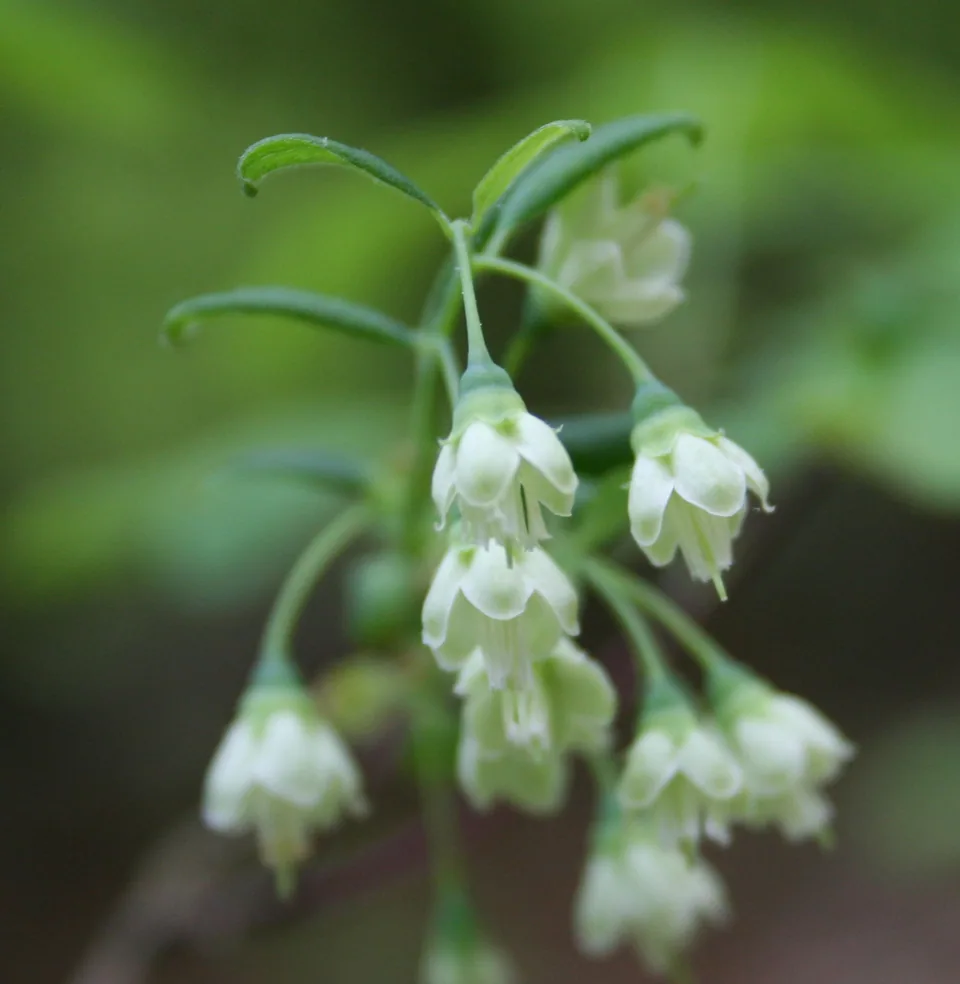


How to Grow and Care for Deerberry
Vaccinium stamineum
Written by Emilio Marruso · last checked
At a glance
Deerberry is a tough, easygoing shrub that thrives anywhere from full sun to part shade and handles dry spells once established. Give it acidic soil, pH 6.0 or lower, and it grows 5 to 15 feet tall, offering edible berries with a tangy, sour bite. It also feeds caterpillars, welcoming wildlife into your garden.
- Sun
Full sun to part shade
What the sources say (1)
Light: Full sun to part shade
Grow this shrub in acidic, rich, well-drained soils in full sun to part shade.
— Vaccinium stamineum (Deerberry, Highbush Huckleberry) | North Carolina Extension Gardener Plant Toolbox [1] - Water
Handles drought once established
What the sources say (1)
Watering: Drought tolerant once established
It spreads by runners to form clumps and is drought tolerant once established.
— Vaccinium stamineum (Deerberry, Highbush Huckleberry) | North Carolina Extension Gardener Plant Toolbox [1] - Cold
Survives winters down to −20 °F (−28.9 °C)
Very hardy · USDA 5a · RHS H7 · Z5
What the sources say (2)
Hardiness, coldest zone: 5a [winter low −28.9 to −26.1 °C (−20 to −15 °F)]
USDA Plant Hardiness Zone: 5a, 5b, 6a, 6b, 7a, 7b, 8a, 9a, 9b
— Vaccinium stamineum (Deerberry, Highbush Huckleberry) | North Carolina Extension Gardener Plant Toolbox [1] Hardiness, warmest zone: 9b [winter low −3.9 to −1.1 °C (25 to 30 °F)]
USDA Plant Hardiness Zone: 5a, 5b, 6a, 6b, 7a, 7b, 8a, 9a, 9b
— Vaccinium stamineum (Deerberry, Highbush Huckleberry) | North Carolina Extension Gardener Plant Toolbox [1] - Soil
Acidic soil, pH 6.0 or lower; in high pH soil the leaves turn yellow
What the sources say (2)
Soil pH, maximum: 6.0
Soil pH: Acid (<6.0) Soil Drainage: Good Drainage Occasionally Dry
— Vaccinium stamineum (Deerberry, Highbush Huckleberry) | North Carolina Extension Gardener Plant Toolbox [1] Grow this shrub in acidic, rich, well-drained soils in full sun to part shade.
— Vaccinium stamineum (Deerberry, Highbush Huckleberry) | North Carolina Extension Gardener Plant Toolbox [1] - Harvest
The berries are edible but sour
- Pests
Problems are rare: stem blight, root rot, mildew; watch for scale, webworms and tent caterpillars
What the sources say (2)
Pests: azalea stem borer, fall webworm, scale, tent caterpillars
Watch for azalea stem borer, fall webworm, scale, and tent caterpillars.
— Vaccinium stamineum (Deerberry, Highbush Huckleberry) | North Carolina Extension Gardener Plant Toolbox [1] Diseases: stem blight, root rot, anthracnose, cane cankers, mildew, botrytis
Potential but infrequent disease problems include stem blight, root rot, anthracnose, cane cankers, mildew and botrytis.
— Vaccinium stamineum (Deerberry, Highbush Huckleberry) | North Carolina Extension Gardener Plant Toolbox [1] - Size
5 to 15 ft tall and 6 to 12 ft wide
What the sources say (2)
Mature height: 152-457 cm (5 to 15 ft)
It may grow 5 to 15 feet tall and nearly as wide with leaves that are alternate with a smooth margin and fuzzy underside.
— Vaccinium stamineum (Deerberry, Highbush Huckleberry) | North Carolina Extension Gardener Plant Toolbox [1] Mature width: 183-366 cm (6 to 12 ft)
Dimensions: Height: 5 ft. 0 in. - 15 ft. 0 in. Width: 6 ft. 0 in. - 12 ft. 0 in.
— Vaccinium stamineum (Deerberry, Highbush Huckleberry) | North Carolina Extension Gardener Plant Toolbox [1]
Overview
Vaccinium stamineum (deerberry) is a native deciduous shrub that may grow 5 to 15 feet [1.5–4.6 m] tall. [1] It grows in acidic, rich, well-drained soils in full sun to part shade and is drought tolerant once established. [1] Its berries are edible but sour. [1]
This record is incomplete: the sources we read do not cover every field yet.
Not yet covered by our sources: Pruning, Propagation
Deerberry care
Measurements in square brackets are our conversion into the other unit system; the quoted text is unchanged.
How to water Deerberry
Drought tolerant once established
What the sources say (1)
It spreads by runners to form clumps and is drought tolerant once established.How much light Deerberry needs
Full sun to part shade
What the sources say (1)
Grow this shrub in acidic, rich, well-drained soils in full sun to part shade.How much cold Deerberry can take
Hardiness, coldest zone
5a [winter low −28.9 to −26.1 °C (−20 to −15 °F)]
What the sources say (1)
USDA Plant Hardiness Zone:
5a, 5b, 6a, 6b, 7a, 7b, 8a, 9a, 9bHardiness, warmest zone
9b [winter low −3.9 to −1.1 °C (25 to 30 °F)]
What the sources say (1)
USDA Plant Hardiness Zone:
5a, 5b, 6a, 6b, 7a, 7b, 8a, 9a, 9bBest soil for Deerberry
6.0
What the sources say (2)
Soil pH:
Acid (<6.0)
Soil Drainage:
Good Drainage
Occasionally DryGrow this shrub in acidic, rich, well-drained soils in full sun to part shade.How to propagate Deerberry
Not stated in the sources we read.
How to grow Deerberry
The plant
Family
Ericaceae
What the sources say (1)
Genus:
Vaccinium
Species:
stamineum
Family:
Ericaceae
Life Cycle:Mature height
152-457 cm (5 to 15 ft)
What the sources say (1)
It may grow 5 to 15 feet tall and nearly as wide with leaves that are alternate with a smooth margin and fuzzy underside.Mature width
183-366 cm (6 to 12 ft)
What the sources say (1)
Dimensions:
Height: 5 ft. 0 in. - 15 ft. 0 in.
Width: 6 ft. 0 in. - 12 ft. 0 in.Pests and diseases
Pests
azalea stem borer, fall webworm, scale, tent caterpillars
What the sources say (1)
Watch for azalea stem borer, fall webworm, scale, and tent caterpillars.Diseases
stem blight, root rot, anthracnose, cane cankers, mildew, botrytis
What the sources say (1)
Potential but infrequent disease problems include stem blight, root rot, anthracnose, cane cankers, mildew and botrytis.Deerberry pests and problems
Chlorosis
Symptom: Yellowing of leaves may occur in high pH soils.
What to do: Not stated in the provided documents.
What the sources say (1)
Chlorosis (yellowing of leaves) may occur in high pH soils.
— Vaccinium stamineum (Deerberry, Highbush Huckleberry) | North Carolina Extension Gardener Plant Toolbox [1] Diseases and pests
Symptom: Potential but infrequent problems include stem blight, root rot, anthracnose, cane cankers, mildew and botrytis; watch for azalea stem borer, fall webworm, scale, and tent caterpillars.
What to do: Not stated in the provided documents.
What the sources say (1)
Potential but infrequent disease problems include stem blight, root rot, anthracnose, cane cankers, mildew and botrytis. Watch for azalea stem borer, fall webworm, scale, and tent caterpillars.
— Vaccinium stamineum (Deerberry, Highbush Huckleberry) | North Carolina Extension Gardener Plant Toolbox [1]
Remedies
Each remedy shows what official sources say about it; traditional remedies without an official source are marked as such. Harmful ones are listed so you know to avoid them.
Treating the plant
fall webworm
pruning or removing webs by hand Official source, not independently tested
How: Destroy nests by pruning or removing by hand; a stick may be inserted into large webs and twisted to loosen them.
Cultural Practices- Destroy nests by pruning or removing by hand (a stick may be inserted into large webs and twisting it loosens the webs).
— extension.unh.edu [4]
scale
horticultural oil spray Works
Oil sprays are best used when the temperature is between 45 and 85 degrees, and they should only be applied to plants that are not in stress.
— lsuagcenter.com [5] How: Apply the oil spray over every surface of the plant, including leaf undersides; one or two follow-up applications are needed after the first.
The safest effective way to control scale is with a horticultural oil spray.
— lsuagcenter.com [5] What the evidence says The safest effective way to control scale is with a horticultural oil spray.
— lsuagcenter.com [5] insecticidal soap Partly works
How: Insecticidal soap can control crawlers, the newly hatched stage, before they settle and form a protective covering.
Crawlers can be controlled with contact insecticides such as insecticidal soap or malathion, but most gardeners never notice them and miss the opportunity.
— lsuagcenter.com [5] What the evidence says Insecticidal soap does a better job of controlling these scales and insect growth regulators like pyriproxifen and buprofizen work even better.
— purduelandscapereport.org [6]
Calendar
Pruning
Not stated in the sources we read.
Months as given by the sources, which are mostly from the United States (northern hemisphere). In the southern hemisphere they shift by about six months.
Edibility
Reported by the source, quoted verbatim. Do not eat a plant on the basis of this page alone: identification mistakes can be dangerous.
Wildlife Larval Host Edibility: Berries are edible but sour
[1]
Indicative values
Values from a secondary source, not checked word for word like the rest of this page. Use them as a starting point.
- Life cycle
- PerennialIndicative value, adapt it to your climate · Secondary source
- Hours of sun
- 6-8 hoursIndicative value, adapt it to your climate · Secondary source
- Drought tolerant
- yesIndicative value, adapt it to your climate · Secondary source
- Growth rate
- LowIndicative value, adapt it to your climate · Secondary source
- Pruning
- February, March, April, February, March, AprilIndicative value, adapt it to your climate · Secondary source
- Propagation
- Layering Propagation, Cutting, Division, Seed Propagation, Grafting PropagationIndicative value, adapt it to your climate · Secondary source
Similar plants
- Bilberry Vaccinium myrtillus
- Black Highbush Blueberry Vaccinium fuscatum
- Cranberry Vaccinium macrocarpon
- Creeping Blueberry Vaccinium crassifolium
- Elliott's Blueberry Vaccinium elliottii
- Highbush blueberry Vaccinium corymbosum
- Highbush Blueberry Vaccinium formosum
- Japanese Blueberries Vaccinium oldhamii
Sources
Every value above is quoted from these documents. Links lead to the original publisher.
- Vaccinium stamineum (Deerberry, Highbush Huckleberry) | North Carolina Extension Gardener Plant Toolbox · plants.ces.ncsu.edu, consulted
- Vaccinium (Bilberries, Blueberries, Blueberry, Cranberries, Huckleberries) | North Carolina Extension Gardener Plant Toolbox · plants.ces.ncsu.edu, consulted
- Huckleberries - Vaccinium | North Carolina Extension Gardener Plant Toolbox · plants.ces.ncsu.edu, consulted
- extension.unh.edu · extension.unh.edu
- lsuagcenter.com · lsuagcenter.com
- purduelandscapereport.org · purduelandscapereport.org
Written by Emilio Marruso · last checked