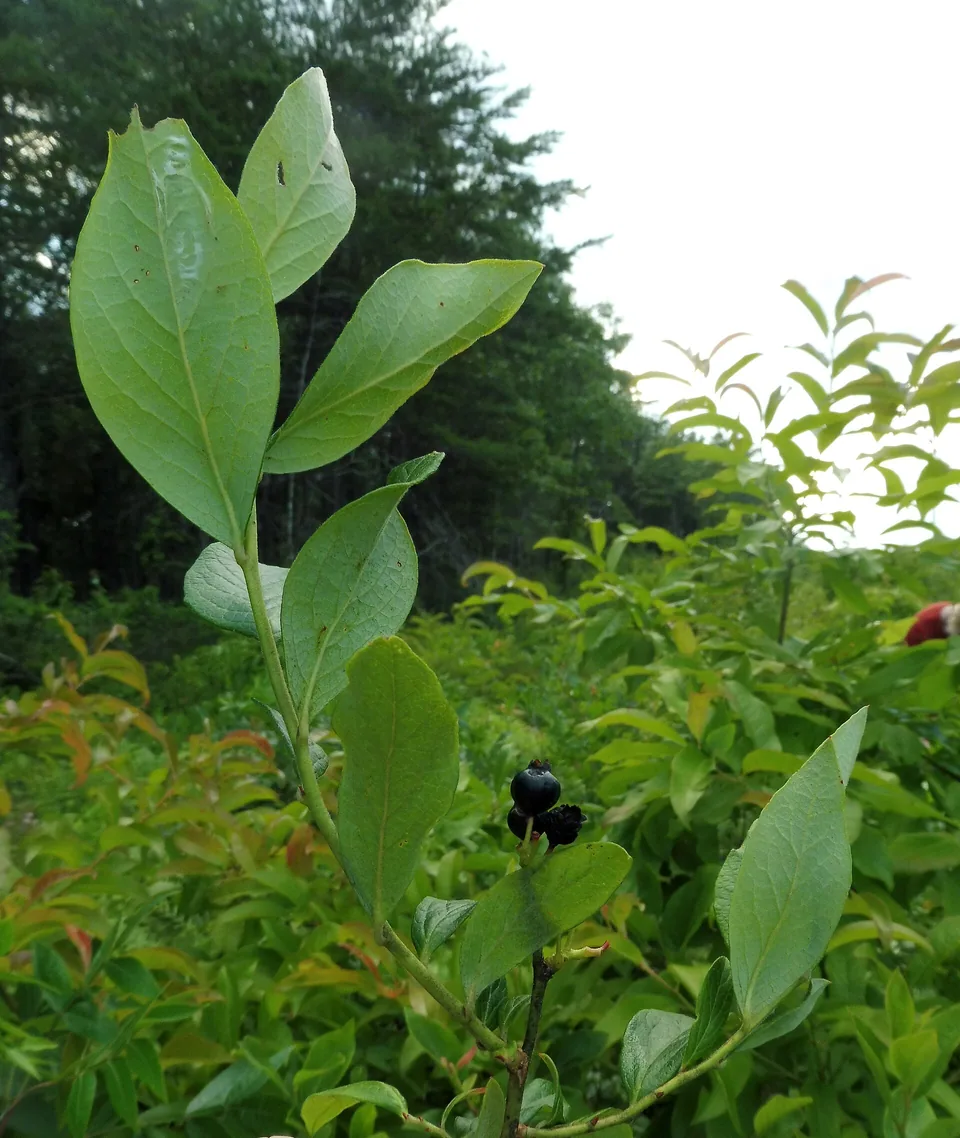


How to Grow and Care for Black Highbush Blueberry
Vaccinium fuscatum
Written by Emilio Marruso · last checked
At a glance
This blueberry bush rewards you with large, sweet, juicy fruit you can enjoy fresh or cooked. Give it full sun for the biggest harvest, though it also grows in partial shade, and keep its acidic soil moist or even wet. Move it to its permanent spot after the last frost, or grow it happily in a container.
- Sun
Full sun to partial shade; full sun gives the most fruit
What the sources say (1)
Light: Full sun to partial shade; full sun yields the most fruit
It will grow in both full sun and part shade, however, full sun location will yield the most fruits.
— Vaccinium fuscatum (Black Highbush Blueberry, Hairy Highbush Blueberry) | North Carolina Extension Gardener Plant Toolbox [1] - Water
Likes moist or even wet soil
What the sources say (1)
Watering: Prefers moist or wet soils
Its prefers moist or wet soils that do not contain lime. Soils high in acid are ideal.
— Vaccinium fuscatum (Black Highbush Blueberry, Hairy Highbush Blueberry) | North Carolina Extension Gardener Plant Toolbox [1] - Cold
Survives winters down to −30 °F (−34.4 °C)
Very hardy · USDA 4a · RHS H7 · Z4
What the sources say (2)
Hardiness, coldest zone: 4a [winter low −34.4 to −31.7 °C (−30 to −25 °F)]
USDA Plant Hardiness Zone: 4a, 4b, 5a, 5b, 6a, 6b, 7a, 7b, 8a, 8b
— Vaccinium fuscatum (Black Highbush Blueberry, Hairy Highbush Blueberry) | North Carolina Extension Gardener Plant Toolbox [1] Hardiness, warmest zone: 8b [winter low −9.4 to −6.7 °C (15 to 20 °F)]
USDA Plant Hardiness Zone: 4a, 4b, 5a, 5b, 6a, 6b, 7a, 7b, 8a, 8b
— Vaccinium fuscatum (Black Highbush Blueberry, Hairy Highbush Blueberry) | North Carolina Extension Gardener Plant Toolbox [1] - Soil
Acidic soil, pH 6.0 or lower
What the sources say (1)
Soil pH, maximum: 6.0
Soil pH: Acid (<6.0) Soil Drainage: Good Drainage
— Vaccinium fuscatum (Black Highbush Blueberry, Hairy Highbush Blueberry) | North Carolina Extension Gardener Plant Toolbox [1] - Planting
Move it to its permanent spot after the last frost
What the sources say (1)
Planting: Relocate to the permanent position after the last frost
Allow the new plant to have at least one winter in an indoor location, such as a greenhouse. A shady spot in the greenhouse is ideal. Wait until the last frost before relocating to its permanent home.
— Vaccinium fuscatum (Black Highbush Blueberry, Hairy Highbush Blueberry) | North Carolina Extension Gardener Plant Toolbox [1] - Harvest
Large, sweet, juicy berries to eat fresh or cooked
- Size
3 to 12 ft tall and 3 to 10 ft wide
What the sources say (2)
Mature height: 91.44-365.76 cm (3-12 ft)
Dimensions: Height: 3 ft. 0 in. - 12 ft. 0 in. Width: 3 ft. 0 in. - 10 ft. 0 in.
— Vaccinium fuscatum (Black Highbush Blueberry, Hairy Highbush Blueberry) | North Carolina Extension Gardener Plant Toolbox [1] Mature width: 91.44-304.8 cm (3-10 ft)
Dimensions: Height: 3 ft. 0 in. - 12 ft. 0 in. Width: 3 ft. 0 in. - 10 ft. 0 in.
— Vaccinium fuscatum (Black Highbush Blueberry, Hairy Highbush Blueberry) | North Carolina Extension Gardener Plant Toolbox [1] - Propagation
Grow new plants by layering a branch or from seed
What the sources say (1)
Propagation: Layering, seed
Recommended Propagation Strategy: Layering Seed Country Or Region Of Origin:
— Vaccinium fuscatum (Black Highbush Blueberry, Hairy Highbush Blueberry) | North Carolina Extension Gardener Plant Toolbox [1] - Containers
Grows in containers too
What the sources say (1)
In containers: Yes
Not liking its roots disturbed, it can be grown in a container until its permanent position has been established.
— Vaccinium fuscatum (Black Highbush Blueberry, Hairy Highbush Blueberry) | North Carolina Extension Gardener Plant Toolbox [1]
Overview
Vaccinium fuscatum is a deciduous North American shrub with large, sweet, juicy fruits that can be eaten raw or cooked. [1] It grows in full sun to part shade and prefers moist or wet, acid soils. [1]
This record is incomplete: the sources we read do not cover every field yet.
Not yet covered by our sources: Harvest, Spacing
Black Highbush Blueberry care
How to water Black Highbush Blueberry
Prefers moist or wet soils
What the sources say (1)
Its prefers moist or wet soils that do not contain lime. Soils high in acid are ideal.How much light Black Highbush Blueberry needs
Full sun to partial shade; full sun yields the most fruit
What the sources say (1)
It will grow in both full sun and part shade, however, full sun location will yield the most fruits.How much cold Black Highbush Blueberry can take
Hardiness, coldest zone
4a [winter low −34.4 to −31.7 °C (−30 to −25 °F)]
What the sources say (1)
USDA Plant Hardiness Zone:
4a, 4b, 5a, 5b, 6a, 6b, 7a, 7b, 8a, 8bHardiness, warmest zone
8b [winter low −9.4 to −6.7 °C (15 to 20 °F)]
What the sources say (1)
USDA Plant Hardiness Zone:
4a, 4b, 5a, 5b, 6a, 6b, 7a, 7b, 8a, 8bBest soil for Black Highbush Blueberry
6.0
What the sources say (1)
Soil pH:
Acid (<6.0)
Soil Drainage:
Good DrainageWhere to grow Black Highbush Blueberry
In containers
Yes
What the sources say (1)
Not liking its roots disturbed, it can be grown in a container until its permanent position has been established.Spacing
Not stated in the sources we read.
How to propagate Black Highbush Blueberry
Layering, seed
What the sources say (1)
Recommended Propagation Strategy:
Layering
Seed
Country Or Region Of Origin:How to grow Black Highbush Blueberry
The plant
Life cycle
perennial
What the sources say (1)
Genus: Vaccinium Species: fuscatum Family: Ericaceae Life Cycle: Perennial WoodyFamily
Ericaceae
What the sources say (1)
Genus: Vaccinium Species: fuscatum Family: Ericaceae Life Cycle: Perennial WoodyMature height
91.44-365.76 cm (3-12 ft)
What the sources say (1)
Dimensions: Height: 3 ft. 0 in. - 12 ft. 0 in. Width: 3 ft. 0 in. - 10 ft. 0 in.Mature width
91.44-304.8 cm (3-10 ft)
What the sources say (1)
Dimensions: Height: 3 ft. 0 in. - 12 ft. 0 in. Width: 3 ft. 0 in. - 10 ft. 0 in.Remedies
Each remedy shows what official sources say about it; traditional remedies without an official source are marked as such. Harmful ones are listed so you know to avoid them.
Treating the plant
birds eating fruit
plastic netting Official source, not independently tested
How: Cover the shrubs, individually or in groups, with plastic netting.
The most serious pests are birds that devour fruits. To protect the shrubs, cover them either individually or in groups with plastic netting.
— Vaccinium (Bilberries, Blueberries, Blueberry, Cranberries, Huckleberries) | North Carolina Extension Gardener Plant Toolbox [3]
spotted wing drosophila
netting to exclude the fly Official source, not independently tested
How: Use netting with holes smaller than one millimeter, placed over the plants just before the fruit ripens, sealed at the soil line; remove during picking and replace immediately after.
Insecticides are available for control, but a better option for home gardeners with a just a few plants is to exclude the female fly with netting as the berries begin to ripen.
— uvm.edu [5] picking ripe fruit daily Official source, not independently tested
How: Pick ripe fruit daily and chill immediately.
To minimize damage, gardeners should pick ripe fruit daily and chill immediately.
— uvm.edu [5]
mummy berry
burying or mulching mummies Official source, not independently tested
It is difficult to ensure that all mummies will be buried or removed, so chemical control is also necessary.
— newswire.caes.uga.edu [6] How: Rake or use a leaf blower to move mummies into row centers and bury them 2 inches deep or add 2 inches of mulch.
Burying or mulching the mummies during the winter can help prevent future infections. Rake or use a leaf blower to move mummies into row centers and bury 2 inches deep
— newswire.caes.uga.edu [6]
aphids
insecticidal soap spray Official source, not independently tested
Avoid making applications of insecticides to plants in bloom to avoid bee injury. Follow all label directions.
— pnwhandbooks.org [7] How: Apply when aphids appear and repeat if necessary; direct spray to undersides of leaves and growing tips.
insecticidal soap-May require several applications. Some formulations are OMRI-listed for organic use.
— pnwhandbooks.org [7] sticky band against ants Official source, not independently tested
How: A narrow band of sticky barrier at the base of the stem excludes ants that protect the aphids.
Home gardeners: Control ants, which "farm" the aphids and protect them from predators. A narrow band of "stickem" at the base of the stem should exclude ants.
— pnwhandbooks.org [7]
Calendar
Planting
Relocate to the permanent position after the last frost
What the sources say (1)
Allow the new plant to have at least one winter in an indoor location, such as a greenhouse. A shady spot in the greenhouse is ideal. Wait until the last frost before relocating to its permanent home.Harvest
Not stated in the sources we read.
Months as given by the sources, which are mostly from the United States (northern hemisphere). In the southern hemisphere they shift by about six months.
Edibility
Reported by the source, quoted verbatim. Do not eat a plant on the basis of this page alone: identification mistakes can be dangerous.
Similar plants
- Bilberry Vaccinium myrtillus
- Cranberry Vaccinium macrocarpon
- Creeping Blueberry Vaccinium crassifolium
- Deerberry Vaccinium stamineum
- Elliott's Blueberry Vaccinium elliottii
- Highbush blueberry Vaccinium corymbosum
- Highbush Blueberry Vaccinium formosum
- Japanese Blueberries Vaccinium oldhamii
Sources
Every value above is quoted from these documents. Links lead to the original publisher.
- Vaccinium fuscatum (Black Highbush Blueberry, Hairy Highbush Blueberry) | North Carolina Extension Gardener Plant Toolbox · plants.ces.ncsu.edu, consulted
- Black Highbush Blueberry - Vaccinium fuscatum | North Carolina Extension Gardener Plant Toolbox · plants.ces.ncsu.edu, consulted
- Vaccinium (Bilberries, Blueberries, Blueberry, Cranberries, Huckleberries) | North Carolina Extension Gardener Plant Toolbox · plants.ces.ncsu.edu, consulted
- Huckleberries - Vaccinium | North Carolina Extension Gardener Plant Toolbox · plants.ces.ncsu.edu, consulted
- uvm.edu · uvm.edu
- newswire.caes.uga.edu · newswire.caes.uga.edu
- pnwhandbooks.org · pnwhandbooks.org
Written by Emilio Marruso · last checked