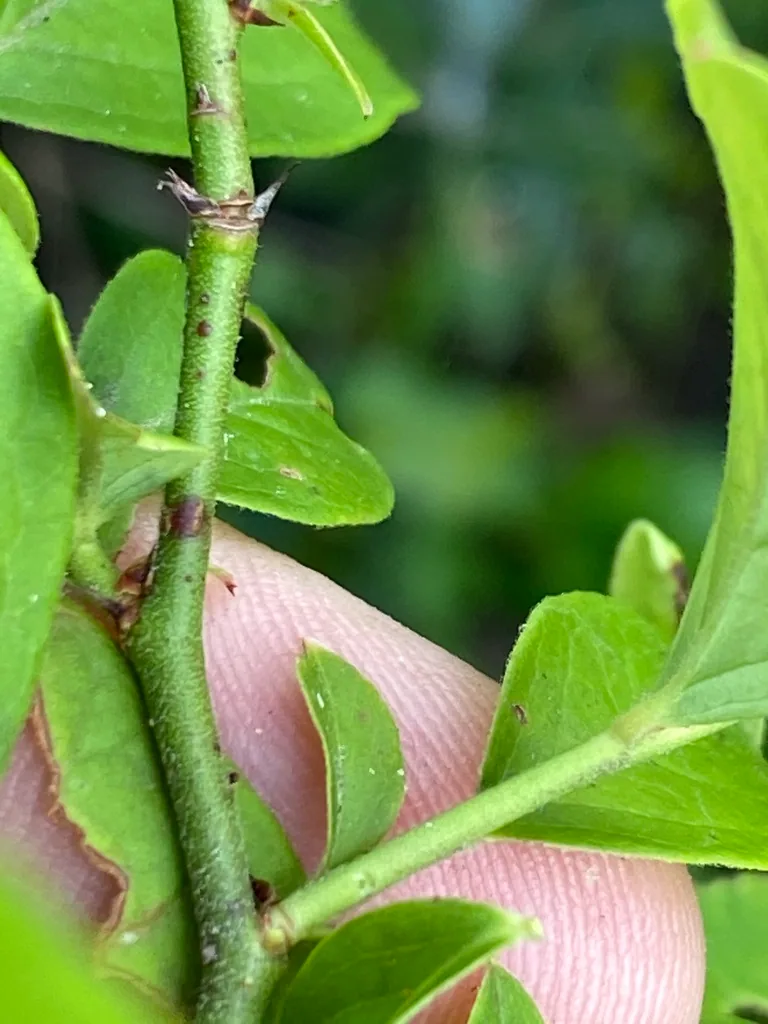
How to Grow and Care for Highbush Blueberry
Vaccinium formosum
Written by Emilio Marruso · last checked
At a glance
This blueberry is a perennial shrub that gives you fruit from June to August, delicious fresh or cooked. It grows happily in full sun or partial shade, as long as the soil stays moist and acidic, with a pH no higher than 6.0. Given room, it can reach 4 to 13 feet tall, a generous plant for any garden.
- Sun
Full sun to partial shade
What the sources say (2)
Light: Full sun to partial shade
Light: Full sun (6 or more hours of direct sunlight a day) Partial Shade (Direct sunlight only part of the day, 2-6 hours)
— Vaccinium formosum (Highbush Blueberry, Southern Blueberry, Southern Highbush Blueberry, Swamp Highbush Blueberry) | North Carolina Extension Gardener Plant Toolbox [1] Best fruiting occurs when situated in full sun.
— Vaccinium formosum (Highbush Blueberry, Southern Blueberry, Southern Highbush Blueberry, Swamp Highbush Blueberry) | North Carolina Extension Gardener Plant Toolbox [1] - Water
Keep the soil moist; it can handle soil that is wet now and then
What the sources say (1)
Watering: Moist to occasionally wet soil
Soil Drainage: Moist Occasionally Wet Available Space To
— Vaccinium formosum (Highbush Blueberry, Southern Blueberry, Southern Highbush Blueberry, Swamp Highbush Blueberry) | North Carolina Extension Gardener Plant Toolbox [1] - Cold
Survives winters down to −30 °F (−34.4 °C)
Very hardy · USDA 4a · RHS H7 · Z4
What the sources say (2)
Hardiness, coldest zone: 4a [winter low −34.4 to −31.7 °C (−30 to −25 °F)]
USDA Plant Hardiness Zone: 4a, 4b, 5a, 5b, 6a, 6b, 7a, 7b, 8a, 8b, 9b
— Vaccinium formosum (Highbush Blueberry, Southern Blueberry, Southern Highbush Blueberry, Swamp Highbush Blueberry) | North Carolina Extension Gardener Plant Toolbox [1] Hardiness, warmest zone: 9b [winter low −3.9 to −1.1 °C (25 to 30 °F)]
USDA Plant Hardiness Zone: 4a, 4b, 5a, 5b, 6a, 6b, 7a, 7b, 8a, 8b, 9b
— Vaccinium formosum (Highbush Blueberry, Southern Blueberry, Southern Highbush Blueberry, Swamp Highbush Blueberry) | North Carolina Extension Gardener Plant Toolbox [1] - Soil
Acidic soil, pH no higher than 6.0
What the sources say (1)
Soil pH, maximum: 6.0
Soil pH: Acid (<6.0) Soil Drainage: Moist Occasionally
— Vaccinium formosum (Highbush Blueberry, Southern Blueberry, Southern Highbush Blueberry, Swamp Highbush Blueberry) | North Carolina Extension Gardener Plant Toolbox [1] - Planting
Plant outdoors after its first winter; until then keep the young plant in light shade
What the sources say (1)
Planting: Outdoors after the first winter, once the seedling has been kept in a lightly shaded location
At this point, swamp highbush blueberry prefers a lightly shaded location and should be kept in this environment at least through its first winter. After that time, it can be planted outside in a location with protection from strong winds.
— Vaccinium formosum (Highbush Blueberry, Southern Blueberry, Southern Highbush Blueberry, Swamp Highbush Blueberry) | North Carolina Extension Gardener Plant Toolbox [1] - Harvest
Pick the fruit from June to August; eat it fresh or cooked
What the sources say (1)
Harvest: June to August
Blueberries with glaucus bloom. Displays from June to August and best fruit set occurs in the fulls sun.
— Vaccinium formosum (Highbush Blueberry, Southern Blueberry, Southern Highbush Blueberry, Swamp Highbush Blueberry) | North Carolina Extension Gardener Plant Toolbox [1] - Size
4 to 13 ft tall and 3 to 10 ft wide
What the sources say (2)
Mature height: 121.92-396.24 cm (4-13 ft)
Dimensions: Height: 4 ft. 0 in. - 13 ft. 0 in. Width: 3 ft. 0 in. - 10 ft. 0 in.
— Vaccinium formosum (Highbush Blueberry, Southern Blueberry, Southern Highbush Blueberry, Swamp Highbush Blueberry) | North Carolina Extension Gardener Plant Toolbox [1] Mature width: 91.44-304.8 cm (3-10 ft)
Dimensions: Height: 4 ft. 0 in. - 13 ft. 0 in. Width: 3 ft. 0 in. - 10 ft. 0 in.
— Vaccinium formosum (Highbush Blueberry, Southern Blueberry, Southern Highbush Blueberry, Swamp Highbush Blueberry) | North Carolina Extension Gardener Plant Toolbox [1] - Propagation
Grow new plants by division, layering, seed or stem cuttings
What the sources say (2)
Propagation: Division, layering, seed, stem cutting
Recommended Propagation Strategy: Division Layering Seed Stem Cutting
— Vaccinium formosum (Highbush Blueberry, Southern Blueberry, Southern Highbush Blueberry, Swamp Highbush Blueberry) | North Carolina Extension Gardener Plant Toolbox [1] Propagating from seed is best done in a protected setting, such as a greenhouse.
— Vaccinium formosum (Highbush Blueberry, Southern Blueberry, Southern Highbush Blueberry, Swamp Highbush Blueberry) | North Carolina Extension Gardener Plant Toolbox [1]
Overview
Swamp highbush blueberry is a deciduous shrub native to the southeastern United States, growing in bogs, swamps and other moist ground. [1] It prefers very acidic soils and gives its best fruiting in full sun; the fruits are edible fresh or cooked. [1]
This record is incomplete: the sources we read do not cover every field yet.
Not yet covered by our sources: Spacing
Highbush Blueberry care
How to water Highbush Blueberry
Moist to occasionally wet soil
What the sources say (1)
Soil Drainage:
Moist
Occasionally Wet
Available Space ToHow much light Highbush Blueberry needs
Full sun to partial shade
What the sources say (2)
Light:
Full sun (6 or more hours of direct sunlight a day)
Partial Shade (Direct sunlight only part of the day, 2-6 hours)Best fruiting occurs when situated in full sun.How much cold Highbush Blueberry can take
Hardiness, coldest zone
4a [winter low −34.4 to −31.7 °C (−30 to −25 °F)]
What the sources say (1)
USDA Plant Hardiness Zone:
4a, 4b, 5a, 5b, 6a, 6b, 7a, 7b, 8a, 8b, 9bHardiness, warmest zone
9b [winter low −3.9 to −1.1 °C (25 to 30 °F)]
What the sources say (1)
USDA Plant Hardiness Zone:
4a, 4b, 5a, 5b, 6a, 6b, 7a, 7b, 8a, 8b, 9bBest soil for Highbush Blueberry
6.0
What the sources say (1)
Soil pH:
Acid (<6.0)
Soil Drainage:
Moist
OccasionallyWhere to grow Highbush Blueberry
Not stated in the sources we read.
How to propagate Highbush Blueberry
Division, layering, seed, stem cutting
What the sources say (2)
Recommended Propagation Strategy:
Division
Layering
Seed
Stem CuttingPropagating from seed is best done in a protected setting, such as a greenhouse.How to grow Highbush Blueberry
The plant
Life cycle
perennial
What the sources say (1)
Genus:
Vaccinium
Species:
formosum
Family:
Ericaceae
Life Cycle:
Perennial
WoodyFamily
Ericaceae
What the sources say (1)
Swamp highbush blueberry is a deciduous shrub in the Ericaceae (heath) family.Mature height
121.92-396.24 cm (4-13 ft)
What the sources say (1)
Dimensions:
Height: 4 ft. 0 in. - 13 ft. 0 in.
Width: 3 ft. 0 in. - 10 ft. 0 in.Mature width
91.44-304.8 cm (3-10 ft)
What the sources say (1)
Dimensions:
Height: 4 ft. 0 in. - 13 ft. 0 in.
Width: 3 ft. 0 in. - 10 ft. 0 in.Remedies
Each remedy shows what official sources say about it; traditional remedies without an official source are marked as such. Harmful ones are listed so you know to avoid them.
Treating the plant
birds eating fruit
bird netting on a frame Works
Make sure there are no gaps; otherwise, birds will find their way inside and become trapped.
— hgic.clemson.edu [4] How: Erect a frame over the planting to support the netting, drape it so it reaches the ground on all sides and secure it with sod staples; pick from underneath the net.
Using bird netting with a frame will preserve your harvest and allow you to enjoy more berries than your feathered friends.
— hgic.clemson.edu [4] What the evidence says Bird netting is highly effective at excluding birds, but it has difficulties.
— hgic.clemson.edu [4]
aphids
strong water spray Official source, not independently tested
How: Wash aphids from the plants with a strong stream of water.
Wash aphids from plants with a strong stream of water.
— hortsense.cahnrs.wsu.edu [5] insecticidal soap Official source, not independently tested
How: Apply when aphids appear, directing the application to the undersides of leaves; soaps may require several applications.
Apply when aphids appear, repeat if necessary. - Direct applications to undersides of leaves. - Soaps may require several applications.
— hortsense.cahnrs.wsu.edu [5]
Calendar
Outdoors after the first winter, once the seedling has been kept in a lightly shaded location
What the sources say (1)
At this point, swamp highbush blueberry prefers a lightly shaded location and should be kept in this environment at least through its first winter. After that time, it can be planted outside in a location with protection from strong winds.June to August
What the sources say (1)
Blueberries with glaucus bloom. Displays from June to August and best fruit set occurs in the fulls sun.Months as given by the sources, which are mostly from the United States (northern hemisphere). In the southern hemisphere they shift by about six months.
Edibility
Reported by the source, quoted verbatim. Do not eat a plant on the basis of this page alone: identification mistakes can be dangerous.
Edibility: Fruits are edible fresh or cooked. Dimensions:
[1]
Similar plants
- Bilberry Vaccinium myrtillus
- Black Highbush Blueberry Vaccinium fuscatum
- Cranberry Vaccinium macrocarpon
- Creeping Blueberry Vaccinium crassifolium
- Deerberry Vaccinium stamineum
- Elliott's Blueberry Vaccinium elliottii
- Highbush blueberry Vaccinium corymbosum
- Japanese Blueberries Vaccinium oldhamii
Sources
Every value above is quoted from these documents. Links lead to the original publisher.
- Vaccinium formosum (Highbush Blueberry, Southern Blueberry, Southern Highbush Blueberry, Swamp Highbush Blueberry) | North Carolina Extension Gardener Plant Toolbox · plants.ces.ncsu.edu, consulted
- Vaccinium (Bilberries, Blueberries, Blueberry, Cranberries, Huckleberries) | North Carolina Extension Gardener Plant Toolbox · plants.ces.ncsu.edu, consulted
- Cranberries - Vaccinium | North Carolina Extension Gardener Plant Toolbox · plants.ces.ncsu.edu, consulted
- hgic.clemson.edu · hgic.clemson.edu
- hortsense.cahnrs.wsu.edu · hortsense.cahnrs.wsu.edu
Written by Emilio Marruso · last checked