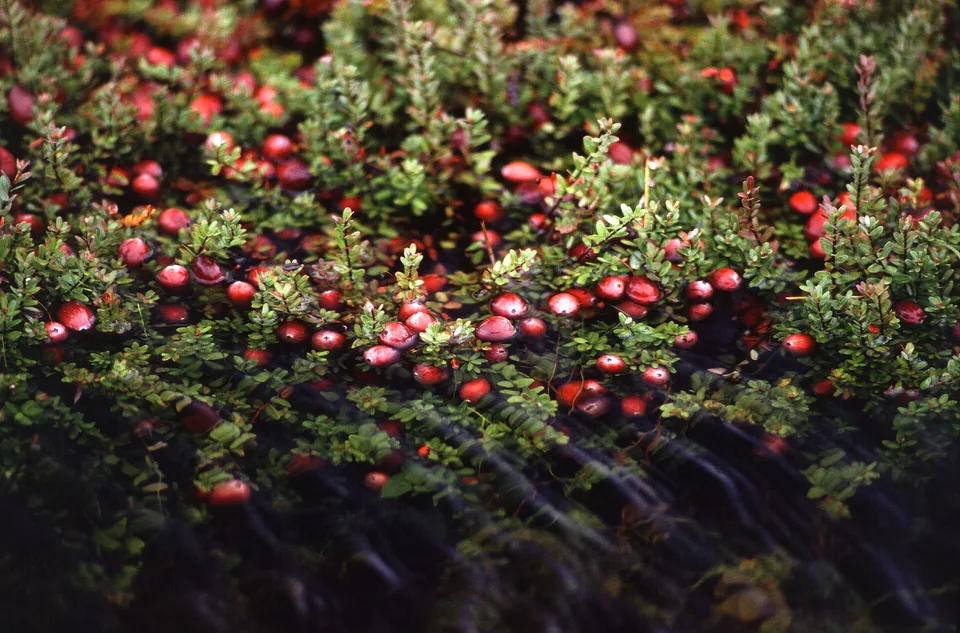


How to Grow and Care for Cranberry
Vaccinium macrocarpon
Written by Emilio Marruso · last checked
At a glance
Cranberry is a low perennial that fills your garden with edible berries from August to November, and wildlife enjoys them too. Give it full sun and very acidic soil, pH 4.0–5.2, kept moist but well drained. It even handles occasional flooding, though it dislikes heat and drought, so a cool, damp spot makes it happiest.
- Sun
Full sun
What the sources say (1)
Light: Full sun
Requirements are full sun and moist but well-drained soils and they can tolerate periodic flooding. Soil pH needs to be 4.0-5.2.
— Vaccinium macrocarpon (American Cranberry, Bearberry, Cranberry, Large Cranberry) | North Carolina Extension Gardener Plant Toolbox [1] - Water
Keep the soil moist but well drained; it handles brief flooding but not drought
What the sources say (2)
Watering: Moist but well-drained soil; tolerates periodic flooding; intolerant of heat and drought
Requirements are full sun and moist but well-drained soils and they can tolerate periodic flooding. Soil pH needs to be 4.0-5.2.
— Vaccinium macrocarpon (American Cranberry, Bearberry, Cranberry, Large Cranberry) | North Carolina Extension Gardener Plant Toolbox [1] This plant is intolerant of heat and drought.
— Vaccinium macrocarpon (American Cranberry, Bearberry, Cranberry, Large Cranberry) | North Carolina Extension Gardener Plant Toolbox [1] - Cold
Survives winters down to −40 °F (−40 °C)
Very hardy · USDA 3a · RHS H7 · Z3
What the sources say (2)
Hardiness, coldest zone: 3a [winter low −40 to −37.2 °C (−40 to −35 °F)]
USDA Plant Hardiness Zone: 3a, 3b, 4a, 4b, 5a, 5b, 6a, 6b, 7a, 7b
— Vaccinium macrocarpon (American Cranberry, Bearberry, Cranberry, Large Cranberry) | North Carolina Extension Gardener Plant Toolbox [1] Hardiness, warmest zone: 7b [winter low −15 to −12.2 °C (5 to 10 °F)]
USDA Plant Hardiness Zone: 3a, 3b, 4a, 4b, 5a, 5b, 6a, 6b, 7a, 7b
— Vaccinium macrocarpon (American Cranberry, Bearberry, Cranberry, Large Cranberry) | North Carolina Extension Gardener Plant Toolbox [1] - Soil
Very acidic soil, pH 4.0–5.2; if the pH is higher, the leaves turn yellow
What the sources say (2)
Soil pH, minimum: 4.0
Requirements are full sun and moist but well-drained soils and they can tolerate periodic flooding. Soil pH needs to be 4.0-5.2.
— Vaccinium macrocarpon (American Cranberry, Bearberry, Cranberry, Large Cranberry) | North Carolina Extension Gardener Plant Toolbox [1] Soil pH, maximum: 5.2
Requirements are full sun and moist but well-drained soils and they can tolerate periodic flooding. Soil pH needs to be 4.0-5.2.
— Vaccinium macrocarpon (American Cranberry, Bearberry, Cranberry, Large Cranberry) | North Carolina Extension Gardener Plant Toolbox [1] - Harvest
Edible berries ripen from August to November
What the sources say (1)
Harvest: Berries mature August-November
The plants are grown commercially as a food crop and the berries mature in August-November.
— Vaccinium macrocarpon (American Cranberry, Bearberry, Cranberry, Large Cranberry) | North Carolina Extension Gardener Plant Toolbox [1] - Watch out
It does not like heat or dry spells
What the sources say (2)
Watering: Moist but well-drained soil; tolerates periodic flooding; intolerant of heat and drought
Requirements are full sun and moist but well-drained soils and they can tolerate periodic flooding. Soil pH needs to be 4.0-5.2.
— Vaccinium macrocarpon (American Cranberry, Bearberry, Cranberry, Large Cranberry) | North Carolina Extension Gardener Plant Toolbox [1] This plant is intolerant of heat and drought.
— Vaccinium macrocarpon (American Cranberry, Bearberry, Cranberry, Large Cranberry) | North Carolina Extension Gardener Plant Toolbox [1] - Size
1–3 ft tall and 18–28 in wide
What the sources say (2)
Mature height: 30.5-91.4 cm (1-3 ft)
Height: 1 ft. 0 in. - 3 ft. 0 in. Width: 1 ft. 6 in. - 2 ft. 4 in.
— Vaccinium macrocarpon (American Cranberry, Bearberry, Cranberry, Large Cranberry) | North Carolina Extension Gardener Plant Toolbox [1] Mature width: 45.7-71.1 cm (1 ft 6 in - 2 ft 4 in)
Height: 1 ft. 0 in. - 3 ft. 0 in. Width: 1 ft. 6 in. - 2 ft. 4 in.
— Vaccinium macrocarpon (American Cranberry, Bearberry, Cranberry, Large Cranberry) | North Carolina Extension Gardener Plant Toolbox [1] - Propagation
Grow new plants from seed or stem cuttings
What the sources say (1)
Propagation: Seed, stem cutting
Life Cycle: Perennial Recommended Propagation Strategy: Seed Stem Cutting
— Vaccinium macrocarpon (American Cranberry, Bearberry, Cranberry, Large Cranberry) | North Carolina Extension Gardener Plant Toolbox [1]
Overview
American cranberry is a low-growing evergreen vine or ground cover shrub usually grown in wet bog conditions and grown commercially as a food crop. [1] It needs full sun, moist but well-drained acidic soil, and is intolerant of heat and drought. [1]
This record is incomplete: the sources we read do not cover every field yet.
Not yet covered by our sources: Planting, Spacing
Cranberry care
How to water Cranberry
Moist but well-drained soil; tolerates periodic flooding; intolerant of heat and drought
What the sources say (2)
Requirements are full sun and moist but well-drained soils and they can tolerate periodic flooding. Soil pH needs to be 4.0-5.2.This plant is intolerant of heat and drought.How much light Cranberry needs
Full sun
What the sources say (1)
Requirements are full sun and moist but well-drained soils and they can tolerate periodic flooding. Soil pH needs to be 4.0-5.2.How much cold Cranberry can take
Hardiness, coldest zone
3a [winter low −40 to −37.2 °C (−40 to −35 °F)]
What the sources say (1)
USDA Plant Hardiness Zone:
3a, 3b, 4a, 4b, 5a, 5b, 6a, 6b, 7a, 7bHardiness, warmest zone
7b [winter low −15 to −12.2 °C (5 to 10 °F)]
What the sources say (1)
USDA Plant Hardiness Zone:
3a, 3b, 4a, 4b, 5a, 5b, 6a, 6b, 7a, 7bBest soil for Cranberry
Soil pH, minimum
4.0
What the sources say (1)
Requirements are full sun and moist but well-drained soils and they can tolerate periodic flooding. Soil pH needs to be 4.0-5.2.Soil pH, maximum
5.2
What the sources say (1)
Requirements are full sun and moist but well-drained soils and they can tolerate periodic flooding. Soil pH needs to be 4.0-5.2.Where to grow Cranberry
Not stated in the sources we read.
How to propagate Cranberry
Seed, stem cutting
What the sources say (1)
Life Cycle:
Perennial
Recommended Propagation Strategy:
Seed
Stem CuttingHow to grow Cranberry
The plant
Life cycle
perennial
What the sources say (1)
Life Cycle:
Perennial
Recommended Propagation Strategy:
SeedFamily
Ericaceae
What the sources say (1)
Genus:
Vaccinium
Species:
macrocarpon
Family:
EricaceaeMature height
30.5-91.4 cm (1-3 ft)
What the sources say (1)
Height: 1 ft. 0 in. - 3 ft. 0 in.
Width: 1 ft. 6 in. - 2 ft. 4 in.Mature width
45.7-71.1 cm (1 ft 6 in - 2 ft 4 in)
What the sources say (1)
Height: 1 ft. 0 in. - 3 ft. 0 in.
Width: 1 ft. 6 in. - 2 ft. 4 in.Cranberry pests and problems
Chlorosis
Symptom: Cranberries are subject to chlorosis problems if soil pH is too high.
What to do: Keep soil pH within 4.0-5.2.
What the sources say (2)
Cranberries are subject to chlorosis problems if soil pH is too high.
— Vaccinium macrocarpon (American Cranberry, Bearberry, Cranberry, Large Cranberry) | North Carolina Extension Gardener Plant Toolbox [1] Requirements are full sun and moist but well-drained soils and they can tolerate periodic flooding. Soil pH needs to be 4.0-5.2.
— Vaccinium macrocarpon (American Cranberry, Bearberry, Cranberry, Large Cranberry) | North Carolina Extension Gardener Plant Toolbox [1]
Remedies
Each remedy shows what official sources say about it; traditional remedies without an official source are marked as such. Harmful ones are listed so you know to avoid them.
Treating the plant
birds eating fruit
plastic netting Works
How: cover the shrubs either individually or in groups with plastic netting
The most serious pests are birds that devour fruits. To protect the shrubs, cover them either individually or in groups with plastic netting.
— plants.ces.ncsu.edu [3] What the evidence says The most serious pests are birds that devour fruits. To protect the shrubs, cover them either individually or in groups with plastic netting.
— plants.ces.ncsu.edu [3]
frost damage
plastic sheet or blanket cover Official source, not independently tested
How: in the home garden, cover the plants with plastic sheets or blankets in the event of a frost
In the home garden, cranberry plants can be protected by covering with plastic sheets or blankets in the event of a frost.
— plantvillage.psu.edu [4]
Calendar
Not stated in the sources we read.
Berries mature August-November
What the sources say (1)
The plants are grown commercially as a food crop and the berries mature in August-November.Months as given by the sources, which are mostly from the United States (northern hemisphere). In the southern hemisphere they shift by about six months.
Edibility
Reported by the source, quoted verbatim. Do not eat a plant on the basis of this page alone: identification mistakes can be dangerous.
Edible fruit Wildlife Food Source Edibility: Edible berries
[1]
Indicative values
Values from a secondary source, not checked word for word like the rest of this page. Use them as a starting point.
- Hours of sun
- 8-10 hoursIndicative value, adapt it to your climate · Secondary source
- Soil
- Sandy LoamyIndicative value, adapt it to your climate · Secondary source
- Care level
- MediumIndicative value, adapt it to your climate · Secondary source
- Growth rate
- ModerateIndicative value, adapt it to your climate · Secondary source
- Pruning
- December, January, February, April, MayIndicative value, adapt it to your climate · Secondary source
- Pests
- Abiotic disorder, Beetles, weevils, Blight, needle cast, Fungal leaf spotIndicative value, adapt it to your climate · Secondary source
Similar plants
- Bilberry Vaccinium myrtillus
- Black Highbush Blueberry Vaccinium fuscatum
- Creeping Blueberry Vaccinium crassifolium
- Deerberry Vaccinium stamineum
- Elliott's Blueberry Vaccinium elliottii
- Highbush blueberry Vaccinium corymbosum
- Highbush Blueberry Vaccinium formosum
- Japanese Blueberries Vaccinium oldhamii
Sources
Every value above is quoted from these documents. Links lead to the original publisher.
- Vaccinium macrocarpon (American Cranberry, Bearberry, Cranberry, Large Cranberry) | North Carolina Extension Gardener Plant Toolbox · plants.ces.ncsu.edu, consulted
- Vaccinium (Bilberries, Blueberries, Blueberry, Cranberries, Huckleberries) | North Carolina Extension Gardener Plant Toolbox · plants.ces.ncsu.edu, consulted
- plants.ces.ncsu.edu · plants.ces.ncsu.edu
- plantvillage.psu.edu · plantvillage.psu.edu
Written by Emilio Marruso · last checked