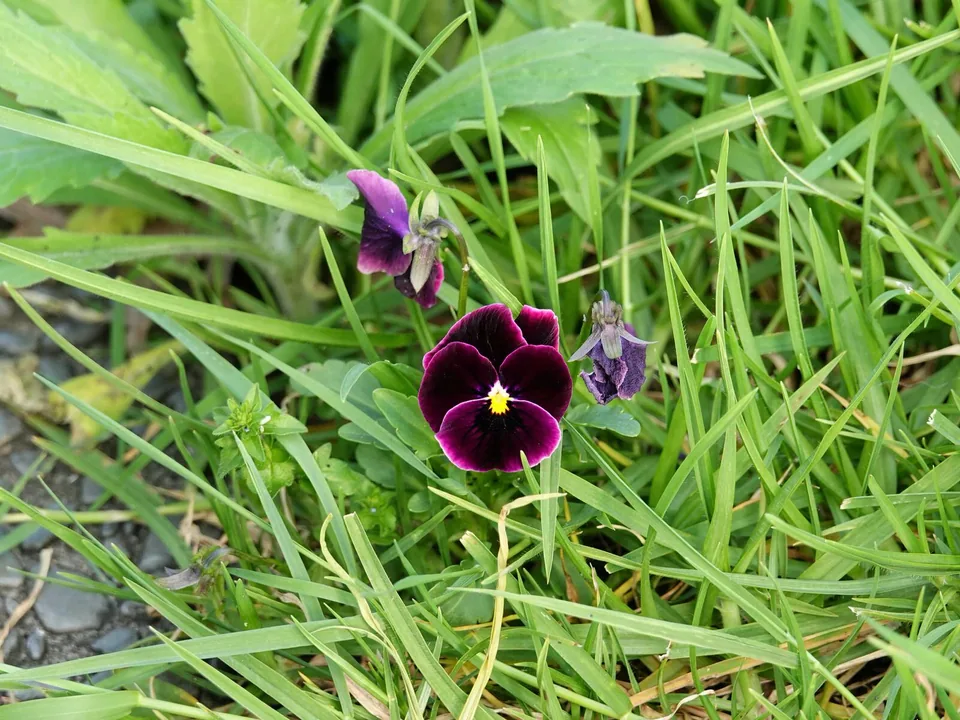
Cómo cultivar y cuidar Hybrid violet
Viola wittrockiana
Escrito por Emilio Marruso · última revisión
De un vistazo
Los pensamientos son pequeñas anuales alegres que florecen cuando el jardín descansa: plántalos en otoño y tendrás flores en invierno y a principios de primavera. Les va bien a pleno sol o en semisombra, se quedan en 15–23 cm de alto y crecen felices también en maceta. Y lo mejor: sus flores son comestibles, para disfrutarlas en el jardín y en el plato.
- Sol
Pleno sol o semisombra
Qué dicen las fuentes (1)
Luz: Pleno sol a semisombra
Pansy prefers full sun to part shade in humus-rich soils that are consistently moist and well-drained.
— Pansy - Viola x wittrockiana | North Carolina Extension Gardener Plant Toolbox [1] - Frío
Aguanta inviernos de hasta −23,3 °C (−10 °F)
Muy rústica · USDA 6a · RHS H7 · Z6
Qué dicen las fuentes (2)
Rusticidad, zona más fría: 6a [mínima invernal de −23,3 a −20,6 °C (de −10 a −5 °F)]
USDA Plant Hardiness Zone: 6a, 6b, 7a, 7b, 8a, 8b, 9a, 9b, 10a, 10b
— Pansy - Viola x wittrockiana | North Carolina Extension Gardener Plant Toolbox [1] Rusticidad, zona más cálida: 10b [mínima invernal de 1,7 a 4,4 °C (de 35 a 40 °F)]
USDA Plant Hardiness Zone: 6a, 6b, 7a, 7b, 8a, 8b, 9a, 9b, 10a, 10b
— Pansy - Viola x wittrockiana | North Carolina Extension Gardener Plant Toolbox [1] - Suelo
Suelo ácido, pH 5,4–5,8
Qué dicen las fuentes (2)
pH del suelo, mínimo: 5.4
Pansies prefer a pH in the range of 5.4 to 5.8.
— Success with Pansies in the Winter Landscape: A Guide for Landscape Professionals | CAES Field Report [2] pH del suelo, máximo: 5.8
Pansies prefer a pH in the range of 5.4 to 5.8.
— Success with Pansies in the Winter Landscape: A Guide for Landscape Professionals | CAES Field Report [2] - Distancia
15–25 cm entre plantas
Qué dicen las fuentes (1)
Distancia de plantación: 15.2-25.4 cm (6-10 pulgadas)
Pansy plants are usually planted at spacings of 6 inches, 8inches or 10 inches between plants (Table 3).
— Success with Pansies in the Winter Landscape: A Guide for Landscape Professionals | CAES Field Report [2] - Plantación
Planta en otoño para tener flores en invierno y a principios de primavera
Qué dicen las fuentes (1)
Plantación: Otoño, para floraciones de invierno y principios de primavera
Plant in the fall for winter and early spring blooms.
— Pansy - Viola x wittrockiana | North Carolina Extension Gardener Plant Toolbox [1] - Abonado
Abona al plantar y luego en líquido cada 14 días hasta mediados de marzo; sin exceso de nitrógeno
Qué dicen las fuentes (11)
Cuándo: Al trasplantar; luego un programa de alimentación líquida una vez que la temperatura del suelo baje de 15.6 °C [60 °F], hasta mediados de marzo; solo nitrógeno amoniacal desde mediados de marzo a medida que el suelo se calienta
Generally, a thorough drenching of the soil at transplant with 150 parts per million of a soluble greenhouse fertilizer, such as 15-2-20, will get the plants off to a good start.
— Success with Pansies in the Winter Landscape: A Guide for Landscape Professionals | CAES Field Report [2] When the weather cools and soil temperatures drop below 60° F, begin a liquid feed program using a fertilizer containing at least 50 percent of its nitrogen in nitrate form.
— Success with Pansies in the Winter Landscape: A Guide for Landscape Professionals | CAES Field Report [2] Soil temperatures usually are on the rise by March 15, so fertilizers containing ammoniacal nitrogen can be used at that time.
— Success with Pansies in the Winter Landscape: A Guide for Landscape Professionals | CAES Field Report [2] Frecuencia: Cada 14 días hasta mediados de marzo, ajustado al vigor de la plantación
A standard 15-2-20, high-nitrate pansy formula fertilizer applied at 14-day intervals through March 15 provides excellent results.
— Success with Pansies in the Winter Landscape: A Guide for Landscape Professionals | CAES Field Report [2] Fertilization frequency depends on the vigor and performance of the planting.
— Success with Pansies in the Winter Landscape: A Guide for Landscape Professionals | CAES Field Report [2] Evitar: Alto nitrógeno amoniacal de liberación lenta en los meses fríos; alto nitrógeno en septiembre y a fines de abril–mayo; encalado sin análisis de suelo; más de dos drench de boro por temporada; materia orgánica superior al 25% por volumen
Avoid using fertilizers containing high amounts of slow-release ammoniacal nitrogen. These fertilizers are commonly used on summer annuals but are not recommended for pansies.
— Success with Pansies in the Winter Landscape: A Guide for Landscape Professionals | CAES Field Report [2] Avoid high rates of nitrogen during September and later in April and May, because the plants grow quickly and can stretch in warm weather under high nutrition.
— Success with Pansies in the Winter Landscape: A Guide for Landscape Professionals | CAES Field Report [2] A soil pH above 5.8 can result in boron and iron deficiencies; therefore, avoid liming pansy beds out of habit, unless the soil test indicates a need for lime.
— Success with Pansies in the Winter Landscape: A Guide for Landscape Professionals | CAES Field Report [2] Do not apply more than two boron drenches during the growing season because excess boron can cause other problems.
— Success with Pansies in the Winter Landscape: A Guide for Landscape Professionals | CAES Field Report [2] Avoid high amounts of organic matter (more than 25 percent by volume); the humic acids and organic salts it releases can cause plant problems.
— Success with Pansies in the Winter Landscape: A Guide for Landscape Professionals | CAES Field Report [2] Signos de exceso: Tallos estirados y suculentos que debilitan la planta y la hacen más propensa a daños por invierno
High rates of ammoniacal nitrogen can cause pansy stems to stretch and become succulent during warm fall weather, which weakens plants and makes them more susceptible to winter injury.
— Success with Pansies in the Winter Landscape: A Guide for Landscape Professionals | CAES Field Report [2] - Cosecha
Las flores son comestibles, pero las plantas de vivero pueden estar tratadas con pesticidas
- Plagas
Babosas, caracoles y araña roja; manchas en las hojas y oídio
Qué dicen las fuentes (2)
Plagas: babosas, caracoles, arañas rojas del invernadero
Slugs, snails and glasshouse red spider mites are common pests.
— Pansy - Viola x wittrockiana | North Carolina Extension Gardener Plant Toolbox [1] Enfermedades: enfermedad fúngica de las hojas, mancha foliar del pensamiento, oídio
Fungal leaf disease, pansy leaf spot and powdery mildew may affect this plant.
— Pansy - Viola x wittrockiana | North Carolina Extension Gardener Plant Toolbox [1] - Tamaño
15–23 cm de alto y 23–30 cm de ancho
Qué dicen las fuentes (2)
Altura adulta: 15.24-22.86 cm (6-9 pulgadas)
It grows 6 to 9 inches in height and 9 to 12 inches in width.
— Pansy - Viola x wittrockiana | North Carolina Extension Gardener Plant Toolbox [1] Anchura adulta: 22.86-30.48 cm (9-12 pulgadas)
It grows 6 to 9 inches in height and 9 to 12 inches in width.
— Pansy - Viola x wittrockiana | North Carolina Extension Gardener Plant Toolbox [1] - Maceta
Crece también en maceta
Qué dicen las fuentes (1)
En maceta: Sí
This plant can bloom for up to 4 to 6 months, making it an excellent plant for bedding, containers and hanging baskets.
— Pansy - Viola x wittrockiana | North Carolina Extension Gardener Plant Toolbox [1]
Resumen
El pensamiento es una planta anual de semisiempreverde para clima fresco que prefiere pleno sol a semisombra en suelo constantemente húmedo y bien drenado. [1] Es apto para macizos, contenedores y cestas colgantes, y las flores son comestibles. [1] Las plantas generalmente se espacian de 6 a 10 pulgadas [15–25 cm], y un espaciado más amplio mejora la circulación del aire. [2]
Citado en inglés, como en la fuente.
Esta ficha está incompleta: las fuentes consultadas aún no cubren todos los campos.
Aún no cubierto por nuestras fuentes: Poda, Propagación
Cuidados
Las medidas entre corchetes son nuestra conversión al otro sistema de unidades; el texto citado no cambia.
Riego
Las fuentes dan valores distintos según la región, la zona o las condiciones de cultivo.
Lo que dice cada fuente
Según NC State Extension: Suelo constantemente húmedo y bien drenado
antes del clima frío (Extensión UGA, Georgia): Ligeramente seco
Qué dicen las fuentes (3)
Según NC State Extension: Pansy prefers full sun to part shade in humus-rich soils that are consistently moist and well-drained.antes del clima frío (Extensión UGA, Georgia): Carefully monitor irrigation and try to keep pansies slightly on the dry side to “harden” growth prior to cold weather.Pansy prefers full sun to part shade in humus-rich soils that are consistently moist and well-drained.Luz
Pleno sol a semisombra
Qué dicen las fuentes (1)
Pansy prefers full sun to part shade in humus-rich soils that are consistently moist and well-drained.Clima y frío
Rusticidad, zona más fría
6a [mínima invernal de −23,3 a −20,6 °C (de −10 a −5 °F)]
Qué dicen las fuentes (1)
USDA Plant Hardiness Zone:
6a, 6b, 7a, 7b, 8a, 8b, 9a, 9b, 10a, 10b Rusticidad, zona más cálida
10b [mínima invernal de 1,7 a 4,4 °C (de 35 a 40 °F)]
Qué dicen las fuentes (1)
USDA Plant Hardiness Zone:
6a, 6b, 7a, 7b, 8a, 8b, 9a, 9b, 10a, 10b Suelo
pH del suelo, mínimo
5.4
Qué dicen las fuentes (1)
Pansies prefer a pH in the range of 5.4 to 5.8.pH del suelo, máximo
5.8
Qué dicen las fuentes (1)
Pansies prefer a pH in the range of 5.4 to 5.8.Dónde cultivarla
En maceta
Sí
Qué dicen las fuentes (1)
This plant can bloom for up to 4 to 6 months, making it an excellent plant for bedding, containers and hanging baskets.Distancia de plantación
15.2-25.4 cm (6-10 pulgadas)
Qué dicen las fuentes (1)
Pansy plants are usually planted at spacings of 6 inches, 8inches or 10 inches between plants (Table 3).Propagación
No figura en las fuentes consultadas.
Cultivo
La planta
Ciclo de vida
anual
Qué dicen las fuentes (1)
Pansy is a semi-evergreen annual in the violet family (Violaceae) and native to Europe and Asia.Familia
Violaceae
Qué dicen las fuentes (1)
Pansy is a semi-evergreen annual in the violet family (Violaceae) and native to Europe and Asia.Altura adulta
15.24-22.86 cm (6-9 pulgadas)
Qué dicen las fuentes (1)
It grows 6 to 9 inches in height and 9 to 12 inches in width.Anchura adulta
22.86-30.48 cm (9-12 pulgadas)
Qué dicen las fuentes (1)
It grows 6 to 9 inches in height and 9 to 12 inches in width.Plagas y enfermedades
Plagas
babosas, caracoles, arañas rojas del invernadero
Qué dicen las fuentes (1)
Slugs, snails and glasshouse red spider mites are common pests.Enfermedades
enfermedad fúngica de las hojas, mancha foliar del pensamiento, oídio
Qué dicen las fuentes (1)
Fungal leaf disease, pansy leaf spot and powdery mildew may affect this plant.Abonado
Cuándo
Al trasplantar; luego un programa de alimentación líquida una vez que la temperatura del suelo baje de 15.6 °C [60 °F], hasta mediados de marzo; solo nitrógeno amoniacal desde mediados de marzo a medida que el suelo se calienta
Qué dicen las fuentes (3)
Generally, a thorough drenching of the soil at transplant with 150 parts per million of a soluble greenhouse fertilizer, such as 15-2-20, will get the plants off to a good start.When the weather cools and soil temperatures drop below 60° F, begin a liquid feed program using a fertilizer containing at least 50 percent of its nitrogen in nitrate form.Soil temperatures usually are on the rise by March 15, so fertilizers containing ammoniacal nitrogen can be used at that time.Frecuencia
Cada 14 días hasta mediados de marzo, ajustado al vigor de la plantación
Qué dicen las fuentes (2)
A standard 15-2-20, high-nitrate pansy formula fertilizer applied at 14-day intervals through March 15 provides excellent results.Fertilization frequency depends on the vigor and performance of the planting.Abonos naturales
Compost o estiércol animal compostado como enmienda del suelo, 25% por volumen: 7.62 cm [3 in] trabajados en los 30.5 cm [12 in] superiores del suelo
Qué dicen las fuentes (1)
Compost and composted animal manure are frequently used as amendments. A 25 percent by volume quantity of amendment is recommended for best results; this equals 3 inches of organic matter incorporated into the top 12 inches of soil.Abonos minerales
Soluble 15-2-20 a 150 ppm al trasplantar; luego un alimento líquido 15-2-20 de alto nitrato con al menos el 50% del nitrógeno como nitrato (nitrato de potasio, calcio o magnesio); desde mediados de marzo 20-20-20 a 200 ppm o un fertilizante de liberación lenta/granulado
Qué dicen las fuentes (4)
Generally, a thorough drenching of the soil at transplant with 150 parts per million of a soluble greenhouse fertilizer, such as 15-2-20, will get the plants off to a good start.A standard 15-2-20, high-nitrate pansy formula fertilizer applied at 14-day intervals through March 15 provides excellent results.Formulations with nitrogen derived from potassium nitrate (KNO 3 ), calcium nitrate [Ca(NO 3 ) 2 ] or magnesium nitrate [Mg(NO 3 ) 2 ] are recommended.The standard fertility program used on summer annuals — 200 ppm 20-20-20 or a slow release/granular fertilizer — should work well for pansies during the remainder of the growing season.Microelementos
Boro: drench de bórax a 3.74 g por 100 L [26,4 gal] cuando hay deficiencia; magnesio: drench de sales de Epsom a 240 g por 100 L [26,4 gal] si la relación Ca:Mg supera 5:2, no más de una vez cada cuatro semanas; hierro: drench de sulfato de hierro a 120–360 g por 100 L [26,4 gal], luego si es necesario un spray foliar de quelato de hierro al 10%
Qué dicen las fuentes (4)
In addition, a soil drench of borax at a rate of ½ ounce per 100 gallonsIf it is greater than 5:2, apply a soil drench of epsom salts (2 pounds per 100 gallons of water). Do not make applications more than once every four weeks.If the pH is too high, lower it with a soil drench of iron sulfate (1 to 3 pounds per 100 gallons). Not only will this treatment lower soil pH, it also will increase iron levels in the soil solution.If further treatment is needed, use a foliar spray of 10 percent iron chelateEvitar
Alto nitrógeno amoniacal de liberación lenta en los meses fríos; alto nitrógeno en septiembre y a fines de abril–mayo; encalado sin análisis de suelo; más de dos drench de boro por temporada; materia orgánica superior al 25% por volumen
Qué dicen las fuentes (5)
Avoid using fertilizers containing high amounts of slow-release ammoniacal nitrogen. These fertilizers are commonly used on summer annuals but are not recommended for pansies.Avoid high rates of nitrogen during September and later in April and May, because the plants grow quickly and can stretch in warm weather under high nutrition.A soil pH above 5.8 can result in boron and iron deficiencies; therefore, avoid liming pansy beds out of habit, unless the soil test indicates a need for lime.Do not apply more than two boron drenches during the growing season because excess boron can cause other problems.Avoid high amounts of organic matter (more than 25 percent by volume); the humic acids and organic salts it releases can cause plant problems.Signos de carencia
Boro: el brote principal deja de crecer, las hojas jóvenes son pequeñas, engrosadas y arrugadas; hierro: amarilleamiento entre las nervaduras de las hojas más jóvenes, luego quemadura marginal; magnesio: amarilleamiento entre las nervaduras de las hojas recién maduras, luego amarilleamiento general desde los márgenes; nitrógeno: plantas pálidas y con aspecto de hambrientas
Qué dicen las fuentes (4)
Boron deficiency symptoms are very specific: the main shoot stops growing and the young, developing leaves become small, thickened and puckered.Iron deficiency symptoms begin with interveinal chlorosis (yellowing) of primarily the youngest leaves, followed by marginal burning in severe cases.Magnesium deficiency symptoms begin with interveinal chlorosis of the newly matured (not the youngest, still expanding) leaves, followed by a general yellowing of the leaves beginning at the margins.As a result, nitrogen levels in the soil may be depleted, causing plants to appear anemic and hungry.Signos de exceso
Tallos estirados y suculentos que debilitan la planta y la hacen más propensa a daños por invierno
Qué dicen las fuentes (1)
High rates of ammoniacal nitrogen can cause pansy stems to stretch and become succulent during warm fall weather, which weakens plants and makes them more susceptible to winter injury.Problemas
Mancha foliar del pensamiento, mildiu polvoriento, babosas, caracoles, arañas rojas de invernadero
Qué dicen las fuentes (1)
Slugs, snails and glasshouse red spider mites are common pests.
— Pansy - Viola x wittrockiana | North Carolina Extension Gardener Plant Toolbox [1]
Remedios
Cada remedio indica qué dicen las fuentes oficiales; los remedios tradicionales sin fuente oficial aparecen marcados. Los perjudiciales están para que sepas evitarlos.
Cuidar la planta
babosas y caracoles
recolección manual por la noche Fuente oficial, sin prueba independiente
Cómo: Recoge a mano las babosas y los caracoles por la tarde con una linterna. Riega la zona antes de las inspecciones nocturnas para favorecer la actividad de babosas y caracoles.
Handpick slugs and snails during the evening using a flashlight.
— hgic.clemson.edu [3] trampa de cerveza Fuente oficial, sin prueba independiente
Cómo: Llena recipientes poco profundos con cerveza y colócalos en el suelo con los bordes a nivel de la superficie.
Slugs and snails are attracted to the yeasty odor and may drown in the liquid.
— hgic.clemson.edu [3] trampa de tabla Fuente oficial, sin prueba independiente
Cómo: Coloca una tabla aproximadamente una pulgada por encima de la superficie del suelo; las babosas y los caracoles se esconden debajo durante el día. Levanta la tabla con regularidad para retirarlos y deshacerte de ellos.
Slugs and snails will hide beneath the board during the day.
— hgic.clemson.edu [3] barrera de tierra de diatomeas Funciona en parte
Cómo: Espolvorea tierra de diatomeas alrededor de los pensamientos. Vuelve a aplicarla después de la lluvia o el riego.
Sprinkle diatomaceous earth around pansies to reduce slug and snail activity.
— hgic.clemson.edu [3] Qué dicen las pruebas Diatomaceous earth damages the soft bodies of these pests, leading to dehydration. Reapply after rainfall or irrigation.
— hgic.clemson.edu [3] Elimina el mantillo y la hojarasca. Fuente oficial, sin prueba independiente
Cómo: Retira el mantillo y la hojarasca cerca de las plantas para reducir las zonas húmedas donde se esconden.
Remove mulch and leaf litter near plants to reduce the moist hiding areas.
— hgic.clemson.edu [3]
ácaros araña
jabón insecticida Fuente oficial, sin prueba independiente
As with all pesticides, read and follow all label instructions and precautions.
— hgic.clemson.edu [3] Cómo: Comienza a aplicar jabón insecticida semanalmente según sea necesario.
When spider mite infestations occur, begin applications of insecticidal soap weekly as needed.
— hgic.clemson.edu [3]
pulgones
mariquitas y crisopas Fuente oficial, sin prueba independiente
Cómo: Permite que los depredadores naturales reduzcan las poblaciones de pulgones; las plantas nectaríferas de flores pequeñas, como el encaje de la Reina Ana, los atraen.
As much as possible, these predators should be allowed to reduce aphid populations.
— hgic.clemson.edu [3]
Calendario
Plantación
Otoño, para floraciones de invierno y principios de primavera
Qué dicen las fuentes (1)
Plant in the fall for winter and early spring blooms.Poda
No figura en las fuentes consultadas.
Meses tal como los dan las fuentes, en su mayoría de Estados Unidos (hemisferio norte). En el hemisferio sur se desplazan unos seis meses.
Comestibilidad
Según la fuente, citada textualmente. No comas una planta basándote solo en esta página: los errores de identificación pueden ser peligrosos.
Pansy flowers are edible, but be advised that plants purchased from nurseries or garden centers may have been treated with systemic pesticides.
[1]
Valores orientativos
Valores de una fuente secundaria, no comprobados palabra por palabra como el resto de esta página. Úselos como punto de partida.
- Horas de sol
- 5-6 horasValor orientativo, adáptalo a tu clima · Fuente secundaria
- Nivel de cuidado
- MedioValor orientativo, adáptalo a tu clima · Fuente secundaria
- Crecimiento
- BajoValor orientativo, adáptalo a tu clima · Fuente secundaria
- Poda
- Febrero, marzo, abrilValor orientativo, adáptalo a tu clima · Fuente secundaria
- Propagación
- Propagación por semilla, división, esqueje, propagación por acodoValor orientativo, adáptalo a tu clima · Fuente secundaria
Plantas similares
- Bird-Foot Violet Viola pedata
- Bog White Viola Viola lanceolata
- Canadian Violet Viola canadensis
- Common Blue Violet Viola sororia
- Pensamiento silvestre Viola arvensis
- Field Pansy Viola rafinesquei
- Hairy Yellow Violet Viola pubescens
- Kidneyleaf Violet Viola renifolia
Fuentes
Cada valor anterior se cita de estos documentos. Los enlaces llevan al editor original.
- Pansy - Viola x wittrockiana | North Carolina Extension Gardener Plant Toolbox · plants.ces.ncsu.edu, consultado
- Success with Pansies in the Winter Landscape: A Guide for Landscape Professionals | CAES Field Report · fieldreport.caes.uga.edu, consultado
- hgic.clemson.edu · hgic.clemson.edu
Escrito por Emilio Marruso · última revisión