
Cómo cultivar y cuidar Iczotl
Yucca filamentosa
Escrito por Emilio Marruso · última revisión
Tóxica para: Gatos, Perros, Caballos · Por qué
De un vistazo
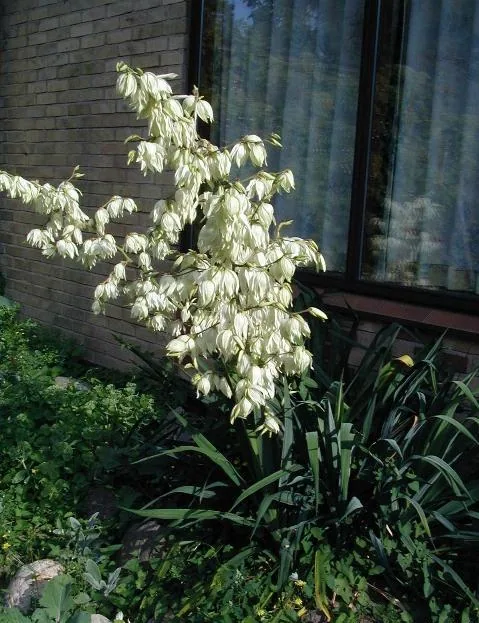
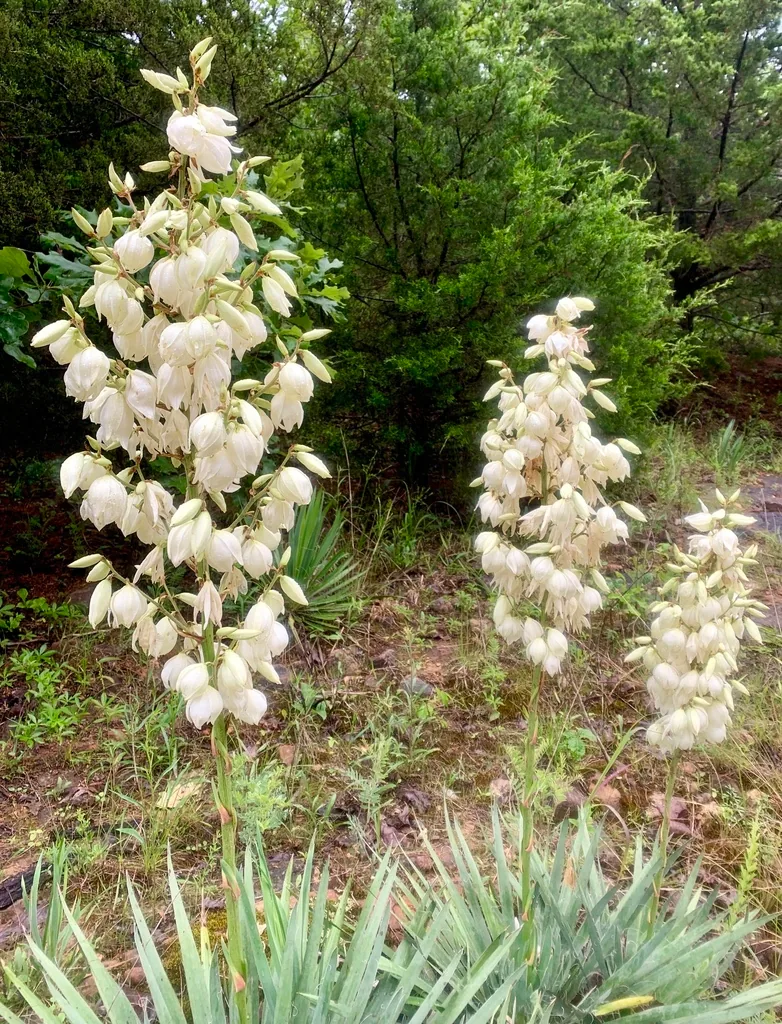
Esta yuca resistente pide muy poco: una vez asentada, apenas necesita riego y casi nunca abono. Crece a pleno sol o en semisombra y alcanza de 0,9 a 2,4 m de alto. Y de regalo, sus flores son comestibles, con un sabor parecido a la alcachofa amarga, deliciosas frescas en ensalada, en sopas, guisos o asadas.
- Sol
Sol pleno o semisombra
Qué dicen las fuentes (1)
Luz: Pleno sol a semisombra
Grow this yucca in full sun or partial shade. It is not particular about soil type but does require the soil to have a neutral pH and good drainage.
— Yucca filamentosa (Adam's Needle Yucca, Curlyleaf Yucca, Spoonleaf Yucca) | North Carolina Extension Gardener Plant Toolbox [1] - Riego
Poco o ningún riego una vez asentada; el exceso de humedad ennegrece los bordes de las hojas
Qué dicen las fuentes (2)
Riego: Se necesita poca o ninguna irrigación una vez establecida
As with yuccas in general, the Curyleaf Yucca needs little to no fertilizer, pruning, spraying or irrigation (once established) and can withstand strong winds.
— Yucca Filamentosa (Curlyleaf Yucca) - Brunswick County Center | N.C. Cooperative Extension [3] Notas sobre el riego: Necesita buen drenaje; demasiada humedad puede resultar en áreas negras en los márgenes de las hojas
It is susceptible to leaf spots or blight in areas with poor drainage or in periods of wet weather, and too much moisture may result in black areas on the leaf margins.
— Yucca Filamentosa (Curlyleaf Yucca) - Brunswick County Center | N.C. Cooperative Extension [3] - Frío
Aguanta inviernos de hasta −34,4 °C (−30 °F)
Muy rústica · USDA 4a · RHS H7 · Z4
Qué dicen las fuentes (2)
Rusticidad, zona más fría: 4a [mínima invernal de −34,4 a −31,7 °C (de −30 a −25 °F)]
4a, 4b, 5a, 5b, 6a, 6b, 7a, 7b, 8a, 8b, 9a, 9b, 10a, 10b
— Yucca filamentosa (Adam's Needle Yucca, Curlyleaf Yucca, Spoonleaf Yucca) | North Carolina Extension Gardener Plant Toolbox [1] Rusticidad, zona más cálida: 10b [mínima invernal de 1,7 a 4,4 °C (de 35 a 40 °F)]
4a, 4b, 5a, 5b, 6a, 6b, 7a, 7b, 8a, 8b, 9a, 9b, 10a, 10b
— Yucca filamentosa (Adam's Needle Yucca, Curlyleaf Yucca, Spoonleaf Yucca) | North Carolina Extension Gardener Plant Toolbox [1] - Suelo
Suelo con buen drenaje, pH 6,0–8,0
Qué dicen las fuentes (3)
pH del suelo, mínimo: 6.0
Soil pH: Neutral (6.0-8.0) Soil Drainage: Good Drainage
— Yucca filamentosa (Adam's Needle Yucca, Curlyleaf Yucca, Spoonleaf Yucca) | North Carolina Extension Gardener Plant Toolbox [1] pH del suelo, máximo: 8.0
Soil pH: Neutral (6.0-8.0) Soil Drainage: Good Drainage
— Yucca filamentosa (Adam's Needle Yucca, Curlyleaf Yucca, Spoonleaf Yucca) | North Carolina Extension Gardener Plant Toolbox [1] Notas sobre el riego: Necesita buen drenaje; demasiada humedad puede resultar en áreas negras en los márgenes de las hojas
It is susceptible to leaf spots or blight in areas with poor drainage or in periods of wet weather, and too much moisture may result in black areas on the leaf margins.
— Yucca Filamentosa (Curlyleaf Yucca) - Brunswick County Center | N.C. Cooperative Extension [3] - Abonado
Rara vez: apenas necesita abono
Qué dicen las fuentes (1)
Frecuencia: Rara vez: necesita poco o ningún fertilizante
As with yuccas in general, the Curyleaf Yucca needs little to no fertilizer, pruning, spraying or irrigation (once established) and can withstand strong winds.
— Yucca Filamentosa (Curlyleaf Yucca) - Brunswick County Center | N.C. Cooperative Extension [3] - Cosecha
Flores comestibles con sabor a alcachofa amarga: frescas en ensalada, en sopas o asadas
- Plagas
El pulgón negro puede estropear las flores; manchas foliares y tizón si el suelo drena mal
Qué dicen las fuentes (3)
Plagas: pulgones negros
It is a hardy, durable plant, but black aphids on flower stalks may ruin the flowers.
— Yucca Filamentosa (Curlyleaf Yucca) - Brunswick County Center | N.C. Cooperative Extension [3] Enfermedades: manchas en las hojas, tizón
In areas of poor drainage, the leaves may be sensitive to leaf spots or blight.
— Yucca filamentosa (Adam's Needle Yucca, Curlyleaf Yucca, Spoonleaf Yucca) | North Carolina Extension Gardener Plant Toolbox [1] It is susceptible to leaf spots or blight in areas with poor drainage or in periods of wet weather, and too much moisture may result in black areas on the leaf margins.
— Yucca Filamentosa (Curlyleaf Yucca) - Brunswick County Center | N.C. Cooperative Extension [3] - Tamaño
De 0,9 a 2,4 m de alto y de 0,9 a 1,5 m de ancho
Qué dicen las fuentes (4)
Altura adulta: 91-244 cm (3 pies - 8 pies)
It is native to the Southeastern United States. It grows 3 to 8 feet tall and 3 to 5 feet wide.
— Yucca filamentosa (Adam's Needle Yucca, Curlyleaf Yucca, Spoonleaf Yucca) | North Carolina Extension Gardener Plant Toolbox [1] It grows 3- to 8-ft. tall and 3- to 5-ft. wide.
— Yucca Filamentosa (Curlyleaf Yucca) - Brunswick County Center | N.C. Cooperative Extension [3] Anchura adulta: 91-152 cm (3 pies - 5 pies)
It is native to the Southeastern United States. It grows 3 to 8 feet tall and 3 to 5 feet wide.
— Yucca filamentosa (Adam's Needle Yucca, Curlyleaf Yucca, Spoonleaf Yucca) | North Carolina Extension Gardener Plant Toolbox [1] It grows 3- to 8-ft. tall and 3- to 5-ft. wide.
— Yucca Filamentosa (Curlyleaf Yucca) - Brunswick County Center | N.C. Cooperative Extension [3] - Multiplicación
Por división, esquejes de raíz o semilla
Qué dicen las fuentes (1)
Propagación: División, esquejes de raíz, semilla
It can be propagated by division, root cutting, or seed.
— Yucca filamentosa (Adam's Needle Yucca, Curlyleaf Yucca, Spoonleaf Yucca) | North Carolina Extension Gardener Plant Toolbox [1] - Seguridad
Es perjudicial para gatos, perros y caballos
Resumen
La yuca de hoja rizada es un arbusto perenne, de hoja ancha, siempreverde y en macolla, que crece de 3 a 8 pies [0,9–2,4 m] de alto y de 3 a 5 pies [0,9–1,5 m] de ancho. [1] Crece a pleno sol o semisombra y requiere buen drenaje, y es resistente a ciervos, conejos, sequía y calor. [1]
Citado en inglés, como en la fuente.
Esta ficha está incompleta: las fuentes consultadas aún no cubren todos los campos.
Aún no cubierto por nuestras fuentes: Poda
Cuidados
Las medidas entre corchetes son nuestra conversión al otro sistema de unidades; el texto citado no cambia.
Riego
Riego
Se necesita poca o ninguna irrigación una vez establecida
Qué dicen las fuentes (1)
As with yuccas in general, the Curyleaf Yucca needs little to no fertilizer, pruning, spraying or irrigation (once established) and can withstand strong winds.Notas sobre el riego
Necesita buen drenaje; demasiada humedad puede resultar en áreas negras en los márgenes de las hojas
Qué dicen las fuentes (1)
It is susceptible to leaf spots or blight in areas with poor drainage or in periods of wet weather, and too much moisture may result in black areas on the leaf margins.Luz
Pleno sol a semisombra
Qué dicen las fuentes (1)
Grow this yucca in full sun or partial shade. It is not particular about soil type but does require the soil to have a neutral pH and good drainage.Clima y frío
Rusticidad, zona más fría
4a [mínima invernal de −34,4 a −31,7 °C (de −30 a −25 °F)]
Qué dicen las fuentes (1)
4a, 4b, 5a, 5b, 6a, 6b, 7a, 7b, 8a, 8b, 9a, 9b, 10a, 10bRusticidad, zona más cálida
10b [mínima invernal de 1,7 a 4,4 °C (de 35 a 40 °F)]
Qué dicen las fuentes (1)
4a, 4b, 5a, 5b, 6a, 6b, 7a, 7b, 8a, 8b, 9a, 9b, 10a, 10bSuelo
pH del suelo, mínimo
6.0
Qué dicen las fuentes (1)
Soil pH:
Neutral (6.0-8.0)
Soil Drainage:
Good DrainagepH del suelo, máximo
8.0
Qué dicen las fuentes (1)
Soil pH:
Neutral (6.0-8.0)
Soil Drainage:
Good DrainagePropagación
División, esquejes de raíz, semilla
Qué dicen las fuentes (1)
It can be propagated by division, root cutting, or seed.Cultivo
La planta
Ciclo de vida
perenne
Qué dicen las fuentes (2)
Curlyleaf yucca is a perennial, broadleaf evergreen, clumping shrub in the asparagus family (Asparagaceae).Curlyleaf Yucca is a perennial broadleaf, clumping evergreen shrub native to the Southeastern US.Familia
Asparagáceas
Qué dicen las fuentes (1)
Curlyleaf yucca is a perennial, broadleaf evergreen, clumping shrub in the asparagus family (Asparagaceae).Altura adulta
91-244 cm (3 pies - 8 pies)
Qué dicen las fuentes (2)
It is native to the Southeastern United States. It grows 3 to 8 feet tall and 3 to 5 feet wide.It grows 3- to 8-ft. tall and 3- to 5-ft. wide.Anchura adulta
91-152 cm (3 pies - 5 pies)
Qué dicen las fuentes (2)
It is native to the Southeastern United States. It grows 3 to 8 feet tall and 3 to 5 feet wide.It grows 3- to 8-ft. tall and 3- to 5-ft. wide.Plagas y enfermedades
Plagas
pulgones negros
Qué dicen las fuentes (1)
It is a hardy, durable plant, but black aphids on flower stalks may ruin the flowers.Enfermedades
manchas en las hojas, tizón
Qué dicen las fuentes (2)
In areas of poor drainage, the leaves may be sensitive to leaf spots or blight.It is susceptible to leaf spots or blight in areas with poor drainage or in periods of wet weather, and too much moisture may result in black areas on the leaf margins.Abonado
Frecuencia
Rara vez: necesita poco o ningún fertilizante
Qué dicen las fuentes (1)
As with yuccas in general, the Curyleaf Yucca needs little to no fertilizer, pruning, spraying or irrigation (once established) and can withstand strong winds.Problemas
Manchas foliares y tizón
Síntoma: Las hojas pueden ser sensibles a manchas foliares o tizón en áreas con mal drenaje; demasiada humedad puede causar áreas negras en los márgenes de las hojas.
Qué hacer: Proporciona un buen drenaje.
Qué dicen las fuentes (2)
Insects, Diseases, and Other Plant Problems: In areas of poor drainage, the leaves may be sensitive to leaf spots or blight.
— Yucca filamentosa (Adam's Needle Yucca, Curlyleaf Yucca, Spoonleaf Yucca) | North Carolina Extension Gardener Plant Toolbox [1] It is susceptible to leaf spots or blight in areas with poor drainage or in periods of wet weather, and too much moisture may result in black areas on the leaf margins.
— Yucca Filamentosa (Curlyleaf Yucca) - Brunswick County Center | N.C. Cooperative Extension [3] Pulgones negros
Síntoma: Los pulgones negros en los tallos de las flores pueden arruinar las flores.
Qué hacer: No se da ningún manejo en las fuentes.
Qué dicen las fuentes (1)
It is a hardy, durable plant, but black aphids on flower stalks may ruin the flowers.
— Yucca Filamentosa (Curlyleaf Yucca) - Brunswick County Center | N.C. Cooperative Extension [3]
Remedios
Cada remedio indica qué dicen las fuentes oficiales; los remedios tradicionales sin fuente oficial aparecen marcados. Los perjudiciales están para que sepas evitarlos.
Cuidar la planta
pulgones
chorro fuerte de agua No verificado
Remedio tradicional, no verificado por una fuente oficial.
Cómo: Usa un chorro fuerte de agua con la manguera de jardín; puede ser necesario repetirlo durante unos días para destruir por completo la colonia.
plagas de insectos
mezcla de jabón de cuajo Funciona
For example, spraying home remedies that contain dish detergent on plants on a sunny day can injure the plant, essentially burning it.
— extension.psu.edu [6] Cómo: Unta a los insectos con una mezcla de jabón potásico.
Spray and pour nettle slurry - dab the insects with curd soap mixture or tobacco stock
— live-native.com [4] Qué dicen las pruebas For example, insecticidal soap is a safe, effective organic insecticide with minimal environmental impact.
— extension.psu.edu [5]
manchas foliares
aceite de neem Funciona en parte
Despite these being biological pesticides, it is important to read the directions on the label and wear safety equipment.
— extension.illinois.edu [9] Cómo: El aceite de neem se puede usar para infecciones fúngicas persistentes.
A natural fungicide and insecticide like neem oil can be used for persistent fungal infections.
— gardenerspath.com [7] Qué dicen las pruebas However, neem oil is not effective against every insect and disease, and often must be frequently reapplied to reach the desired outcome.
— extension.unh.edu [8]
Venenosa para los animales
Según la fuente, citada textualmente. No es un consejo médico ni veterinario: si una persona o un animal pudo haber ingerido esta planta, contacta con un centro de toxicología o con un veterinario.
It is described as being a problem for cats, dogs, and horses.
[3]La fuente señala el riesgo para este animal pero no explica por qué.
Calendario
Poda
No figura en las fuentes consultadas.
Meses tal como los dan las fuentes, en su mayoría de Estados Unidos (hemisferio norte). En el hemisferio sur se desplazan unos seis meses.
Comestibilidad
Según la fuente, citada textualmente. No comas una planta basándote solo en esta página: los errores de identificación pueden ser peligrosos.
The edible flowers taste somewhat like bitter artichoke and can be used fresh in salads, cooked in soups or stews, or roasted.
[1]
Valores orientativos
Valores de una fuente secundaria, no comprobados palabra por palabra como el resto de esta página. Úselos como punto de partida.
- Horas de sol
- 6-8 horasValor orientativo, adáptalo a tu clima · Fuente secundaria
- Resiste la sequía
- SíValor orientativo, adáptalo a tu clima · Fuente secundaria
- Nivel de cuidado
- BajoValor orientativo, adáptalo a tu clima · Fuente secundaria
- Crecimiento
- BajoValor orientativo, adáptalo a tu clima · Fuente secundaria
- Poda
- Mayo, junio, julioValor orientativo, adáptalo a tu clima · Fuente secundaria
Plantas similares
- Palma de aguja Yucca flaccida
- Beaked Yucca Yucca rostrata
- Yuca de interior Yucca gigantea
- Mound Lily Yucca Yucca gloriosa
- Soapweed Yucca Yucca glauca
- Bayoneta española Yucca aloifolia
- Izote de desierto Yucca brevifolia
- American Agave Agave virginica
Fuentes
Cada valor anterior se cita de estos documentos. Los enlaces llevan al editor original.
- Yucca filamentosa (Adam's Needle Yucca, Curlyleaf Yucca, Spoonleaf Yucca) | North Carolina Extension Gardener Plant Toolbox · plants.ces.ncsu.edu, consultado
- Curlyleaf Yucca - Yucca filamentosa | North Carolina Extension Gardener Plant Toolbox · plants.ces.ncsu.edu, consultado
- Yucca Filamentosa (Curlyleaf Yucca) - Brunswick County Center | N.C. Cooperative Extension · brunswick.ces.ncsu.edu, consultado
- live-native.com · live-native.com
- extension.psu.edu · extension.psu.edu
- extension.psu.edu · extension.psu.edu
- gardenerspath.com · gardenerspath.com
- extension.unh.edu · extension.unh.edu
- extension.illinois.edu · extension.illinois.edu
Escrito por Emilio Marruso · última revisión