Growing Pumpkins from Seed: When to Sow and How to Thin
Decide whether to sow pumpkins directly or start them indoors, then choose a hill layout and thin seedlings without disturbing their roots.
by Emilio MarrusoPublished
Sow pumpkins outdoors after frost danger passes and the soil warms. If your season is short, pick a cultivar that fits the available growing time, or start it indoors in a plantable pot and transplant without breaking up the roots. Sources Colorado State University Extension, Cucumbers, Pumpkins, Squash, and Melons, Iowa State University Extension, All about Pumpkins and University of Minnesota Extension, Growing pumpkins and winter squash in home gardens [1] [2] [3]
In short:
- Choose the pumpkin by days to maturity and the space its vines need.
- Direct-sow in warm soil, or use a short indoor start where the season is limited.
- Thin the hill by clipping extras, then leave flowering plants open to pollinators.
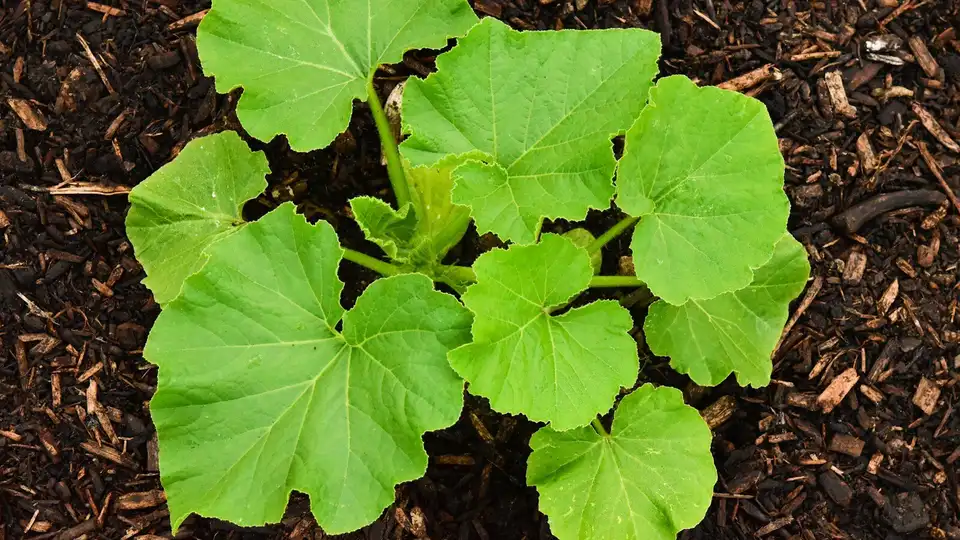
Will this pumpkin mature in the space and time you have?
| Your situation | Choose | Before you sow |
|---|---|---|
| Warm soil and a cultivar that fits the season | Direct sowing | Mark the hills and give vines room [1] [2] |
| Short season or a late-warming bed | An earlier cultivar or a short indoor start | Reserve plantable pots and check when the bed can receive seedlings [1] [2] |
| Narrow plot or a path through the garden | A cultivar with a growth habit that fits | Draw where the vines can go without blocking access [1] [2] |
Look at the cultivar's stated days to maturity and how the supplier measures them. Some times are given from sowing and others from transplanting. Compare the interval with the time available from the chosen starting point until your local fall freeze risk increases. Use the frost-date directory to locate the usual spring and fall windows. Keep in mind that the usable season begins when the bed is warm enough, which can be later than the spring date. The fall date is useful for planning and the actual forecast guides decisions near harvest [1] [2].
Compare growth habit as well. A small fruit may still grow on a long vine. Look for the cultivar's description of mature spread and walk the garden with that footprint in mind. Keep enough passage to water the base, weed early and reach the fruit later. The Cucurbita pepo profile describes the species that includes many garden pumpkins. Check the packet for the identity and spread of the one you are growing.
Direct-sow in a bed that has warmed
Pick a sunny, well-drained site. Check the soil with a thermometer in the planting area. Colorado State gives its temperature benchmark at the depth specified above and advises waiting longer in chilly weather. Treat that as a regional reference and check local advice if your bed or climate differs. In a bed where part of the row warms later, measure there separately. A sunny afternoon can heat the surface while the layer below stays cooler [1].
For the Iowa State hill layout, leave 4–5 ft (1.2–1.5 m) between hills and 5–7 ft (1.5–2.1 m) between rows. Sow at the depth in the data block. In this layout a hill is a group planting, with a mound useful where extra drainage is needed. Water gently after sowing so the seed stays at its intended depth. Mark each hill so you know where to check for emergence and can work around it before seedlings appear [1] [2].
When the first true leaves appear, thin to vigorous seedlings. The first broad seed leaves appear before the true leaves that resemble pumpkin foliage. Colorado State recommends clipping unwanted seedlings at soil level. If several roots occupy the same patch, pulling one can loosen the seedlings you plan to keep. Leave the strongest plants with room between them and firm the soil if any seedling has loosened [1] [2].
Minnesota Extension uses 65°F (18.3 °C) at 2 in (5.1 cm) for germination in its pumpkin and winter squash guide. That is a crop-specific reference. Colorado State gives a different benchmark in a guide to several warm-season vine crops. If you garden in either region, follow that local planting system. If you garden elsewhere, ask which recommendation fits your crop and spring conditions rather than averaging the two thresholds [1] [3].
Start indoors only when you have a place ready for the seedlings
Count back from the date you expect to have frost-free conditions and warm soil in the bed. Use the Iowa State indoor window as the starting interval in that method. Sow in plantable containers so the young roots can move with the plant. Before transplanting, harden the seedlings in a sheltered outdoor spot and increase exposure to sun and wind gradually. Bring them back under protection if conditions turn cold [2].
Prepare the final hole first. Water the start if the mix is dry and move it gently with its root ball supported. If your plantable container has a rim projecting above the bed, follow its planting directions so the edge does not wick moisture away from the root ball. Water the planted hill and label it. If the bed is still cold, keep the seedlings protected for the moment and recheck the soil instead of planting just because the planned date has arrived [1] [2].
Watch the hill from emergence to flowers
If seeds have failed to emerge in a section, check the soil before adding more. Inspect for a crust after hard rain, signs that water moved soil away from the marker, or a dry layer at seed depth. Check another hill where seedlings did emerge and compare conditions. If you sow again, mark the new sowing separately and revisit whether the cultivar still fits the remaining season.
Keep the flowers accessible to visiting bees. Male flowers can appear before female flowers. A female flower has a small swollen base behind it. Watch for both flower types to be open and accessible before judging whether fruit set is poor. Water the root zone and leave room to find developing fruit without moving heavy vines [3].
Frequently asked questions
Can I sow outdoors as soon as the last frost date passes?
Check the forecast and the soil first. Colorado State advises delaying longer through chilly weather and gives a soil benchmark for the planting depth used to measure [1].
Can I pull out the weakest pumpkin seedling?
Clip it at ground level in a crowded hill. Pulling can disturb the roots of a seedling you want to keep [1].
Sources
- Colorado State University Extension, Cucumbers, Pumpkins, Squash, and Melons · extension.colostate.edu, consulted
- Iowa State University Extension, All about Pumpkins · yardandgarden.extension.iastate.edu, consulted
- University of Minnesota Extension, Growing pumpkins and winter squash in home gardens · extension.umn.edu, consulted
Written by Emilio Marruso · last checked