Strawberries: When to Plant Bare-Root and Potted Plants
Choose when to plant dormant or potted strawberries, set the crown at soil level, and plan for the runners and harvest pattern of your cultivar.
by Emilio MarrusoPublished
Plant dormant bare-root strawberries in spring as soon as the bed is workable in a cold-winter climate. Set out actively growing potted plants after the risk of frost has passed. In mild regions, use the local planting window. The North Carolina coastal plain, for example, has an October–March window for setting bare-root plants. Sources University of Minnesota Extension, Growing strawberries in the home garden and NC State Extension, Small Fruits [1] [2]
In short:
- Identify your stock as dormant bare-root or actively growing before picking a planting day.
- Give the roots a sunny, well-drained bed and set the middle of the crown at soil level.
- Plan for the harvest pattern of your cultivar and for the runners it produces.
- Minnesota home-garden calendar
- April–May for dormant transplants, May–June for potted transplants [1]
- North Carolina bare-root planting
- October–March in the coastal plain, March or April in the piedmont and western part of the state [2]
- Direct sunlight
- At least 6 hours a day in the Minnesota home-garden guide [1]
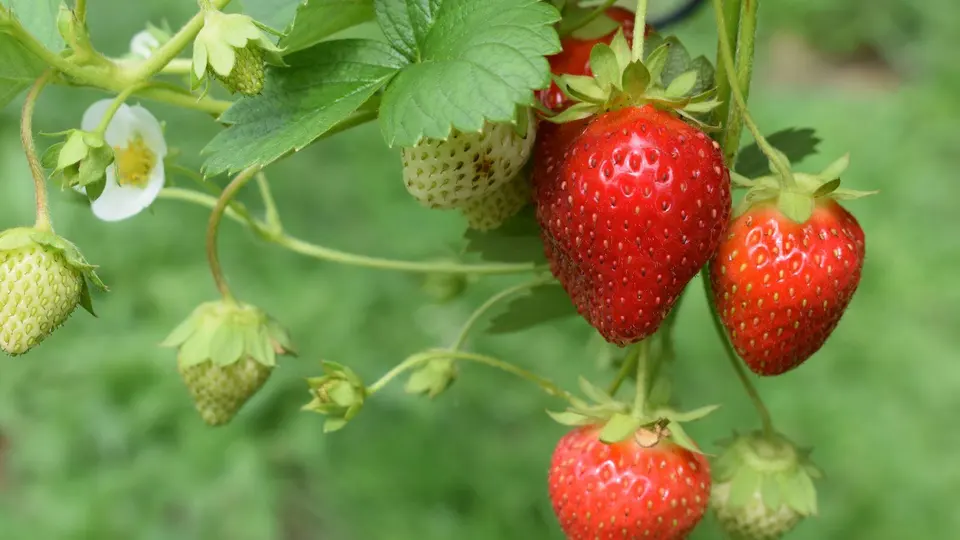
Which planting window fits the plants you bought?
| What you have | What to look for | When to act |
|---|---|---|
| Dormant bare-root plants in a cold-winter garden | A compact crown with roots and little or no new top growth | Plant in spring when a trowel enters the soil easily and the bed drains [1] |
| Actively growing plants in nursery pots | Green leaves and a root ball that holds together | Plant soon after buying, once frost risk has passed in the Minnesota system [1] |
| Bare-root plants in a mild coastal climate | Local home-garden guidance for the same kind of stock | Use the regional window, such as the North Carolina coastal plain example above [2] |
Read the shipping label before choosing a window. A dormant plant can look like a brown knot with roots even when it is sound. A potted plant with expanded leaves has already started growing. Treat those as separate planting decisions, even when both packets carry the same variety name. Keep bare-root stock cool and moist before planting. Keep nursery pots watered if you have to hold them while the bed is being prepared [1] [2].
A regional month on the calendar tells you when to start looking at conditions. Walk the planting area after rain. If water sits on the bed, or soil sticks to the trowel as a wet mass, postpone planting there and solve the drainage problem. Look for a bed that drains and has open air around it. Low spots can collect cold air, and a bed near large trees has both shade and root competition. Put the patch where you can reach it with a hose without walking over the crowns [1].
Choose the harvest pattern before laying out the bed
A June-bearing cultivar gives a concentrated crop. The name describes a production pattern. North Carolina Extension notes that the main home crop for this group comes in May there, while the Minnesota guide describes a later crop. Day-neutral cultivars can fruit over a longer part of the growing season. Everbearing cultivars have a different pattern again, with separate crops in the Minnesota guide. Read the cultivar label and choose according to how you want to use the berries and how you will manage the patch [1] [2].
For a June-bearing matted row, Minnesota recommends setting the original plants 18–24 in (45.7–61.0 cm) apart, with 3–4 ft (0.9–1.2 m) between rows. The extra space is where daughter plants will root. Mark out the walking lanes before planting so runners have a place to go. A day-neutral border works differently: you may want separate plants and a clear edge rather than a spreading row. The garden strawberry profile identifies the cultivated hybrid grown for garden strawberries [1].
Before ordering, decide who will water the new patch and which side you will pick from. If the bed borders a path, reserve room to reach the center without leaning on the plants. If you plan to encourage runners, mark the parent plants when you set them out. That simple record helps you see where new plants have filled gaps and where they are beginning to crowd each other.
Set the crown at the soil line
Find the crown where the roots meet the leaf bases. Open a hole or trench large enough to spread the roots downward. Bring soil in around the roots and position the center of the crown at the soil surface. If the crown sits high, exposed roots and crown tissue can dry out. If you bury the crown, the new leaves have to push through the soil. For a growing potted plant at the correct depth in its nursery mix, keep that depth when you move it into the bed [1] [2].
Firm the soil gently and water. Then check every plant again. Soil can settle and reveal roots, or wash into the center of a crown. Adjust the plant while the soil is still loose enough to move, and recheck the crown from the side. In a long row, planting and watering a short section at a time lets you catch a depth mistake before repeating it down the bed [1].
Give new plants time to establish
Follow your local recommendations for removing the first flowers. Minnesota describes pinching flowers during early establishment so the plant puts growth into roots and leaves. Keep the root zone moist and direct water toward the soil. If you allow a runner to fill a gap, guide its daughter plant to bare soil where it can take root. If a runner crosses a walking lane or lands beside another crown, clip it rather than letting it fill the lane. Established rows are easier to harvest and inspect when you can see the plants from both sides [1].
Before the first set of flowers opens, decide how you would cover the patch if cold returns. New vegetative growth and open blooms have different exposure to frost injury. The local frost dates help you plan when to have a cover ready. Check the actual forecast when flowers are open, especially if the patch lies low or has restricted air movement [1] [2].
Frequently asked questions
Sources
- University of Minnesota Extension, Growing strawberries in the home garden · extension.umn.edu, consulted
- NC State Extension, Small Fruits · content.ces.ncsu.edu, consulted
Written by Emilio Marruso · last checked