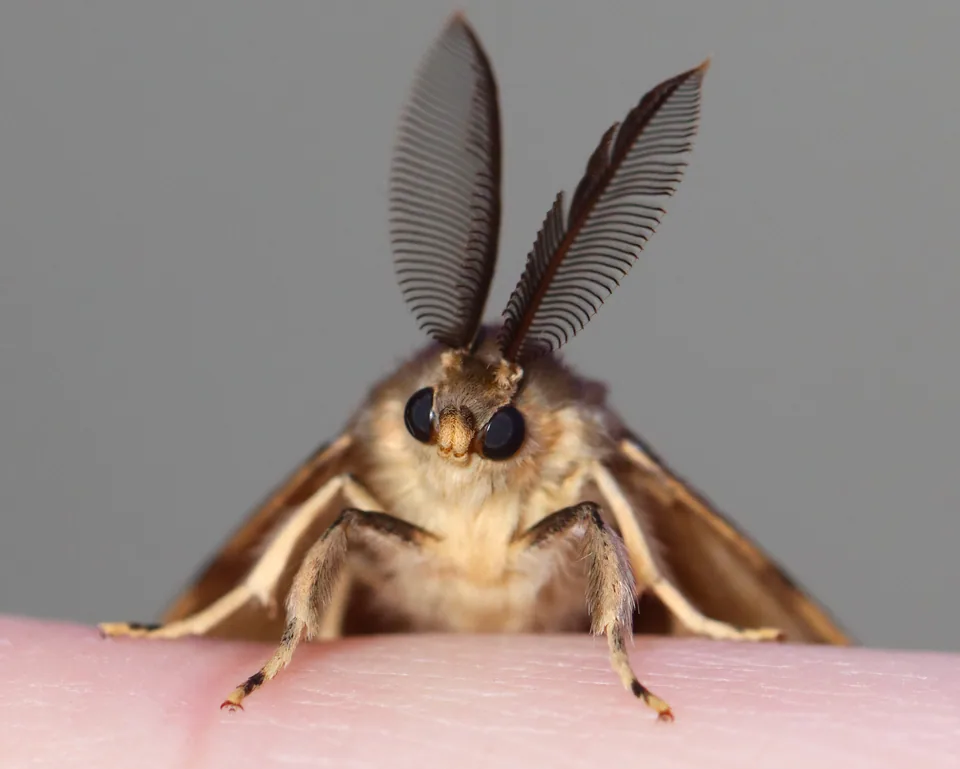
Insect
Gypsy moth
Lymantria dispar
Written by Emilio Marruso
Classification: Arthropoda › Hexapoda › Insecta › Lepidoptera › Erebidae › Lymantria
Plants it attacks
Plants in our guide where this problem is reported. Open a plant to see the sources.
- Red Oak
Symptom: Defoliates the trees.
Also reported on: American Hop-hornbeam, Black Oak, Chestnut Oak, Chinese Cork Oak, English Oak, Paradise apple, Pear, Pin Oak, Sessile Oak
Remedies
What our plant sheets report, with the outcome checked against official sources. Traditional remedies without an official source are flagged.
Treat
scraping egg masses into soapy water Works
How: Scrape the egg masses off with a knife or paint scraper, taking care not to cut the tree, and soak them in a bucket of soapy water for 48 hours; eggs left on the ground or crushed can still hatch.
Reported for 2 plants: American Hop-hornbeam, Chinese Cork Oak
bacillus thuringiensis (bt) Works
How: Spray Bacillus thuringiensis kurstaki on the foliage in May while the caterpillars are small.
Reported for 1 plant: American Hop-hornbeam
horticultural oil on egg masses Works
How: Spray the egg masses until soaked with a horticultural oil labeled for spongy moth egg masses.
Reported for 1 plant: American Hop-hornbeam
scrape egg masses into soapy water Works
How: Scrape the egg masses with a putty knife or stiff brush into a plastic bag or container, cover them with soapy water (dish detergent works well) and let them soak for a day or two before discarding. Egg masses left on the ground can still hatch.
Reported for 1 plant: Black Oak
soybean oil and water on egg masses Works
How: Saturate the egg masses with a solution of soybean oil and water in a 1:1 ratio.
Reported for 1 plant: American Hop-hornbeam
burlap band on trunk Partly works
How: Wrap a strip of burlap 30-46 cm wide around the trunk at chest height, secure it with a string and fold the top over like a skirt. Check under the flap every day and flick the caterpillars into a container of soapy water.
Reported for 1 plant: Black Oak
burlap bands on the trunk Partly works
How: Wrap a burlap strip 12 to 18 inches wide around the trunk at chest height, tie it 6 inches from the top and fold the top down; check every afternoon and drop the caterpillars into soapy water.
Reported for 1 plant: American Hop-hornbeam
burlap bands on trunk Partly works
How: from mid-to-late May tie burlap strips around the trunk, inspect them every day and kill the caterpillars hiding in them by hand
Reported for 1 plant: Chestnut Oak
insecticidal soap Partly works
How: Insecticidal soap sprayed directly onto the caterpillars.
Reported for 1 plant: American Hop-hornbeam
scraping egg masses into soapy water Partly works
How: scrape egg masses into a container and cover them with soapy water for 2 days before discarding in the trash
Reported for 1 plant: Chestnut Oak
burlap collection band Official source, not independently tested
How: Fasten a cloth or burlap band around the trunk at chest height, fold the top half down, and check daily in the afternoon.
Reported for 1 plant: Chinese Cork Oak
horticultural oil on egg masses Official source, not independently tested
How: Spray the egg masses until soaked, mid-October to mid-April.
Reported for 1 plant: Chinese Cork Oak
soybean oil and water on egg masses Official source, not independently tested
How: Saturate the egg masses where found with a solution of soybean oil and water in a 1:1 ratio, using a small spray bottle, a pump sprayer or a squirt gun. The oil smothers the eggs.
Reported for 1 plant: Black Oak
removing egg masses Not verified
How: Females lay eggs on piles of firewood, rock, and dead branches; remove any egg mass found there.
Reported for 1 plant: Pin Oak
sticky barrier band Harmful
Handle with care: read the plant sheet before using it.
How: Wrap a band of duct tape or other nonporous material around the trunk and smear a thin layer of insect barrier coating or petroleum jelly on the band; never apply the sticky substance directly to the trunk.
Reported for 1 plant: Black Oak
Where it is found
Present in 54 countries.
Regulated as a quarantine pest in: Argentina, Armenia, Brazil, Canada, Chile, Georgia, Israel, Mexico, New Zealand, Russia, United States, Uruguay.