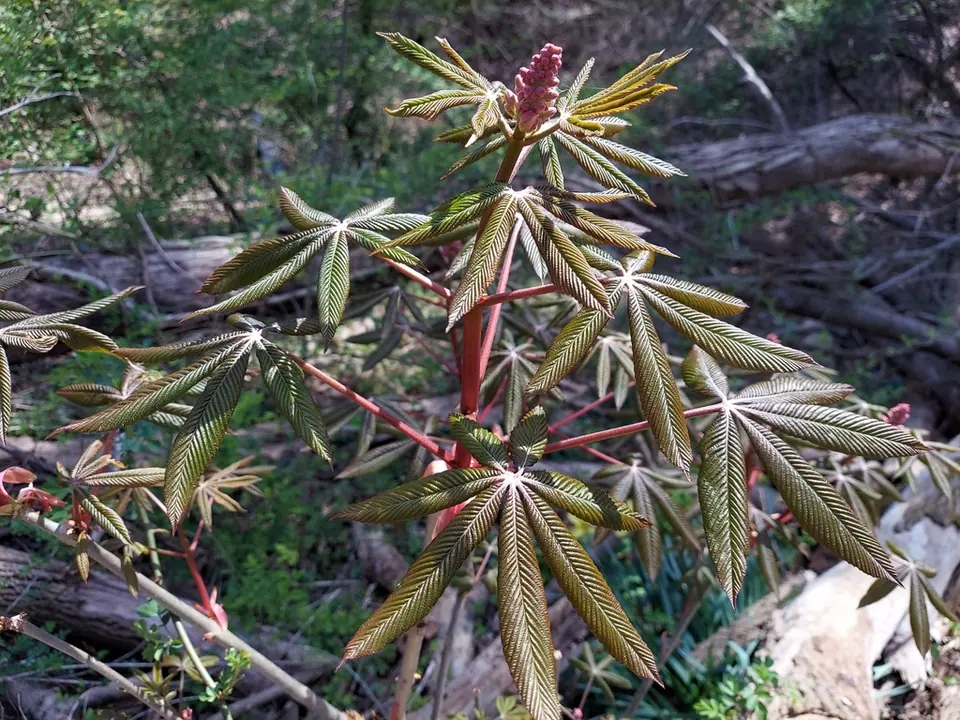
How to Grow and Care for Red horse-chestnut
Aesculus carnea
Written by Emilio Marruso · last checked
Toxic to: Cats, Dogs, Horses, People · Why
At a glance
Red horse chestnut is an easygoing tree for many gardens: it grows in full sun or light shade and accepts soil from pH 5.0 to 8.0. Plant it in spring in moist, well-drained soil and don't let it dry out, since dry conditions scorch its leaves. You can even raise new plants from seed, and they come true to the parent tree.
- Sun
Full sun to light shade
What the sources say (1)
Light: Full sun to light shade
Full sun to light shade; prefers moist, but well drained soils; slightly acid soil is best.
— Red Horsechestnut | Drush Site-Install [3] - Water
Keep the soil moist; it does not like drought, which scorches the leaves
What the sources say (2)
- Soil
Moist, well-drained soil, pH 5.0–8.0
What the sources say (4)
Watering: Moist, well-drained soil; does not thrive in drought conditions
prefers moist, but well drained soils
— Red Horsechestnut | Drush Site-Install [3] it does not thrive in drought conditions.
— Red Horse Chestnut - Aesculus x carnea | North Carolina Extension Gardener Plant Toolbox [1] Soil pH, minimum: 5.0
Can tolerate acid to alkaline soil (pH 5.0 to 8.0)
— Woody Plants Database [4] Soil pH, maximum: 8.0
Can tolerate acid to alkaline soil (pH 5.0 to 8.0)
— Woody Plants Database [4] - Planting
Plant or transplant in spring
What the sources say (1)
Planting: Spring (transplanting)
transplant in spring
— Woody Plants Database [4] - Pests
Bagworms, Japanese beetles, borers and powdery mildew; pick varieties resistant to leaf blotch
What the sources say (3)
Pests: bagworms, Japanese beetles, borers
Bagworms, Japanese beetles and borers are infrequent but potentially troublesome.
— Red Horse Chestnut - Aesculus x carnea | North Carolina Extension Gardener Plant Toolbox [1] Diseases: powdery mildew, leaf scorch, leaf blotch
Disease is less of a problem than with most horsechestnuts, but it may develop powdery mildew causing early leaf drop.
— Red Horse Chestnut - Aesculus x carnea | North Carolina Extension Gardener Plant Toolbox [1] Dry conditions cause leaf scorch and, although it is more drought tolerant than most Aesculus, it does not thrive in drought conditions. Leaf blotch can be a significant problem.
— Red Horse Chestnut - Aesculus x carnea | North Carolina Extension Gardener Plant Toolbox [1] - Propagation
Grows from seed, and new plants come out like the parent
What the sources say (1)
Propagation: Seed (new plants come true from seed)
Although this is a hybrid, new plants will come true from seed.
— Red Horse Chestnut - Aesculus x carnea | North Carolina Extension Gardener Plant Toolbox [1] - Safety
Poisonous to people, cats, dogs and horses: don't let anyone eat it
Overview
Aesculus x carnea is a deciduous hybrid shade tree grown for its pink to red spring flowers. [1][3] It prefers moist, well-drained, slightly acid soil in full sun to light shade. [3] The nuts are poisonous. [3][1]
This record is incomplete: the sources we read do not cover every field yet.
Not yet covered by our sources: Hardiness, warmest zone, Pruning
Red horse-chestnut care
How to water Red horse-chestnut
Moist, well-drained soil; does not thrive in drought conditions
How much light Red horse-chestnut needs
Full sun to light shade
What the sources say (1)
Full sun to light shade; prefers moist, but well drained soils; slightly acid soil is best.How much cold Red horse-chestnut can take
Hardiness, coldest zone
The sources give different values depending on region, zone or growing conditions.
What each source says
According to NC State Extension: 4a [winter low −34.4 to −31.7 °C (−30 to −25 °F)]
According to Cornell Woody Plants Database: 5a [winter low −28.9 to −26.1 °C (−20 to −15 °F)]
Hardiness, warmest zone
The sources give different values depending on region, zone or growing conditions.
What each source says
According to NC State Extension: 9b [winter low −3.9 to −1.1 °C (25 to 30 °F)]
What the sources say (1)
According to NC State Extension: 4a, 4b, 5a, 5b, 6a, 6b, 7a, 7b, 8a, 8b, 9a, 9bBest soil for Red horse-chestnut
Soil pH, minimum
5.0
What the sources say (1)
Can tolerate acid to alkaline soil (pH 5.0 to 8.0)Soil pH, maximum
8.0
What the sources say (1)
Can tolerate acid to alkaline soil (pH 5.0 to 8.0)How to propagate Red horse-chestnut
Seed (new plants come true from seed)
What the sources say (1)
Although this is a hybrid, new plants will come true from seed.How to grow Red horse-chestnut
The plant
Family
Pests and diseases
Pests
bagworms, Japanese beetles, borers
What the sources say (1)
Bagworms, Japanese beetles and borers are infrequent but potentially troublesome.Diseases
powdery mildew, leaf scorch, leaf blotch
What the sources say (2)
Disease is less of a problem than with most horsechestnuts, but it may develop powdery mildew causing early leaf drop.Dry conditions cause leaf scorch and, although it is more drought tolerant than most Aesculus, it does not thrive in drought conditions. Leaf blotch can be a significant problem.Fertilizing
When
The sources give different values depending on region, zone or growing conditions.
What each source says
Aesculus in general, trees weakened by leaf scorch: Early spring
What the sources say (1)
Aesculus in general, trees weakened by leaf scorch: caused by drought injury and poor tree vigor. Water trees thoroughly during dry periods in the summer and fall, and fertilize in the early spring to improve tree health.Red horse-chestnut pests and problems
Leaf scorch and leaf blotch
Symptom: Dry conditions cause leaf scorch; leaf blotch can be a significant problem
What to do: Cultivars resistant to leaf blotch are listed (Briotii, Fort McNair)
What the sources say (1)
Dry conditions cause leaf scorch and, although it is more drought tolerant than most Aesculus, it does not thrive in drought conditions. Leaf blotch can be a significant problem.
— Red Horse Chestnut - Aesculus x carnea | North Carolina Extension Gardener Plant Toolbox [1]
Remedies
Each remedy shows what official sources say about it; traditional remedies without an official source are marked as such. Harmful ones are listed so you know to avoid them.
First aid
First aid: not a substitute for a doctor
ingestion of horse chestnut seeds
rinse the mouth with water Official source, not independently tested
If problems start or you have questions, call the Missouri Poison Center right away at 1-800-222-1222
— missouripoisoncenter.org [11] How: Have them rinse with water and spit to remove remaining plant material from their mouth.
Have them rinse with water and spit to remove remaining plant material from their mouth.
— poison.org [10] wipe the mouth and give water Official source, not independently tested
If problems start or you have questions, call the Missouri Poison Center right away at 1-800-222-1222
— missouripoisoncenter.org [11] How: Wipe out the mouth with a soft, wet cloth and give them some water to drink.
Wipe out the mouth with a soft, wet cloth and give them some water to drink.
— missouripoisoncenter.org [11]
Treating the plant
leaf blotch
raking and destroying fallen leaves Works
How: Rake and destroy fallen leaves during the growing season and at the end of the year.
Rake and destroy fallen leaves during the growing season and at the end of the year.
— pnwhandbooks.org [12] What the evidence says Rake and destroy infected leaves in the fall to remove the overwintering fungus from the area.
— extension.umaine.edu [13]
japanese beetles
japanese beetle traps Partly works
However, beetles often land and feed on plants close to traps, so traps should be placed well away from valued plantings.
— portal.ct.gov [9] How: Traps containing floral and sex attractant lures are available at home and garden centers.
Japanese beetle traps containing floral and sex attractant lures are readily available at home and garden centers. These traps may help reduce the overall number of beetles.
— portal.ct.gov [9] What the evidence says Japanese beetle traps containing floral and sex attractant lures are readily available at home and garden centers. These traps may help reduce the overall number of beetles.
— portal.ct.gov [9]
leaf scorch
thorough watering in dry periods Official source, not independently tested
How: Water trees thoroughly during dry periods in the summer and fall, and fertilize in the early spring to improve tree health.
Water trees thoroughly during dry periods in the summer and fall, and fertilize in the early spring to improve tree health.
— portal.ct.gov [9]
Is Red horse-chestnut toxic to pets?
Reported by the source, quoted verbatim. This is not medical or veterinary advice: if a person or an animal may have eaten this plant, contact a poison control centre or a veterinarian.
Animals
#problem for cats
[1]The source flags the risk for this animal but does not explain why.
#problem for dogs
[1]The source flags the risk for this animal but does not explain why.
#problem for horses
[1]The source flags the risk for this animal but does not explain why.
People
This plant has medium severity poison characteristics.
[1]- Poisonous parts
Poison Part: Fruits
[1]- Toxic principle
Aesculin (a glycosidic saponin), other saponins
[1]- Toxic principle
Fruits are poisonous (containing toxic saponins).
[5]- Symptoms
Causes gastrointestinal disturbances. Severe vomiting and diarrhea, depression or excitement, dilated pupils, coma, convulsions.
[1]- Severity
Poison Severity: Medium
[1]
Calendar
Planting
Spring (transplanting)
What the sources say (1)
transplant in springPruning
Not stated in the sources we read.
Months as given by the sources, which are mostly from the United States (northern hemisphere). In the southern hemisphere they shift by about six months.
Indicative values
Values from a secondary source, not checked word for word like the rest of this page. Use them as a starting point.
- Life cycle
- PerennialIndicative value, adapt it to your climate · Secondary source
- Hours of sun
- 4-6 hoursIndicative value, adapt it to your climate · Secondary source
- Growth rate
- LowIndicative value, adapt it to your climate · Secondary source
- Pruning
- February, March, April, MayIndicative value, adapt it to your climate · Secondary source
Similar plants
- Buckeye Aesculus californica
- Red Buckeye Aesculus pavia
- Bottlebrush Buckeye Aesculus parviflora
- Buckeye Aesculus glabra
- Horsechestnut Aesculus hippocastanum
- Painted Buckeye Aesculus sylvatica
- Yellow Buckeye Aesculus flava
- Abies grandis Abies grandis
Sources
Every value above is quoted from these documents. Links lead to the original publisher.
- Red Horse Chestnut - Aesculus x carnea | North Carolina Extension Gardener Plant Toolbox · plants.ces.ncsu.edu, consulted
- Horsechestnut, Red | TreeBrowser | USU · extension.usu.edu, consulted
- Red Horsechestnut | Drush Site-Install · selectors.extension.illinois.edu, consulted
- Woody Plants Database · woodyplants.cals.cornell.edu, consulted
- Aesculus × carnea (Red Horsechestnut) – Purdue Arboretum Explorer · arboretum.purdue.edu, consulted
- Aesculus × carnea - Useful Temperate Plants · temperate.theferns.info, consulted
- Aesculus × carnea - Trees and Shrubs Online · treesandshrubsonline.org, consulted
- ENH225 · edis.ifas.ufl.edu, consulted
- portal.ct.gov · portal.ct.gov
- poison.org · poison.org
- missouripoisoncenter.org · missouripoisoncenter.org
- pnwhandbooks.org · pnwhandbooks.org
- extension.umaine.edu · extension.umaine.edu
Written by Emilio Marruso · last checked