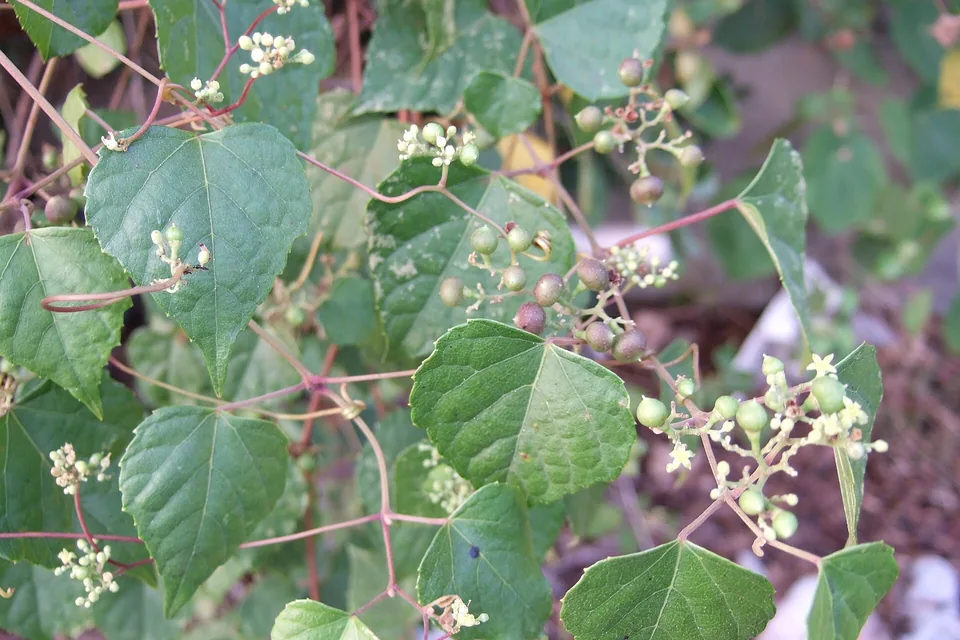

How to Grow and Care for Porcelain Berry
Ampelopsis brevipedunculata
Written by Emilio Marruso · last checked
Toxic to: People · Why
At a glance
This tough perennial from the grape family grows in full sun or partial shade and handles dry spells well, though it is happiest in moist, rich, porous soil. A cut to the ground each late winter keeps it in check, which matters, because it spreads easily. Enjoy its leaves in the garden, but keep the berries away from children: they are poisonous.
- Sun
Full sun to partial shade
What the sources say (3)
Light: Full sun to partial shade
Light: Full sun (6 or more hours of direct sunlight a day) Partial Shade (Direct sunlight only part of the day, 2-6 hours)
— Ampelopsis glandulosa var. brevipedunculata (Porcelain Berry, Porcelain-berry, Porcelain Vine) | North Carolina Extension Gardener Plant Toolbox [1] Sun (best for fruiting) or part shade, nearly any soil.
— Ampelopsis glandulosa var. brevipedunculata | Landscape Plants | Oregon State University [3] It prefers full to partial sunlight, and is less tolerant of heavy shade
— Ampelopsis brevipedunculata | CLIMBERS [4] - Water
Handles dry spells well
What the sources say (1)
Watering: Drought tolerant
Particularly Resistant To (Insects/Diseases/Other Problems): drought tolerant
— Ampelopsis glandulosa var. brevipedunculata (Porcelain Berry, Porcelain-berry, Porcelain Vine) | North Carolina Extension Gardener Plant Toolbox [1] - Soil
Likes moist, rich soil that drains well
What the sources say (1)
Watering notes: Prefers moist, porous, rich soils
This plant prefers moist, porous, rich soils and can thrive in a wide range of light availability.
— Ampelopsis glandulosa var. brevipedunculata (Porcelain Berry, Porcelain-berry, Porcelain Vine) | North Carolina Extension Gardener Plant Toolbox [1] - Pruning
In late winter, cut it to the ground to stop it spreading
What the sources say (1)
Pruning: Late winter (cut to the ground to manage spread)
To manage spread, cut to the ground in late winter.
— Ampelopsis glandulosa var. brevipedunculata (Porcelain Berry, Porcelain-berry, Porcelain Vine) | North Carolina Extension Gardener Plant Toolbox [1] - Pests
Japanese beetles chew the leaves
What the sources say (1)
Pests: Japanese beetles
Japanese beetles will damage the foliage. This plant is weedy, and alternatives should be considered.
— Ampelopsis glandulosa var. brevipedunculata (Porcelain Berry, Porcelain-berry, Porcelain Vine) | North Carolina Extension Gardener Plant Toolbox [1] - Watch out
It spreads like a weed: think about other plants first
What the sources say (1)
Pruning: Late winter (cut to the ground to manage spread)
To manage spread, cut to the ground in late winter.
— Ampelopsis glandulosa var. brevipedunculata (Porcelain Berry, Porcelain-berry, Porcelain Vine) | North Carolina Extension Gardener Plant Toolbox [1] - Propagation
Grow new plants from seed or cuttings
What the sources say (2)
Propagation: Seed; cuttings
Recommended Propagation Strategy: Seed
— Ampelopsis glandulosa var. brevipedunculata (Porcelain Berry, Porcelain-berry, Porcelain Vine) | North Carolina Extension Gardener Plant Toolbox [1] A cutting of porcelain berry can grow roots 46-59cm long in 7 weeks
— Ampelopsis brevipedunculata | CLIMBERS [4] - Safety
The berries are poisonous if eaten and irritate the mouth
Overview
Porcelain berry is a deciduous, woody, climbing vine that prefers moist, porous, rich soils and tolerates a wide range of light. [1] It is listed as invasive in the southeastern and eastern United States, spread by birds and mammals that eat the fruit. [1][3] The fruits are poisonous to humans through calcium oxalate crystals, with low severity. [1]
Porcelain Berry care
How to water Porcelain Berry
Watering
Drought tolerant
What the sources say (1)
Particularly Resistant To (Insects/Diseases/Other Problems): drought tolerantWatering notes
Prefers moist, porous, rich soils
What the sources say (1)
This plant prefers moist, porous, rich soils and can thrive in a wide range of light availability.How much light Porcelain Berry needs
Full sun to partial shade
What the sources say (3)
Light: Full sun (6 or more hours of direct sunlight a day) Partial Shade (Direct sunlight only part of the day, 2-6 hours)Sun (best for fruiting) or part shade, nearly any soil.It prefers full to partial sunlight, and is less tolerant of heavy shadeHow much cold Porcelain Berry can take
Hardiness, coldest zone
The sources give different values depending on region, zone or growing conditions.
What each source says
According to NC State Extension: 5a [winter low −28.9 to −26.1 °C (−20 to −15 °F)]
According to Oregon State University: 4 [winter low −34.4 to −28.9 °C (−30 to −20 °F)]
What the sources say (2)
According to NC State Extension: USDA Plant Hardiness Zone: 5a, 5b, 6a, 6b, 7a, 7b, 8a, 8b, 9a, 9bAccording to Oregon State University: Hardy to USDA Zone 4Hardiness, warmest zone
9b [winter low −3.9 to −1.1 °C (25 to 30 °F)]
What the sources say (1)
USDA Plant Hardiness Zone: 5a, 5b, 6a, 6b, 7a, 7b, 8a, 8b, 9a, 9bHow to propagate Porcelain Berry
Seed; cuttings
What the sources say (2)
Recommended Propagation Strategy: SeedA cutting of porcelain berry can grow roots 46-59cm long in 7 weeksHow to grow Porcelain Berry
The plant
Life cycle
perennial
What the sources say (1)
A. brevipedunculata is a deciduous, woody, perennial vine with a large, deep taproot and longitudinal ridges on branching stems.Family
Vitaceae
What the sources say (1)
Porcelain berry is an aggressive weed in the Vitaceae (grape) family of the eastern United States that closely resembles native grapesPests and diseases
Pests
Japanese beetles
What the sources say (1)
Japanese beetles will damage the foliage. This plant is weedy, and alternatives should be considered.Porcelain Berry pests and problems
Japanese beetle damage
Symptom: Japanese beetles will damage the foliage
What to do: No management stated; the source advises considering alternatives because the plant is weedy
What the sources say (1)
Japanese beetles will damage the foliage. This plant is weedy, and alternatives should be considered.
— Ampelopsis glandulosa var. brevipedunculata (Porcelain Berry, Porcelain-berry, Porcelain Vine) | North Carolina Extension Gardener Plant Toolbox [1]
Remedies
Each remedy shows what official sources say about it; traditional remedies without an official source are marked as such. Harmful ones are listed so you know to avoid them.
First aid
First aid: not a substitute for a doctor
ingestion of fruits
wiping out the mouth and offering a cool drink or snack Official source, not independently tested
If there is swelling that prevents the child taking anything by mouth or causes difficulty breathing, go to the nearest emergency department immediately.
— chop.edu [6] How: Wipe out the residue of the plant from the mouth and offer a cool drink or snack such as a popsicle, applesauce or yogurt.
If a child eats any part of an oxalate-containing plant, wipe out the residue of the plant from the mouth and offer a cool drink or snack such as a popsicle, applesauce or yogurt.
— chop.edu [6]
Getting rid of it
invasive vine
pulling young vines by hand with the whole root Partly works
How: Pull any young vines by hand and remove the entire root; do not spread soil that contains root sections; bag and destroy plants pulled while in fruit.
Pull any young vines by hand and be sure to remove the entire root. Do not spread soil that contains any root sections. If the plants are pulled while in fruit, they should be bagged and destroyed.
— mda.state.mn.us [7] What the evidence says Control can often be accomplished by hand-pulling for small populations (less than 1/4 acre). Plants pulled early in the season are much smaller and easier to manage.
— cipwg.uconn.edu [8] digging out larger vines with a spade Not verified
Traditional remedy, not verified by an official source.
Be sure to remove and dispose of the entire root network, or else porcelain berry can grow back from root fragments with a vengeance.
— lewisginter.org [9] How: Larger vines require shovels, spades being useful for ripping up roots; remove and dispose of the entire root network and do not compost it.
cutting vines to the ground Partly works
How: To manage spread, cut to the ground in late winter.
This plant flowers on new growth. To manage spread, cut to the ground in late winter.
— Ampelopsis glandulosa var. brevipedunculata (Porcelain Berry, Porcelain-berry, Porcelain Vine) | North Carolina Extension Gardener Plant Toolbox [1] What the evidence says It can also spread vegetatively by resprouting from roots, especially in response to cutting above-ground vines.
— mda.state.mn.us [7]
Is Porcelain Berry poisonous?
Reported by the source, quoted verbatim. This is not medical or veterinary advice: if a person or an animal may have eaten this plant, contact a poison control centre or a veterinarian.
Poisonous through ingestion of fruits. Raphide crystals of calcium oxalate are irritating to mucus membranes.
[1]
Calendar
Pruning
Late winter (cut to the ground to manage spread)
What the sources say (1)
To manage spread, cut to the ground in late winter.Months as given by the sources, which are mostly from the United States (northern hemisphere). In the southern hemisphere they shift by about six months.
Edibility
Reported by the source, quoted verbatim. Do not eat a plant on the basis of this page alone: identification mistakes can be dangerous.
Indicative values
Values from a secondary source, not checked word for word like the rest of this page. Use them as a starting point.
- Hours of sun
- 6-8 hoursIndicative value, adapt it to your climate · Secondary source
- Drought tolerant
- yesIndicative value, adapt it to your climate · Secondary source
- Soil pH
- 5.5-7.5Indicative value, adapt it to your climate · Secondary source
- Care level
- MediumIndicative value, adapt it to your climate · Secondary source
- Growth rate
- LowIndicative value, adapt it to your climate · Secondary source
Similar plants
- Boston Ivy Parthenocissus tricuspidata
- Fox grape Vitis labrusca
- Riverbank Grape Vitis riparia
- Summer Grape Vitis aestivalis
- Virginia Creeper Parthenocissus quinquefolia
- False virginia creeper Parthenocissus inserta
- Muscadine Grape Vitis rotundifolia
- Frost Grape Vitis vulpina
Sources
Every value above is quoted from these documents. Links lead to the original publisher.
- Ampelopsis glandulosa var. brevipedunculata (Porcelain Berry, Porcelain-berry, Porcelain Vine) | North Carolina Extension Gardener Plant Toolbox · plants.ces.ncsu.edu, consulted
- Porcelain Berry - Ampelopsis glandulosa var. brevipedunculata | North Carolina Extension Gardener Plant Toolbox · plants.ces.ncsu.edu, consulted
- Ampelopsis glandulosa var. brevipedunculata | Landscape Plants | Oregon State University · landscapeplants.oregonstate.edu, consulted
- Ampelopsis brevipedunculata | CLIMBERS · climbers.lsa.umich.edu, consulted
- Bean's Trees and Shrubs · beanstreesandshrubs.org, consulted
- chop.edu · chop.edu
- mda.state.mn.us · mda.state.mn.us
- cipwg.uconn.edu · cipwg.uconn.edu
- lewisginter.org · lewisginter.org
Written by Emilio Marruso · last checked