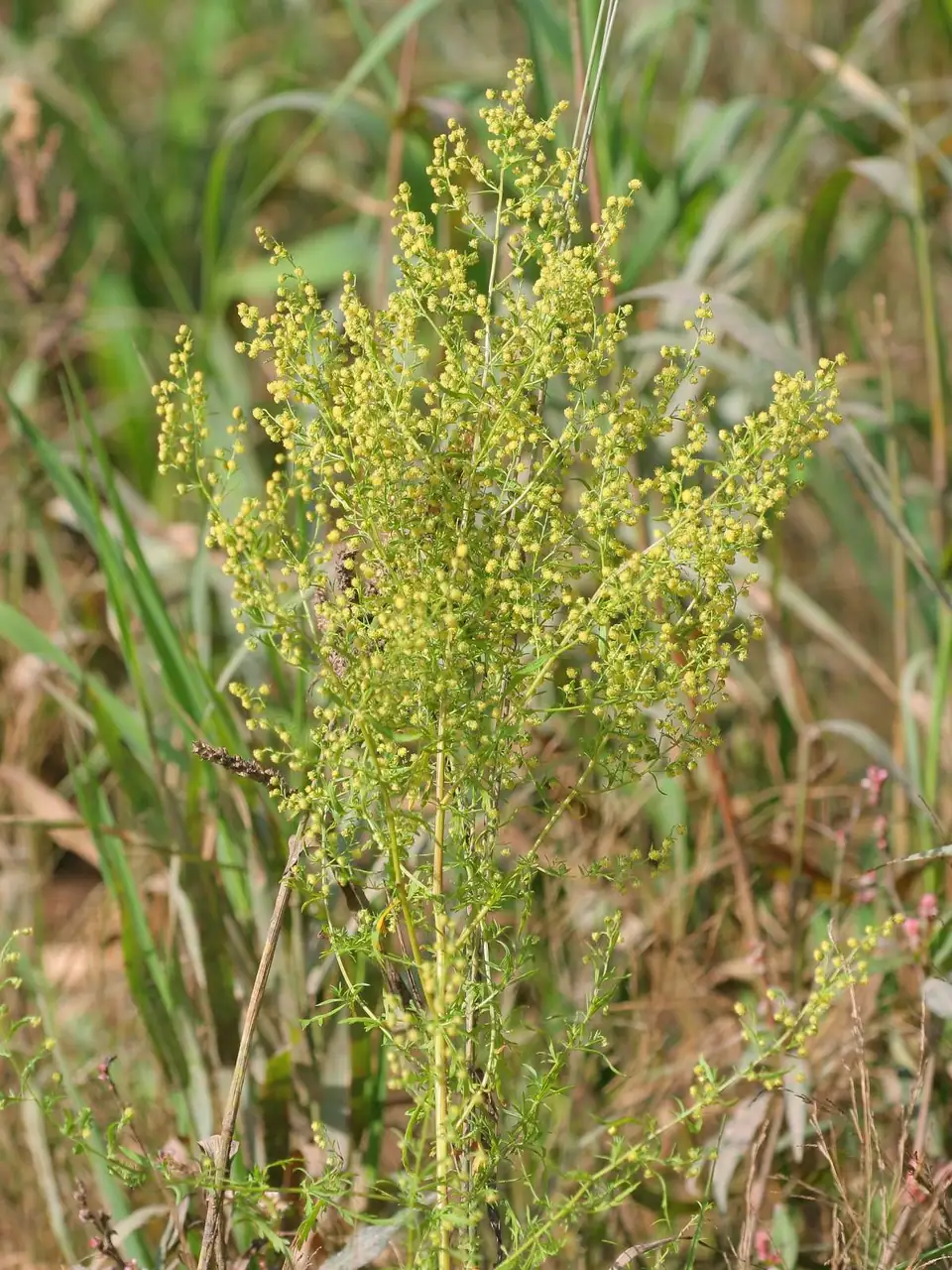
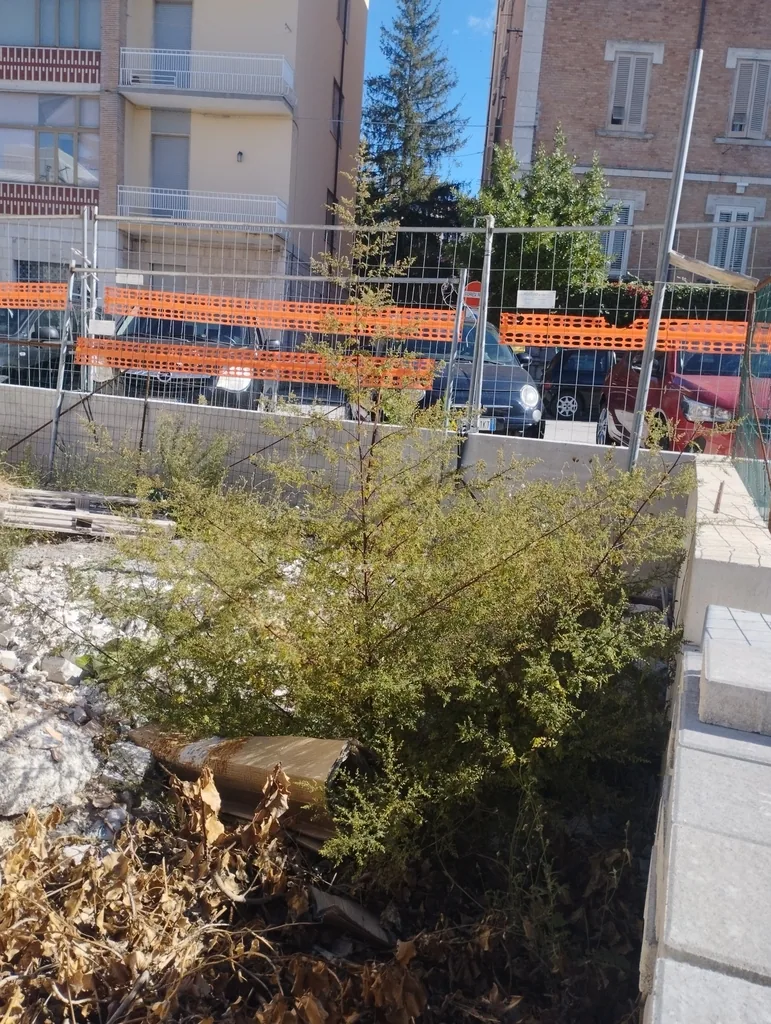

How to Grow and Care for Sweet sagewort
Artemisia annua
Written by Emilio Marruso · last checked
At a glance
Artemisia annua is an easygoing annual that asks for very little: a sunny spot and only occasional watering once it settles in. Start it from seed, plant it out in spring well after the last frost, and in late summer cut the stems just as the blooms appear. It even self-seeds, and it grows happily in containers too.
- Sun
A sunny spot
What the sources say (1)
Light: Sunny location
Grow wormwood or sweet Annie plant in a sunny location and well-drained soil.
— Tips For Growing Wormwood Herb Plants | Gardening Know How [2] - Water
Water now and then once settled in; soggy soil rots the roots
What the sources say (2)
Watering: Occasional watering once established; does not like being overly wet
Once established, wormwood plants require little care. In addition to occasional watering, these plants can be fertilized once a year.
— Tips For Growing Wormwood Herb Plants | Gardening Know How [2] Watering notes: Root rot can occur from overly wet soil
other than root rot from overly wet soil
— Tips For Growing Wormwood Herb Plants | Gardening Know How [2] - Planting
Plant out in spring, well after the last frost
What the sources say (1)
Planting: Spring, set out well after the last frost
set the seedlings out in the garden well after the last frost in spring
— Tips For Growing Wormwood Herb Plants | Gardening Know How [2] - Harvest
For the flowers, cut in late summer just as the blooms begin to appear
What the sources say (1)
Harvest: Just as blooms begin to appear in late summer (for floral use)
Harvest sweet Annie plant just as its blooms begin to appear in late summer for use in floral arrangements or wreaths.
— Tips For Growing Wormwood Herb Plants | Gardening Know How [2] - Propagation
From seed sown in trays, then planted out; it also self-seeds
What the sources say (1)
Propagation: Seed (sown in flats, then seedlings set out); self-seeds
If starting plants from seeds, sow the small seeds in flats and set the seedlings out in the garden
— Tips For Growing Wormwood Herb Plants | Gardening Know How [2] - Containers
Grows in containers too
What the sources say (1)
In containers: Yes
These plants make great additions to many gardens and can even be grown in containers
— Tips For Growing Wormwood Herb Plants | Gardening Know How [2]
Overview
Sweet Annie is grown in gardens for its feathery, sweet-smelling foliage and yellow blooms, used in floral decorations and wreaths. [2] It prefers a sunny site and well-drained soil and reseeds readily. [2]
This record is incomplete: the sources we read do not cover every field yet.
Not yet covered by our sources: Hardiness, coldest zone, Hardiness, warmest zone, Pruning
Sweet sagewort care
How to water Sweet sagewort
Watering
Occasional watering once established; does not like being overly wet
What the sources say (1)
Once established, wormwood plants require little care. In addition to occasional watering, these plants can be fertilized once a year.Watering notes
Root rot can occur from overly wet soil
What the sources say (1)
other than root rot from overly wet soilHow much light Sweet sagewort needs
Sunny location
What the sources say (1)
Grow wormwood or sweet Annie plant in a sunny location and well-drained soil.How much cold Sweet sagewort can take
Hardiness, coldest zone
Not stated in the sources we read.
Hardiness, warmest zone
Not stated in the sources we read.
Where to grow Sweet sagewort
Yes
What the sources say (1)
These plants make great additions to many gardens and can even be grown in containersHow to propagate Sweet sagewort
Seed (sown in flats, then seedlings set out); self-seeds
What the sources say (1)
If starting plants from seeds, sow the small seeds in flats and set the seedlings out in the gardenHow to grow Sweet sagewort
The plant
Life cycle
annual
What the sources say (1)
The native range of this species is N. Africa to Eurasia. It is an annual and grows primarily in the temperate biome.Family
Asteraceae
What the sources say (1)
Asteraceae (Compositae) Artemisia annua L. Sinonimi: / Nomi comuni Italiano: Artemisia annuale, Assenzio annuale. Inglese: Annual mugwort.Fertilizing
When
The sources give different values depending on region, zone or growing conditions.
What each source says
field crop grown for artemisinin: Before sowing or transplanting, banded in rows
What the sources say (1)
field crop grown for artemisinin: The manoeuvre of pre-drilling
fertilizer in 150 mm rows prior to sowing or transplant-
ing plantlets allows very simple and inexpensive
sowing equipment to be usedHow often
The sources give different values depending on region, zone or growing conditions.
What each source says
field crop grown for artemisinin, rainy areas: Nitrogen split into two, three or more doses
What the sources say (1)
field crop grown for artemisinin, rainy areas: Under such rainy weather, splitting the total nitrogen to
be applied into two, three or more doses is rec-
ommended.Mineral fertilizers
The sources give different values depending on region, zone or growing conditions.
What each source says
field crop grown for artemisinin: 64 kg [141.1 lb] N/ha, the most cost-effective nitrogen rate in a field trial
What the sources say (1)
field crop grown for artemisinin: The rate of 64 kg N/ha resulted
in a leaf biomass of 3880 kg/ha and artemisinin yield of
40.4 kg/ha (a 51% increase from the 0 kg N/ha), thus
being the most cost-effective N rate for artemisinin pro-
duction.Micronutrients
The sources give different values depending on region, zone or growing conditions.
What each source says
sand culture experiments: Iron, manganese, copper, zinc and boron: low levels reduced growth
What the sources say (1)
sand culture experiments: showed that low levels of the micronutrients Fe,
Mn, Cu, Zn and B, when compared to upper levels,
resulted in significant decreases in plant height (26–
63% shorter)Avoid
The sources give different values depending on region, zone or growing conditions.
What each source says
field crop grown for artemisinin: Letting the soil dry out at establishment, which risks fertilizer burn from soluble nitrogen and potassium
Artemisia in general: Fertilizer: artemisias need none and dislike excess fertilizer
What the sources say (2)
field crop grown for artemisinin: Another reason to avoid soil
moisture drop at crop establishment is the possibility of
fertilizer ‘burn’. This problem is caused by a detrimental
osmotic effect from high concentrations of soluble
mobile elements such as nitrogen and sometimes potass-
iumArtemisia in general: Artemisias require no fertilizer, very little water, full sun or some light shade, and good drainage.Signs of deficiency
The sources give different values depending on region, zone or growing conditions.
What each source says
sand culture experiments, low iron, manganese, copper, zinc and boron: Shorter plants with lower fresh weight and dry matter
What the sources say (1)
sand culture experiments, low iron, manganese, copper, zinc and boron: showed that low levels of the micronutrients Fe,
Mn, Cu, Zn and B, when compared to upper levels,
resulted in significant decreases in plant height (26–
63% shorter), fresh weight (19–45% lighter) and dry
matter accumulation (18–49% lighter).Signs of excess
The sources give different values depending on region, zone or growing conditions.
What each source says
field crop grown for artemisinin: Lower artemisinin concentration per plant at 97 kg [213.8 lb] N/ha
What the sources say (1)
field crop grown for artemisinin: increased to 4690 kg/ha dry
leaves and 41 kg/ha artemisinin at 97 kg N/ha, although
the concentration of artemisinin per plant was reduced
by 22% at this high N rate.Remedies
The sources we checked give no remedies for this plant.
Calendar
Planting
Spring, set out well after the last frost
What the sources say (1)
set the seedlings out in the garden well after the last frost in springHarvest
Just as blooms begin to appear in late summer (for floral use)
What the sources say (1)
Harvest sweet Annie plant just as its blooms begin to appear in late summer for use in floral arrangements or wreaths.Pruning
Not stated in the sources we read.
Months as given by the sources, which are mostly from the United States (northern hemisphere). In the southern hemisphere they shift by about six months.
Similar plants
- Dusty Miller Artemisia stelleriana
- Southernwood Artemisia abrotanum
- White Sage Artemisia ludoviciana
- Wormwood Artemisia absinthium
- Big sagebrush Artemisia tridentata
- Mugwort Artemisia vulgaris
- Artemisia afra Artemisia afra
- Artemisia capillaris Artemisia capillaris
Sources
Every value above is quoted from these documents. Links lead to the original publisher.
- Asteraceae (Compositae) · regione.piemonte.it, consulted
- Tips For Growing Wormwood Herb Plants | Gardening Know How · gardeningknowhow.com, consulted
- Oxford University Plants 400: Artemisia annua · herbaria.plants.ox.ac.uk, consulted
- Artemisia annua (sweet wormwood) - Cambridge University Botanic Garden · botanic.cam.ac.uk, consulted
- Artemisia annua L. | Plants of the World Online | Kew Science · powo.science.kew.org, consulted
- Artemisia annua: prove di adattabilita' in Italia meridionale - Rivista di Agraria.org · rivistadiagraria.org, consulted
- ars.usda.gov · ars.usda.gov
- ucanr.edu · ucanr.edu
Written by Emilio Marruso · last checked