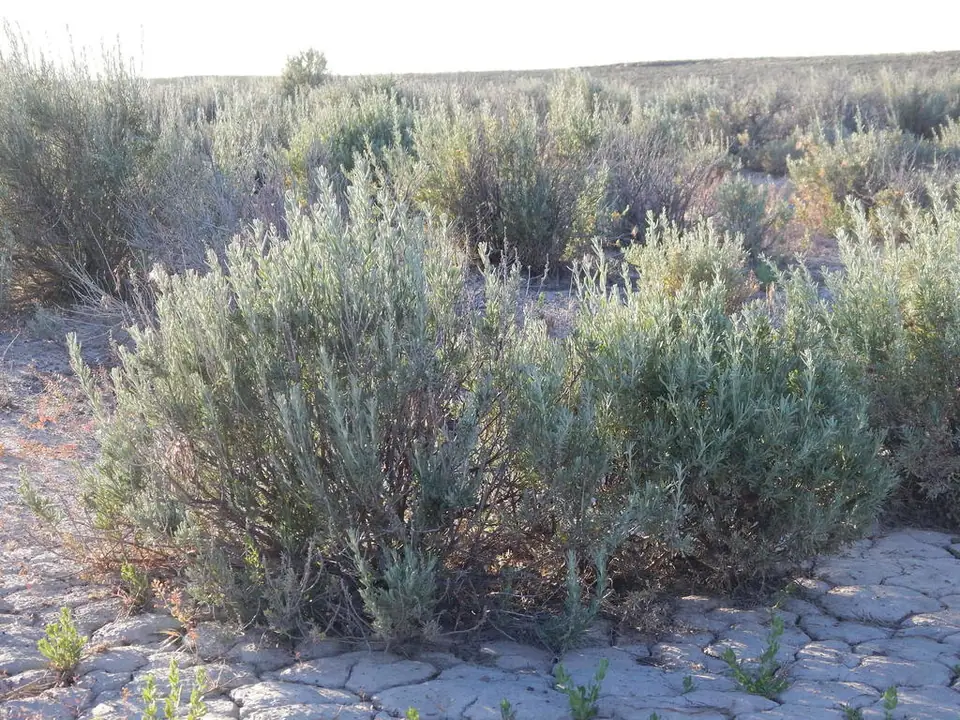
How to Grow and Care for Silver sagebrush
Artemisia cana
Written by Emilio Marruso · last checked
At a glance
This sagebrush is an easygoing plant for sunny spots: give it full sun and very little water, letting the soil dry out between waterings. It accepts a remarkably wide range of soils, from pH 5.2 to 9.0. Plant it in spring or summer, or start your own from seed in fall, then collect fresh seed in late fall.
- Sun
Full sun
- Water
Little water; let the soil dry out between waterings
- Soil
Very adaptable: acidic to alkaline soil, pH 5.2–9.0
- Planting
Potted plants in spring or summer; bare-root plants in spring only. Avoid late fall and winter
What the sources say (1)
Planting: Spring and summer from containerized material; spring only for bare root; avoid winter and late fall
relatively easy during the spring and summer from containerized material and bare root (spring only). Avoid winter and late fall transplanting.
— Plant Propagation Protocol for Artemisia cana [4] - Harvest
Collect the seeds in late fall, October–November
What the sources say (2)
- Pests
Check for aphids, especially in early spring; it can get powdery mildew and root rot
- Sowing
Sow outdoors in fall, or in spring after soaking the seeds in water for 24 hours
What the sources say (1)
Sowing: Fall (outdoors) or spring (after soaking seed for 24 hours in water)
Seeds can be planted outside in the fall or soaked for 24 hours in water before planting in the spring.
— "Asteraceae : Artemisia cana" by R Neil Reese [3]
Overview
Silver sagebrush is a native, semi-woody perennial with white-woolly stems growing 1-3 feet [30–91 cm] tall in the upper Midwest. [1] It grows on rocky, well-drained soils in full sun and tolerates a pH range of 5.2-9.0. [3][4] The species occurs from southern British Columbia east to southwestern Manitoba and south to Minnesota, Nebraska, northern New Mexico and Arizona, and southern California. [4]
This record is incomplete: the sources we read do not cover every field yet.
Not yet covered by our sources: Hardiness, coldest zone, Hardiness, warmest zone, Pruning
Silver sagebrush care
Measurements in square brackets are our conversion into the other unit system; the quoted text is unchanged.
How to water Silver sagebrush
How much light Silver sagebrush needs
How much cold Silver sagebrush can take
Hardiness, coldest zone
Not stated in the sources we read.
Hardiness, warmest zone
Not stated in the sources we read.
Best soil for Silver sagebrush
Soil pH, minimum
5.2
What the sources say (1)
Can tolerate pH range of 5.2-9.0Soil pH, maximum
9.0
What the sources say (1)
Can tolerate pH range of 5.2-9.0How to propagate Silver sagebrush
The sources disagree:
Silver sagebrush pests and problems
Foliar and root diseases, aphids
Symptom: Susceptible to powdery mildew, Fusarium root rot and aphids
What to do: Check for aphids especially in the early spring
What the sources say (1)
Can be susceptible to foliar and root pathogens such as Powdery Mildew and Fusarium root rot. Check for aphids especially in the early spring
— Plant Propagation Protocol for Artemisia cana [4]
Remedies
The sources we checked give no remedies for this plant.
Calendar
Sowing
Fall (outdoors) or spring (after soaking seed for 24 hours in water)
What the sources say (1)
Seeds can be planted outside in the fall or soaked for 24 hours in water before planting in the spring.Planting
Spring and summer from containerized material; spring only for bare root; avoid winter and late fall
What the sources say (1)
relatively easy during the spring and summer from containerized material and bare root (spring only). Avoid winter and late fall transplanting.Harvest
Seed: late fall (October-November)
Pruning
Not stated in the sources we read.
Months as given by the sources, which are mostly from the United States (northern hemisphere). In the southern hemisphere they shift by about six months.
Indicative values
Values from a secondary source, not checked word for word like the rest of this page. Use them as a starting point.
- Mature height
- 50-150 cm [20–59 in]Indicative value, adapt it to your climate · Secondary source
- Hours of sun
- 6-8 hoursIndicative value, adapt it to your climate · Secondary source
- Care level
- LowIndicative value, adapt it to your climate · Secondary source
- Growth rate
- LowIndicative value, adapt it to your climate · Secondary source
- Pruning
- May, June, July, December, January, FebruaryIndicative value, adapt it to your climate · Secondary source
Similar plants
- Artemisia afra Artemisia afra
- Artemisia capillaris Artemisia capillaris
- Dusty Miller Artemisia stelleriana
- Southernwood Artemisia abrotanum
- Tree Wormwood Artemisia arborescens
- White Sage Artemisia ludoviciana
- Wormwood Artemisia absinthium
- Prairie sagewort Artemisia frigida
Sources
Every value above is quoted from these documents. Links lead to the original publisher.
- Silver Sagebrush · ag.missouristate.edu, consulted
- danielle_test | USU · extension.usu.edu, consulted
- "Asteraceae : Artemisia cana" by R Neil Reese · openprairie.sdstate.edu, consulted
- Plant Propagation Protocol for Artemisia cana · courses.washington.edu, consulted
- Silver Sagebrush (Artemisia cana) · desert-tropicals.com, consulted
- Silver Sagebrush, Artemisia Cana · americansouthwest.net, consulted
Written by Emilio Marruso · last checked