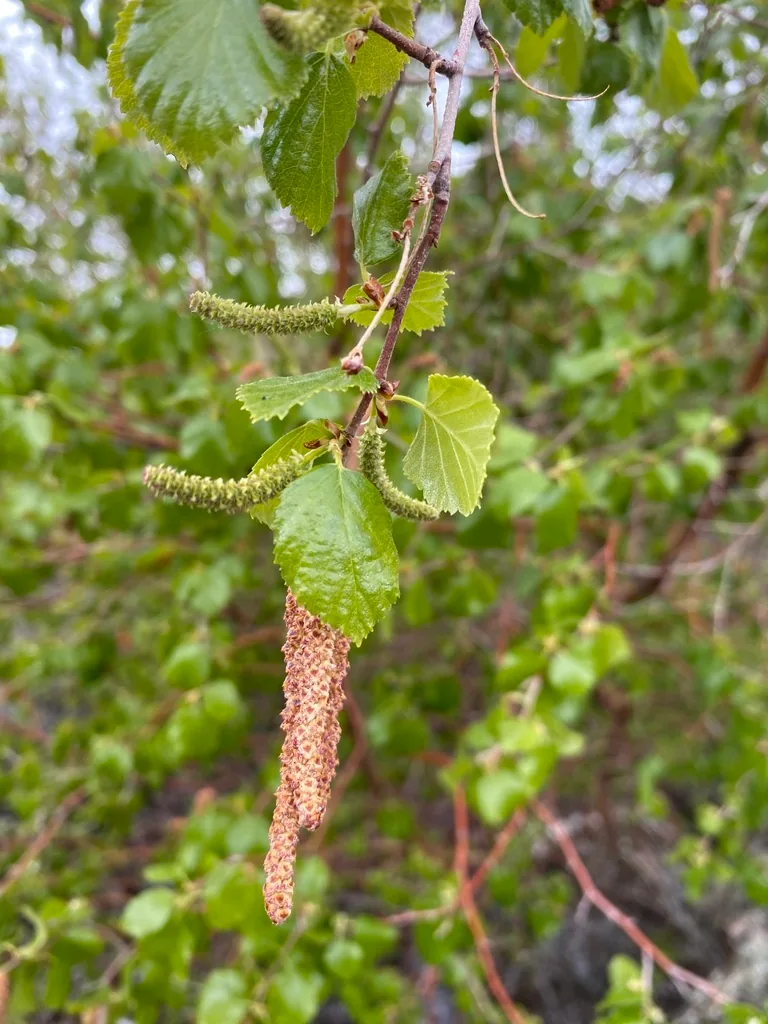
How to Grow and Care for Black birch
Betula occidentalis
Written by Emilio Marruso · last checked
At a glance
Water birch is a perennial that fits easily into your garden, happy in full sun or light shade. Keep its ground moist with a soaker hose and spread bark mulch over the soil to help hold in the water. You can even start your own from seed, a lovely project to watch grow and return year after year.
- Sun
Full sun to light shade
What the sources say (1)
Light: Full sun to light shade
Plant in full sun to light shade. Intermediate shade tolerance.
— Tree Tour - Facilities - The University of Utah [7] - Water
Keep the ground moist with a soaker hose; cover the soil with bark mulch
What the sources say (1)
Watering notes: Soaker hoses to keep the ground moist; bark mulch on top of the soil
If you are planning on cultivating this birch tree, think about using soaker hoses to keep the ground moist. Bark mulches on top of the soil is also a good idea.
— How To Grow A Red Birch Tree | Gardening Know How [6] - Propagation
Grows from seed
What the sources say (1)
Propagation: Seed
giving the crown a spreading or open appearance. It reproduces by seed.
— Water Brich | USU [1]
Overview
Water birch is a deciduous small tree, often shrubby, that occurs naturally in moist areas along streams and lakes. [1][2] Its primary importance is for streambank stabilization and wildlife habitat. [1] As a landscape tree it does well if very hot, dry sites are avoided. [7]
This record is incomplete: the sources we read do not cover every field yet.
Not yet covered by our sources: Pruning
Black birch care
How to water Black birch
Watering
The sources disagree:
Zones: 4-9 Full Sun Moderate Water Location: Many locations throughout the Garden
[4]
Watering notes
Soaker hoses to keep the ground moist; bark mulch on top of the soil
What the sources say (1)
If you are planning on cultivating this birch tree, think about using soaker hoses to keep the ground moist. Bark mulches on top of the soil is also a good idea.How much light Black birch needs
Full sun to light shade
What the sources say (1)
Plant in full sun to light shade. Intermediate shade tolerance.How much cold Black birch can take
Hardiness, coldest zone
The sources give different values depending on region, zone or growing conditions.
What each source says
According to USU Extension (forestry): 3 [winter low −40 to −34.4 °C (−40 to −30 °F)]
According to University of Utah: 3 [winter low −40 to −34.4 °C (−40 to −30 °F)]
According to Red Butte Garden: 4 [winter low −34.4 to −28.9 °C (−30 to −20 °F)]
According to Gardening Know How: 2 [winter low −45.6 to −40 °C (−50 to −40 °F)]
What the sources say (4)
According to USU Extension (forestry): and able to withstand moderately high soil pH. Zones 3-7.According to University of Utah: USDA Hardiness Zone:
3 to 8
Family/Origin:
BetulaceaeAccording to Red Butte Garden: Betula occidentalis Birch Family (Betulaceae) Zones: 4-9 Full Sun Moderate WaterAccording to Gardening Know How: This tree is hardy down to U.S. Department of Agriculture plant hardiness zone 2.Hardiness, warmest zone
The sources give different values depending on region, zone or growing conditions.
What each source says
According to USU Extension (forestry): 7 [winter low −17.8 to −12.2 °C (0 to 10 °F)]
According to University of Utah: 8 [winter low −12.2 to −6.7 °C (10 to 20 °F)]
According to Red Butte Garden: 9 [winter low −6.7 to −1.1 °C (20 to 30 °F)]
What the sources say (3)
According to USU Extension (forestry): and able to withstand moderately high soil pH. Zones 3-7.According to University of Utah: USDA Hardiness Zone:
3 to 8
Family/Origin:
BetulaceaeAccording to Red Butte Garden: Betula occidentalis Birch Family (Betulaceae) Zones: 4-9 Full Sun Moderate WaterHow to propagate Black birch
Seed
What the sources say (1)
giving the crown a spreading or open appearance. It reproduces by seed.How to grow Black birch
The plant
Life cycle
perennial
What the sources say (1)
Life Span: Perennial
Origin: Native
Season: Deciduous
Growth Characteristics:Family
Betulaceae
What the sources say (1)
Betulaceae – Birch. Native to much of the western U.S. and southern Canada. Utah's only native birch.Remedies
The sources we checked give no remedies for this plant.
Calendar
Pruning
Not stated in the sources we read.
Months as given by the sources, which are mostly from the United States (northern hemisphere). In the southern hemisphere they shift by about six months.
Indicative values
Values from a secondary source, not checked word for word like the rest of this page. Use them as a starting point.
- Mature height
- 304.8-1219.2 cm (10-40 ft)Indicative value, adapt it to your climate · Secondary source
- Drought tolerant
- yesIndicative value, adapt it to your climate · Secondary source
- Soil
- Sandy Loamy ClayIndicative value, adapt it to your climate · Secondary source
- Soil pH
- 5-7Indicative value, adapt it to your climate · Secondary source
- Care level
- MediumIndicative value, adapt it to your climate · Secondary source
- Growth rate
- LowIndicative value, adapt it to your climate · Secondary source
- Pruning
- March, April, May, June, July, August, September, March, April, FebruaryIndicative value, adapt it to your climate · Secondary source
Similar plants
- Asian White Birch Betula platyphylla
- European White Birch Betula pendula
- Jacquemontii Birch Tree Betula jacquemontii
- Japanese Cherry Birch Betula grossa
- Monarch Birch Betula maximowicziana
- Paper Birch Betula papyrifera
- Sweet Birch Betula lenta
- Yellow Birch Betula alleghaniensis
Sources
Every value above is quoted from these documents. Links lead to the original publisher.
- Water Brich | USU · extension.usu.edu, consulted
- Water Birch | Forestry | Extension | USU · extension.usu.edu, consulted
- danielle_test | USU · extension.usu.edu, consulted
- Western River Birch · redbuttegarden.org, consulted
- Betula occidentalis - Trees and Shrubs Online · treesandshrubsonline.org, consulted
- How To Grow A Red Birch Tree | Gardening Know How · gardeningknowhow.com, consulted
- Tree Tour - Facilities - The University of Utah · facilities.utah.edu, consulted
- Virginia Tech Dendrology Fact Sheet · dendro.cnre.vt.edu, consulted
Written by Emilio Marruso · last checked