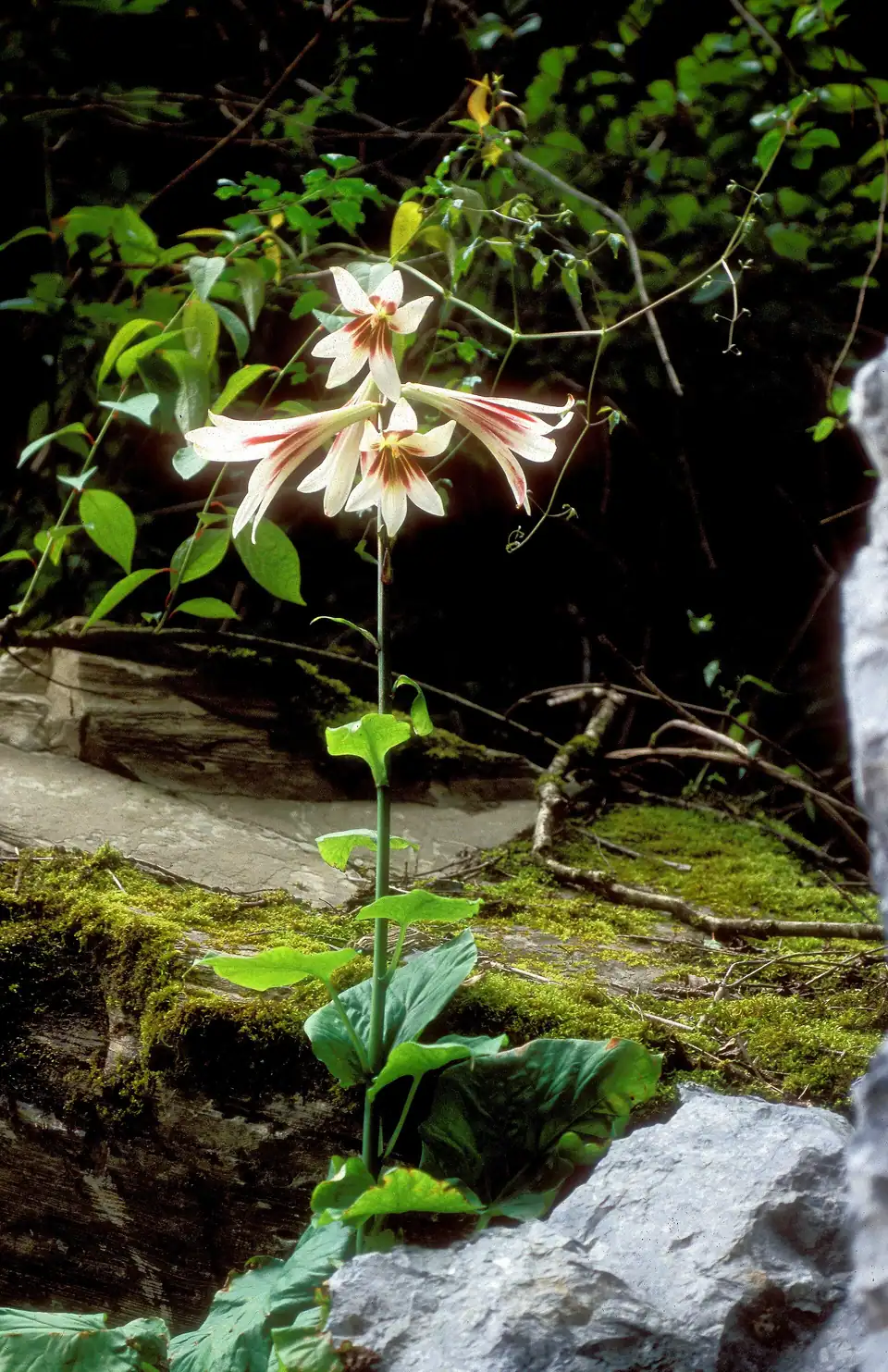

How to Grow and Care for Cardiocrinum giganteum
Cardiocrinum giganteum
Written by Emilio Marruso · last checked
At a glance
This perennial from the lily family is happiest in partial shade, in soil that stays moist yet drains freely. Water it well during dry spells, keep it out of winter wet, and it will come back year after year. After flowering, the old plant leaves small bulbs at its base that you can replant, or you can sow its seeds in autumn as soon as they ripen.
- Sun
Partial shade
What the sources say (2)
Light: Partial shade
These plants do best in partial shade and will thrive if given woodland conditions similar to those of its native habitat.
— Beware The Giant Himalayan Lily - These Plants Are A Lot Of Work For Little Reward | Horticulture.co.uk [2] Giant Himalayan lily care includes planting bulbs in a partially shaded location.
— Giant Himalayan Lily Care - Tips For Growing Giant Himalayan Lilies | Gardening Know How [1] - Water
Water well in dry spells to keep the soil moist, but never soggy
What the sources say (1)
Watering: Water well during dry spells to maintain soil moisture, without saturating the site
Water well during dry spells to maintain soil moisture, but take care not to saturate the site
— Beware The Giant Himalayan Lily - These Plants Are A Lot Of Work For Little Reward | Horticulture.co.uk [2] - Cold
Survives winters down to 0 °F (−17.8 °C)
Hardy in very cold winters · USDA 7 · RHS H6 · Z7
What the sources say (2)
Hardiness, coldest zone: 7 [winter low −17.8 to −12.2 °C (0 to 10 °F)]
It is hardy in USDA zones 7 through 9.
— Giant Himalayan Lily Care - Tips For Growing Giant Himalayan Lilies | Gardening Know How [1] Hardiness, warmest zone: 9 [winter low −6.7 to −1.1 °C (20 to 30 °F)]
It is hardy in USDA zones 7 through 9.
— Giant Himalayan Lily Care - Tips For Growing Giant Himalayan Lilies | Gardening Know How [1] - Soil
Moist soil that drains freely; winter wet and soggy ground cause problems
What the sources say (2)
Watering notes: Soil must be moist yet free-draining; winter wet and waterlogging cause problems
The soil must be moist yet free-draining and ideally deep, humus-rich and fertile.
— Beware The Giant Himalayan Lily - These Plants Are A Lot Of Work For Little Reward | Horticulture.co.uk [2] you do need to look out for winter wet, which can cause a number of problems if waterlogging is allowed to occur
— Beware The Giant Himalayan Lily - These Plants Are A Lot Of Work For Little Reward | Horticulture.co.uk [2] - Pests
Slugs, snails, aphids and bulb rot; mice and voles chew the bulbs in the cold months
What the sources say (2)
Pests: snails, slugs, mice
Snails and slugs are common visitors to this plant. Locations with poor drainage can lead to bulb rot. Mice sometimes chew on immature bulbs.
— Giant Himalayan Lily - Cardiocrinum | North Carolina Extension Gardener Plant Toolbox [6] Diseases: bulb rot
Locations with poor drainage can lead to bulb rot.
— Giant Himalayan Lily - Cardiocrinum | North Carolina Extension Gardener Plant Toolbox [6] - Propagation
After flowering, replant the small bulbs from the base of the old plant, or grow from seed
What the sources say (2)
Propagation: Bulblets (offsets) from the base of the old plant after flowering; seed
the plants will produce bulblets at the base which can be used for propagation.
— Beware The Giant Himalayan Lily - These Plants Are A Lot Of Work For Little Reward | Horticulture.co.uk [2] Bulblets are obtained from the base of the old plant after flowering.
— Cardiocrinum giganteum - Useful Temperate Plants [4] - Sowing
Sow in autumn, as soon as the seed is ripe
What the sources say (2)
Sowing: Autumn, as soon as the seed is ripe
The seed is best sown in a cold frame or other protected spot in the autumn, as soon as it becomes ripe.
— Beware The Giant Himalayan Lily - These Plants Are A Lot Of Work For Little Reward | Horticulture.co.uk [2] Seed - best sown as soon as it is ripe in a cold frame in the autumn.
— Cardiocrinum giganteum - Useful Temperate Plants [4]
Overview
Cardiocrinum giganteum (giant Himalayan lily) is a monocarpic perennial that dies after flowering and leaves offset bulblets. [2][1] It prefers partial shade and moist, humus-rich soil, and takes about seven years from seed to flower. [2][4]
This record is incomplete: the sources we read do not cover every field yet.
Not yet covered by our sources: Pruning
Cardiocrinum giganteum care
How to water Cardiocrinum giganteum
Watering
Water well during dry spells to maintain soil moisture, without saturating the site
What the sources say (1)
Water well during dry spells to maintain soil moisture, but take care not to saturate the siteWatering notes
Soil must be moist yet free-draining; winter wet and waterlogging cause problems
What the sources say (2)
The soil must be moist yet free-draining and ideally deep, humus-rich and fertile.you do need to look out for winter wet, which can cause a number of problems if waterlogging is allowed to occurHow much light Cardiocrinum giganteum needs
Partial shade
What the sources say (2)
These plants do best in partial shade and will thrive if given woodland conditions similar to those of its native habitat.Giant Himalayan lily care includes planting bulbs in a partially shaded location.How much cold Cardiocrinum giganteum can take
Hardiness, coldest zone
7 [winter low −17.8 to −12.2 °C (0 to 10 °F)]
What the sources say (1)
It is hardy in USDA zones 7 through 9.Hardiness, warmest zone
9 [winter low −6.7 to −1.1 °C (20 to 30 °F)]
What the sources say (1)
It is hardy in USDA zones 7 through 9.How to propagate Cardiocrinum giganteum
Bulblets (offsets) from the base of the old plant after flowering; seed
What the sources say (2)
the plants will produce bulblets at the base which can be used for propagation.Bulblets are obtained from the base of the old plant after flowering.How to grow Cardiocrinum giganteum
The plant
Life cycle
perennial
What the sources say (1)
These bulbous, herbaceous perennials are members of the lily family ( Liliaceae ), from high-altitude woodlands across eastern Asia.Family
Liliaceae
What the sources say (1)
These bulbous, herbaceous perennials are members of the lily family ( Liliaceae ), from high-altitude woodlands across eastern Asia.Pests and diseases
Pests
snails, slugs, mice
What the sources say (1)
Snails and slugs are common visitors to this plant. Locations with poor drainage can lead to bulb rot. Mice sometimes chew on immature bulbs.Diseases
bulb rot
What the sources say (1)
Locations with poor drainage can lead to bulb rot.Cardiocrinum giganteum pests and problems
Slugs, snails and aphids
Symptom: Often attracted to the plant; aphids can carry lily mosaic virus
What to do: Pest control
What the sources say (1)
Slugs , snails , and aphids (which can carry lily mosaic virus) are often attracted to the Cardiocrinum Himalayan lily.
— Giant Himalayan Lily Care - Tips For Growing Giant Himalayan Lilies | Gardening Know How [1] Slugs, mice and voles on the bulbs
Symptom: Damage to the bulbs, especially during the colder months
What to do: Protect the bulbs
What the sources say (1)
You also need to be aware of pests like slugs, mice and voles, which can be attracted to the bulbs and cause damage to them
— Beware The Giant Himalayan Lily - These Plants Are A Lot Of Work For Little Reward | Horticulture.co.uk [2]
Remedies
The sources we checked give no remedies for this plant.
Calendar
Sowing
Autumn, as soon as the seed is ripe
What the sources say (2)
The seed is best sown in a cold frame or other protected spot in the autumn, as soon as it becomes ripe.Seed - best sown as soon as it is ripe in a cold frame in the autumn.Pruning
Not stated in the sources we read.
Months as given by the sources, which are mostly from the United States (northern hemisphere). In the southern hemisphere they shift by about six months.
Indicative values
Values from a secondary source, not checked word for word like the rest of this page. Use them as a starting point.
- Mature height
- 213.4-274.3 cm (7-9 ft)Indicative value, adapt it to your climate · Secondary source
- Hours of sun
- 6-8 hoursIndicative value, adapt it to your climate · Secondary source
- Soil pH
- 5.5-6.5Indicative value, adapt it to your climate · Secondary source
- Growth rate
- HighIndicative value, adapt it to your climate · Secondary source
- Pruning
- November, December, January, FebruaryIndicative value, adapt it to your climate · Secondary source
Similar plants
- Asphodelus ramosus Asphodelus ramosus
- Bluebead Lily Clintonia borealis
- Carolina Lily Lilium michauxii
- Crown Imperial Fritillary Fritillaria imperialis
- Dog's-tooth-violet Erythronium dens-canis
- Gray's Lily Lilium grayi
- Indian Cucumber Medeola virginiana
- Nodding Mandarin Prosartes maculata
Sources
Every value above is quoted from these documents. Links lead to the original publisher.
- Giant Himalayan Lily Care - Tips For Growing Giant Himalayan Lilies | Gardening Know How · gardeningknowhow.com, consulted
- Beware The Giant Himalayan Lily - These Plants Are A Lot Of Work For Little Reward | Horticulture.co.uk · horticulture.co.uk, consulted
- Cultivation of Cardiocrinum · redhall.org.uk, consulted
- Cardiocrinum giganteum - Useful Temperate Plants · temperate.theferns.info, consulted
- How to grow Cardiocrinum | RHS Growing Guide · rhs.org.uk, consulted
- Giant Himalayan Lily - Cardiocrinum | North Carolina Extension Gardener Plant Toolbox · plants.ces.ncsu.edu, consulted
Written by Emilio Marruso · last checked