
How to Grow and Care for Common calabash tree
Crescentia cujete
Written by Emilio Marruso · last checked
Toxic to: People · Why
At a glance
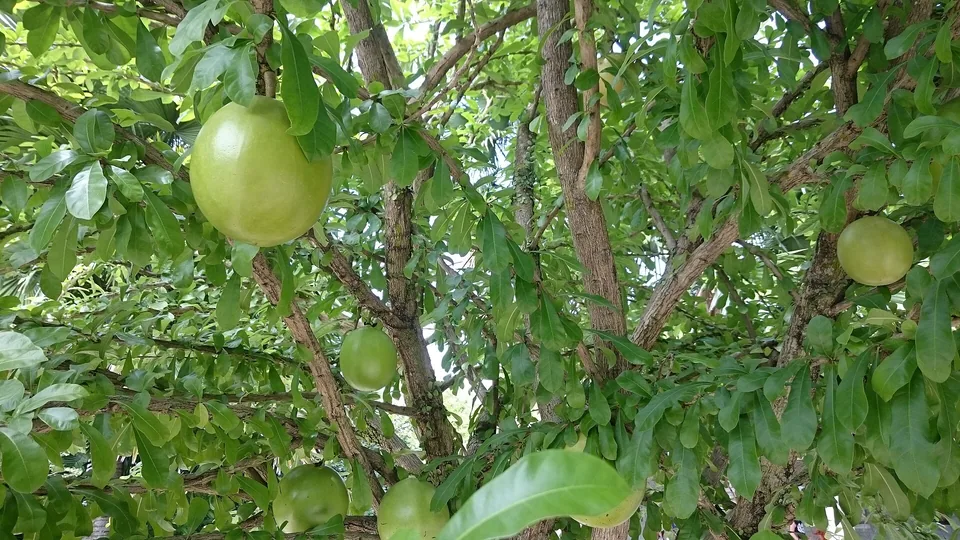
The calabash tree hangs its smooth, hard-shelled fruits directly beneath the branches, a sight that makes any sunny garden memorable. Give it full sun and plenty of room: it grows 10–25 feet tall and even wider, 20–30 feet across. The young fruit is occasionally pickled and the roasted seeds make an aromatic coffee substitute, but never eat the pulp: it is poisonous.
- Sun
Full sun
- Cold
Survives winters down to 35 °F (1.7 °C)
Tender: needs a frost-free greenhouse · USDA 10b · RHS H2 · Z10
What the sources say (4)
Hardiness, coldest zone: 10b [winter low 1.7 to 4.4 °C (35 to 40 °F)]
USDA hardiness zones: 10B through 11 (Figure 2)
— ENH375/ST216: Crescentia cujete: Calabash [1] It thrives in U.S. Department of Agriculture plant hardiness zones 10b through 11.
— Calabash Tree Information: Calabash Tree Growing And Care | Gardening Know How [4] Hardiness, warmest zone: 11 [winter low 4.4 to 10 °C (40 to 50 °F)]
USDA hardiness zones: 10B through 11 (Figure 2)
— ENH375/ST216: Crescentia cujete: Calabash [1] It thrives in U.S. Department of Agriculture plant hardiness zones 10b through 11.
— Calabash Tree Information: Calabash Tree Growing And Care | Gardening Know How [4] - Harvest
Young fruit can be pickled; roasted seeds mixed with roasted wheat make a coffee substitute
- Pests
Chinese rose beetles and leaf-webbing caterpillars cause occasional damage
What the sources say (1)
Pests: Chinese rose beetles, leaf-webbing caterpillar
No pests or diseases are of major concern but occasionally bothered by Chinese rose beetles and a leaf-webbing caterpillar.
— ENH375/ST216: Crescentia cujete: Calabash [1] - Size
10–25 ft tall and 20–30 ft wide
What the sources say (2)
Mature height: 305-762 cm (10-25 ft)
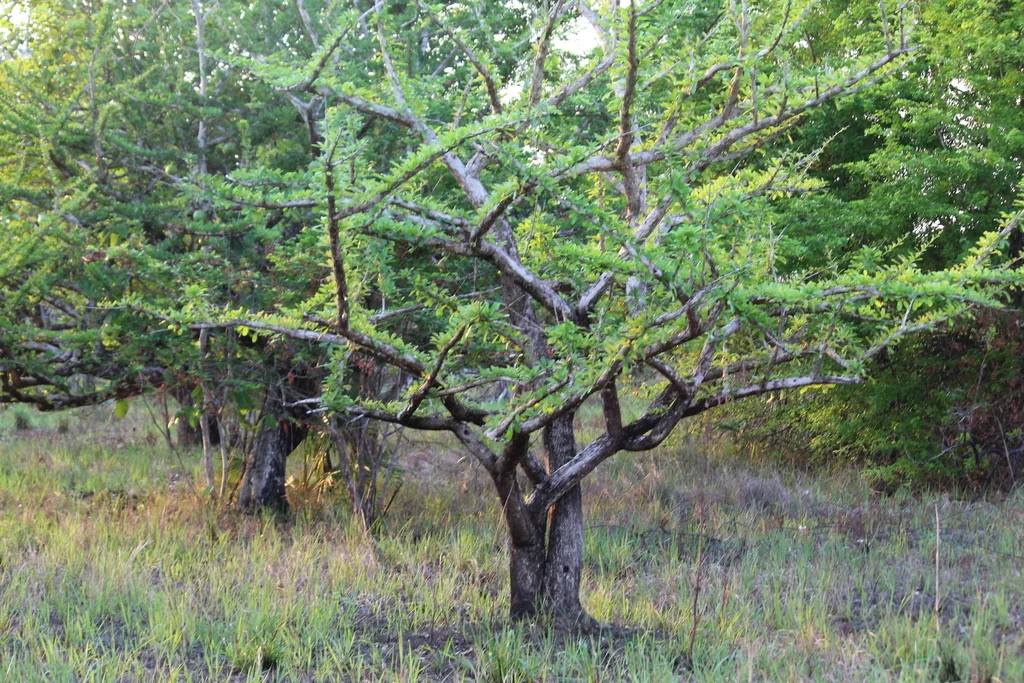
Calabash is an evergreen tree reaching 10 to 25 feet in height with a broad, irregular crown composed of long, spreading branches clothed in 2- to 7-inch-long dark green leaves
— ENH375/ST216: Crescentia cujete: Calabash [1] Mature width: 610-914 cm (20-30 ft)
Height: 10 to 25 feet Spread: 20 to 30 feet Crown uniformity: irregular Crown shape: spreading, round
— ENH375/ST216: Crescentia cujete: Calabash [1] - Propagation
Grow new trees from seed
What the sources say (1)
Propagation: Seed
Rootzone Tolerance | Drought Tolerant, Well-Drained Soils | Propagation Method | Seed
— NParks | Crescentia cujete [3] - Safety
The fruit pulp is poisonous: never eat it
Overview
Calabash is an evergreen tree reaching 10 to 25 feet [3–7.6 m] with a broad, irregular crown, valued for year-round flowers and large hard-shelled fruit. [1] It should be grown in full sun on well-drained soil. [1] The fruit pulp is described as toxic and should not be consumed. [3]
This record is incomplete: the sources we read do not cover every field yet.
Not yet covered by our sources: Pruning
Common calabash tree care
Measurements in square brackets are our conversion into the other unit system; the quoted text is unchanged.
How to water Common calabash tree
The sources give different values depending on region, zone or growing conditions.
What each source says
According to Gardening Know How: Cannot tolerate drought, seedling or mature; regular water
According to NParks: Moderate water; drought tolerant
What the sources say (2)
According to Gardening Know How: The calabash tree, whether a seedling or a mature specimen, cannot tolerate drought.According to NParks: Rootzone Tolerance
| Drought Tolerant, Well-Drained Soils
| Propagation Method
| SeedHow much light Common calabash tree needs
How much cold Common calabash tree can take
Hardiness, coldest zone
10b [winter low 1.7 to 4.4 °C (35 to 40 °F)]
Hardiness, warmest zone
11 [winter low 4.4 to 10 °C (40 to 50 °F)]
How to propagate Common calabash tree
Seed
What the sources say (1)
Rootzone Tolerance
| Drought Tolerant, Well-Drained Soils
| Propagation Method
| SeedHow to grow Common calabash tree
The plant
Family
Bignoniaceae
What the sources say (1)
Common name(s): Calabash
Family: Bignoniaceae
USDA hardiness zones: 10B through 11 (Figure 2)Mature height
305-762 cm (10-25 ft)
What the sources say (1)
Calabash is an evergreen tree reaching 10 to 25 feet in height with a broad, irregular crown composed of long, spreading branches clothed in 2- to 7-inch-long dark green leavesMature width
610-914 cm (20-30 ft)
What the sources say (1)
Height: 10 to 25 feet
Spread: 20 to 30 feet
Crown uniformity: irregular
Crown shape: spreading, roundPests and diseases
Pests
Chinese rose beetles, leaf-webbing caterpillar
What the sources say (1)
No pests or diseases are of major concern but occasionally bothered by Chinese rose beetles and a leaf-webbing caterpillar.Common calabash tree pests and problems
Chinese rose beetles and leaf-webbing caterpillar
Symptom: Occasional damage
What the sources say (1)
No pests or diseases are of major concern but occasionally bothered by Chinese rose beetles and a leaf-webbing caterpillar.
— ENH375/ST216: Crescentia cujete: Calabash [1]
Remedies
The sources we checked give no remedies for this plant.
Is Common calabash tree poisonous?
Reported by the source, quoted verbatim. This is not medical or veterinary advice: if a person or an animal may have eaten this plant, contact a poison control centre or a veterinarian.
with a smooth, hard shell, which hang directly beneath the branches. Fruits are poisonous.
[1]Usage Hazard - Cons | Toxic Upon Ingestion | Usage Hazard - Cons Remarks | Pulp of the fruit is toxic and should not be consumed.
[3]- Poisonous parts
Pulp of the fruit is toxic and should not be consumed.
[3]
Known Hazards The pulp of the fruit is poisonous
[5]- Poisonous parts
Known Hazards The pulp of the fruit is poisonous
[5]
Calendar
Pruning
Not stated in the sources we read.
Months as given by the sources, which are mostly from the United States (northern hemisphere). In the southern hemisphere they shift by about six months.
Edibility
Reported by the source, quoted verbatim. Do not eat a plant on the basis of this page alone: identification mistakes can be dangerous.
Indicative values
Values from a secondary source, not checked word for word like the rest of this page. Use them as a starting point.
- Life cycle
- PerennialIndicative value, adapt it to your climate · Secondary source
- Hours of sun
- 6-8 hoursIndicative value, adapt it to your climate · Secondary source
- Soil pH
- 6-7.5Indicative value, adapt it to your climate · Secondary source
- Care level
- MediumIndicative value, adapt it to your climate · Secondary source
- Growth rate
- LowIndicative value, adapt it to your climate · Secondary source
- Pruning
- February, March, AprilIndicative value, adapt it to your climate · Secondary source
Similar plants
- African tuliptree Spathodea campanulata
- Cape Honeysuckle Tecomaria capensis
- Chilean Glory Flower Eccremocarpus scaber
- Chinese catalpa Catalpa ovata
- Chinese Trumpet Creeper Campsis grandiflora
- Cross-Vine Bignonia capreolata
- Desert Willow Chilopsis linearis
- Hardy Gloxinia Incarvillea delavayi
Sources
Every value above is quoted from these documents. Links lead to the original publisher.
- ENH375/ST216: Crescentia cujete: Calabash · ask.ifas.ufl.edu, consulted
- Crescentia cujete - Plant Detail - Tropical Plants Database - NTBG Database · ntbg.org, consulted
- NParks | Crescentia cujete · nparks.gov.sg, consulted
- Calabash Tree Information: Calabash Tree Growing And Care | Gardening Know How · gardeningknowhow.com, consulted
- Crescentia cujete - Useful Tropical Plants · tropical.theferns.info, consulted
- Crescentia cujete / [Species detail] / Plant Atlas · florida.plantatlas.usf.edu, consulted
Written by Emilio Marruso · last checked