
How to Grow and Care for Crocus etruscus
Crocus etruscus
Written by Emilio Marruso · last checked
At a glance
Etruscan crocus is a bulb that asks for very little: a sunny or partly sunny spot and soil that drains well. It even tolerates summer moisture, as long as the drainage is right, and it likes a pH of 6.0–7.0. Plant the bulbs 3–4 inches apart and cover the bed with wire mesh so squirrels can't dig them up.
- Sun
Full sun to partial sun
What the sources say (1)
Light: Sunny to partially sunny
Crocus bulbs need well-drained soil in a sunny to partially sunny location.
— Crocus etruscus (Tuscan Crocus) - World of Flowering Plants [2] - Water
Handles summer moisture if the soil drains well
What the sources say (1)
Watering notes: Tolerates summer moisture as long as the drainage is right
For species like C. sativus and C. etruscus that are less picky than the alpine house types because they’ll tolerates summer moisture, just make sure that the drainage is right.
— How to grow crocuses / RHS Growing Guide [3] - Cold
Survives winters down to −10 °F (−23.3 °C)
Very hardy · USDA 6a · RHS H7 · Z6
What the sources say (2)
Hardiness, coldest zone: 6a [winter low −23.3 to −20.6 °C (−10 to −5 °F)]
Hardiness: USDA hardiness zone 6a to 8b: from -10°F (-23.3°C) to 20°F (-6.7°C).
— Crocus etruscus (Tuscan Crocus) - World of Flowering Plants [2] Hardiness, warmest zone: 8b [winter low −9.4 to −6.7 °C (15 to 20 °F)]
Hardiness: USDA hardiness zone 6a to 8b: from -10°F (-23.3°C) to 20°F (-6.7°C).
— Crocus etruscus (Tuscan Crocus) - World of Flowering Plants [2] - Soil
Slightly acidic to neutral soil, pH 6.0–7.0
What the sources say (2)
Soil pH, minimum: 6.0
They thrive in a soil pH of 6 to 7 and tolerate a wide range of soils.
— Crocus etruscus (Tuscan Crocus) - World of Flowering Plants [2] Soil pH, maximum: 7.0
They thrive in a soil pH of 6 to 7 and tolerate a wide range of soils.
— Crocus etruscus (Tuscan Crocus) - World of Flowering Plants [2] - Spacing
3–4 in between bulbs
What the sources say (1)
Spacing: 7.5-10 cm (3 to 4 in)
Bulbs are planted 3 inches (7.5 cm) deep and 3 to 4 inches (7.5 to 10 cm) apart.
— Crocus etruscus (Tuscan Crocus) - World of Flowering Plants [2] - Pests
Squirrels and other rodents eat the bulbs, deer eat the leaves; cover the bed with wire mesh
Overview
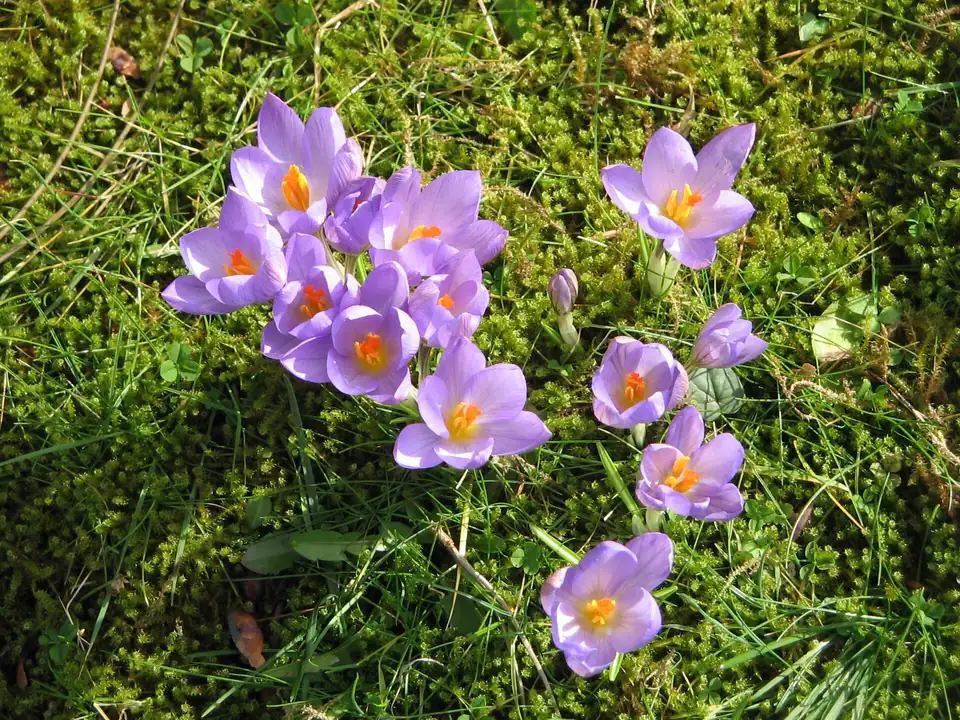
Crocus etruscus is a narrow endemic confined to a restricted range of continental Tuscany. [1] It flowers from February to April, mostly at the edges of wooded areas. [1] The RHS guide lists it among species that can be grown in open garden situations where drainage is good. [3]
This record is incomplete: the sources we read do not cover every field yet.
Not yet covered by our sources: Watering, Pruning, Propagation
Crocus etruscus care
How to water Crocus etruscus
Watering
Not stated in the sources we read.
Watering notes
Tolerates summer moisture as long as the drainage is right
What the sources say (1)
For species like C. sativus and C. etruscus that are less picky than the alpine house types because they’ll tolerates summer moisture, just make sure that the drainage is right.How much light Crocus etruscus needs
Sunny to partially sunny
What the sources say (1)
Crocus bulbs need well-drained soil in a sunny to partially sunny location.How much cold Crocus etruscus can take
Hardiness, coldest zone
6a [winter low −23.3 to −20.6 °C (−10 to −5 °F)]
What the sources say (1)
Hardiness: USDA hardiness zone 6a to 8b: from -10°F (-23.3°C) to 20°F (-6.7°C).Hardiness, warmest zone
8b [winter low −9.4 to −6.7 °C (15 to 20 °F)]
What the sources say (1)
Hardiness: USDA hardiness zone 6a to 8b: from -10°F (-23.3°C) to 20°F (-6.7°C).Best soil for Crocus etruscus
Soil pH, minimum
6.0
What the sources say (1)
They thrive in a soil pH of 6 to 7 and tolerate a wide range of soils.Soil pH, maximum
7.0
What the sources say (1)
They thrive in a soil pH of 6 to 7 and tolerate a wide range of soils.Where to grow Crocus etruscus
7.5-10 cm (3 to 4 in)
What the sources say (1)
Bulbs are planted 3 inches (7.5 cm) deep and 3 to 4 inches (7.5 to 10 cm) apart.How to propagate Crocus etruscus
Not stated in the sources we read.
Crocus etruscus pests and problems
Rodent and deer damage
Symptom: Squirrels and other rodents dig up and eat the bulbs; deer graze the early foliage
What to do: Cover the bed with wire mesh; deer repellents can be tried
What the sources say (1)
Squirrels and other rodents will dig up the bulbs and eat them, and deer graze on the early foliage.
— Crocus etruscus (Tuscan Crocus) - World of Flowering Plants [2]
Remedies
Each remedy shows what official sources say about it; traditional remedies without an official source are marked as such. Harmful ones are listed so you know to avoid them.
Treating the plant
rodents
wire mesh cover over the bulb bed Not verified
Traditional remedy, not verified by an official source.
How: Cover the spring bulb bed with wire mesh to prevent squirrel damage.
Calendar
Pruning
Not stated in the sources we read.
Months as given by the sources, which are mostly from the United States (northern hemisphere). In the southern hemisphere they shift by about six months.
Similar plants
- Crocus corsicus Crocus corsicus
- Crocus ligusticus Crocus ligusticus
- Crocus longiflorus Crocus longiflorus
- Crocus minimus Crocus minimus
- Crocus speciosus Crocus speciosus
- Crocus thomasii Crocus thomasii
- Crocus versicolor Crocus versicolor
- Crocus weldenii Crocus weldenii
Sources
Every value above is quoted from these documents. Links lead to the original publisher.
- INFORMATORE BOTANICO ITALIANO, 42 (1) 47-52, 2010 · societabotanicaitaliana.it, consulted
- Crocus etruscus (Tuscan Crocus) - World of Flowering Plants · worldoffloweringplants.com, consulted
- How to grow crocuses / RHS Growing Guide · rhs.org.uk, consulted
Written by Emilio Marruso · last checked