
How to Grow and Care for Crocus speciosus
Crocus speciosus
Written by Emilio Marruso · last checked
At a glance
This crocus is an easy perennial that comes back year after year. Plant the corms early in the bulb planting season, 5 inches deep, in an open spot with some sun where the ground dries out in summer. Tuck them into grass so the flowers hold up better in bad weather, and plant deep to help protect them from mice.
- Sun
Some sun in an open spot
What the sources say (2)
- Water
Never soggy: best where the ground dries in summer and is moist again in winter
What the sources say (2)
Watering notes: Avoid waterlogging; best where the ground dries in summer and is moist again in winter
Cultivation Requirements Tolerant of garden conditions given some sun and avoiding waterlogging
— speciosus speciosus [5] Here they are best in a position that emulates their homeland and dries in the summer months and hydrates again in the winter
— Crocus speciosus - Dig Delve – An online magazine about gardens, landscape, growing & making. Dig Delve – An online magazine about gardens, landscape, growing & making. [4] - Cold
Survives winters down to −20 °F (−28.9 °C)
Very hardy · USDA 5 · RHS H7 · Z5
What the sources say (1)
Hardiness, coldest zone: 5 [winter low −28.9 to −23.3 °C (−20 to −10 °F)]
These less common species of crocus can be obtained through mail-order bulb companies. They also may also be available at local garden centers and nurseries. All crocuses mentioned here are hardy to USDA zone five.
— 1009 – Bulbs: Fall Flowering Crocus – PlantTalk Colorado [2] - Planting
Plant corms early in the bulb planting season, 5 in deep
What the sources say (3)
Planting: Early in the bulb planting season
If you are introducing the bulbs into turf, do so early in the bulb planting season to allow for their rise to October flower.
— Crocus speciosus - Dig Delve – An online magazine about gardens, landscape, growing & making. Dig Delve – An online magazine about gardens, landscape, growing & making. [4] Sowing depth: 12 cm (5 in), corms planted for naturalising
crocus corms in general: 9-10 cm (3½-4 in): The small corms should be set with flattest side down in the soil at a depth of 3½ to 4 inches.
— 1009 – Bulbs: Fall Flowering Crocus – PlantTalk Colorado [2] For naturalising outdoors, plant species like C. speciosus at 12cm (5in) deep.
— How to grow crocuses / RHS Growing Guide [3] - Pests
Birds, squirrels and mice eat the corms; stored corms can rot
What the sources say (2)
Pests: birds, squirrels, rodents
Watch out for bird, squirrel and rodent damage. Planting under a metal mesh may reduce losses.
— How to grow crocuses / RHS Growing Guide [3] Diseases: fungal rots of stored corms
Store in cool dry conditions to avoid the fungal rots that bulbs
— How to grow crocuses / RHS Growing Guide [3] - Watch out
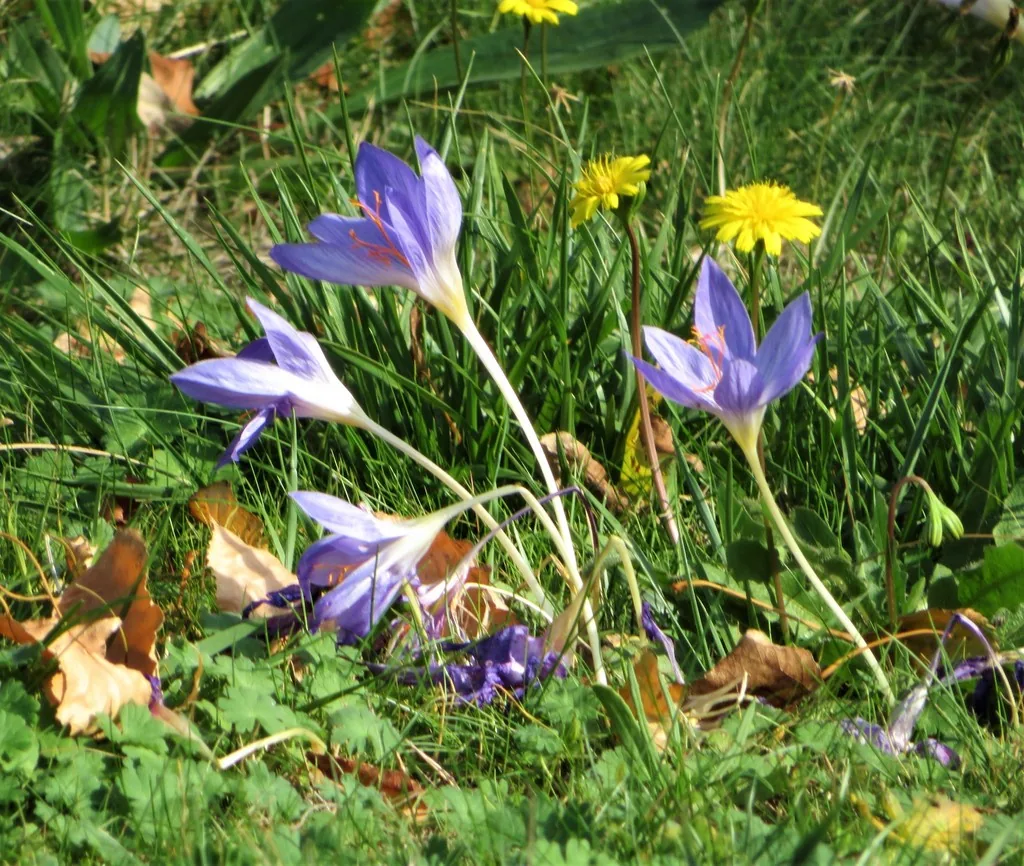
Flowers flop in bad weather: plant them in grass for support
- Size
6–7 in tall
What the sources say (1)
Mature height: 15-18 cm (6-7 in)
At 6-7 inches tall, Crocus speciosus is larger than the saffron crocus and blooms a bit earlier.
— 1009 – Bulbs: Fall Flowering Crocus – PlantTalk Colorado [2] - Propagation
Grow new plants from the small corms or from seed
- Sowing
Collect seed before the pod splits and sow it right away
What the sources say (1)
Saving seeds: Collect seed before the capsule splits and sow it when ripe
Collect seed before the capsule splits. Sow in a pot of well-draining, peat-free seed compost
— How to grow crocuses / RHS Growing Guide [3]
Overview
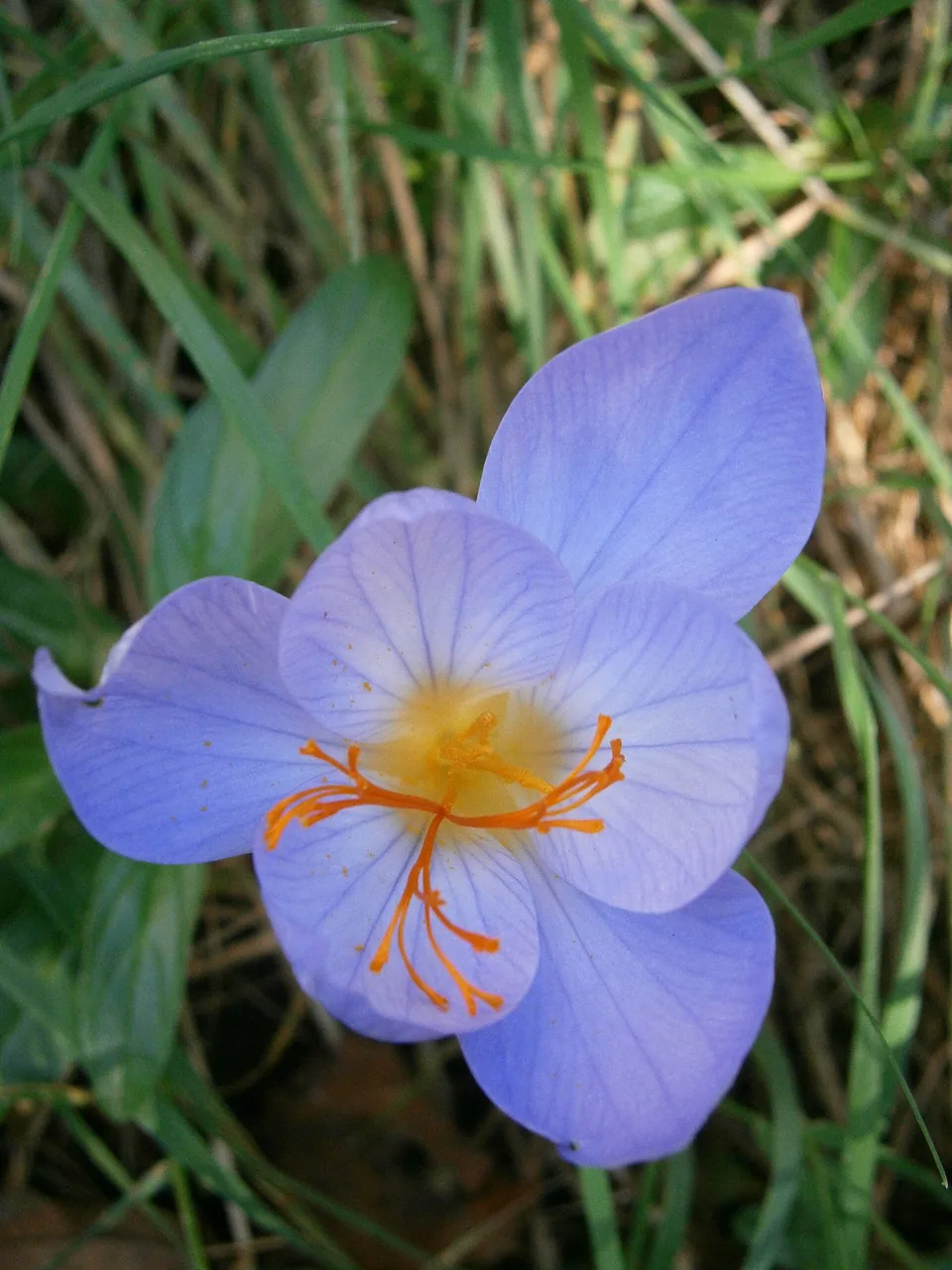
Crocus speciosus is an autumn-flowering, fragrant and easy-to-grow crocus native to Greece, Crimea, the Caucasus, Turkey and Iran. [1] Its leaves appear after the flowers, and it is suited to naturalising in sparse short grass in an open site. [1][3] For naturalising it is planted about 12 cm (5 in) deep. [3]
This record is incomplete: the sources we read do not cover every field yet.
Not yet covered by our sources: Watering, Hardiness, warmest zone, Pruning
Crocus speciosus care
How to water Crocus speciosus
Watering
Not stated in the sources we read.
Watering notes
Avoid waterlogging; best where the ground dries in summer and is moist again in winter
What the sources say (2)
Cultivation Requirements Tolerant of garden conditions given some sun and avoiding waterloggingHere they are best in a position that emulates their homeland and dries in the summer months and hydrates again in the winterHow much light Crocus speciosus needs
Some sun; open site
How much cold Crocus speciosus can take
Hardiness, coldest zone
5 [winter low −28.9 to −23.3 °C (−20 to −10 °F)]
What the sources say (1)
These less common species of crocus can be obtained through mail-order bulb companies. They also may also be available at local garden centers and nurseries. All crocuses mentioned here are hardy to USDA zone five.Hardiness, warmest zone
Not stated in the sources we read.
How to propagate Crocus speciosus
How to grow Crocus speciosus
The plant
Life cycle
perennial
What the sources say (1)
A genus of around 80 species of perennial corms that come up every yearFamily
Iridaceae (iris family)
What the sources say (1)
Technically members of the iris family, there are more than a dozen species of crocuses that bloom in fall and winter.Mature height
15-18 cm (6-7 in)
What the sources say (1)
At 6-7 inches tall, Crocus speciosus is larger than the saffron crocus and blooms a bit earlier.Sowing and growth
Sowing depth
12 cm (5 in), corms planted for naturalising
What each source says
crocus corms in general: 9-10 cm (3½-4 in):
What the sources say (2)
crocus corms in general: 9-10 cm (3½-4 in): The small corms should be set with flattest side down in the soil at a depth of 3½ to 4 inches.For naturalising outdoors, plant species like C. speciosus at 12cm (5in) deep.Harvest and storage
Saving seeds
Collect seed before the capsule splits and sow it when ripe
What the sources say (1)
Collect seed before the capsule splits. Sow in a pot of well-draining, peat-free seed compostPests and diseases
Pests
birds, squirrels, rodents
What the sources say (1)
Watch out for bird, squirrel and rodent damage. Planting under a metal mesh may reduce losses.Diseases
fungal rots of stored corms
What the sources say (1)
Store in cool dry conditions to avoid the fungal rots that bulbsCrocus speciosus pests and problems
Mice
Symptom: Corms eaten by mice
What to do: Plant deep, up to 12 cm
What the sources say (1)
Planting deep, up to 12cm, will also help keep them out of reach of mice, which are a favourite predator.
— Crocus speciosus - Dig Delve – An online magazine about gardens, landscape, growing & making. Dig Delve – An online magazine about gardens, landscape, growing & making. [4] Flopping and weather damage
Symptom: Flowers flop over and are damaged by bad weather
What to do: Plant in grass
What the sources say (1)
prone to flopping over and easily damaged by bad weather. This shortcoming can be overcome to some extent by planting in grass
— speciosus speciosus [5]
Remedies
Each remedy shows what official sources say about it; traditional remedies without an official source are marked as such. Harmful ones are listed so you know to avoid them.
Treating the plant
mice
deep planting Not verified
Traditional remedy, not verified by an official source.
How: Plant the corms deep, up to 12 cm, to keep them out of reach of mice.
flower flopping
planting in grass Not verified
Traditional remedy, not verified by an official source.
How: Plant in grass, which by October has grown just enough to support the stems, so most flowers stay standing.
Calendar
Planting
Early in the bulb planting season
What the sources say (1)
If you are introducing the bulbs into turf, do so early in the bulb planting season to allow for their rise to October flower.Pruning
Not stated in the sources we read.
Months as given by the sources, which are mostly from the United States (northern hemisphere). In the southern hemisphere they shift by about six months.
Indicative values
Values from a secondary source, not checked word for word like the rest of this page. Use them as a starting point.
- Watering
- MinimalIndicative value, adapt it to your climate · Secondary source
- Drought tolerant
- yesIndicative value, adapt it to your climate · Secondary source
- Soil
- Well-drainedIndicative value, adapt it to your climate · Secondary source
- Soil pH
- 6-7Indicative value, adapt it to your climate · Secondary source
- Growth rate
- LowIndicative value, adapt it to your climate · Secondary source
Similar plants
- Crocus corsicus Crocus corsicus
- Crocus etruscus Crocus etruscus
- Crocus ligusticus Crocus ligusticus
- Crocus longiflorus Crocus longiflorus
- Crocus minimus Crocus minimus
- Crocus thomasii Crocus thomasii
- Crocus versicolor Crocus versicolor
- Crocus weldenii Crocus weldenii
Sources
Every value above is quoted from these documents. Links lead to the original publisher.
-  · slu.se, consulted
- 1009 – Bulbs: Fall Flowering Crocus – PlantTalk Colorado · planttalk.colostate.edu, consulted
- How to grow crocuses / RHS Growing Guide · rhs.org.uk, consulted
- Crocus speciosus - Dig Delve – An online magazine about gardens, landscape, growing & making. Dig Delve – An online magazine about gardens, landscape, growing & making. · digdelve.com, consulted
- speciosus speciosus · srgc.org.uk, consulted
Written by Emilio Marruso · last checked