
How to Grow and Care for Spurge-laurel
Daphne laureola
Written by Emilio Marruso · last checked
Toxic to: Cats, Dogs, Livestock, People · Why
At a glance
Spurge laurel is a forgiving shrub for tricky spots: it grows in sun or shade, does best with a bit of both, and even tolerates deep shade. It likes moist soil, yet once established it copes with dry shade under trees. Slow-growing and deep-rooted, it rarely needs feeding, just a generous layer of garden compost after planting.
- Sun
Sun or shade, best with some of both; it even tolerates deep shade
What the sources say (3)
Light: Sun or shade, best with some of both; deep shade is tolerated
Spurge laurel will grow in sun or shade and looks the best with some of both.
— Washington State Noxious Weed Control Board [6] Deep shade – is fine for D. laureola .
— How to grow daphnes / RHS Growing Guide [2] It prefers a moist soil and semi-shade, and is useful in woodland
— Bean's Trees and Shrubs [4] - Water
Likes moist soil; once settled, it copes with dry shade under trees
What the sources say (2)
Watering: Prefers moist soil
It prefers a moist soil and semi-shade, and is useful in woodland
— Bean's Trees and Shrubs [4] Watering notes: Once established it copes even in dry shade under trees
Deep shade – is fine for D. laureola . Once established it will even cope in dry shade under trees
— How to grow daphnes / RHS Growing Guide [2] - Feeding
Rarely needs feeding: spread compost after planting; leaves may yellow on alkaline soil
What the sources say (4)
How often: Generally no feeding needed: slow-growing, deep-rooted plants
Daphnes are generally slow growing and deep rooted, so shouldn't need feeding.
— How to grow daphnes / RHS Growing Guide [2] Natural fertilizers: A generous mulch of garden compost over the soil after planting
in containers: Top-dress containers in early spring by removing the top 5cm (2in) of compost
— How to grow daphnes / RHS Growing Guide [2] After planting, spread a generous mulch of garden compost over the soil surface. This will help to hold moisture in the soil and deter weed germination
— How to grow daphnes / RHS Growing Guide [2] Signs of deficiency: Yellowing foliage, especially on alkaline soil
nutrient deficiency leading to yellowing foliage, especially on alkaline soil
— How to grow daphnes / RHS Growing Guide [2] - Pests
Can catch virus infections
What the sources say (1)
Diseases: virus infections
- virus infections – especially Daphne laureola , D. mezereum and D. odora
— How to grow daphnes / RHS Growing Guide [2] - Watch out
Spreads on its own through sprouts from the roots
What the sources say (1)
Propagation: Seed; root sprouts (vegetative spread)
Spurge laurel reproduces by seed, also can reproduce vegetatively through the production of root sprouts.
— Washington State Noxious Weed Control Board [6] - Size
24 to 55 inches tall
What the sources say (1)
Mature height: 60-140 cm [24–55 in]
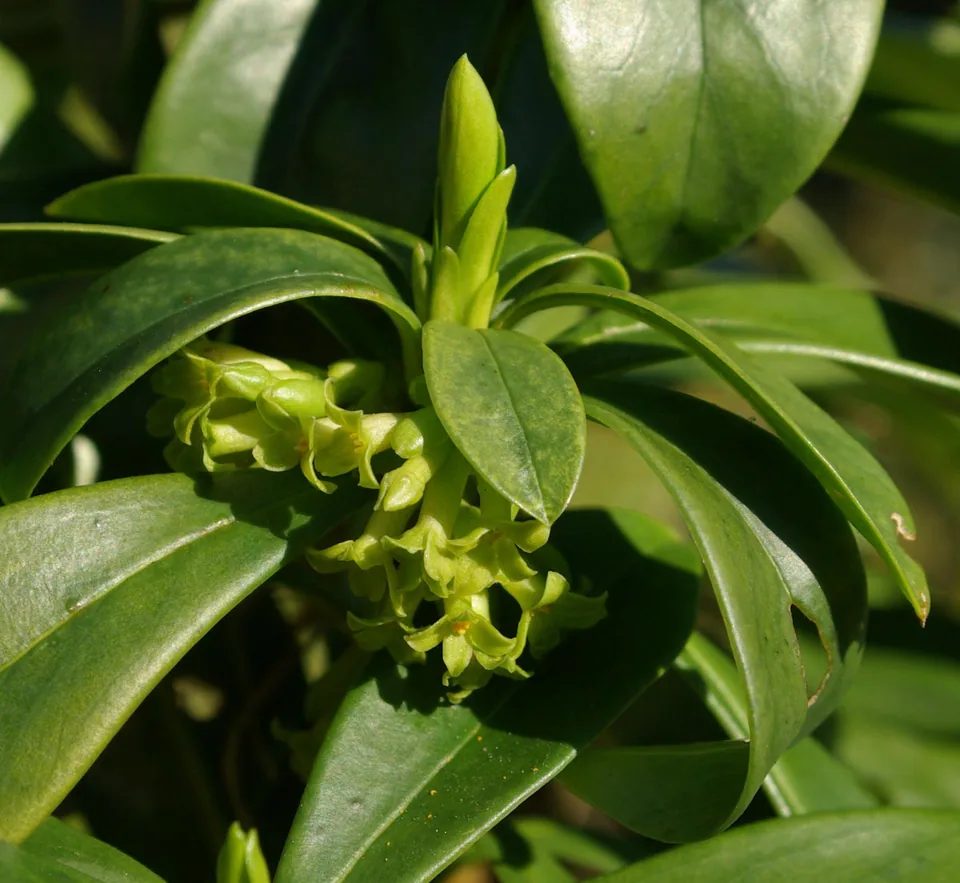
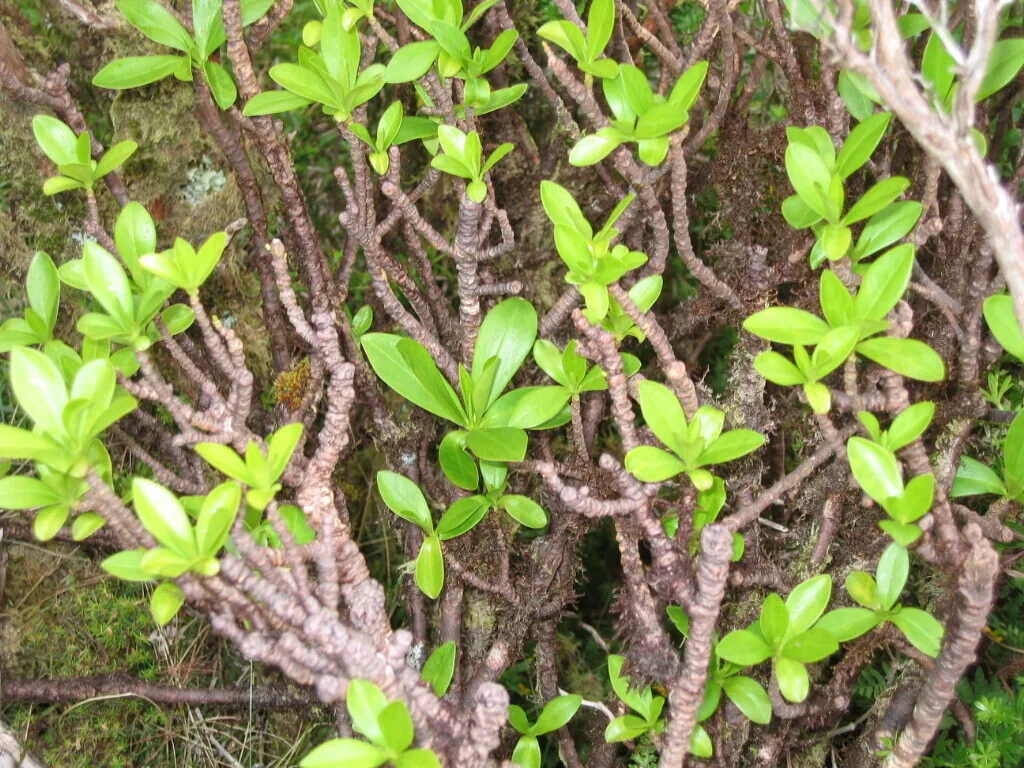
Habit: Evergreen shrub 60–140 cm tall. Stems erect and little branched, with leaves concentrated at the apex. Branches fleshy and glabrous, dichotomously branched.
— Daphne laureola L. – Giardino della Flora Appenninica [1] - Propagation
From seed or from root sprouts
What the sources say (1)
Propagation: Seed; root sprouts (vegetative spread)
Spurge laurel reproduces by seed, also can reproduce vegetatively through the production of root sprouts.
— Washington State Noxious Weed Control Board [6] - Safety
All parts are highly toxic to people and livestock, and poisonous to cats and dogs
Overview
Daphne laureola is an evergreen shrub 60-140 cm [24–55 in] tall, found in shaded understory of deciduous forests in Italy. [1] All parts of the plant are described as highly toxic to humans and livestock. [5] It has escaped from gardens and naturalized in woodlands and other shady places. [5]
This record is incomplete: the sources we read do not cover every field yet.
Not yet covered by our sources: Hardiness, coldest zone, Hardiness, warmest zone, Pruning
Spurge-laurel care
Measurements in square brackets are our conversion into the other unit system; the quoted text is unchanged.
How to water Spurge-laurel
Watering
Prefers moist soil
What the sources say (1)
It prefers a moist soil and semi-shade, and is useful in woodlandWatering notes
Once established it copes even in dry shade under trees
What the sources say (1)
Deep shade – is fine for D. laureola . Once established it will even cope in dry shade under treesHow much light Spurge-laurel needs
Sun or shade, best with some of both; deep shade is tolerated
What the sources say (3)
Spurge laurel will grow in sun or shade and looks the best with some of both.Deep shade – is fine for D. laureola .It prefers a moist soil and semi-shade, and is useful in woodlandHow much cold Spurge-laurel can take
Hardiness, coldest zone
Not stated in the sources we read.
Hardiness, warmest zone
Not stated in the sources we read.
How to propagate Spurge-laurel
Seed; root sprouts (vegetative spread)
What the sources say (1)
Spurge laurel reproduces by seed, also can reproduce vegetatively through the production of root sprouts.How to grow Spurge-laurel
The plant
Family
Thymelaeaceae
What the sources say (1)
Scientific name:
Daphne laureola L.
Common name:
Spurge Laurel
Family:
ThymelaeaceaeMature height
60-140 cm [24–55 in]
What the sources say (1)
Habit: Evergreen shrub 60–140 cm tall. Stems erect and little branched, with leaves concentrated at the apex. Branches fleshy and glabrous, dichotomously branched.Pests and diseases
Diseases
virus infections
What the sources say (1)
- virus infections – especially Daphne laureola , D. mezereum and D. odoraFertilizing
When
The sources give different values depending on region, zone or growing conditions.
What each source says
in containers: Early spring (top-dressing)
What the sources say (1)
in containers: Top-dress containers in early spring by removing the top 5cm (2in) of compostHow often
Generally no feeding needed: slow-growing, deep-rooted plants
What the sources say (1)
Daphnes are generally slow growing and deep rooted, so shouldn't need feeding.Natural fertilizers
A generous mulch of garden compost over the soil after planting
What each source says
in containers: Early-spring top-dressing after removing the top 5 cm [2 in] of compost
What the sources say (2)
in containers: Top-dress containers in early spring by removing the top 5cm (2in) of compostAfter planting, spread a generous mulch of garden compost over the soil surface. This will help to hold moisture in the soil and deter weed germinationSigns of deficiency
Yellowing foliage, especially on alkaline soil
What the sources say (1)
nutrient deficiency leading to yellowing foliage, especially on alkaline soilRemedies
Each remedy shows what official sources say about it; traditional remedies without an official source are marked as such. Harmful ones are listed so you know to avoid them.
First aid
First aid: not a substitute for a doctor
skin contact with sap
wash skin with soap and water Official source, not independently tested
If a rash or blistering develops, consult a doctor.
— worksafebc.com [8] How: After skin contact with sap, wash the skin carefully with soap and water.
After skin contact with sap, wash the skin carefully with soap and water.
— worksafebc.com [8] keep affected skin out of sunlight Official source, not independently tested
How: Keep the affected skin away from sunlight for at least 48 hours.
Keep the affected skin away from sunlight for at least 48 hours.
— worksafebc.com [8]
sap in the eyes
flush eyes with water Official source, not independently tested
How: If sap gets into the eyes, flush with large amounts of water and use sunglasses with UV protection.
If sap gets into the eyes, flush with large amounts of water and use sunglasses with UV protection.
— worksafebc.com [8]
Getting rid of it
invasive weed
hand pulling and cutting below soil line Works
Due to the irritating toxins in the sap, stem, leaves, and fruits, it is advisable to wear gloves and other protective gear when handling spurge laurel.
— Washington State Noxious Weed Control Board [6] How: Hand pull small infestations; cut larger shrubs below the soil line and recut resprouts as needed.
Hand pulling small infestations is effective. Larger shrubs that are too big to pull can be cut below soil line. Watch the area for resprouts and recut as needed.
— Washington State Noxious Weed Control Board [6] What the evidence says Hand pulling small infestations is effective. Larger shrubs that are too big to pull can be cut below soil line. Watch the area for resprouts and recut as needed.
— Washington State Noxious Weed Control Board [6] pulling or digging up plants with the top of the root Official source, not independently tested
Check the site for new plants at least once a year and especially for the first 2-3 years after removal. Spurge laurel root fragments may continue to grow and produce new plants.
— portland.gov [9] How: Cut off and bag berries first, then pull or dig up the plant including the top few inches of root; check the site yearly for 2-3 years.
Pull or dig up spurge laurel and be sure to get the top few inches of the root.
— portland.gov [9]
Is Spurge-laurel toxic to pets?
Reported by the source, quoted verbatim. This is not medical or veterinary advice: if a person or an animal may have eaten this plant, contact a poison control centre or a veterinarian.
Calendar
Pruning
Not stated in the sources we read.
Months as given by the sources, which are mostly from the United States (northern hemisphere). In the southern hemisphere they shift by about six months.
Similar plants
- Spurge Laurel Daphne mezereum
- Caucasian Daphne Daphne caucasica
- Flax-Leaved Daphne Daphne gnidium
- Lilac Daphne Daphne genkwa
- Onishibari Daphne pseudomezereum
- Rose Daphne Daphne cneorum
- Tangut Daphne Daphne tangutica
- Winter Daphne Daphne odora
Sources
Every value above is quoted from these documents. Links lead to the original publisher.
- Daphne laureola L. – Giardino della Flora Appenninica · giardinocapracotta.unimol.it, consulted
- How to grow daphnes / RHS Growing Guide · rhs.org.uk, consulted
- How to Grow Daphnes | BBC Gardeners World Magazine · gardenersworld.com, consulted
- Bean's Trees and Shrubs · beanstreesandshrubs.org, consulted
- Spurge laurel identification and control - King County, Washington · kingcounty.gov, consulted
- Washington State Noxious Weed Control Board · nwcb.wa.gov, consulted
- Daphne laureola L. · infoflora.ch, consulted
- worksafebc.com · worksafebc.com
- portland.gov · portland.gov
Written by Emilio Marruso · last checked