
How to Grow and Care for Fringed pink
Dianthus superbus
Written by Emilio Marruso · last checked
Toxic to: Cats, Dogs, People · Why
At a glance
Superb pink is an easygoing plant that asks for very little: full sun, soil with a pH of 6.0–7.5, and once settled it handles dry spells on its own. Sow it outdoors when the air reaches 60–70 °F, or in early fall for flowers the following year. It grows happily in a pot too, and a quick trim after blooming keeps it tidy.
- Sun
Full sun; it also accepts light partial shade
What the sources say (1)
Light: Full sun, tolerates light partial shade
The plants enjoy a full sun location but can tolerate light, partial shade.
— How to Grow and Care for Large Pinks (Dianthus superbus) [2] - Water
First season: 1 inch a week, mornings only; later water only in long dry spells
What the sources say (2)
Watering notes: About one inch [2.5 cm] of water per week in the first growing season, watering in the mornings only
Provide about one inch of water per week in their first growing season, watering in the mornings only.
— How to Grow and Care for Large Pinks (Dianthus superbus) [2] Watering: Drought tolerant once established; additional water only during prolonged dry spells
Drought-resistant once established, large pinks require additional water only during prolonged dry spells.
— How to Grow and Care for Large Pinks (Dianthus superbus) [2] - Cold
Survives winters down to −40 °F (−40 °C)
Very hardy · USDA 3 · RHS H7 · Z3
What the sources say (2)
Hardiness, coldest zone: 3 [winter low −40 to −34.4 °C (−40 to −30 °F)]
Hardy in USDA Zones 3 to 9, new plants develop a rosette of leaves in their first season and flower stalks in their second.
— How to Grow and Care for Large Pinks (Dianthus superbus) [2] Hardiness, warmest zone: 9 [winter low −6.7 to −1.1 °C (20 to 30 °F)]
Hardy in USDA Zones 3 to 9, new plants develop a rosette of leaves in their first season and flower stalks in their second.
— How to Grow and Care for Large Pinks (Dianthus superbus) [2] - Soil
Soil with a pH of 6.0–7.5
What the sources say (2)
Soil pH, minimum: 6.0
D. superbus prefers humus-rich soil with a slightly gritty texture and a neutral to alkaline pH in the range of 6.0 to 7.5.
— How to Grow and Care for Large Pinks (Dianthus superbus) [2] Soil pH, maximum: 7.5
D. superbus prefers humus-rich soil with a slightly gritty texture and a neutral to alkaline pH in the range of 6.0 to 7.5.
— How to Grow and Care for Large Pinks (Dianthus superbus) [2] - Pruning
After flowering, snip off faded flowers or shear the plant
What the sources say (1)
Pruning: After flowering (deadhead or shear)
To encourage reblooming and maintain a tidy shape, be sure to deadhead or shear plants after flowering.
— How to Grow and Care for Large Pinks (Dianthus superbus) [2] - Harvest
In China the leaves and young plants are eaten cooked
- Pests
Rust makes orange or brown bumps; remove sick plants and don't replant dianthus in that spot
- Propagation
Grow new plants from seed or from soft stem cuttings
What the sources say (1)
Propagation: Seed (sown indoors or directly in the garden) and soft stem cuttings
large pinks can be propagated by sowing seed indoors , direct sowing in the garden, or rooting soft stem cuttings.
— How to Grow and Care for Large Pinks (Dianthus superbus) [2] - Sowing
Sow outdoors at 60–70 °F (16–21 °C), or in early fall for flowers next year
What the sources say (3)
Sowing: Outdoors when temperatures reach 60 to 70°F [16–21 °C], or in early autumn for flowers the following year
and sow outdoors when temperatures reach 60 to 70°F.
— How to Grow and Care for Large Pinks (Dianthus superbus) [2] You can also sow seeds outdoors in early autumn for flowers the following year.
— How to Grow and Care for Large Pinks (Dianthus superbus) [2] Propagation: Seed (sown indoors or directly in the garden) and soft stem cuttings
large pinks can be propagated by sowing seed indoors , direct sowing in the garden, or rooting soft stem cuttings.
— How to Grow and Care for Large Pinks (Dianthus superbus) [2] - Containers
Grows in containers too
What the sources say (1)
In containers: Yes
Their long stems, sparkling flowers, and strong, spicy scent are ideal in beds, borders, containers, edging, and rockeries as well as butterfly, courtyard, gravel, and zen gardens.
— How to Grow and Care for Large Pinks (Dianthus superbus) [2] - Safety
Mildly toxic to people, cats and dogs
Overview
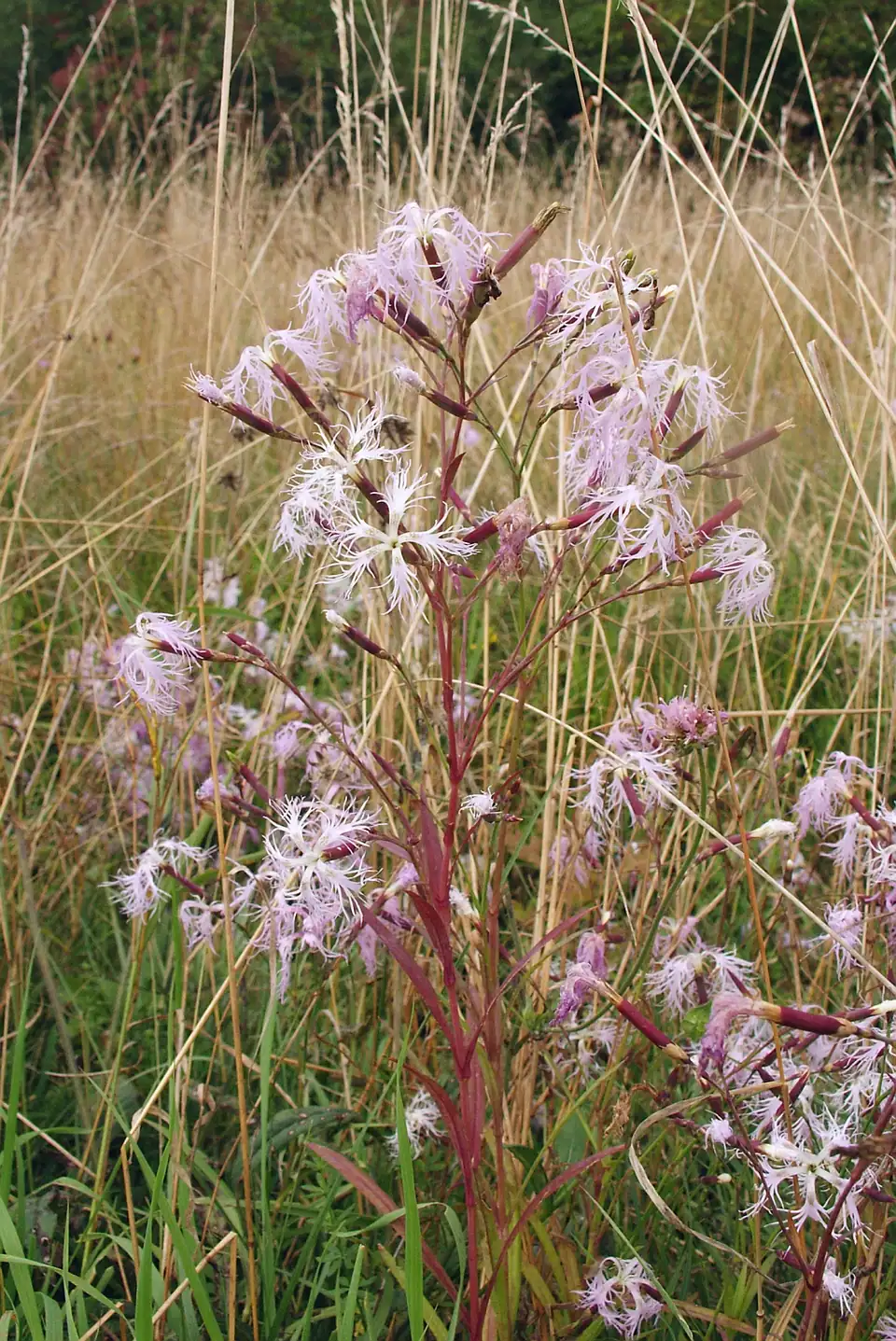
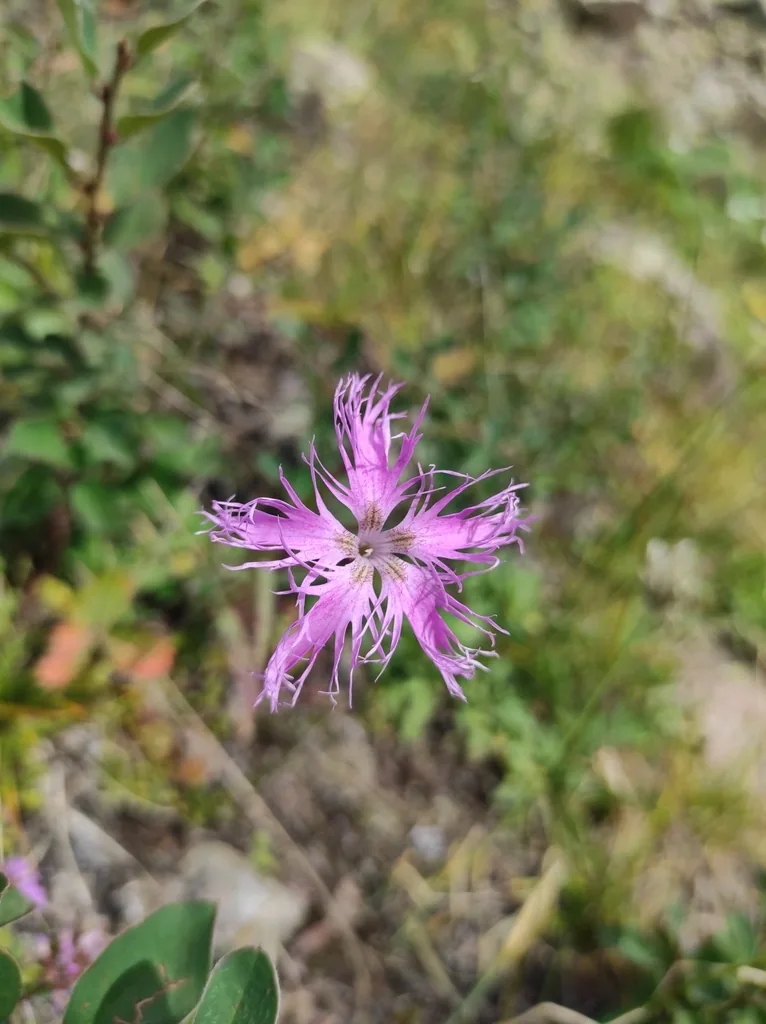
Fringed pink is a cold-hardy herbaceous perennial native to parts of northern Asia and Europe. [2] It prefers full sun, well-drained humus-rich soil and is drought tolerant once established. [2]
Fringed pink care
Measurements in square brackets are our conversion into the other unit system; the quoted text is unchanged.
How to water Fringed pink
Watering
Drought tolerant once established; additional water only during prolonged dry spells
What the sources say (1)
Drought-resistant once established, large pinks require additional water only during prolonged dry spells.Watering notes
About one inch [2.5 cm] of water per week in the first growing season, watering in the mornings only
What the sources say (1)
Provide about one inch of water per week in their first growing season, watering in the mornings only.How much light Fringed pink needs
Full sun, tolerates light partial shade
What the sources say (1)
The plants enjoy a full sun location but can tolerate light, partial shade.How much cold Fringed pink can take
Hardiness, coldest zone
3 [winter low −40 to −34.4 °C (−40 to −30 °F)]
What the sources say (1)
Hardy in USDA Zones 3 to 9, new plants develop a rosette of leaves in their first season and flower stalks in their second.Hardiness, warmest zone
9 [winter low −6.7 to −1.1 °C (20 to 30 °F)]
What the sources say (1)
Hardy in USDA Zones 3 to 9, new plants develop a rosette of leaves in their first season and flower stalks in their second.Best soil for Fringed pink
Soil pH, minimum
6.0
What the sources say (1)
D. superbus prefers humus-rich soil with a slightly gritty texture and a neutral to alkaline pH in the range of 6.0 to 7.5.Soil pH, maximum
7.5
What the sources say (1)
D. superbus prefers humus-rich soil with a slightly gritty texture and a neutral to alkaline pH in the range of 6.0 to 7.5.Where to grow Fringed pink
Yes
What the sources say (1)
Their long stems, sparkling flowers, and strong, spicy scent are ideal in beds, borders, containers, edging, and rockeries as well as butterfly, courtyard, gravel, and zen gardens.How to propagate Fringed pink
Seed (sown indoors or directly in the garden) and soft stem cuttings
What the sources say (1)
large pinks can be propagated by sowing seed indoors , direct sowing in the garden, or rooting soft stem cuttings.How to grow Fringed pink
Fertilizing
When
The sources give different values depending on region, zone or growing conditions.
What each source says
Dianthus in general, as cool-season bedding plants (Mississippi): At transplanting, then monthly through the winter
What the sources say (1)
Dianthus in general, as cool-season bedding plants (Mississippi): Dianthus is a vigorous grower, so fertilize at transplanting with a good, slow-release fertilizer, and then supplement monthly with water-soluble fertilizer through the winter to keep the flowers coming.How often
The sources give different values depending on region, zone or growing conditions.
What each source says
Dianthus in general, in the ground: No additional feeding needed
Dianthus in general, in containers: Additional fertiliser, especially for short-lived bedding types
Dianthus in general, as cool-season bedding plants (Mississippi): Monthly through the winter after a slow-release feed at transplanting
Dianthus in general, for continued blooming: Light feeding every six to eight weeks
What the sources say (4)
Dianthus in general, in the ground: Dianthus grown in the ground are unlikely to need additional feeding. Plants in containers, especially short-lived bedding types, will benefit from additional fertiliserDianthus in general, in containers: Dianthus grown in the ground are unlikely to need additional feeding. Plants in containers, especially short-lived bedding types, will benefit from additional fertiliserDianthus in general, as cool-season bedding plants (Mississippi): Dianthus is a vigorous grower, so fertilize at transplanting with a good, slow-release fertilizer, and then supplement monthly with water-soluble fertilizer through the winter to keep the flowers coming.Dianthus in general, for continued blooming: For continued blooming, feed these flowers lightly every six to eight weeks with an all purpose liquid fertilizer.Mineral fertilizers
The sources give different values depending on region, zone or growing conditions.
What each source says
Dianthus in general, as cool-season bedding plants (Mississippi): Slow-release fertilizer at transplanting, then water-soluble fertilizer
Dianthus in general, for continued blooming: All-purpose liquid fertilizer, applied lightly
What the sources say (2)
Dianthus in general, as cool-season bedding plants (Mississippi): Dianthus is a vigorous grower, so fertilize at transplanting with a good, slow-release fertilizer, and then supplement monthly with water-soluble fertilizer through the winter to keep the flowers coming.Dianthus in general, for continued blooming: For continued blooming, feed these flowers lightly every six to eight weeks with an all purpose liquid fertilizer.Fringed pink pests and problems
Rust
Symptom: Small brick red, brown, or orange pustules on leaves and stems
What to do: Remove and dispose of rust-infected plants and do not reuse the location for dianthus
What the sources say (1)
Remove and dispose of rust-infected plants and don’t reuse the location for dianthus.
— How to Grow and Care for Large Pinks (Dianthus superbus) [2]
Remedies
Each remedy shows what official sources say about it; traditional remedies without an official source are marked as such. Harmful ones are listed so you know to avoid them.
Treating the plant
aphids
insecticidal soap spray Works
Pollinating insects, such as honey bees and bumblebees, can be adversely affected by the use of pesticides.
— hgic.clemson.edu [7] How: Apply a nontoxic insecticidal soap for persistent infestations.
Or an application of a nontoxic insecticidal soap or neem oil can be used for persistent infestations.
— How to Grow and Care for Large Pinks (Dianthus superbus) [2] What the evidence says Insecticidal soaps are most effective against soft-bodied insects and related pests, such as aphids, mealybugs, immature scales (crawlers), thrips, whiteflies, and spider mites.
— hgic.clemson.edu [7] neem oil spray Partly works
Pollinating insects, such as honey bees and bumblebees, can be adversely affected by the use of pesticides.
— hgic.clemson.edu [7] How: Apply neem oil for persistent infestations.
Or an application of a nontoxic insecticidal soap or neem oil can be used for persistent infestations.
— How to Grow and Care for Large Pinks (Dianthus superbus) [2] What the evidence says Neem oil extract or botanical oil sprays may also reduce plant damage by repelling many insect pests.
— hgic.clemson.edu [7] beneficial insects Not verified
Traditional remedy, not verified by an official source.
How: Use beneficial insects like ladybugs and lacewings.
spider mites
strong water spray Partly works
How: Remove them with a strong spray of water from the garden hose.
Common pests such as aphids and spider mites can be removed with a strong spray of water from the garden hose .
— How to Grow and Care for Large Pinks (Dianthus superbus) [2] What the evidence says Spray sturdy plants forcefully with water, including the undersides of leaves, to dislodge mites and break up their webs.
— hgic.clemson.edu [7] insecticidal soap spray Works
How: Apply at least twice at 7-10 day intervals, with thorough spray coverage.
Spraying with insecticidal soap will give sufficient control if applied at least twice at 7-10 day intervals.
— portal.ct.gov [8] What the evidence says Spraying with insecticidal soap will give sufficient control if applied at least twice at 7-10 day intervals.
— portal.ct.gov [8]
crown rot
avoid overwatering Official source, not independently tested
How: Avoid overwatering, especially in heavy soils, and avoid watering directly into the crown area.
It is helpful to avoid overwatering, especially in heavy soils, and to avoid watering directly into the crown area of the plant.
— portal.ct.gov [8]
rust
clean up plant refuse and space plants Official source, not independently tested
How: Clean up plant refuse in the fall and space plants adequately for air circulation.
This disease can be minimized by cleaning up plant refuse in the fall and by adequate spacing of the plants to promote good air circulation.
— portal.ct.gov [8]
Is Fringed pink toxic to pets?
Reported by the source, quoted verbatim. This is not medical or veterinary advice: if a person or an animal may have eaten this plant, contact a poison control centre or a veterinarian.
Calendar
Sowing
Outdoors when temperatures reach 60 to 70°F [16–21 °C], or in early autumn for flowers the following year
Pruning
After flowering (deadhead or shear)
What the sources say (1)
To encourage reblooming and maintain a tidy shape, be sure to deadhead or shear plants after flowering.Months as given by the sources, which are mostly from the United States (northern hemisphere). In the southern hemisphere they shift by about six months.
Edibility
Reported by the source, quoted verbatim. Do not eat a plant on the basis of this page alone: identification mistakes can be dangerous.
China: leaves and young plant cooked and eaten.
[1]
Indicative values
Values from a secondary source, not checked word for word like the rest of this page. Use them as a starting point.
- Life cycle
- Herbaceous PerennialIndicative value, adapt it to your climate · Secondary source
- Mature height
- 22.9-45.7 cm (0.75-1.5 ft)Indicative value, adapt it to your climate · Secondary source
- Growth rate
- LowIndicative value, adapt it to your climate · Secondary source
Similar plants
- Carnation Dianthus caryophyllus
- Carthusian Pink Dianthus carthusianorum
- Cheddar Pink Dianthus gratianopolitanus
- Chinese Pink Dianthus chinensis
- Cottage Pink Dianthus plumarius
- Deptford Pink Dianthus armeria
- Maiden Pink Dianthus deltoides
- Peacock-eye Pink Dianthus pavonius
Sources
Every value above is quoted from these documents. Links lead to the original publisher.
- Dianthus superbus | Purdue University Famine Foods · purdue.edu, consulted
- How to Grow and Care for Large Pinks (Dianthus superbus) · gardenerspath.com, consulted
- Dianthus superbus, Fringed or Large Pink · first-nature.com, consulted
- extension.msstate.edu · extension.msstate.edu
- rhs.org.uk · rhs.org.uk
- ask.extension.org · ask.extension.org
- hgic.clemson.edu · hgic.clemson.edu
- portal.ct.gov · portal.ct.gov
Written by Emilio Marruso · last checked