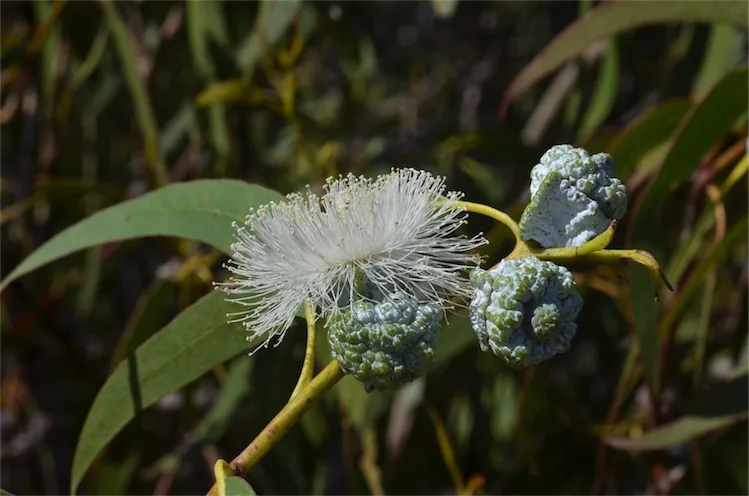
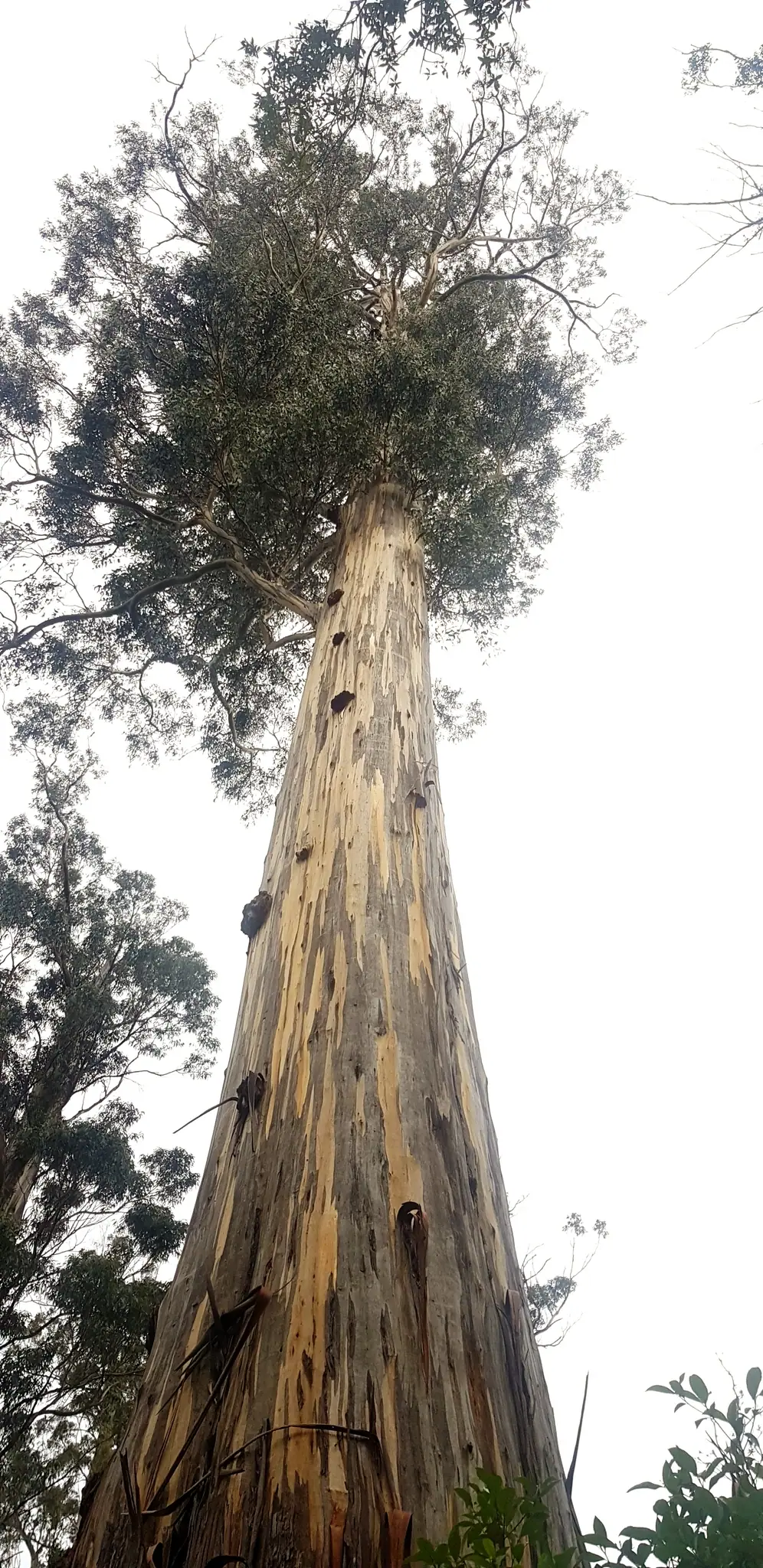

How to Grow and Care for Tasmanian blue gum
Eucalyptus globulus
Written by Emilio Marruso · last checked
Toxic to: People · Why
At a glance
Blue gum loves full sun and loamy soil rich in organic matter, and you can start it from seed in spring or summer. Give it a sheltered spot away from strong, drying winds, and never let the soil get waterlogged. Its fresh or dried leaves hold a fragrant essential oil used to flavor sweets, baked goods and ice cream.
- Sun
Full sun
What the sources say (2)
Light: Full sun
Prefers a sunny position in a moderately fertile well-drained moisture retentive circum-neutral soil
— Tasmanian Blue Gum (Eucalyptus globulus) — Practical Plants [8] Where to plant Blue Gum - Grow blue gum in full sun. - Blue gum will adapt to a wide range of soils
— How to Grow Blue Gum - Eucalyptus [5] - Water
Never let the soil get waterlogged; too much water turns the leaves yellow
What the sources say (1)
Watering notes: Does not tolerate waterlogging; prefers loamy soils rich in organic matter with a relatively high water table
Prefiere sue-los de textura franca, ricos en materia orgánica, con pH superior a 5 y la capa freática relativa-mente alta. No soporta el encharcamiento.
— Atlas de las Plantas Alóctonas Invasoras en España [3] - Cold
Heavy frost often kills it: avoid cold hollows and cover the roots with a deep mulch
- Soil
Loamy soil rich in organic matter, pH above 5
What the sources say (2)
Soil pH, minimum: above 5
Prefiere sue-los de textura franca, ricos en materia orgánica, con pH superior a 5 y la capa freática relativa-mente alta. No soporta el encharcamiento.
— Atlas de las Plantas Alóctonas Invasoras en España [3] Watering notes: Does not tolerate waterlogging; prefers loamy soils rich in organic matter with a relatively high water table
Prefiere sue-los de textura franca, ricos en materia orgánica, con pH superior a 5 y la capa freática relativa-mente alta. No soporta el encharcamiento.
— Atlas de las Plantas Alóctonas Invasoras en España [3] - Spacing
40–60 ft between trees
What the sources say (1)
Spacing: 1219-1829 cm (40-60 ft)
Space eucalyptus 40 to 60 feet apart; plants grow as much as 10 feet annually
— How to Grow Blue Gum - Eucalyptus [5] - Harvest
The oil from its leaves flavors sweets, baked goods and ice cream
- Watch out
Strong winds can damage it: plant it in a sheltered spot, away from cold, drying winds
- Propagation
From seed, or from new shoots that sprout from the stump
What the sources say (3)
Propagation: Seed and stump sprouts
Se reproduce por semilla y por bro-tes de cepa.
— Atlas de las Plantas Alóctonas Invasoras en España [3] Eucalyptus are propagated by seed sown under screens.
— How to Grow Blue Gum - Eucalyptus [5] Blue gum sprouts readily from stumps of all sizes and ages, as well as from the lignotuber
— Review Article [1] - Sowing
Sow in spring or summer
What the sources say (4)
Sowing: Spring or summer
According to Harvest to Table: Sow blue gum seeds in spring or summer.
— How to Grow Blue Gum - Eucalyptus [5] greenhouse, surface sown (Practical Plants): Seed - surface sow February/March in a sunny position in a greenhouse
— Tasmanian Blue Gum (Eucalyptus globulus) — Practical Plants [8] Practical Plants, alternative sowing: The seed can also be sown in June, the young trees being planted in their final positions in late spring of the following year.
— Tasmanian Blue Gum (Eucalyptus globulus) — Practical Plants [8] Sow blue gum seeds in spring or summer.
— How to Grow Blue Gum - Eucalyptus [5] - Safety
The leaf oil is poisonous if swallowed and can irritate skin: keep it away from children
Overview
Eucalyptus globulus is a tall evergreen tree widely planted outside Australia, and it is a significant invasive alien in parts of California. [4] It prefers a sunny position and well-drained soil, and established plants are drought tolerant. [8] It does not tolerate waterlogging and reproduces by seed and by stump sprouts. [3]
Tasmanian blue gum care
How to water Tasmanian blue gum
Watering
The sources give different values depending on region, zone or growing conditions.
What each source says
According to Harvest to Table: Tolerates drought
According to Gardener's Path: Needs a bit more water than many other species
What the sources say (4)
According to Harvest to Table: Water blue gum can tolerate drought. Overwatering can cause chlorosis.According to Gardener's Path: It needs a bit more water than many other species and grows in Zones 7 to 11.Water blue gum can tolerate drought. Overwatering can cause chlorosis.Succeeds in most soils [10] , tolerating poor and dry soils, especially those low in mineral elements [15] . Established plants are drought tolerant [15] .Watering notes
Does not tolerate waterlogging; prefers loamy soils rich in organic matter with a relatively high water table
What the sources say (1)
Prefiere sue-los de textura franca, ricos en materia orgánica, con pH superior a 5 y la capa freática relativa-mente alta. No soporta el encharcamiento.How much light Tasmanian blue gum needs
Full sun
What the sources say (2)
Prefers a sunny position in a moderately fertile well-drained moisture retentive circum-neutral soilWhere to plant Blue Gum
- Grow blue gum in full sun.
- Blue gum will adapt to a wide range of soilsHow much cold Tasmanian blue gum can take
Hardiness, coldest zone
The sources give different values depending on region, zone or growing conditions.
What each source says
Hardy range (cultivated, Florida listing): 9a [winter low −6.7 to −3.9 °C (20 to 25 °F)]
Native range climate equivalence: 8b [winter low −9.4 to −6.7 °C (15 to 20 °F)]
According to Harvest to Table: 8 [winter low −12.2 to −6.7 °C (10 to 20 °F)]
According to Practical Plants: 9 [winter low −6.7 to −1.1 °C (20 to 30 °F)]
According to Gardener's Path: 7 [winter low −17.8 to −12.2 °C (0 to 10 °F)]
What the sources say (5)
Hardy range (cultivated, Florida listing): 4. Hardy range 9A to 11 (FL zones 9a- 11b). 2.02 No computer analysis was performed.Native range climate equivalence: Native global plant hardiness zones 8-10; equivalent to USDA Hardiness zones 8b-10a (north, central, and south zones of Florida).According to Harvest to Table: Plant type: Evergreen tree
- Growing Zones and range: 8-10
- Hardiness: Evergreen to warm temperature regionsAccording to Practical Plants: Light
full sun
Shade tolerance
no shade
Water
high
Hardiness
Zone 9+
Soil textures
sandy, loamy, clayAccording to Gardener's Path: It needs a bit more water than many other species and grows in Zones 7 to 11.Hardiness, warmest zone
The sources give different values depending on region, zone or growing conditions.
What each source says
Hardy range (cultivated, Florida listing): 11 [winter low 4.4 to 10 °C (40 to 50 °F)]
Native range climate equivalence: 10a [winter low −1.1 to 1.7 °C (30 to 35 °F)]
According to Harvest to Table: 10 [winter low −1.1 to 4.4 °C (30 to 40 °F)]
According to Gardener's Path: 11 [winter low 4.4 to 10 °C (40 to 50 °F)]
What the sources say (4)
Hardy range (cultivated, Florida listing): 4. Hardy range 9A to 11 (FL zones 9a- 11b). 2.02 No computer analysis was performed.Native range climate equivalence: Native global plant hardiness zones 8-10; equivalent to USDA Hardiness zones 8b-10a (north, central, and south zones of Florida).According to Harvest to Table: Plant type: Evergreen tree
- Growing Zones and range: 8-10
- Hardiness: Evergreen to warm temperature regionsAccording to Gardener's Path: It needs a bit more water than many other species and grows in Zones 7 to 11.Best soil for Tasmanian blue gum
above 5
What the sources say (1)
Prefiere sue-los de textura franca, ricos en materia orgánica, con pH superior a 5 y la capa freática relativa-mente alta. No soporta el encharcamiento.Where to grow Tasmanian blue gum
1219-1829 cm (40-60 ft)
What the sources say (1)
Space eucalyptus 40 to 60 feet apart; plants grow as much as 10 feet annuallyHow to propagate Tasmanian blue gum
Seed and stump sprouts
What the sources say (3)
Se reproduce por semilla y por bro-tes de cepa.Eucalyptus are propagated by seed sown under screens.Blue gum sprouts readily from stumps of all sizes and ages, as well as from the lignotuberHow to grow Tasmanian blue gum
The plant
Family
Myrtaceae
What the sources say (1)
Blue gum, a large tree in the Myrtle family (Myrtaceae) that is native to southeastern AustraliaMature height
Fertilizing
When
The sources give different values depending on region, zone or growing conditions.
What each source says
Eucalyptus in general: Only after a hard pruning, if the tree isn't growing strongly; established trees in the ground need no feeding
Eucalyptus in general, in containers: Throughout the growing season (April to September)
What the sources say (2)
Eucalyptus in general: Most established trees growing in the ground don't need feeding.
However, it can be beneficial to feed eucalyptus that have just been hard prunedEucalyptus in general, in containers: Feed monthly with a general-purpose liquid fertiliser throughout the growing season (April to September)How often
The sources give different values depending on region, zone or growing conditions.
What each source says
Eucalyptus in general, in containers: Monthly during the growing season
What the sources say (1)
Eucalyptus in general, in containers: Feed monthly with a general-purpose liquid fertiliser throughout the growing season (April to September)Mineral fertilizers
The sources give different values depending on region, zone or growing conditions.
What each source says
Eucalyptus in general, in containers: General-purpose liquid fertiliser
What the sources say (1)
Eucalyptus in general, in containers: Feed monthly with a general-purpose liquid fertiliser throughout the growing season (April to September)Avoid
The sources give different values depending on region, zone or growing conditions.
What each source says
Eucalyptus in general: Enriching the planting soil with manure or garden compost
What the sources say (1)
Eucalyptus in general: Don't enrich the soil with manure or garden compostTasmanian blue gum pests and problems
Chlorosis
Symptom: Leaves that turn yellow between the veins
What to do: Iron may be required; overwatering can cause chlorosis.
What the sources say (1)
Iron may be required for leaves that turn yellow between the veins (chlorosis).
— How to Grow Blue Gum - Eucalyptus [5] Wind injury
Symptom: Blue gum can be injured by strong winds.
What to do: Requires a sheltered position, disliking cold, dry or desiccating winds.
Frost damage
Symptom: Often succumbs to heavy frosts in Britain.
What to do: Not grown in frost pockets or windy sites; deep mulch around the roots helps trees survive cold.
What the sources say (1)
This species is not very hardy in Britain, tolerating temperatures down to about -5°c
— Tasmanian Blue Gum (Eucalyptus globulus) — Practical Plants [8]
Remedies
Each remedy shows what official sources say about it; traditional remedies without an official source are marked as such. Harmful ones are listed so you know to avoid them.
Getting rid of it
invasive blue gum
stump grinding Not verified
Traditional remedy, not verified by an official source.
It is expensive to treat many stumps this way, even if a powerful and efficient self-propelled grinder is used.
— cal-ipc.org [10] How: Grind all underground portions of the stump to a depth of approximately two feet, then fill the resulting crater with soil.
manual removal of stump sprouts Not verified
Traditional remedy, not verified by an official source.
Manual removal should be limited to situations where close attention can be given to a few stumps.
— cal-ipc.org [10] How: Remove the sprouts from the stumps by hand; control comes eventually as the stump food resources are exhausted.
Is Tasmanian blue gum poisonous?
Reported by the source, quoted verbatim. This is not medical or veterinary advice: if a person or an animal may have eaten this plant, contact a poison control centre or a veterinarian.
Eucalyptus oil can cause headaches and convulsions and can be fatal if ingested. It should be kept out of the reach of children. The oil can also cause contact dermatitis.
[4]In large doses, oil of eucalyptus, like so many essential oils has caused fatalities from intestinal irritation
[8]- Toxic principle
Citronellal, an essential oil found in most Eucalyptus species is reported to be mutagenic when used in isolation
[8]- Symptoms
Symptoms include gastroenteric burning and irritation, nausea, vomiting, diarrhoea, oxygen deficiency, ,weakness, dizziness, stupor, difficult respiration, delirium, paralysis, convulsions, and death, usually due to respiratory failure
[8]- Severity
Death is reported from ingestion of 4 - 24 ml of essential oils, but recoveries are also reported for the same amount
[8]
Calendar
Sowing
Spring or summer
What each source says
According to Harvest to Table: Spring or summer
greenhouse, surface sown (Practical Plants): February/March
Practical Plants, alternative sowing: June
What the sources say (4)
According to Harvest to Table: Sow blue gum seeds in spring or summer.greenhouse, surface sown (Practical Plants): Seed - surface sow February/March in a sunny position in a greenhousePractical Plants, alternative sowing: The seed can also be sown in June, the young trees being planted in their final positions in late spring of the following year.Sow blue gum seeds in spring or summer.Planting
The sources give different values depending on region, zone or growing conditions.
What each source says
container-grown trees (Harvest to Table): Winter or spring
seedlings from February/March sowing (Practical Plants): Early summer
seed sown in June (Practical Plants): Late spring of the following year
What the sources say (4)
container-grown trees (Harvest to Table): Transplant smallest container grown trees in winter or spring.seedlings from February/March sowing (Practical Plants): Plant out into their permanent positions in early summer and give them some protection from the cold in their first winter.seed sown in June (Practical Plants): The seed can also be sown in June, the young trees being planted in their final positions in late spring of the following year.Transplant smallest container grown trees in winter or spring.Months as given by the sources, which are mostly from the United States (northern hemisphere). In the southern hemisphere they shift by about six months.
Edibility
Reported by the source, quoted verbatim. Do not eat a plant on the basis of this page alone: identification mistakes can be dangerous.
An essential oil from the fresh or dried leaves is used as a flavouring in sweets, baked goods, ice cream etc
[8]
Similar plants
- River redgum Eucalyptus camaldulensis
- Silver Dollar Tree Eucalyptus cinerea
- Indonesian gum Eucalyptus deglupta
- Crimson Bottle Brush Melaleuca citrina
- Feijoa Acca sellowiana
- Jaboticaba Plinia cauliflora
- Myrtle Myrtus communis
- Peppermint Agonis flexuosa
Sources
Every value above is quoted from these documents. Links lead to the original publisher.
- Review Article · tpyoung.ucdavis.edu, consulted
- Answer Score · assessment.ifas.ufl.edu, consulted
- Atlas de las Plantas Alóctonas Invasoras en España · miteco.gob.es, consulted
- Eucalyptus globulus Labill. | Plants of the World Online | Kew Science · powo.science.kew.org, consulted
- How to Grow Blue Gum - Eucalyptus · harvesttotable.com, consulted
- How to Grow and Care for Eucalyptus | Gardener’s Path · gardenerspath.com, consulted
- Tasmanian Blue Gum- Private Forest Tasmania · pft.tas.gov.au, consulted
- Tasmanian Blue Gum (Eucalyptus globulus) — Practical Plants · practicalplants.org, consulted
- rhs.org.uk · rhs.org.uk
- cal-ipc.org · cal-ipc.org
Written by Emilio Marruso · last checked