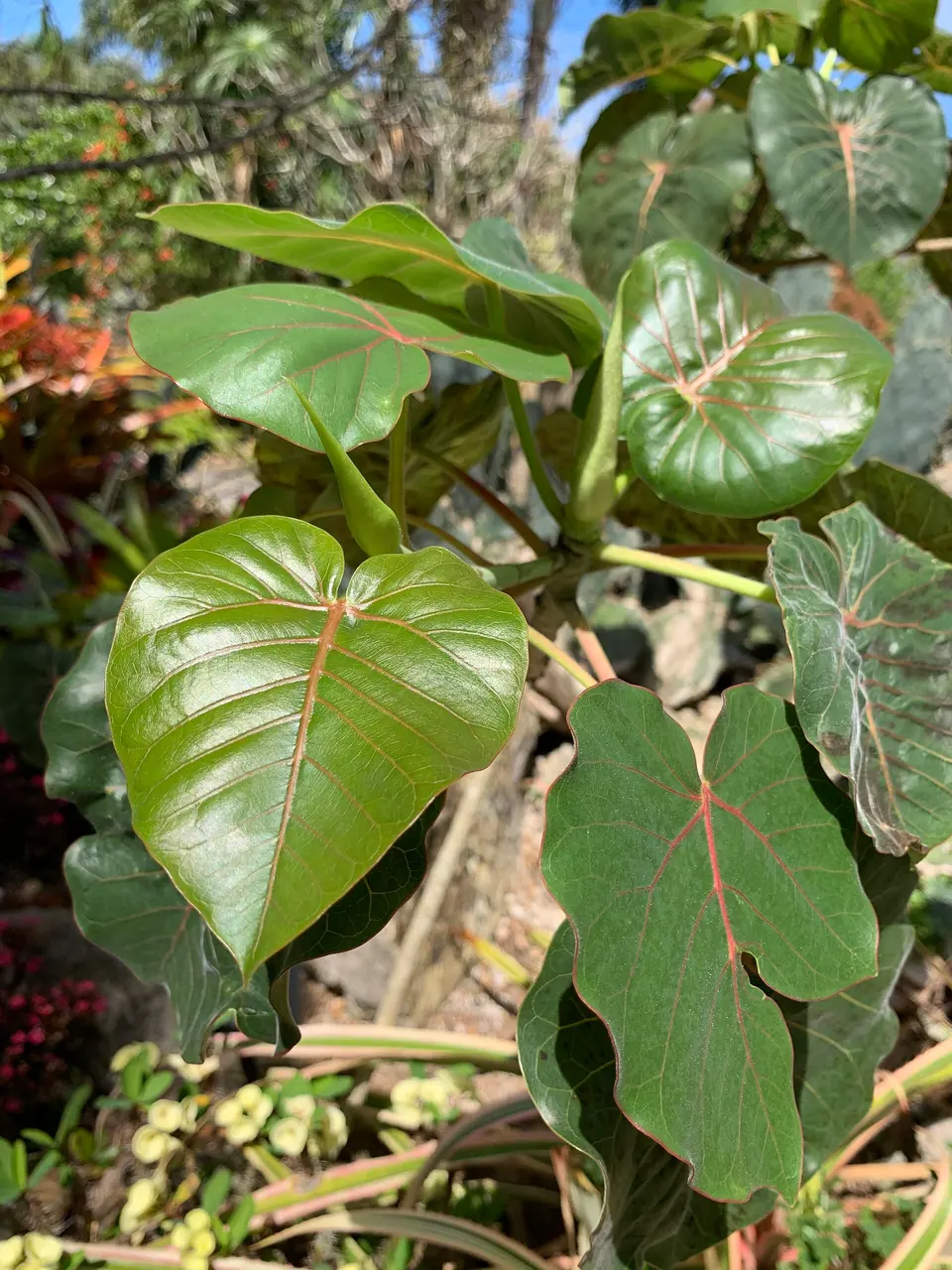
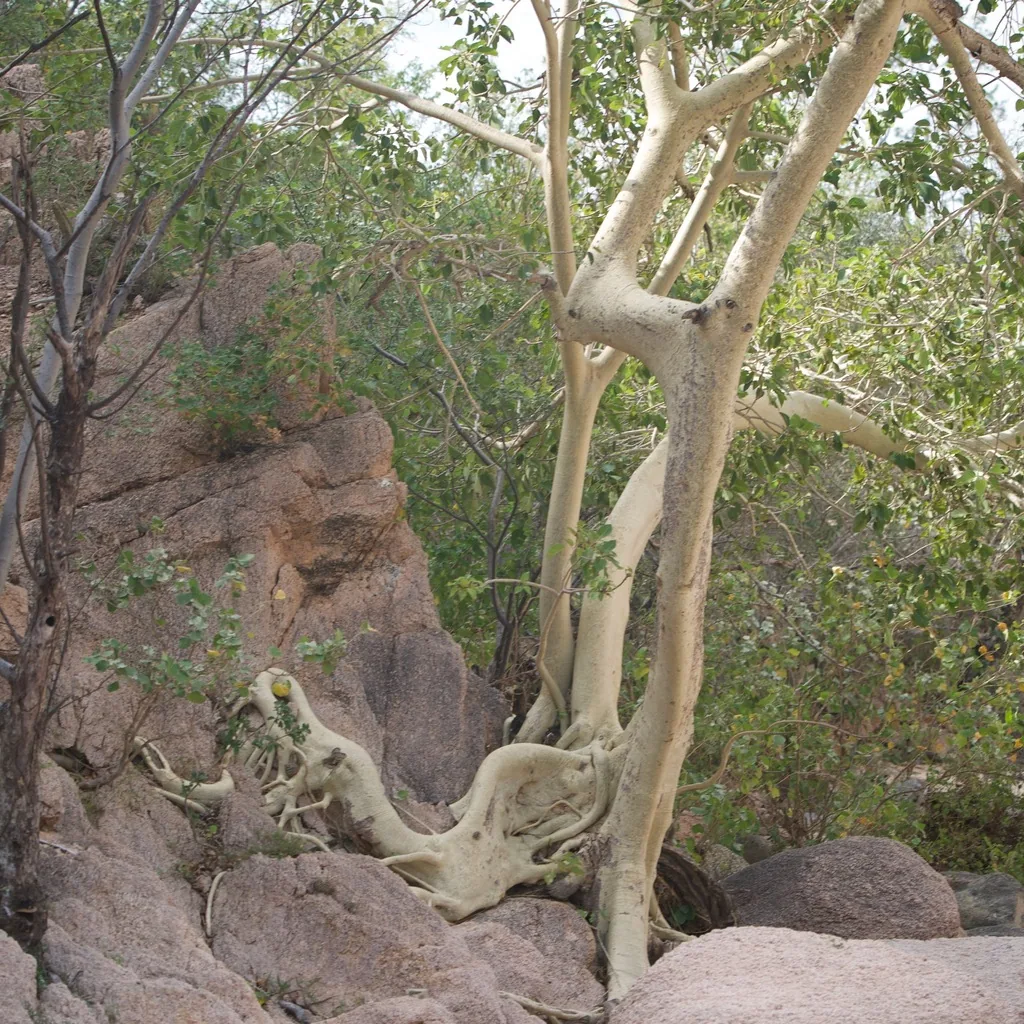

How to Grow and Care for Ficus petiolaris
Ficus petiolaris
Written by Emilio Marruso · last checked
Toxic to: Cats, Dogs, People · Why
At a glance
This fig is an easy companion for a pot: it grows happily in a container, as long as you never let the potting mix dry out completely, especially in the warmer months. In winter, water sparingly; if it drops some leaves, don't worry, it does no harm. It even bears small edible fruits, often in pairs.
- Water
Never let the potting mix dry out completely in warm months; water sparingly in winter
What the sources say (2)
Watering: Do not allow the potting mix to become completely dry, especially during the warmer months
Don't allow potting mix to become completely dry, especially during the warmer months.
— Ficus petiolaris [2] Watering notes: Water sparingly in winter to maintain leaves; leaf drop in winter is not harmful
Water sparingly in winter to maintain leaves (it's not harmful if leaves drop during winter).
— Ficus petiolaris [2] - Cold
Survives winters down to 25 °F (−3.9 °C)
Half hardy: mild winters or an unheated greenhouse · USDA 9b · RHS H3 · Z9
What the sources say (2)
Hardiness, coldest zone: 9b [winter low −3.9 to −1.1 °C (25 to 30 °F)]
USDA: 9b-10 Frost Tolerance: Needs a protected area of the garden in Phoenix
— Texcalamate, Lava Fig (Ficus petiolaris) [4] Hardiness, warmest zone: 10 [winter low −1.1 to 4.4 °C (30 to 40 °F)]
USDA: 9b-10 Frost Tolerance: Needs a protected area of the garden in Phoenix
— Texcalamate, Lava Fig (Ficus petiolaris) [4] - Harvest
Its small fruits are edible
- Watch out
Dropping leaves in winter is normal and does no harm
What the sources say (1)
Watering notes: Water sparingly in winter to maintain leaves; leaf drop in winter is not harmful
Water sparingly in winter to maintain leaves (it's not harmful if leaves drop during winter).
— Ficus petiolaris [2] - Containers
Grows in containers too
What the sources say (1)
In containers: Yes
It must be grown in a pot for frost protection and to control size.
— Ficus petiolaris [2] - Safety
Keep away from kids, cats and dogs; the sap can irritate skin, especially in sunlight
Overview
Rock fig can grow to gigantic size in nature but can be dwarfed in cultivation, and is an excellent bonsai subject. [2] It grows fast until it fills its container, then growth nearly stops. [2]
This record is incomplete: the sources we read do not cover every field yet.
Not yet covered by our sources: Pruning, Propagation
Ficus petiolaris care
How to water Ficus petiolaris
Watering
Do not allow the potting mix to become completely dry, especially during the warmer months
What the sources say (1)
Don't allow potting mix to become completely dry, especially during the warmer months.Watering notes
Water sparingly in winter to maintain leaves; leaf drop in winter is not harmful
What the sources say (1)
Water sparingly in winter to maintain leaves (it's not harmful if leaves drop during winter).How much light Ficus petiolaris needs
The sources give different values depending on region, zone or growing conditions.
What each source says
According to LLIFLE: Nearly full sun to moderate shade
According to Desert-Tropicals: Full sun to light shade
How much cold Ficus petiolaris can take
Hardiness, coldest zone
9b [winter low −3.9 to −1.1 °C (25 to 30 °F)]
What the sources say (1)
USDA: 9b-10 Frost Tolerance: Needs a protected area of the garden in PhoenixHardiness, warmest zone
10 [winter low −1.1 to 4.4 °C (30 to 40 °F)]
What the sources say (1)
USDA: 9b-10 Frost Tolerance: Needs a protected area of the garden in PhoenixWhere to grow Ficus petiolaris
Yes
What the sources say (1)
It must be grown in a pot for frost protection and to control size.How to propagate Ficus petiolaris
Not stated in the sources we read.
Remedies
The sources we checked give no remedies for this plant.
Is Ficus petiolaris toxic to pets?
Reported by the source, quoted verbatim. This is not medical or veterinary advice: if a person or an animal may have eaten this plant, contact a poison control centre or a veterinarian.
Animals
Problems: Problem for Cats Problem for Children Problem for Dogs
[5]Genus-level warning: refers to the whole genus, not documented for this species
- Severity
This plant has low severity poison characteristics.
[5]
People
Poisonous to Humans: Poison Severity: Low Poison Symptoms: The latex can cause minor skin irritation, especially when exposed to sunlight.
[5]Genus-level warning: refers to the whole genus, not documented for this species
Calendar
Pruning
Not stated in the sources we read.
Months as given by the sources, which are mostly from the United States (northern hemisphere). In the southern hemisphere they shift by about six months.
Edibility
Reported by the source, quoted verbatim. Do not eat a plant on the basis of this page alone: identification mistakes can be dangerous.
later glabrate or puberulent, 18-21 mm in diameter edible, paired or single when one fails to develop or falls off.
[2]
Indicative values
Values from a secondary source, not checked word for word like the rest of this page. Use them as a starting point.
- Life cycle
- PerennialIndicative value, adapt it to your climate · Secondary source
- Mature height
- 609.6-914.4 cm (20-30 ft)Indicative value, adapt it to your climate · Secondary source
- Hours of sun
- 6-8 hoursIndicative value, adapt it to your climate · Secondary source
- Soil pH
- 6-7Indicative value, adapt it to your climate · Secondary source
- Care level
- MediumIndicative value, adapt it to your climate · Secondary source
- Growth rate
- LowIndicative value, adapt it to your climate · Secondary source
- Pruning
- February, March, April, AugustIndicative value, adapt it to your climate · Secondary source
- Propagation
- Air Layering Propagation, Stem Propagation, Root Cutting, Grafting Propagation, DivisionIndicative value, adapt it to your climate · Secondary source
Similar plants
- Bengal Fig Ficus benghalensis
- Creeping Fig Ficus pumila
- Fiddle-leaf Fig Ficus lyrata
- Ginseng Ficus Ficus microcarpa
- Weeping Fig Ficus benjamina
- Ficus religiosa Ficus religiosa
- Fig Ficus carica
- Rubber Plant Ficus elastica
Sources
Every value above is quoted from these documents. Links lead to the original publisher.
- Plants of Hawai'i | Bishop Museum · plantsofhawaii.org, consulted
- Ficus petiolaris · llifle.com, consulted
- Ficus petiolaris - Useful Tropical Plants · tropical.theferns.info, consulted
- Texcalamate, Lava Fig (Ficus petiolaris) · desert-tropicals.com, consulted
- Ficus (Fig, Rubber plant) | North Carolina Extension Gardener Plant Toolbox · plants.ces.ncsu.edu, consulted
Written by Emilio Marruso · last checked