

How to Grow and Care for Ginseng Ficus
Ficus microcarpa
Written by Emilio Marruso · last checked
At a glance
Ficus microcarpa is an easygoing companion: it grows happily indoors or in a pot, anywhere from full sun to partial shade. You can even start new plants from stem cuttings in a glass of water. Just go easy on the watering and let the pot drain before it goes back in its saucer, and this ficus will keep you company for years.
- Sun
Full sun to partial shade
What the sources say (3)
Light: Full sun to partial shade
Full sun (6 or more hours of direct sunlight a day)
— Ficus microcarpa (Chinese Banyan, Curtain Fig, Gajumaru, Gajumaru Indian Laurel, Indian Laurel, Laurel Fig, Malayan Banyan) | North Carolina Extension Gardener Plant Toolbox [1] Partial Shade (Direct sunlight only part of the day, 2-6 hours)
— Ficus microcarpa (Chinese Banyan, Curtain Fig, Gajumaru, Gajumaru Indian Laurel, Indian Laurel, Laurel Fig, Malayan Banyan) | North Carolina Extension Gardener Plant Toolbox [1] Succeeds in full sun to partial shade[ 302
— Ficus microcarpa - Useful Tropical Plants [4] - Water
Don't overwater: let the pot drain before putting it back in its saucer
What the sources say (1)
Watering notes: Root rot can occur from overwatering; let the pot drain before returning it to its saucer
Root rot can occur from overwatering, Leaf spot
— Ficus microcarpa (Chinese Banyan, Curtain Fig, Gajumaru, Gajumaru Indian Laurel, Indian Laurel, Laurel Fig, Malayan Banyan) | North Carolina Extension Gardener Plant Toolbox [1] - Pests
Aphids, spider mites, mealybugs and scale; too much water causes root rot
What the sources say (2)
Pests: aphids, spider mites, mealybugs, scale insects, dry-wood termites
Susceptible to aphids, spider mites, mealybugs, and scale insects. Root rot can occur from overwatering, Leaf spot and gray mold can also occur. Susceptible to attack by dry-wood termites.
— Ficus microcarpa (Chinese Banyan, Curtain Fig, Gajumaru, Gajumaru Indian Laurel, Indian Laurel, Laurel Fig, Malayan Banyan) | North Carolina Extension Gardener Plant Toolbox [1] Diseases: root rot, leaf spot, gray mold
Root rot can occur from overwatering, Leaf spot and gray mold can also occur.
— Ficus microcarpa (Chinese Banyan, Curtain Fig, Gajumaru, Gajumaru Indian Laurel, Indian Laurel, Laurel Fig, Malayan Banyan) | North Carolina Extension Gardener Plant Toolbox [1] - Watch out
Can be invasive: its aerial roots damage pavement; pull up seedlings by hand
- Size
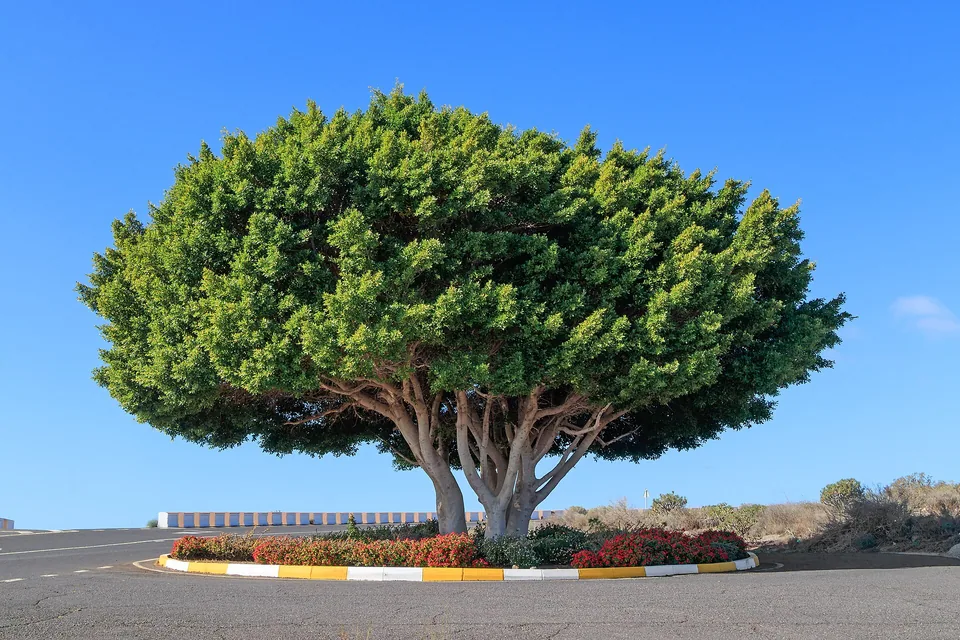
Can reach 50 ft tall or more and 2 to 40 ft wide
What the sources say (2)
Mature height: up to 1500 cm (15 m, 50 ft) or more
evergreen tree to 15 m (50 ft) or more in height, with a rounded dense crown
— | Center for Aquatic and Invasive Plants | University of Florida, IFAS [2] Mature width: 61-1219 cm (2-40 ft)
Dimensions: Height: 2 ft. 0 in. - 50 ft. 0 in. Width: 2 ft. 0 in. - 40 ft. 0 in.
— Ficus microcarpa (Chinese Banyan, Curtain Fig, Gajumaru, Gajumaru Indian Laurel, Indian Laurel, Laurel Fig, Malayan Banyan) | North Carolina Extension Gardener Plant Toolbox [1] - Propagation
Stem cuttings in water, sand or potting soil, or from seed
What the sources say (3)
Propagation: Stem cuttings in water or in sand or potting soil; seed
The species can be propagated easily by cuttings, either in water or directly in a substrate of sand or potting soil.
— Ficus microcarpa (Chinese Banyan, Curtain Fig, Gajumaru, Gajumaru Indian Laurel, Indian Laurel, Laurel Fig, Malayan Banyan) | North Carolina Extension Gardener Plant Toolbox [1] Tip cuttings around 4 - 12cm long, taken from lateral branches
— Ficus microcarpa - Useful Tropical Plants [4] Seed - germinates best at a temperature around 20
— Ficus microcarpa - Useful Tropical Plants [4] - Containers
Grows in containers and indoors too
What the sources say (2)
In containers: Yes
Landscape Location: Container Houseplants Design Feature: Shade Tree
— Ficus microcarpa (Chinese Banyan, Curtain Fig, Gajumaru, Gajumaru Indian Laurel, Indian Laurel, Laurel Fig, Malayan Banyan) | North Carolina Extension Gardener Plant Toolbox [1] Indoors: Yes
It is suitable for temperatures above 68 degrees F all year long, thus it is generally sold as a houseplant.
— Ficus microcarpa (Chinese Banyan, Curtain Fig, Gajumaru, Gajumaru Indian Laurel, Indian Laurel, Laurel Fig, Malayan Banyan) | North Carolina Extension Gardener Plant Toolbox [1]
Overview
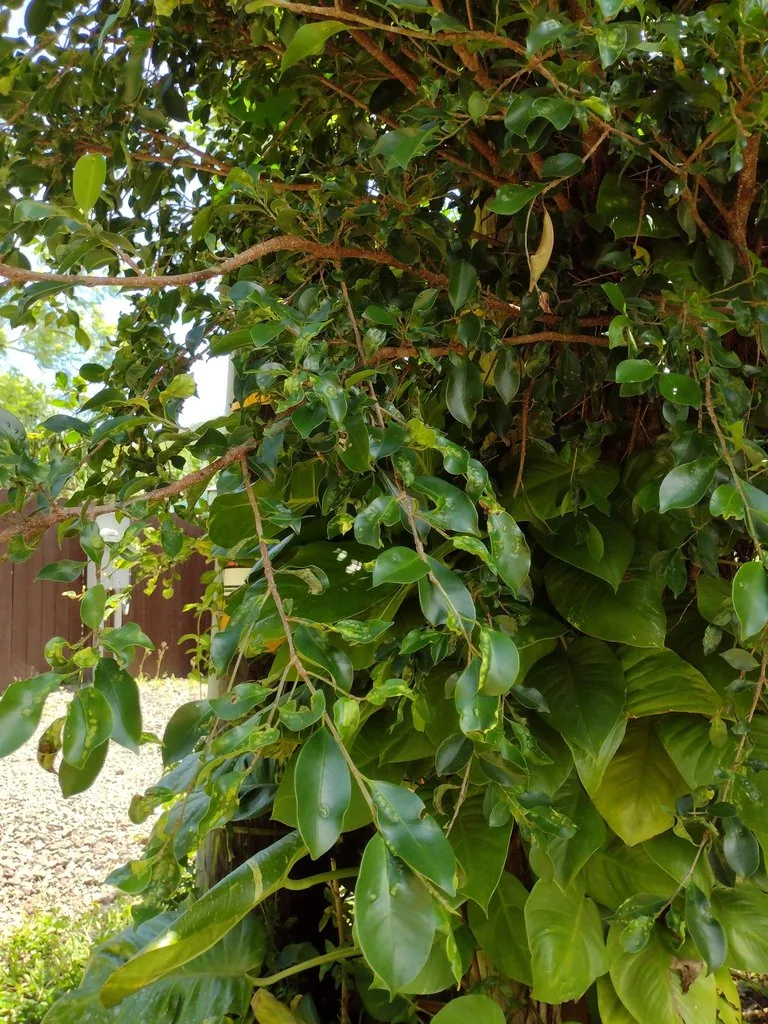
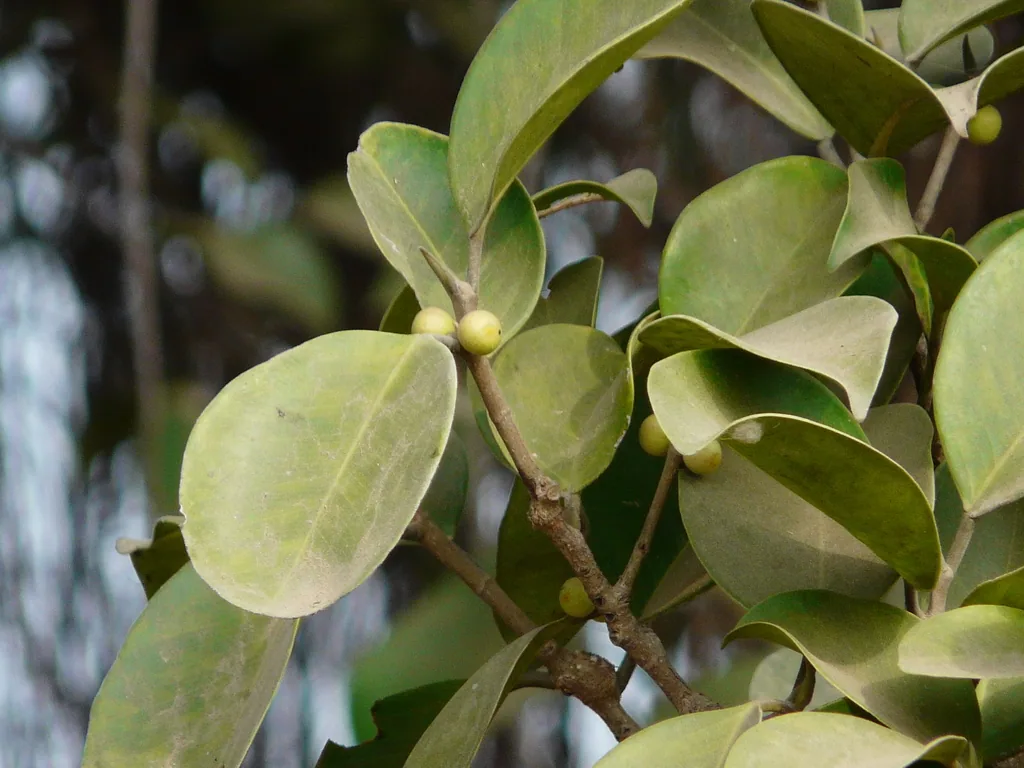
Chinese banyan is a fig tree native to tropical and subtropical Asia that is widely planted as an ornamental and sold as a houseplant. [1] It was introduced into Florida in the early 1900s and is listed there as a Category 1 invasive. [2] It propagates easily by stem cuttings. [1]
This record is incomplete: the sources we read do not cover every field yet.
Not yet covered by our sources: Watering, Pruning
Ginseng Ficus care
How to water Ginseng Ficus
Watering
Not stated in the sources we read.
Watering notes
Root rot can occur from overwatering; let the pot drain before returning it to its saucer
What the sources say (1)
Root rot can occur from overwatering, Leaf spotHow much light Ginseng Ficus needs
Full sun to partial shade
What the sources say (3)
Full sun (6 or more hours of direct sunlight a day)Partial Shade (Direct sunlight only part of the day, 2-6 hours)Succeeds in full sun to partial shade[ 302How much cold Ginseng Ficus can take
Hardiness, coldest zone
The sources give different values depending on region, zone or growing conditions.
What each source says
According to NC State Extension: 9a [winter low −6.7 to −3.9 °C (20 to 25 °F)]
According to Florida Natural Areas Inventory: 9b [winter low −3.9 to −1.1 °C (25 to 30 °F)]
What the sources say (2)
According to NC State Extension: USDA Plant Hardiness Zone:
9a, 9b, 10a, 10b, 11a, 11bAccording to Florida Natural Areas Inventory: USDA Hardiness Zone: 9b-11
Growth Habit: Tree
Origin:Hardiness, warmest zone
11b [winter low 7.2 to 10 °C (45 to 50 °F)]
What the sources say (1)
USDA Plant Hardiness Zone:
9a, 9b, 10a, 10b, 11a, 11bWhere to grow Ginseng Ficus
Indoors
Yes
What the sources say (1)
It is suitable for temperatures above 68 degrees F all year long, thus it is generally sold as a houseplant.In containers
Yes
What the sources say (1)
Landscape Location:
Container
Houseplants
Design Feature:
Shade TreeHow to propagate Ginseng Ficus
Stem cuttings in water or in sand or potting soil; seed
What the sources say (3)
The species can be propagated easily by cuttings, either in water or directly in a substrate of sand or potting soil.Tip cuttings around 4 - 12cm long, taken from lateral branchesSeed - germinates best at a temperature around 20How to grow Ginseng Ficus
The plant
Life cycle
perennial
What the sources say (1)
Life Cycle:
Perennial
Woody
Recommended Propagation Strategy:
Stem CuttingFamily
Moraceae
What the sources say (2)
Family: Moraceae
- Habit: evergreen tree to 15 m (50 ft) or more in heightSpecies:
microcarpa
Family:
Moraceae
Uses (Ethnobotany):
Has been used medicinally in parts of Asia.Mature height
up to 1500 cm (15 m, 50 ft) or more
What the sources say (1)
evergreen tree to 15 m (50 ft) or more in height, with a rounded dense crownMature width
61-1219 cm (2-40 ft)
What the sources say (1)
Dimensions:
Height: 2 ft. 0 in. - 50 ft. 0 in.
Width: 2 ft. 0 in. - 40 ft. 0 in.Pests and diseases
Pests
aphids, spider mites, mealybugs, scale insects, dry-wood termites
What the sources say (1)
Susceptible to aphids, spider mites, mealybugs, and scale insects. Root rot can occur from overwatering, Leaf spot and gray mold can also occur. Susceptible to attack by dry-wood termites.Diseases
root rot, leaf spot, gray mold
What the sources say (1)
Root rot can occur from overwatering, Leaf spot and gray mold can also occur.Ginseng Ficus pests and problems
Pests and diseases
Symptom: Susceptible to aphids, spider mites, mealybugs and scale insects; root rot from overwatering; leaf spot and gray mold; dry-wood termites
What to do: Avoid overwatering to prevent root rot
What the sources say (1)
Susceptible to aphids, spider mites, mealybugs, and scale insects. Root rot can occur from overwatering, Leaf spot and gray mold can also occur. Susceptible to attack by dry-wood termites.
— Ficus microcarpa (Chinese Banyan, Curtain Fig, Gajumaru, Gajumaru Indian Laurel, Indian Laurel, Laurel Fig, Malayan Banyan) | North Carolina Extension Gardener Plant Toolbox [1] Invasiveness and aerial roots
Symptom: Aerial roots can damage pavement and seedlings can strangle host trees
What to do: Preventive monitoring and removal of plants; pull seedlings and hand-pull small infestations
What the sources say (2)
the areal roots can damage pavement if not properly managed
— Ficus microcarpa (Chinese Banyan, Curtain Fig, Gajumaru, Gajumaru Indian Laurel, Indian Laurel, Laurel Fig, Malayan Banyan) | North Carolina Extension Gardener Plant Toolbox [1] Hand-pulling and removal of entire plants, particularly the roots, is practical for small infestations.
— | Center for Aquatic and Invasive Plants | University of Florida, IFAS [2]
Remedies
Each remedy shows what official sources say about it; traditional remedies without an official source are marked as such. Harmful ones are listed so you know to avoid them.
Treating the plant
leaf-gall thrips
pruning injured new growth Partly works
How: Prune new growth to remove injured leaves and suppress the thrips population.
Because both species only attack the tender new foliage, the new growth can be pruned to remove injured leaves and to suppress the thrips population.
— ask.ifas.ufl.edu [7] What the evidence says Because both species only attack the tender new foliage, the new growth can be pruned to remove injured leaves and to suppress the thrips population.
— ask.ifas.ufl.edu [7]
Getting rid of it
invasive laurel fig
hand-pulling seedlings and removing whole plants Partly works
How: Remove seed pods if possible and pull seedlings; remove entire plants, particularly the roots.
Remove any seed pods if possible and pull seedlings. Hand-pulling and removal of entire plants, particularly the roots, is practical for small infestations.
— | Center for Aquatic and Invasive Plants | University of Florida, IFAS [2] What the evidence says Remove any seed pods if possible and pull seedlings. Hand-pulling and removal of entire plants, particularly the roots, is practical for small infestations.
— | Center for Aquatic and Invasive Plants | University of Florida, IFAS [2]
Calendar
Pruning
Not stated in the sources we read.
Months as given by the sources, which are mostly from the United States (northern hemisphere). In the southern hemisphere they shift by about six months.
Edibility
Reported by the source, quoted verbatim. Do not eat a plant on the basis of this page alone: identification mistakes can be dangerous.
Wildlife Value: Birds feed on the fruit of the tree.
[1]
Similar plants
- Bengal Fig Ficus benghalensis
- Creeping Fig Ficus pumila
- Fig Ficus carica
- Rubber Plant Ficus elastica
- Weeping Fig Ficus benjamina
- Ficus religiosa Ficus religiosa
- Fiddle-leaf Fig Ficus lyrata
- Ficus petiolaris Ficus petiolaris
Sources
Every value above is quoted from these documents. Links lead to the original publisher.
- Ficus microcarpa (Chinese Banyan, Curtain Fig, Gajumaru, Gajumaru Indian Laurel, Indian Laurel, Laurel Fig, Malayan Banyan) | North Carolina Extension Gardener Plant Toolbox · plants.ces.ncsu.edu, consulted
- | Center for Aquatic and Invasive Plants | University of Florida, IFAS · plant-directory.ifas.ufl.edu, consulted
- Ficus microcarpa - UF/IFAS Assessment - University of Florida, Institute of Food and Agricultural Sciences · assessment.ifas.ufl.edu, consulted
- Ficus microcarpa - Useful Tropical Plants · tropical.theferns.info, consulted
- Ficus microcarpa - Florida Natural Areas Inventory · fnai.org, consulted
- FULL ACCOUNT FOR: Ficus microcarpus · iucngisd.org, consulted
- ask.ifas.ufl.edu · ask.ifas.ufl.edu
Written by Emilio Marruso · last checked