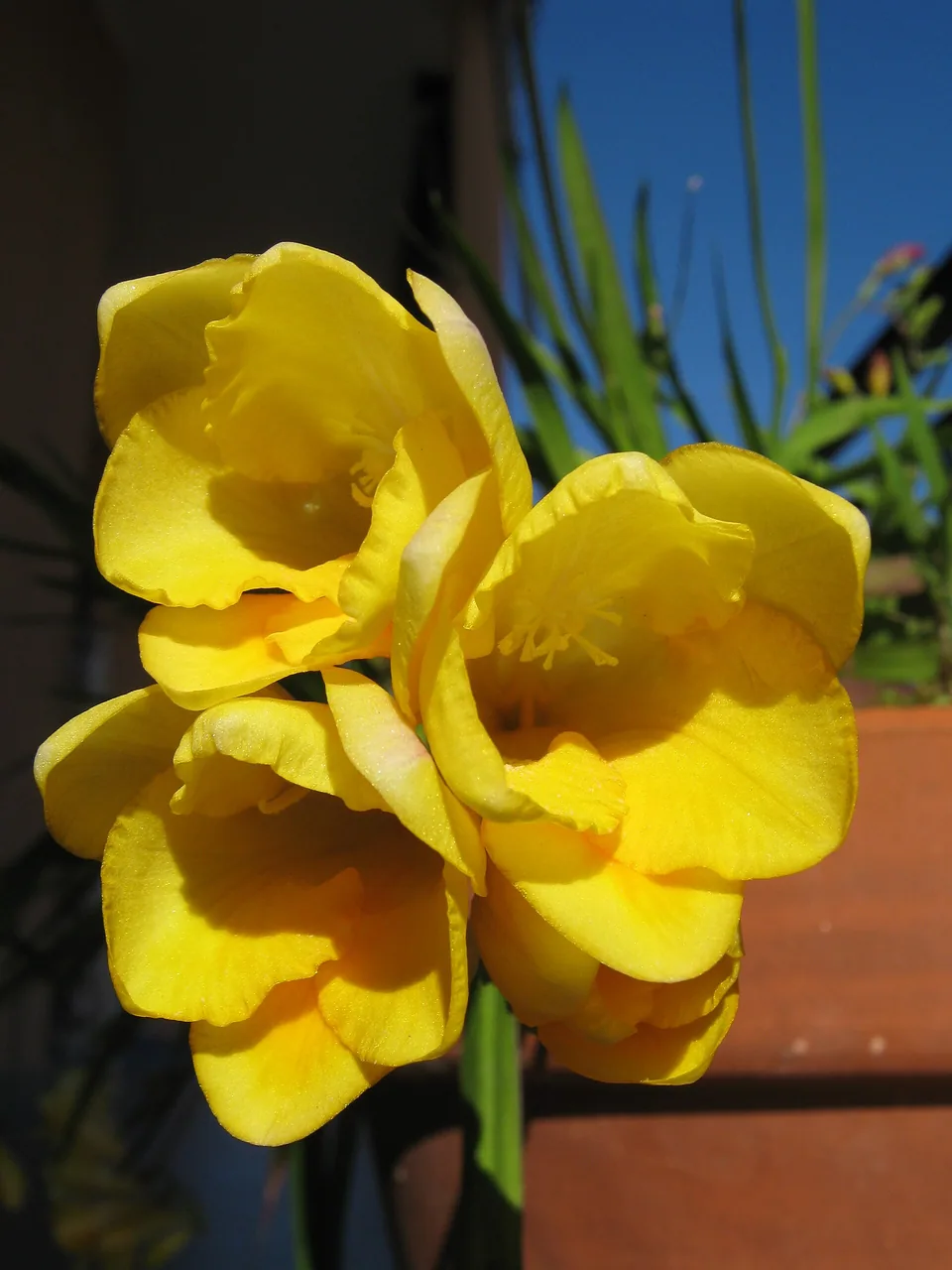
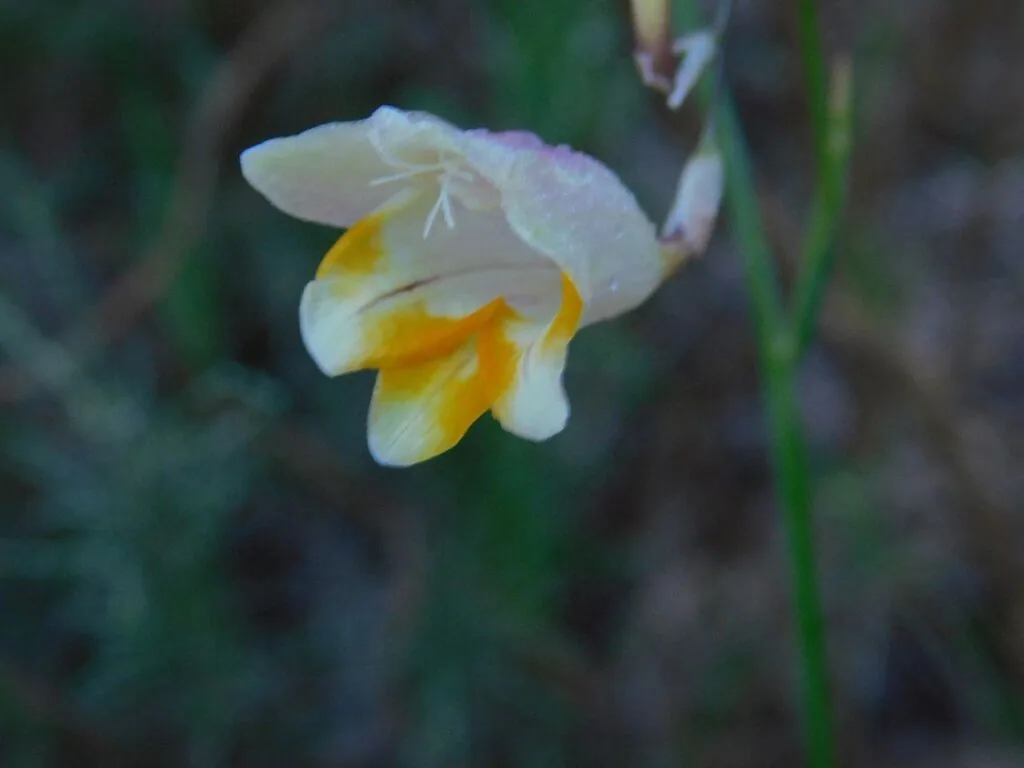

How to Grow and Care for Freesia refracta
Freesia refracta
Written by Emilio Marruso · last checked
At a glance
Freesia belongs to the iris family, and you can grow it from seed or, as gardeners do in practice, from corms. Once the first flower buds appear, give it a high-potassium tomato fertilizer every two weeks. Keep feeding until the leaves begin to wither and yellow after flowering: a simple routine anyone can follow.
- Feeding
From the first buds until the leaves yellow, feed every two weeks with tomato fertilizer
What the sources say (5)
When: From the first flower buds until the foliage begins to wither and yellow after flowering
or tomato fertiliser, every two weeks once the first buds are seen
— [5] After your freesias have finished flowering cut off faded blooms (see below) and continue watering and feeding until the foliage begins to wither and colours yellow or brown then stop watering.
— [5] How often: Every two weeks
or tomato fertiliser, every two weeks once the first buds are seen
— [5] - Propagation
Grows from seed or corms; in practice, gardeners use the corms
What the sources say (1)
Propagation: Seeds or corms (corms used in practice)
Freesia refracta can be propagated either sexually through seeds or vegetatively through corms.
— Waitzia refracta [2]
Overview
Common freesia is an herbaceous ornamental grown from corms and widely used as a cut flower. [2] It is native to southern Africa and is cultivated or sporadically naturalised in Mallorca. [1]
This record is incomplete: the sources we read do not cover every field yet.
Not yet covered by our sources: Watering, Light, Hardiness, coldest zone, Hardiness, warmest zone, Pruning
Freesia refracta care
How to water Freesia refracta
Not stated in the sources we read.
How much light Freesia refracta needs
Not stated in the sources we read.
How much cold Freesia refracta can take
Hardiness, coldest zone
Not stated in the sources we read.
Hardiness, warmest zone
Not stated in the sources we read.
How to propagate Freesia refracta
Seeds or corms (corms used in practice)
What the sources say (1)
Freesia refracta can be propagated either sexually through seeds or vegetatively through corms.How to grow Freesia refracta
The plant
Family
Iridaceae
What the sources say (1)
Family: IRIDACEAE Genus: Freesia Catalan common name: Fragedis. Province distribution: Balearic Islands.Fertilizing
When
From the first flower buds until the foliage begins to wither and yellow after flowering
What the sources say (2)
or tomato fertiliser, every two weeks once the first buds are seenAfter your freesias have finished flowering cut off faded blooms (see below) and continue watering and feeding until the foliage begins to wither and colours yellow or brown then stop watering.How often
Every two weeks
What the sources say (1)
or tomato fertiliser, every two weeks once the first buds are seenRemedies
Each remedy shows what official sources say about it; traditional remedies without an official source are marked as such. Harmful ones are listed so you know to avoid them.
Treating the plant
aphids
spraying or wiping away aphids Not verified
Traditional remedy, not verified by an official source.
How: Spray or wipe the aphids away daily until the population is gone.
slugs and snails
handpicking and soapy water Not verified
Traditional remedy, not verified by an official source.
How: Go out at night with a flashlight, handpick the slugs and snails and drop them into a bucket of soapy water.
beer traps Not verified
Traditional remedy, not verified by an official source.
How: Place beer traps around the garden in shallow dishes and clean them daily.
fusarium corm rot
discarding diseased corms Official source, not independently tested
How: Select clean planting stock and discard all diseased corms.
Select clean planting stock and discard all diseased corms.
— pnwhandbooks.org [6]
Getting rid of it
invasive weed
repeated mowing or grazing Not verified
Traditional remedy, not verified by an official source.
Don't mow after flowering or bulbil formation as this may spread the infestation.
— herbiguide.com.au [7] How: Mowing or grazing normally provide control; continual grazing or repeated mowing provide eventual control.
hand removal of corms Not verified
Traditional remedy, not verified by an official source.
These plants are very difficult to control by hand weeding because they produce seed, corms and bulbils.
— herbiguide.com.au [7] How: Loosen the soil before removal to prevent the corm breaking off.
Calendar
Pruning
Not stated in the sources we read.
Months as given by the sources, which are mostly from the United States (northern hemisphere). In the southern hemisphere they shift by about six months.
Similar plants
- African lily Dietes bicolor
- Algerian Iris Iris unguicularis
- Angel's Fishing Rod Dierama pulcherrimum
- Baboon Flower Babiana nervosa
- Blackberry Lily Iris domestica
- Blood Iris Iris sanguinea
- Blue Iris Iris spuria
- Blue-eyed Grass Sisyrinchium angustifolium
Sources
Every value above is quoted from these documents. Links lead to the original publisher.
- Freesia refracta (Jacq.) Eckl. ex Klatt - Herbari Virtual del Mediterrani Occidental · herbarivirtual.uib.cat, consulted
- Waitzia refracta · llifle.com, consulted
- Freesias Are Not Easily Grown - Follow These Guidelines To Improve Your Chances | Horticulture.co.uk · horticulture.co.uk, consulted
- Freesia · chestofbooks.com, consulted
- rhs.org.uk · rhs.org.uk
- pnwhandbooks.org · pnwhandbooks.org
- herbiguide.com.au · herbiguide.com.au
Written by Emilio Marruso · last checked