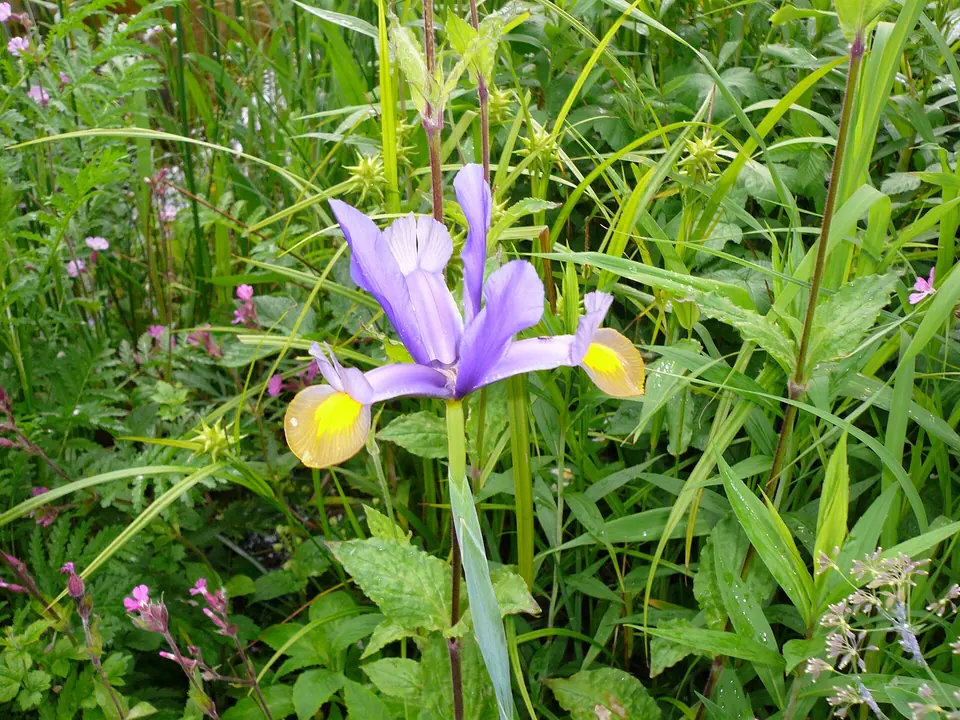
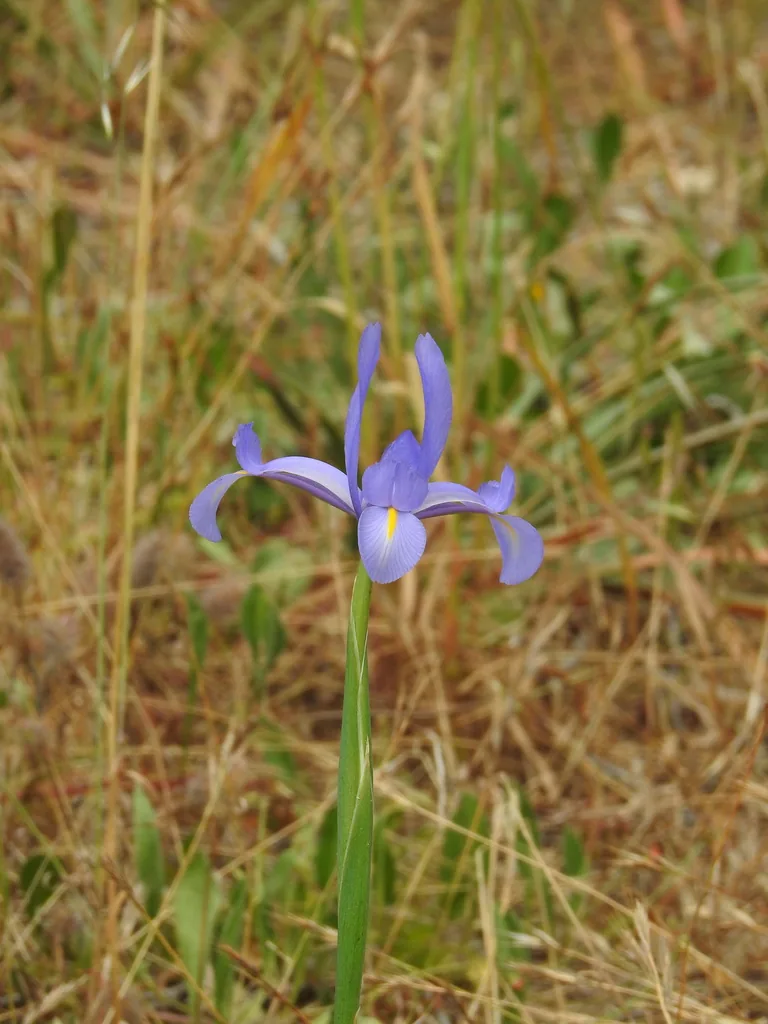

How to Grow and Care for Spanish iris
Iris xiphium
Written by Emilio Marruso · last checked
At a glance
This iris is a sun-loving bulb: give it full sun and plant the bulbs 6 inches apart. Water it generously while it is growing, never overdoing it, then let it rest with less water the rest of the year. It grows happily in containers too, and over the years the bulbs multiply on their own, ready to be dug up and shared.
- Sun
Full sun
What the sources say (1)
Light: Full sun
Iris xiphium needs full sun exposure and warm temperatures.
— Iris xiphium or Spanish iris | Care and Growing [5] - Water
Water generously while it grows, never too much; water less the rest of the year
What the sources say (1)
Watering: Water abundantly during the growth period (never overwater); reduce watering the rest of the year
Water abundantly during the growth period (never overwater). Reduce watering the rest of the year.
— Iris xiphium or Spanish iris | Care and Growing [5] - Cold
Survives winters down to −20 °F (−28.9 °C)
Very hardy · USDA 5 · RHS H7 · Z5
What the sources say (2)
Hardiness, coldest zone: 5 [winter low −28.9 to −23.3 °C (−20 to −10 °F)]
And Spanish varieties, I. xiphium , grow up to 36 inches in height and are hardy in Zones 5-9.
— How to Grow and Care for Bulbous Iris | Gardener’s Path [2] Hardiness, warmest zone: 9 [winter low −6.7 to −1.1 °C (20 to 30 °F)]
And Spanish varieties, I. xiphium , grow up to 36 inches in height and are hardy in Zones 5-9.
— How to Grow and Care for Bulbous Iris | Gardener’s Path [2] - Spacing
6 in between bulbs
What the sources say (1)
Spacing: 15.2 cm (6 in)
The above named bulbous iris is easy to grow in well-drained soils in the open. They should be planted from 3 to 4 inches deep, and spaced 6 inches apart under good conditions.
— GROWING IRIS [4] - Propagation
Every few years, dig up the bulbs and separate them; growing from seed is slow
What the sources say (2)
Propagation: Seed (slow); natural division of bulbs, dug and separated at intervals of several years
Spanish iris propagates from seeds but it's a slow process
— Iris xiphium or Spanish iris | Care and Growing [5] The bulbs multiply naturally by division and may be dug and separated at intervals of several years.
— GROWING IRIS [4] - Containers
Grows in containers too
What the sources say (1)
In containers: Yes
Spanish iris is an easy to grow plant that is used in mixed borders, in rockeries and in pots for terraces and balconies.
— Iris xiphium or Spanish iris | Care and Growing [5]
Overview
Spanish iris is a bulbous perennial reaching 60 cm [24 in] in height. [5] The species is native to Spain and Portugal. [5] It prefers light, sandy and slightly calcareous soil. [5]
This record is incomplete: the sources we read do not cover every field yet.
Not yet covered by our sources: Pruning
Spanish iris care
Measurements in square brackets are our conversion into the other unit system; the quoted text is unchanged.
How to water Spanish iris
Water abundantly during the growth period (never overwater); reduce watering the rest of the year
What the sources say (1)
Water abundantly during the growth period (never overwater). Reduce watering the rest of the year.How much light Spanish iris needs
Full sun
What the sources say (1)
Iris xiphium needs full sun exposure and warm temperatures.How much cold Spanish iris can take
Hardiness, coldest zone
5 [winter low −28.9 to −23.3 °C (−20 to −10 °F)]
What the sources say (1)
And Spanish varieties, I. xiphium , grow up to 36 inches in height and are hardy in Zones 5-9.Hardiness, warmest zone
9 [winter low −6.7 to −1.1 °C (20 to 30 °F)]
What the sources say (1)
And Spanish varieties, I. xiphium , grow up to 36 inches in height and are hardy in Zones 5-9.Where to grow Spanish iris
In containers
Yes
What the sources say (1)
Spanish iris is an easy to grow plant that is used in mixed borders, in rockeries and in pots for terraces and balconies.Spacing
15.2 cm (6 in)
What the sources say (1)
The above named bulbous iris is easy to grow in well-drained soils in the open. They should be planted from 3 to 4 inches deep, and spaced 6 inches apart under good conditions.How to propagate Spanish iris
Seed (slow); natural division of bulbs, dug and separated at intervals of several years
Remedies
Each remedy shows what official sources say about it; traditional remedies without an official source are marked as such. Harmful ones are listed so you know to avoid them.
Treating the plant
slugs and snails
hand-collecting slugs and snails Not verified
Traditional remedy, not verified by an official source.
How: Collect them by hand in the mornings and evenings.
beer traps Not verified
Traditional remedy, not verified by an official source.
How: Beer traps are listed among the preventative measures against slugs and snails.
aphids
squashing aphids by hand Not verified
Traditional remedy, not verified by an official source.
How: Run a finger and thumb up the fan squeezing at the same time.
encouraging ladybirds Not verified
Traditional remedy, not verified by an official source.
How: Encourage natural predators such as ladybirds.
strong stream of water Official source, not independently tested
How: Remove aphids with a strong stream of water applied regularly.
Remove aphids with a strong stream of water applied regularly.
— hgic.clemson.edu [6] insecticidal soap spray Partly works
How: Thoroughly spray both leaf surfaces.
When predator population numbers are low, insecticidal soap can be effective; thoroughly spray both leaf surfaces.
— hgic.clemson.edu [6] What the evidence says When predator population numbers are low, insecticidal soap can be effective; thoroughly spray both leaf surfaces.
— hgic.clemson.edu [6]
rust
collecting and burning dead leaves Not verified
Traditional remedy, not verified by an official source.
How: When the leaves die down they are collected and burnt.
ink spot
destroying leaf debris and infected bulbs Official source, not independently tested
How: Destroy leaf debris and remove and destroy infected bulbs.
Destroy leaf debris. Remove and destroy infected bulbs.
— extension.psu.edu [7]
Calendar
Pruning
Not stated in the sources we read.
Months as given by the sources, which are mostly from the United States (northern hemisphere). In the southern hemisphere they shift by about six months.
Similar plants
- Algerian Iris Iris unguicularis
- Blackberry Lily Iris domestica
- Blood Iris Iris sanguinea
- Blue Iris Iris spuria
- Copper iris Iris fulva
- Dixie Iris Iris hexagona
- Dwarf Iris Iris reticulata
- English Iris Iris latifolia
Sources
Every value above is quoted from these documents. Links lead to the original publisher.
- Flora of New Zealand | Taxon Profile | Iris xiphium · nzflora.info, consulted
- How to Grow and Care for Bulbous Iris | Gardener’s Path · gardenerspath.com, consulted
- Spanish Irises | Pacific Bulb Society · pacificbulbsociety.org, consulted
- GROWING IRIS · s3.amazonaws.com, consulted
- Iris xiphium or Spanish iris | Care and Growing · consultaplantas.com, consulted
- hgic.clemson.edu · hgic.clemson.edu
- extension.psu.edu · extension.psu.edu
Written by Emilio Marruso · last checked