
How to Grow and Care for Savin Juniper
Juniperus sabina
Written by Emilio Marruso · last checked
At a glance
Savin juniper asks for very little: give it full sun and moist, well-drained soil, and it adapts happily to many conditions. It needs only medium watering, as long as its roots never sit in wet ground. Best of all, you can grow new plants from cuttings and share this tough, easygoing juniper with friends and neighbors.
- Sun
Full sun
- Water
Medium watering; never leave the soil soggy
What the sources say (3)
Watering: Medium water use
Light: Full sun. Water: Medium use. Soil: Adapted to a wide variety, but intolerant of wet soils.
— Savin Juniper | NDSU Agriculture [1] Watering notes: Prefers moist, well-drained soil, but very adaptable; intolerant of wet soils
prefers moist, well-drained soil, but very adaptable - full sun - pH adaptable - once established little maintence required
— Plant Database [2] Soil: Adapted to a wide variety, but intolerant of wet soils.
— Savin Juniper | NDSU Agriculture [1] - Cold
Survives winters down to −40 °F (−40 °C)
Very hardy · USDA 3 · RHS H7 · Z3
- Soil
Likes moist, well-drained soil but adapts to many; wet soil harms it
What the sources say (2)
Watering notes: Prefers moist, well-drained soil, but very adaptable; intolerant of wet soils
prefers moist, well-drained soil, but very adaptable - full sun - pH adaptable - once established little maintence required
— Plant Database [2] Soil: Adapted to a wide variety, but intolerant of wet soils.
— Savin Juniper | NDSU Agriculture [1] - Feeding
Yellow inner foliage and slow growth mean it lacks magnesium: then give Epsom salt
What the sources say (2)
Micronutrients: Epsom salt (magnesium sulfate): 25.5 mL/m² on the soil, or 37.4 g/L as a foliar spray, when magnesium is lacking
Apply Epsom salts (magnesium sulfate) either to the soil (1 cup per 100 square feet) or as a foliar fertilizer (5 ounces per gallon of water).
— [5] Signs of deficiency: Magnesium deficiency: yellowing or dead foliage in the centre of the plant and slow growth
A juniper lacking sufficient magnesium develops yellowing or dead foliage in the center and grows slowly.
— [5] - Pests
Watch for tip and needle blights and cedar-apple rust
What the sources say (1)
Diseases: tip and needle blights, cedar-apple rust
Savin junipers are generally susceptible to tip and needle blights. Cedar-apple rust and related rust diseases spend part of their life cycle on junipers.
— Savin Juniper | NDSU Agriculture [1] - Propagation
Grow new plants from cuttings
What the sources say (1)
Propagation: Cuttings
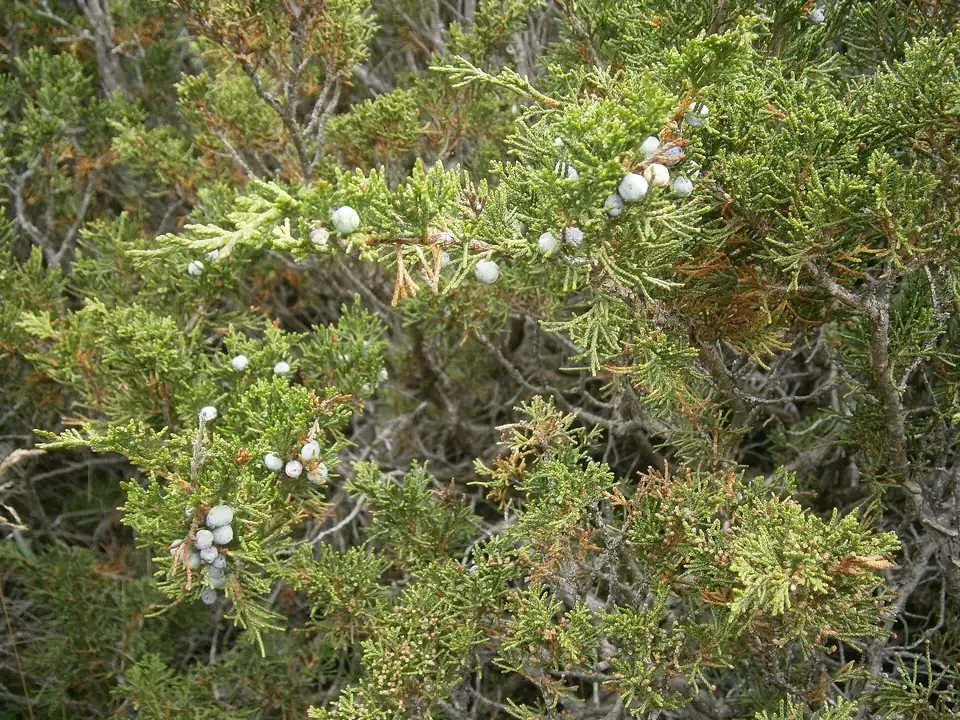
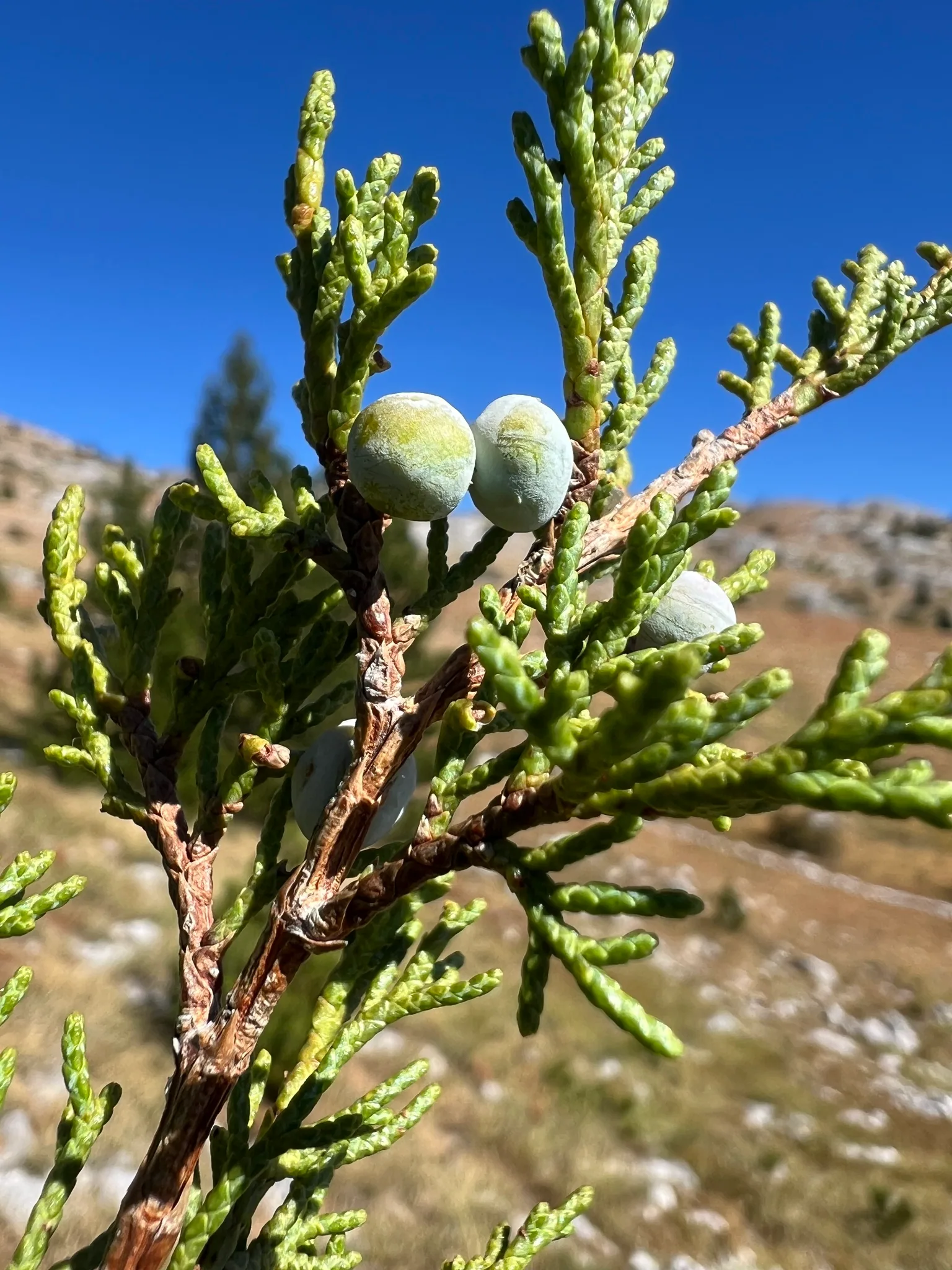
ID Features - juvenile scale-shaped needles - 4-ranked needles - rank odor emitted when leaves are crushed Propagation - by cuttings Cultivars/Varieties
— Plant Database [2]
Overview
Savin juniper is an evergreen shrub native to Europe and western Asia that prefers full sun and moist, well-drained soil. [2] It is propagated by cuttings and is generally susceptible to tip and needle blights. [2][1]
This record is incomplete: the sources we read do not cover every field yet.
Not yet covered by our sources: Hardiness, warmest zone, Pruning
Savin Juniper care
How to water Savin Juniper
Watering
Medium water use
What the sources say (1)
Light: Full sun.
Water: Medium use.
Soil: Adapted to a wide variety, but intolerant of wet soils.Watering notes
Prefers moist, well-drained soil, but very adaptable; intolerant of wet soils
How much light Savin Juniper needs
How much cold Savin Juniper can take
Hardiness, coldest zone
3 [winter low −40 to −34.4 °C (−40 to −30 °F)]
Hardiness, warmest zone
Not stated in the sources we read.
How to propagate Savin Juniper
Cuttings
What the sources say (1)
ID
Features
- juvenile scale-shaped needles
- 4-ranked needles
- rank odor emitted when leaves are crushed
Propagation
- by cuttings
Cultivars/VarietiesHow to grow Savin Juniper
The plant
Family
Cupressaceae
What the sources say (1)
Scientific Name: Juniperus sabina
Family: Cupressaceae (Cypress)
Hardiness: Zone 3
Leaves: EvergreenPests and diseases
Diseases
tip and needle blights, cedar-apple rust
What the sources say (1)
Savin junipers are generally susceptible to tip and needle blights. Cedar-apple rust and related rust diseases spend part of their life cycle on junipers.Fertilizing
Mineral fertilizers
The sources give different values depending on region, zone or growing conditions.
What each source says
spreading junipers: A good-quality balanced fertilizer
What the sources say (1)
spreading junipers: Yes, use of a good quality balanced fertilizer will help these plants grow and be healthy.Micronutrients
Epsom salt (magnesium sulfate): 25.5 mL/m² on the soil, or 37.4 g/L as a foliar spray, when magnesium is lacking
What the sources say (1)
Apply Epsom salts (magnesium sulfate) either to the soil (1 cup per 100 square feet) or as a foliar fertilizer (5 ounces per gallon of water).Signs of deficiency
Magnesium deficiency: yellowing or dead foliage in the centre of the plant and slow growth
What the sources say (1)
A juniper lacking sufficient magnesium develops yellowing or dead foliage in the center and grows slowly.Savin Juniper pests and problems
Tip and needle blights
Symptom: Tip and needle blights
What the sources say (1)
Savin junipers are generally susceptible to tip and needle blights.
— Savin Juniper | NDSU Agriculture [1] Juniper blight
Symptom: Listed as a liability of the species
What the sources say (1)
Liabilities - Juniper blight - not may pest problems
— Plant Database [2]
Remedies
The sources we checked give no remedies for this plant.
Calendar
Pruning
Not stated in the sources we read.
Months as given by the sources, which are mostly from the United States (northern hemisphere). In the southern hemisphere they shift by about six months.
Indicative values
Values from a secondary source, not checked word for word like the rest of this page. Use them as a starting point.
- Life cycle
- PerennialIndicative value, adapt it to your climate · Secondary source
- Drought tolerant
- yesIndicative value, adapt it to your climate · Secondary source
- Soil
- Rocky, gravelly, dry, Well-drainedIndicative value, adapt it to your climate · Secondary source
- Soil pH
- 5-7.5Indicative value, adapt it to your climate · Secondary source
- Care level
- MediumIndicative value, adapt it to your climate · Secondary source
- Growth rate
- ModerateIndicative value, adapt it to your climate · Secondary source
- Pruning
- May, June, July, AugustIndicative value, adapt it to your climate · Secondary source
- Pests
- Blight, needle cast, Mites, Root rot, Rust, Deer resistant, Drought resistantIndicative value, adapt it to your climate · Secondary source
Similar plants
- Chinese Juniper Juniperus chinensis
- Common Juniper Juniperus communis
- Creeping Juniper Juniperus horizontalis
- Eastern Redcedar Juniperus virginiana
- Japanese Garden Juniper Juniperus procumbens
- One-seed Juniper Juniperus monosperma
- Rocky Mountain Juniper Juniperus scopulorum
- Shore Juniper Juniperus conferta
Sources
Every value above is quoted from these documents. Links lead to the original publisher.
- Savin Juniper | NDSU Agriculture · ndsu.edu, consulted
- Plant Database · plantdatabase.uconn.edu, consulted
- Juniperus sabina L. · infoflora.ch, consulted
- ask.extension.org · ask.extension.org
- hortsense.cahnrs.wsu.edu · hortsense.cahnrs.wsu.edu
Written by Emilio Marruso · last checked