
How to Grow and Care for Wild Daffodil
Narcissus pseudonarcissus
Written by Emilio Marruso · last checked
Toxic to: Cats, Dogs, Horses, People · Why
At a glance
This daffodil is a perennial bulb that thrives anywhere from full sun to partial shade. Plant the bulbs 4–5 inches deep, 6 weeks before the first freeze, in moist, well-draining soil, and they grow 1 to 1.5 feet tall. It tolerates drought, so just keep it out of soggy ground and let the leaves brown on their own before cutting them back.
- Sun
Full sun to partial shade
What the sources say (1)
Light: Full sun to partial shade
Trumpet Daffodil does best in moist, well-draining, soil in full sun or partial shade.
— Narcissus pseudonarcissus (Averill, Bell Rose, Trumpet Daffodil, Wild Daffodil) | North Carolina Extension Gardener Plant Toolbox [1] - Water
Keep the soil moist; it handles drought, but soggy soil rots the bulbs
What the sources say (1)
Watering notes: Moist, well-draining soil; tolerates drought but not extremely wet conditions; bulb rot can occur in wet soils
This plant is tolerant of heat and drought. It is intolerant of extremely wet conditions.
— Narcissus pseudonarcissus (Averill, Bell Rose, Trumpet Daffodil, Wild Daffodil) | North Carolina Extension Gardener Plant Toolbox [1] - Soil
Moist soil that drains well
What the sources say (1)
Watering notes: Moist, well-draining soil; tolerates drought but not extremely wet conditions; bulb rot can occur in wet soils
This plant is tolerant of heat and drought. It is intolerant of extremely wet conditions.
— Narcissus pseudonarcissus (Averill, Bell Rose, Trumpet Daffodil, Wild Daffodil) | North Carolina Extension Gardener Plant Toolbox [1] - Planting
Plant the bulbs 4–5 in deep, 6 weeks before the first freeze
What the sources say (2)
Planting: 6 weeks before the first freeze, 4 to 5 inches (10.2-12.7 cm) below the soil surface
Plant 6 weeks before the first freeze, 4 to 5 inches below the soil surface.
— Narcissus pseudonarcissus (Averill, Bell Rose, Trumpet Daffodil, Wild Daffodil) | North Carolina Extension Gardener Plant Toolbox [1] Sowing depth: 10.16-12.7 cm (4-5 in)
Plant 6 weeks before the first freeze, 4 to 5 inches below the soil surface.
— Narcissus pseudonarcissus (Averill, Bell Rose, Trumpet Daffodil, Wild Daffodil) | North Carolina Extension Gardener Plant Toolbox [1] - Feeding
Mix bone meal or a low-nitrogen fertilizer into the soil at planting; too much nitrogen stops flowers
What the sources say (11)
When: At planting, mixed into the soil before the bulbs go in
It benefits from the addition of bone meal or superphosphate added to the planting hole.
— Narcissus pseudonarcissus (Averill, Bell Rose, Trumpet Daffodil, Wild Daffodil) | North Carolina Extension Gardener Plant Toolbox [1] While not typically necessary, fertilizers can be used at planting.
— [5] Natural fertilizers: Bone meal: 146–195 g/m² worked into the bed, or 14.8 mL in the bottom of each planting hole
It benefits from the addition of bone meal or superphosphate added to the planting hole.
— Narcissus pseudonarcissus (Averill, Bell Rose, Trumpet Daffodil, Wild Daffodil) | North Carolina Extension Gardener Plant Toolbox [1] A good organic fertilizer for bulbs is bonemeal with its high phosphorus content. Apply 3 to 4 pounds of bonemeal per 100 square feet. Alternatively, you can work one tablespoon of bonemeal into the bottom of the planting hole.
— [5] Mineral fertilizers: Low-nitrogen complete fertilizer such as 5-10-5 or 5-10-10 (N-P-K ratio 1:2:2 or 1:3:3), 97.6–146 g/m² worked deeply into the soil before planting; superphosphate in the planting hole
If using fertilizers, apply all-purpose fertilizers, such as a 5-10-5, at 2 to 3 pounds per 100 square feet, and work it thoroughly and deeply into the soil before planting.
— [5] When preparing the soil for daffodils, incorporate a complete garden fertilizer with a 1:2:2 or 1:3:3 N-P-K ratio (e.g. 5-10-10); fertilizer with high amounts of nitrogen should be avoided.
— [6] It benefits from the addition of bone meal or superphosphate added to the planting hole.
— Narcissus pseudonarcissus (Averill, Bell Rose, Trumpet Daffodil, Wild Daffodil) | North Carolina Extension Gardener Plant Toolbox [1] Avoid: Fertilizers high in nitrogen, which can stop bulbs from flowering; complete fertilizer placed directly in the bottom of the planting hole; fertilizer left on the leaves
When preparing the soil for daffodils, incorporate a complete garden fertilizer with a 1:2:2 or 1:3:3 N-P-K ratio (e.g. 5-10-10); fertilizer with high amounts of nitrogen should be avoided.
— [6] Be sure to mix this fertilizer thoroughly with the soil; never place it directly in the bottom of a hole in which a daffodil bulb will be planted.
— [6] A handful or garden or bulb fertilizer around the base of each clump is sufficient; take care not to get any fertilizer on the leaves themselves.
— [6] Problems with Narcissus include bulbs failing to flower due to excess nitrogen fertilizer or lack of sun
— [7] - Pruning
Cut the leaves back only after they turn brown on their own
What the sources say (1)
Pruning: Cut foliage back only after it has browned naturally
Deadhead flowers to prevent seeding, but cut foliage back only after it has browned naturally.
— Narcissus pseudonarcissus (Averill, Bell Rose, Trumpet Daffodil, Wild Daffodil) | North Carolina Extension Gardener Plant Toolbox [1] - Pests
Watch for slugs, snails and bulb mites; wet soil causes bulb rot
What the sources say (2)
Pests: slugs, snails, bulb mites
Watch for slugs, snails and bulb mites. Bulb rot can occur in wet soils.
— Narcissus pseudonarcissus (Averill, Bell Rose, Trumpet Daffodil, Wild Daffodil) | North Carolina Extension Gardener Plant Toolbox [1] Diseases: bulb rot
Watch for slugs, snails and bulb mites. Bulb rot can occur in wet soils.
— Narcissus pseudonarcissus (Averill, Bell Rose, Trumpet Daffodil, Wild Daffodil) | North Carolina Extension Gardener Plant Toolbox [1] - Size
1 to 1.5 ft tall and 9 to 12 in wide
What the sources say (2)
Mature height: 30.48-45.72 cm (1 ft 0 in - 1 ft 6 in)
Dimensions: Height: 1 ft. 0 in. - 1 ft. 6 in. Width: 0 ft. 9 in. - 1 ft. 0 in.
— Narcissus pseudonarcissus (Averill, Bell Rose, Trumpet Daffodil, Wild Daffodil) | North Carolina Extension Gardener Plant Toolbox [1] Mature width: 22.86-30.48 cm (0 ft 9 in - 1 ft 0 in)
Dimensions: Height: 1 ft. 0 in. - 1 ft. 6 in. Width: 0 ft. 9 in. - 1 ft. 0 in.
— Narcissus pseudonarcissus (Averill, Bell Rose, Trumpet Daffodil, Wild Daffodil) | North Carolina Extension Gardener Plant Toolbox [1] - Safety
Poisonous to people, cats, dogs and horses; keep it away from children and pets
Overview
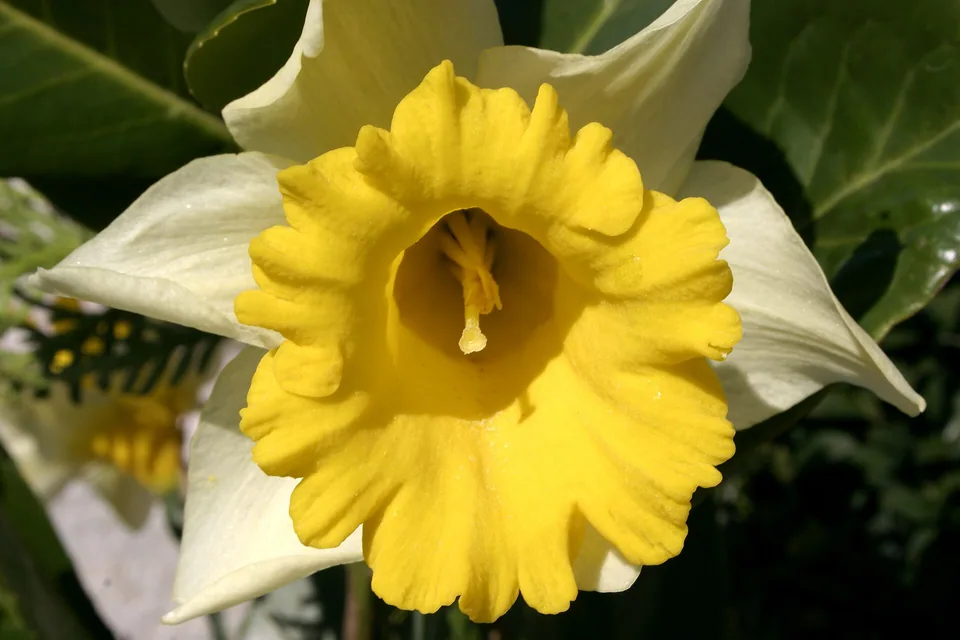
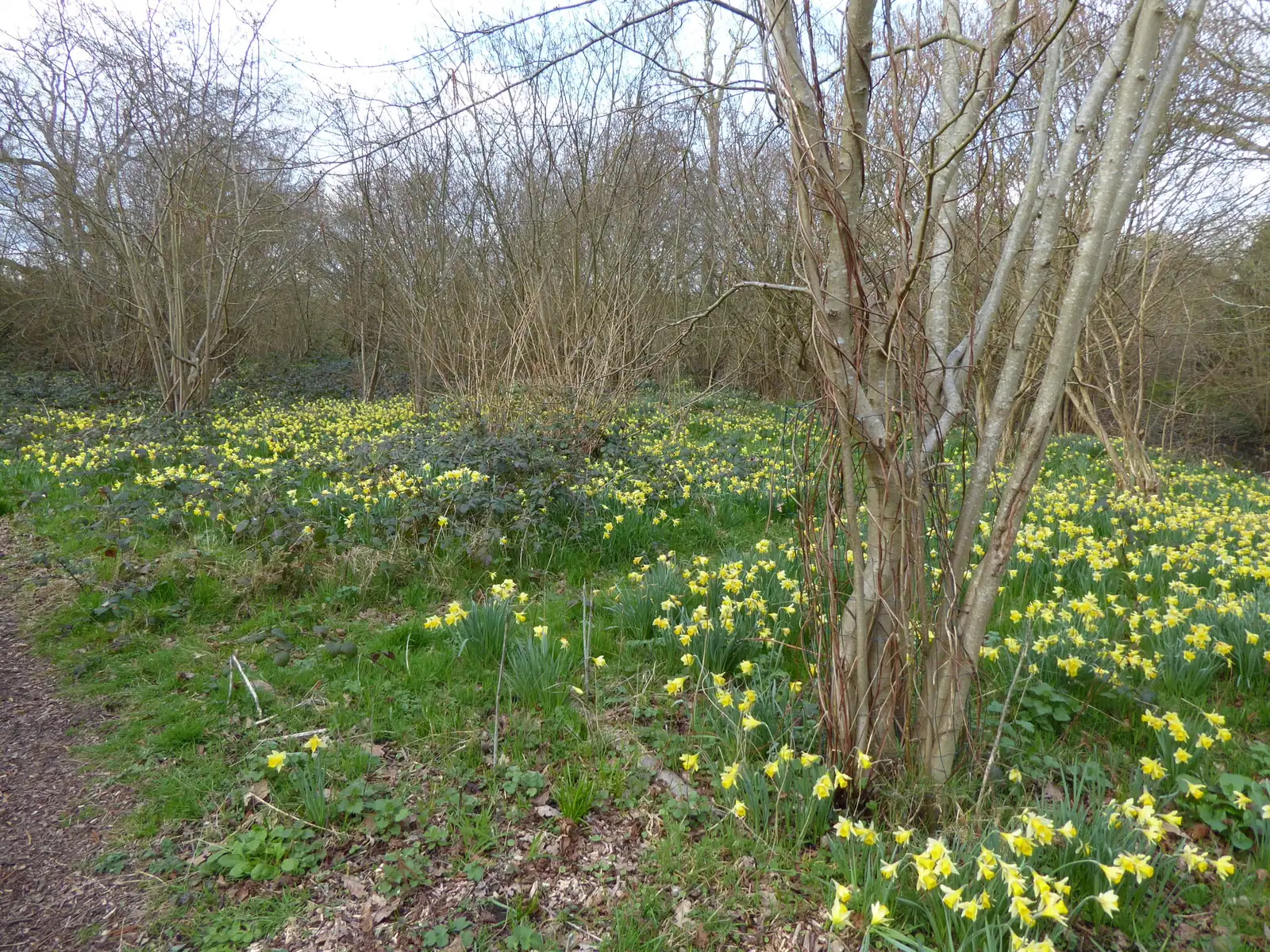
Wild daffodil is a herbaceous flowering bulb that grows best in moist, well-draining soil in full sun or partial shade. [1] It tolerates heat and drought but not extremely wet conditions, and bulb rot can occur in wet soils. [1] It is listed as a low-severity poisonous plant, with bulbs as the most poisonous part. [1]
This record is incomplete: the sources we read do not cover every field yet.
Not yet covered by our sources: Watering, Hardiness, coldest zone, Hardiness, warmest zone, Propagation
Wild Daffodil care
How to water Wild Daffodil
Watering
Not stated in the sources we read.
Watering notes
Moist, well-draining soil; tolerates drought but not extremely wet conditions; bulb rot can occur in wet soils
What the sources say (1)
This plant is tolerant of heat and drought. It is intolerant of extremely wet conditions.How much light Wild Daffodil needs
Full sun to partial shade
What the sources say (1)
Trumpet Daffodil does best in moist, well-draining, soil in full sun or partial shade.How much cold Wild Daffodil can take
Hardiness, coldest zone
Not stated in the sources we read.
Hardiness, warmest zone
Not stated in the sources we read.
How to propagate Wild Daffodil
Not stated in the sources we read.
How to grow Wild Daffodil
The plant
Life cycle
perennial
What the sources say (1)
Trumpet Daffodil is a herbaceous perennial, flowering bulb in the onion family that grows up to 1 and 1/2 feet tall.Family
Amaryllidaceae
What the sources say (1)
Genus: Narcissus Species: pseudonarcissus Family: Amaryllidaceae Uses (Ethnobotany): A yellow dye is obtained from the flowers.Mature height
30.48-45.72 cm (1 ft 0 in - 1 ft 6 in)
What the sources say (1)
Dimensions: Height: 1 ft. 0 in. - 1 ft. 6 in. Width: 0 ft. 9 in. - 1 ft. 0 in.Mature width
22.86-30.48 cm (0 ft 9 in - 1 ft 0 in)
What the sources say (1)
Dimensions: Height: 1 ft. 0 in. - 1 ft. 6 in. Width: 0 ft. 9 in. - 1 ft. 0 in.Sowing and growth
Sowing depth
10.16-12.7 cm (4-5 in)
What the sources say (1)
Plant 6 weeks before the first freeze, 4 to 5 inches below the soil surface.Pests and diseases
Pests
slugs, snails, bulb mites
What the sources say (1)
Watch for slugs, snails and bulb mites. Bulb rot can occur in wet soils.Diseases
bulb rot
What the sources say (1)
Watch for slugs, snails and bulb mites. Bulb rot can occur in wet soils.Fertilizing
When
At planting, mixed into the soil before the bulbs go in
What the sources say (2)
It benefits from the addition of bone meal or superphosphate added to the planting hole.While not typically necessary, fertilizers can be used at planting.How often
The sources disagree:
Daffodils rarely need regular fertilizer to grow well. Plants tolerate
[5]Established bulbs should be fertilized lightly each spring just as their leaves emerge from the soil.
[6]Dig some low-nitrogen fertilizer into the soil at planting time, and then fertilize again lightly when the first green shoots emerge, when the bulbs flower, and in the fall when rain begins.
[7]
Natural fertilizers
Bone meal: 146–195 g/m² worked into the bed, or 14.8 mL in the bottom of each planting hole
What the sources say (2)
It benefits from the addition of bone meal or superphosphate added to the planting hole.A good organic fertilizer for bulbs is bonemeal with its high phosphorus content. Apply 3 to 4 pounds of bonemeal per 100 square feet. Alternatively, you can work one tablespoon of bonemeal into the bottom of the planting hole.Mineral fertilizers
Low-nitrogen complete fertilizer such as 5-10-5 or 5-10-10 (N-P-K ratio 1:2:2 or 1:3:3), 97.6–146 g/m² worked deeply into the soil before planting; superphosphate in the planting hole
What the sources say (3)
If using fertilizers, apply all-purpose fertilizers, such as a 5-10-5, at 2 to 3 pounds per 100 square feet, and work it thoroughly and deeply into the soil before planting.When preparing the soil for daffodils, incorporate a complete garden fertilizer with a 1:2:2 or 1:3:3 N-P-K ratio (e.g. 5-10-10); fertilizer with high amounts of nitrogen should be avoided.It benefits from the addition of bone meal or superphosphate added to the planting hole.Avoid
Fertilizers high in nitrogen, which can stop bulbs from flowering; complete fertilizer placed directly in the bottom of the planting hole; fertilizer left on the leaves
What the sources say (4)
When preparing the soil for daffodils, incorporate a complete garden fertilizer with a 1:2:2 or 1:3:3 N-P-K ratio (e.g. 5-10-10); fertilizer with high amounts of nitrogen should be avoided.Be sure to mix this fertilizer thoroughly with the soil; never place it directly in the bottom of a hole in which a daffodil bulb will be planted.A handful or garden or bulb fertilizer around the base of each clump is sufficient; take care not to get any fertilizer on the leaves themselves.Problems with Narcissus include bulbs failing to flower due to excess nitrogen fertilizer or lack of sunSigns of excess
Bulbs failing to flower
What the sources say (1)
Problems with Narcissus include bulbs failing to flower due to excess nitrogen fertilizer or lack of sunWild Daffodil pests and problems
Slugs, snails and bulb mites
What to do: Watch for them
What the sources say (1)
Watch for slugs, snails and bulb mites. Bulb rot can occur in wet soils.
— Narcissus pseudonarcissus (Averill, Bell Rose, Trumpet Daffodil, Wild Daffodil) | North Carolina Extension Gardener Plant Toolbox [1]
Remedies
Each remedy shows what official sources say about it; traditional remedies without an official source are marked as such. Harmful ones are listed so you know to avoid them.
First aid
First aid: not a substitute for a doctor
daffodil ingestion
rinsing the mouth and drinking water or milk Official source, not independently tested
If a person has severe throat pain, difficulty swallowing, or drooling, medical evaluation and treatment are needed.
— poison.org [8] Have more questions? Use the web POISON CONTROL online tool to get help, or call your poison center at 1-800-222-1222 .
— poison.org [8] How: Rinse the mouth well and drink water or milk; if vomiting and diarrhea persist, watch for dehydration.
The best first aid for daffodil ingestion is rinsing the mouth well and drinking water or milk.
— poison.org [8]
Is Wild Daffodil toxic to pets?
Reported by the source, quoted verbatim. This is not medical or veterinary advice: if a person or an animal may have eaten this plant, contact a poison control centre or a veterinarian.
Animals
Problem for Cats
[1]The source flags the risk for this animal but does not explain why.
Problem for Dogs
[1]The source flags the risk for this animal but does not explain why.
Problem for Horses
[1]The source flags the risk for this animal but does not explain why.
People
Poisonous to Humans: Poison Severity: Low
[1]- Poisonous parts
Poison Part: Flowers Leaves Roots
[1]- Toxic principle
Poison Toxic Principle: Lycorine and other alkaloids
[1]- Symptoms
Poison Symptoms: Vomiting, salvation, diarrhea; large ingestions cause convulsions, low blood pressure, tremors, and cardiac arrhythmias. Bulbs are the most poisonous part
[1]- Severity
Poison Severity: Low
[1]
Calendar
Planting
6 weeks before the first freeze, 4 to 5 inches (10.2-12.7 cm) below the soil surface
What the sources say (1)
Plant 6 weeks before the first freeze, 4 to 5 inches below the soil surface.Pruning
Cut foliage back only after it has browned naturally
What the sources say (1)
Deadhead flowers to prevent seeding, but cut foliage back only after it has browned naturally.Months as given by the sources, which are mostly from the United States (northern hemisphere). In the southern hemisphere they shift by about six months.
Relative to frost
Less precise estimate: there is no weather station within 300 km.
Find frost dates by ZIP code or city
Plant: 6 weeks before the first frost
Plant 6 weeks before the first freeze, 4 to 5 inches below the soil surface.
— Narcissus pseudonarcissus (Averill, Bell Rose, Trumpet Daffodil, Wild Daffodil) | North Carolina Extension Gardener Plant Toolbox [1]
Count from the average frost dates where you live.
Similar plants
- Findern Flower Narcissus poeticus
- Jonquil Narcissus jonquilla
- Orchid Daffodil Narcissus triandrus
- Paper White Narcissus Narcissus tazetta
- Narcissus obsoletus Narcissus obsoletus
- Paperwhite narcissus Narcissus papyraceus
- African Blood Lily Scadoxus multiflorus
- African Blue Lily Agapanthus praecox
Sources
Every value above is quoted from these documents. Links lead to the original publisher.
- Narcissus pseudonarcissus (Averill, Bell Rose, Trumpet Daffodil, Wild Daffodil) | North Carolina Extension Gardener Plant Toolbox · plants.ces.ncsu.edu, consulted
-  · miteco.gob.es, consulted
- Atlas y Libro Rojo de la Flora Vascular Amenazada de España - Adenda 2017 · miteco.gob.es, consulted
- Wild Daffodil - Narcissus pseudonarcissus | North Carolina Extension Gardener Plant Toolbox · plants.ces.ncsu.edu, consulted
- yardandgarden.extension.iastate.edu · yardandgarden.extension.iastate.edu
- ipm.missouri.edu · ipm.missouri.edu
- ucanr.edu · ucanr.edu
- poison.org · poison.org
Written by Emilio Marruso · last checked