
How to Grow and Care for Jeruselem thorn
Paliurus spina-christi
Written by Emilio Marruso · last checked
At a glance
Christ's thorn is a perennial plant that loves full sun but also accepts light shade. Water it moderately, letting the soil dry out between waterings; once it is settled in, it handles drought well. Its fruit is a real treat: eat it raw or dry it for later, with a pleasant, slightly tart taste that recalls dried apples.
- Sun
Full sun to light shade
What the sources say (2)
Light: Full sun to light shade
Light : Full sun to light shade Soil : Average, dry to medium moist, well-drained; tolerates drought and very alkaline conditions.
— Plant Profile: Christ’s Thorn (Paliurus spina-christi) – KarensGardenTips.com [5] Prefers a position in full sun, though tolerant of light shade
— Paliurus spina-christi - Useful Temperate Plants [4] - Water
Water moderately all year, letting the soil dry first; handles drought once settled in
What the sources say (2)
Watering: Water moderately all year long, waiting for the substrate to dry; drought tolerant once established
Water moderately all year long waiting for the substrate to dry.
— Paliurus spina-christi or Jerusalem thorn | Care and Growing [2] Grows well in dry soils and, once established, is drought tolerant.
— Denumire științifică: [3] - Cold
Survives winters down to 0 °F (−17.8 °C)
Hardy in very cold winters · USDA 7 · RHS H6 · Z7
What the sources say (2)
Hardiness, coldest zone: 7 [winter low −17.8 to −12.2 °C (0 to 10 °F)]
tolerates drought and very alkaline conditions. Hardiness: Zones 7-10 Care : Plants regrow from the base if cut back.
— Plant Profile: Christ’s Thorn (Paliurus spina-christi) – KarensGardenTips.com [5] Hardiness, warmest zone: 10 [winter low −1.1 to 4.4 °C (30 to 40 °F)]
tolerates drought and very alkaline conditions. Hardiness: Zones 7-10 Care : Plants regrow from the base if cut back.
— Plant Profile: Christ’s Thorn (Paliurus spina-christi) – KarensGardenTips.com [5] - Planting
Plant out in early summer, after the young plants spend their first winter in a greenhouse
What the sources say (1)
Planting: Early summer (seedlings after their first winter in the greenhouse)
overwinter them in the greenhouse for their first year. Plant them out in early summer.
— Paliurus spina-christi - Useful Temperate Plants [4] - Pruning
Prune in late winter
What the sources say (1)
Pruning: Late winter
Fertilize in early spring with compost or manure. Prune in late winter to keep it compact.
— Paliurus spina-christi or Jerusalem thorn | Care and Growing [2] - Harvest
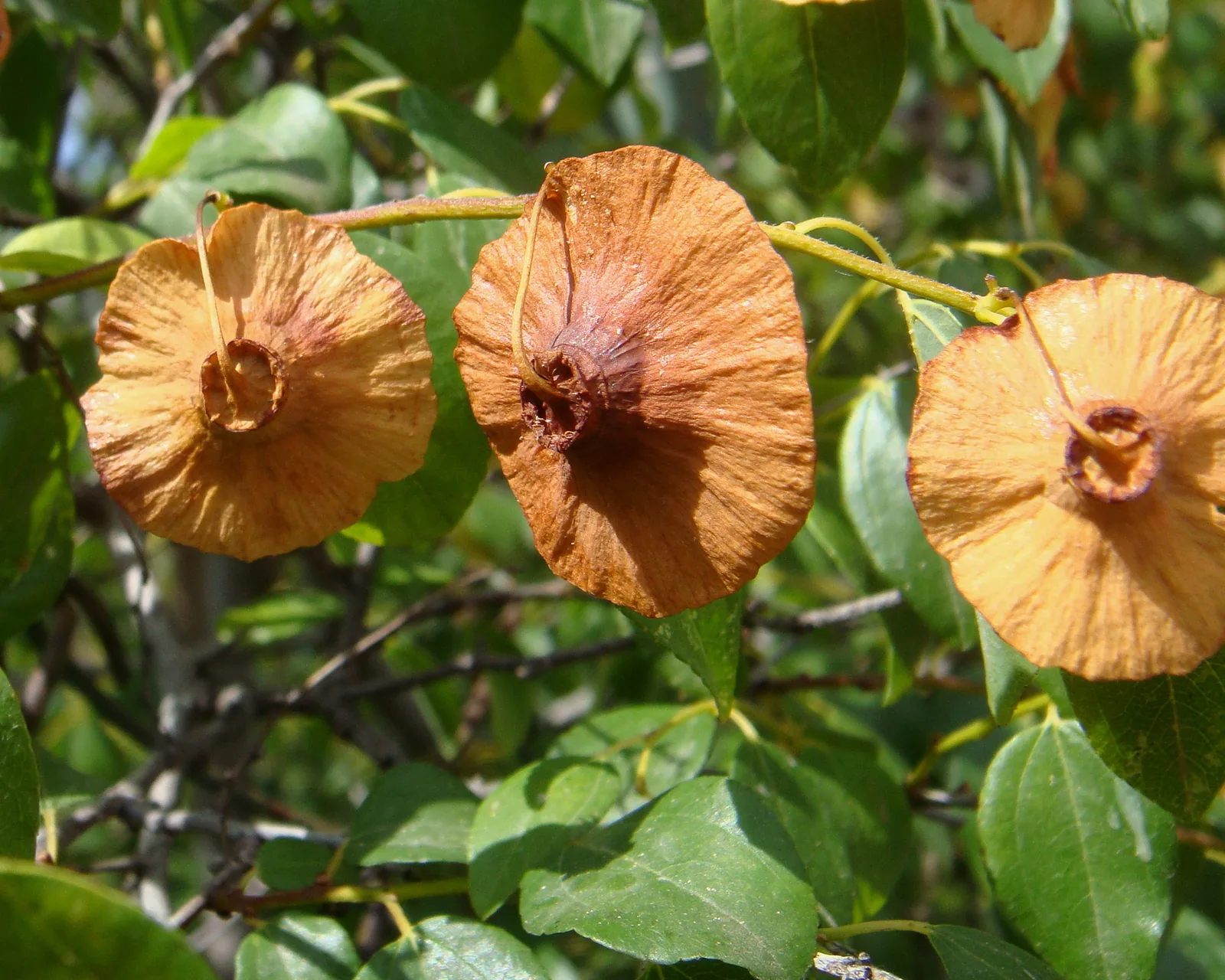
Eat the fruit raw or dried; it tastes pleasant and slightly tart, like dried apples
- Size
Up to 15 ft tall
What the sources say (1)
Mature height: up to 450 cm (4.5 m; 15 ft)
This multi-stemmed shrub in the Buckthorn family can grow up to 15 ft or 4.5 m tall.
— Plants of Texas Rangelands » Christ Thorn, Jerusalem Thorn [1] - Propagation
From seed, stem cuttings in summer, root cuttings in winter, or layering
What the sources say (2)
Propagation: Seed; cuttings (semi-ripe in summer, root cuttings in winter); layering
Propagation : Seed, semi-ripe cuttings in summer, root cuttings in winter, layering Outstanding Selections : None
— Plant Profile: Christ’s Thorn (Paliurus spina-christi) – KarensGardenTips.com [5] Jerusalem thorn is propagated from seeds sown in spring or by cuttings in summer or spring.
— Paliurus spina-christi or Jerusalem thorn | Care and Growing [2]
Overview
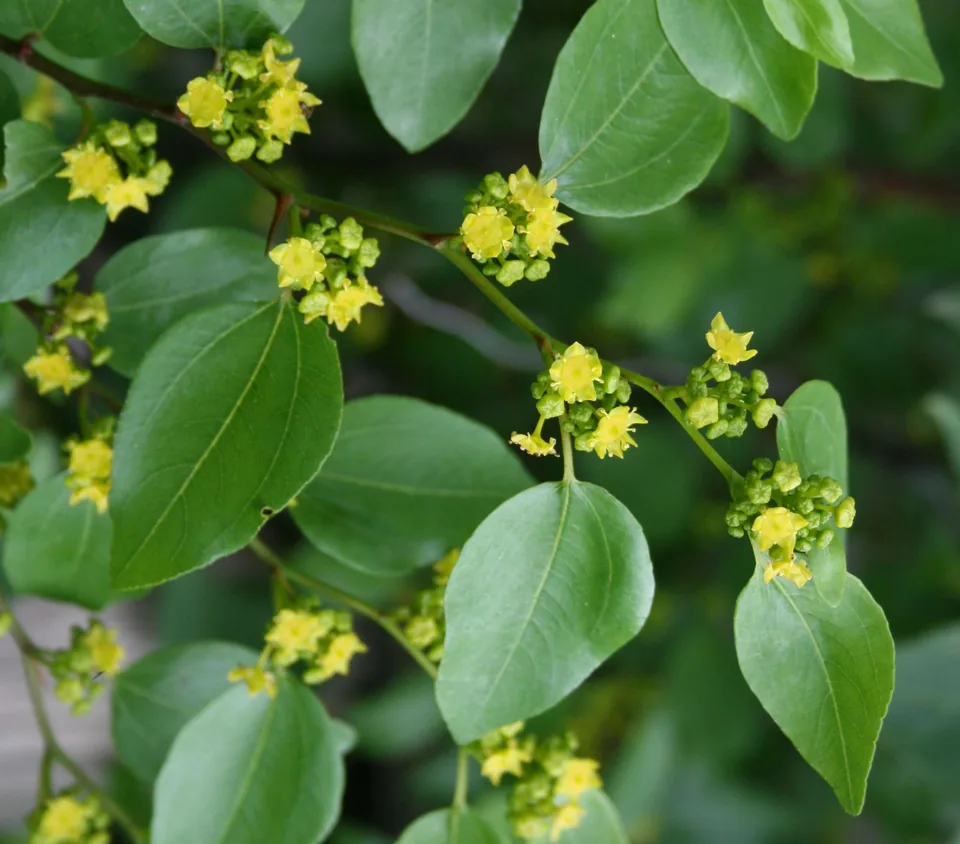
Christ thorn is a multi-stemmed, thorny shrub that can form dense thickets. [1] It is grown as an ornamental with a long history of use as a hedge, and is used as isolated specimens, screens and informal hedges. [4][2] It succeeds in well-drained garden soil in full sun and, once established, is drought tolerant. [3]
Jeruselem thorn care
How to water Jeruselem thorn
Water moderately all year long, waiting for the substrate to dry; drought tolerant once established
How much light Jeruselem thorn needs
Full sun to light shade
What the sources say (2)
Light : Full sun to light shade
Soil : Average, dry to medium moist, well-drained; tolerates drought and very alkaline conditions.Prefers a position in full sun, though tolerant of light shadeHow much cold Jeruselem thorn can take
Hardiness, coldest zone
7 [winter low −17.8 to −12.2 °C (0 to 10 °F)]
What the sources say (1)
tolerates drought and very alkaline conditions.
Hardiness: Zones 7-10
Care : Plants regrow from the base if cut back.Hardiness, warmest zone
10 [winter low −1.1 to 4.4 °C (30 to 40 °F)]
What the sources say (1)
tolerates drought and very alkaline conditions.
Hardiness: Zones 7-10
Care : Plants regrow from the base if cut back.How to propagate Jeruselem thorn
Seed; cuttings (semi-ripe in summer, root cuttings in winter); layering
What the sources say (2)
Propagation : Seed, semi-ripe cuttings in summer, root cuttings in winter, layering
Outstanding Selections : NoneJerusalem thorn is propagated from seeds sown in spring or by cuttings in summer or spring.How to grow Jeruselem thorn
The plant
Life cycle
perennial
What the sources say (1)
Christ Thorn is a shrubby tree from Asia. It is an introduced, cool-season perennial.Family
Rhamnaceae
What the sources say (1)
Paliurus spina-christi Mill.
Rhamnaceae (Buckthorn family)
## Description
Christ Thorn is a shrubby tree from Asia.Mature height
up to 450 cm (4.5 m; 15 ft)
What the sources say (1)
This multi-stemmed shrub in the Buckthorn family can grow up to 15 ft or 4.5 m tall.Remedies
The sources we checked give no remedies for this plant.
Calendar
Sowing
The sources give different values depending on region, zone or growing conditions.
What each source says
According to Consulta Plantas: Spring
According to Useful Temperate Plants: As soon as ripe, in a cold frame
What the sources say (2)
According to Consulta Plantas: Jerusalem thorn is propagated from seeds sown in spring or by cuttings in summer or spring.According to Useful Temperate Plants: Seed - best sown as soon as it is ripe in a cold frame and moved into the greenhouse in late winter.Planting
Early summer (seedlings after their first winter in the greenhouse)
What the sources say (1)
overwinter them in the greenhouse for their first year. Plant them out in early summer.Pruning
Late winter
What the sources say (1)
Fertilize in early spring with compost or manure.
Prune in late winter to keep it compact.Months as given by the sources, which are mostly from the United States (northern hemisphere). In the southern hemisphere they shift by about six months.
Edibility
Reported by the source, quoted verbatim. Do not eat a plant on the basis of this page alone: identification mistakes can be dangerous.
Fruit - raw or dried for later use. A pleasant sub-acid taste, somewhat resembling dried apples
[4]
Similar plants
- Blue Blossom Ceanothus thyrsiflorus
- Carolina Buckthorn Frangula caroliniana
- Common Buckthorn Rhamnus cathartica
- Japanese Raisin Tree Hovenia dulcis
- Jujube Ziziphus jujuba
- Snowbrush ceanothus Ceanothus velutinus
- Glossy Buckthorn Frangula alnus
- New Jersey Tea Ceanothus americanus
Sources
Every value above is quoted from these documents. Links lead to the original publisher.
- Plants of Texas Rangelands » Christ Thorn, Jerusalem Thorn · rangeplants.tamu.edu, consulted
- Paliurus spina-christi or Jerusalem thorn | Care and Growing · consultaplantas.com, consulted
- Denumire științifică: · gradina-botanica.unibuc.ro, consulted
- Paliurus spina-christi - Useful Temperate Plants · temperate.theferns.info, consulted
- Plant Profile: Christ’s Thorn (Paliurus spina-christi) – KarensGardenTips.com · karensgardentips.com, consulted
- Paliurus spina-christi : l’épine du Christ en Provence · luberon.fr, consulted
Written by Emilio Marruso · last checked