
How to Grow and Care for Snowbrush ceanothus
Ceanothus velutinus
Written by Emilio Marruso · last checked
At a glance
This sun-loving perennial grows up to 10 feet tall and settles happily into soil with a pH from 5.5 to 7.0. Plant rooted cuttings in spring, water them often during their first year, and never let the roots sit in soggy soil. You can start new plants from seed, cuttings or layering, so one plant can soon become many.
- Sun
Full sun
What the sources say (2)
Light: Full sun
Growing in full sun, C. velutinus prefers open-wooded slopes; dense patches of growth are found in disturbed areas such as roadsides, logged areas, and previously burned forest.
— Rhamnaceae (Ceanothus) — Reforestation, Nurseries and Genetics Resources [2] Snowbrush grows to about 9 feet (3m) tall. It sometimes sprawls as it competes for sunlight, growing best in full sun.
— Snowbrush, Ceanothus velutinus | Native Plants PNW [7] - Water
Water new cuttings often in their first year, but never let the roots stay soggy
What the sources say (2)
Watering notes: Rooted cuttings need frequent watering in the first year; roots are susceptible to excess moisture
Cuttings require frequent watering for first year.
— Plant Data Sheet http://depts.washington.edu/propplnt/Plants/snowbrush.htm [6] Roots susceptible to excess moisture and should be uppotted to well-drained media.
— Plant Data Sheet http://depts.washington.edu/propplnt/Plants/snowbrush.htm [6] - Soil
Acidic to neutral soil, pH 5.5–7.0
What the sources say (2)
Soil pH, minimum: 5.5
Usually found in soils with PH 5.5-7.0.
— Plant Data Sheet http://depts.washington.edu/propplnt/Plants/snowbrush.htm [6] Soil pH, maximum: 7.0
Usually found in soils with PH 5.5-7.0.
— Plant Data Sheet http://depts.washington.edu/propplnt/Plants/snowbrush.htm [6] - Planting
Plant rooted cuttings in spring, in their first or second year
What the sources say (1)
Planting: Spring (rooted cuttings, in the first or second year)
Transplant cuttings in spring, first or second year.
— Plant Data Sheet http://depts.washington.edu/propplnt/Plants/snowbrush.htm [6] - Size
Up to 10 ft tall
What the sources say (2)
- Propagation
By seed, cuttings or layering; seeds need heat or scratching first, then a cold spell
What the sources say (3)
Propagation: Seed (scarified by heat or abrasion, then cold stratification), cuttings, layering
Seed must be scarified. Heat or abrasion. Heat works best. 176-203 F (80-95 C) is optimal to break seed coat. Germinates better if scarification is followed by cold stratification.
— Plant Data Sheet http://depts.washington.edu/propplnt/Plants/snowbrush.htm [6] Seed, layered, cuttings.
— Plant Data Sheet http://depts.washington.edu/propplnt/Plants/snowbrush.htm [6] Can also spread by layering.
— Plant Data Sheet http://depts.washington.edu/propplnt/Plants/snowbrush.htm [6]
Overview
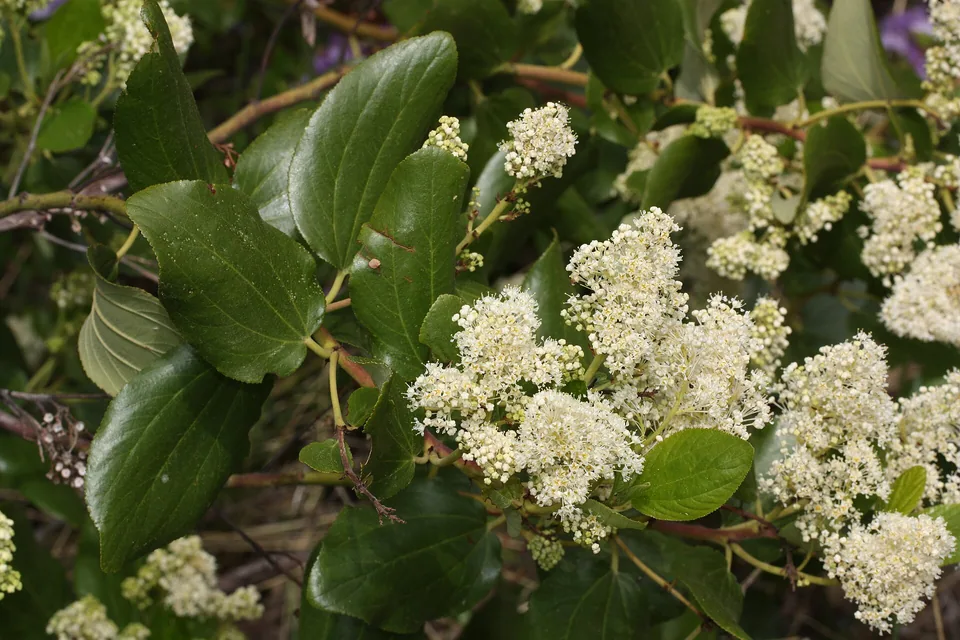
Snowbrush is an evergreen shrub that grows to about 9 feet (3 m) tall, sometimes sprawling. [7] It prefers open-wooded slopes and is found in disturbed areas such as roadsides, logged areas and previously burned forest. [2] It is a fire-adapted nitrogen fixer, and its seeds need heat scarification to germinate. [6][3]
This record is incomplete: the sources we read do not cover every field yet.
Not yet covered by our sources: Watering, Hardiness, coldest zone, Hardiness, warmest zone, Pruning
Snowbrush ceanothus care
How to water Snowbrush ceanothus
Watering
Not stated in the sources we read.
Watering notes
Rooted cuttings need frequent watering in the first year; roots are susceptible to excess moisture
What the sources say (2)
Cuttings require frequent watering for first year.Roots susceptible to excess moisture and should be uppotted to well-drained media.How much light Snowbrush ceanothus needs
Full sun
What the sources say (2)
Growing in full sun, C. velutinus prefers open-wooded slopes; dense patches of growth are found in disturbed areas such as roadsides, logged areas, and previously burned forest.Snowbrush grows to about 9 feet (3m) tall. It sometimes sprawls as it competes for sunlight, growing best in full sun.How much cold Snowbrush ceanothus can take
Hardiness, coldest zone
Not stated in the sources we read.
Hardiness, warmest zone
Not stated in the sources we read.
Best soil for Snowbrush ceanothus
Soil pH, minimum
5.5
What the sources say (1)
Usually found in soils with PH 5.5-7.0.Soil pH, maximum
7.0
What the sources say (1)
Usually found in soils with PH 5.5-7.0.How to propagate Snowbrush ceanothus
Seed (scarified by heat or abrasion, then cold stratification), cuttings, layering
What the sources say (3)
Seed must be scarified. Heat or abrasion. Heat works best. 176-203 F (80-95 C) is optimal to break seed coat. Germinates better if scarification is followed by cold stratification.Seed, layered, cuttings.Can also spread by layering.How to grow Snowbrush ceanothus
The plant
Life cycle
perennial
What the sources say (1)
Snowbrush Ceanothus Ceanothus Velutinus Plant type: Shrub, Tree Growing Season: No information found Life Cycle: PerennialFamily
Rhamnaceae
What the sources say (1)
snowbrush Rhamnaceae Ceanothus velutinus Douglas ex Hook. symbol: CEVEMature height
up to 304.8 cm (10 ft)
Remedies
Each remedy shows what official sources say about it; traditional remedies without an official source are marked as such. Harmful ones are listed so you know to avoid them.
Treating the plant
aphids
strong stream of water Not verified
Traditional remedy, not verified by an official source.
How: Spray with a strong water stream and attract natural predators such as ladybugs and lacewings.
neem oil Partly works
How: Spray with strong water stream or neem oil.
Spray with strong water stream or neem oil. Attract natural predators like ladybugs and lacewings.
— lizplants.com [8] What the evidence says Some benefits of neem include low mammalian toxicity and limited persistence in the environment. However, neem oil is not effective against every insect and disease
— extension.unh.edu [9]
spider mites
water spray Not verified
Traditional remedy, not verified by an official source.
How: Spray with water to dislodge; use neem oil if severe.
root rot
avoiding overwatering and improving drainage Official source, not independently tested
How: Improve drainage where plants are grown; do not overwater; remove and destroy infected plants.
Do not overwater. Ceanothus are best grown in sites where no summer irrigation is received after the plants are established.
— pnwhandbooks.org [10]
Calendar
Planting
Spring (rooted cuttings, in the first or second year)
What the sources say (1)
Transplant cuttings in spring, first or second year.Pruning
Not stated in the sources we read.
Months as given by the sources, which are mostly from the United States (northern hemisphere). In the southern hemisphere they shift by about six months.
Indicative values
Values from a secondary source, not checked word for word like the rest of this page. Use them as a starting point.
- Hours of sun
- 6-8 hoursIndicative value, adapt it to your climate · Secondary source
- Watering
- AverageIndicative value, adapt it to your climate · Secondary source
- Drought tolerant
- yesIndicative value, adapt it to your climate · Secondary source
- Soil
- Sand, LoamIndicative value, adapt it to your climate · Secondary source
- Care level
- MediumIndicative value, adapt it to your climate · Secondary source
- Growth rate
- LowIndicative value, adapt it to your climate · Secondary source
- Pruning
- February, March, April, May, May, August, December, January, FebruaryIndicative value, adapt it to your climate · Secondary source
Similar plants
- Blue Blossom Ceanothus thyrsiflorus
- New Jersey Tea Ceanothus americanus
- Carolina Buckthorn Frangula caroliniana
- Common Buckthorn Rhamnus cathartica
- Japanese Raisin Tree Hovenia dulcis
- Jeruselem thorn Paliurus spina-christi
- Jujube Ziziphus jujuba
- Glossy Buckthorn Frangula alnus
Sources
Every value above is quoted from these documents. Links lead to the original publisher.
- danielle_test | USU · extension.usu.edu, consulted
- Rhamnaceae (Ceanothus) — Reforestation, Nurseries and Genetics Resources · npn.rngr.net, consulted
- Virginia Tech Dendrology Fact Sheet · dendro.cnre.vt.edu, consulted
- Ceanothus velutinus - Trees and Shrubs Online · treesandshrubsonline.org, consulted
- Plant Data Sheet · depts.washington.edu, consulted
- Plant Data Sheet http://depts.washington.edu/propplnt/Plants/snowbrush.htm · courses.washington.edu, consulted
- Snowbrush, Ceanothus velutinus | Native Plants PNW · nativeplantspnw.com, consulted
- lizplants.com · lizplants.com
- extension.unh.edu · extension.unh.edu
- pnwhandbooks.org · pnwhandbooks.org
Written by Emilio Marruso · last checked