
How to Grow and Care for Rubus fruticosus
Rubus fruticosus
Written by Emilio Marruso · last checked
At a glance
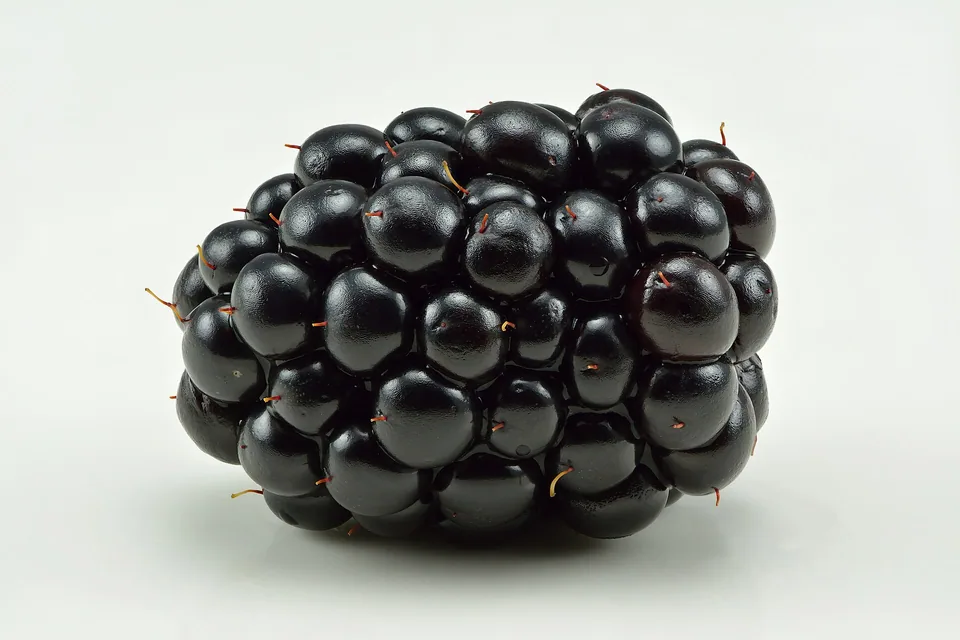
Blackberries are a sweet reward for a sunny spot. Plant them in early spring, 4 to 6 weeks before the last frost, give them 1 inch of water a week when rain falls short, and feed them twice a year. Once settled in they handle dry spells, and you'll know the berries are ready when their glossy shine turns slightly dull.
- Sun
Full sun
What the sources say (1)
Light: Full sun
Blackberries should be planted in full sun for optimal plant health and production.
— Blackberry | Home & Garden Information Center [1] - Water
1 inch of water a week if rain falls short; extra water while settling in and fruiting
What the sources say (2)
Watering: About 1 inch [2.5 cm] of water per week by irrigation if rainfall does not meet the need
Apply about 1 inch of water per week by irrigation if rainfall does not meet the need.
— Blackberry | Home & Garden Information Center [1] Watering notes: Drought-tolerant, but needs considerable water during establishment and fruiting
Though blackberries are drought-tolerant, they require considerable water during the establishment and fruiting period.
— Blackberry | Home & Garden Information Center [1] - Cold
Needs 200–900 hours of winter cold between 32 and 45 °F, depending on the variety
What the sources say (11)
Chill hours: 200–900 hours between 0 and 7.2 °C [32–45 °F]
coltura «Cane Berries»: Cane Berries Chill hours: 200 to 800 Blackberry Blackberries are adapted to all three zones.
— [2] coltura «Blackberry»: Fruit Crop Chilling Hours Required Apples 200–1,000 Blackberry 200–600 Blueberry 150–700
— [3] coltura «blackberry»: Current blackberry cultivars require 300 to 900 chill hours below 45°F (McWhirt 2016).
— [4] cultivar 'Navaho': Navaho * Thornless. Mid-late season harvest with good storage potential. Moderate yield with small to medium size fruit. Susceptible to orange rust. Requires an estimated 800 hours of chill.
— [5] cultivar 'Natchez': Natchez * Thornless. Early season harvest, very large fruit. Strong growing canes, which must be winter pruned to avoid over-cropping. Low chill requirements, estimated to be around 300 hours.
— [5] Cane Berries Chill hours: 200 to 800 Blackberry Blackberries are adapted to all three zones.
— [2] Fruit Crop Chilling Hours Required Apples 200–1,000 Blackberry 200–600 Blueberry 150–700
— [3] Current blackberry cultivars require 300 to 900 chill hours below 45°F (McWhirt 2016).
— [4] Chill hours are accumulated from November through February when temperatures are between 32° and 45°F.
— [2] Different models exist to estimate chilling. One model defines a chill hour as each hour below 45°F starting on October 1.
— [3] Current blackberry cultivars require 300 to 900 chill hours below 45°F (McWhirt 2016).
— [4] - Soil
Slightly acidic soil, pH 6.0–6.5
What the sources say (2)
Soil pH, minimum: 6.0
Blackberries should be planted in well-drained soils with a pH in the 6.0-6.5 range.
— Blackberry | Home & Garden Information Center [1] Soil pH, maximum: 6.5
Blackberries should be planted in well-drained soils with a pH in the 6.0-6.5 range.
— Blackberry | Home & Garden Information Center [1] - Spacing
10 ft between rows
What the sources say (1)
Row spacing: 304.8 cm (10 ft)
Semi-trailing varieties should be planted 6 to 8 feet apart in the row, with rows 10 feet apart.
— Blackberry | Home & Garden Information Center [1] - Planting
Early spring, 4 to 6 weeks before the last frost
What the sources say (1)
Planting: Early spring, about 4 to 6 weeks before the last frost
Plant blackberries in early spring, about 4 to 6 weeks before the last frost.
— Blackberry | Home & Garden Information Center [1] - Feeding
Twice a year: when growth starts in spring and right after harvest; add compost at planting
What the sources say (3)
When: Early spring when growth starts, and again just after harvest
Fertilize blackberries in early spring when growth starts and again just after harvest.
— Blackberry | Home & Garden Information Center [1] How often: Twice a year
Fertilize blackberries in early spring when growth starts and again just after harvest.
— Blackberry | Home & Garden Information Center [1] Natural fertilizers: Compost mixed with native soil in the planting hole
Amend each planting hole with a mix of compost and native soil.
— Blackberry | Home & Garden Information Center [1] - Pruning
In the dormant season, cut out dead, diseased or weak canes
What the sources say (1)
Pruning: Dormant season (dead, diseased or weak floricanes)
Prune out and discard dead, diseased, or weak floricanes during the dormant season.
— Blackberry | Home & Garden Information Center [1] - Harvest
Pick when berries lose their shine and turn slightly dull; refrigerate right away
What the sources say (2)
How to harvest: Pick when the berries lose their glossy shine and turn slightly dull
Blackberries are ripe and at peak flavor when they lose their glossy shine and turn slightly dull.
— Blackberry | Home & Garden Information Center [1] Storage: Refrigerate berries after harvest to remove field heat; store in a breathable container no more than 2 to 3 berries deep
Once harvested, refrigerate berries to remove field heat. The faster the field heat is removed, the longer shelf-life the berry will have. Store berries in a breathable container with no more than a 2 to 3 berry depth.
— Blackberry | Home & Garden Information Center [1] - Pests
Aphids, Japanese beetles, stink bugs and spider mites; also cane diseases and crown gall
What the sources say (2)
Pests: aphids, Japanese beetles, stink bugs, spotted-wing drosophila, spider mites
Pests that are commonly problematic on blackberries include aphids, Japanese beetles, stink bugs, spotted-wing drosophila, and spider mites.
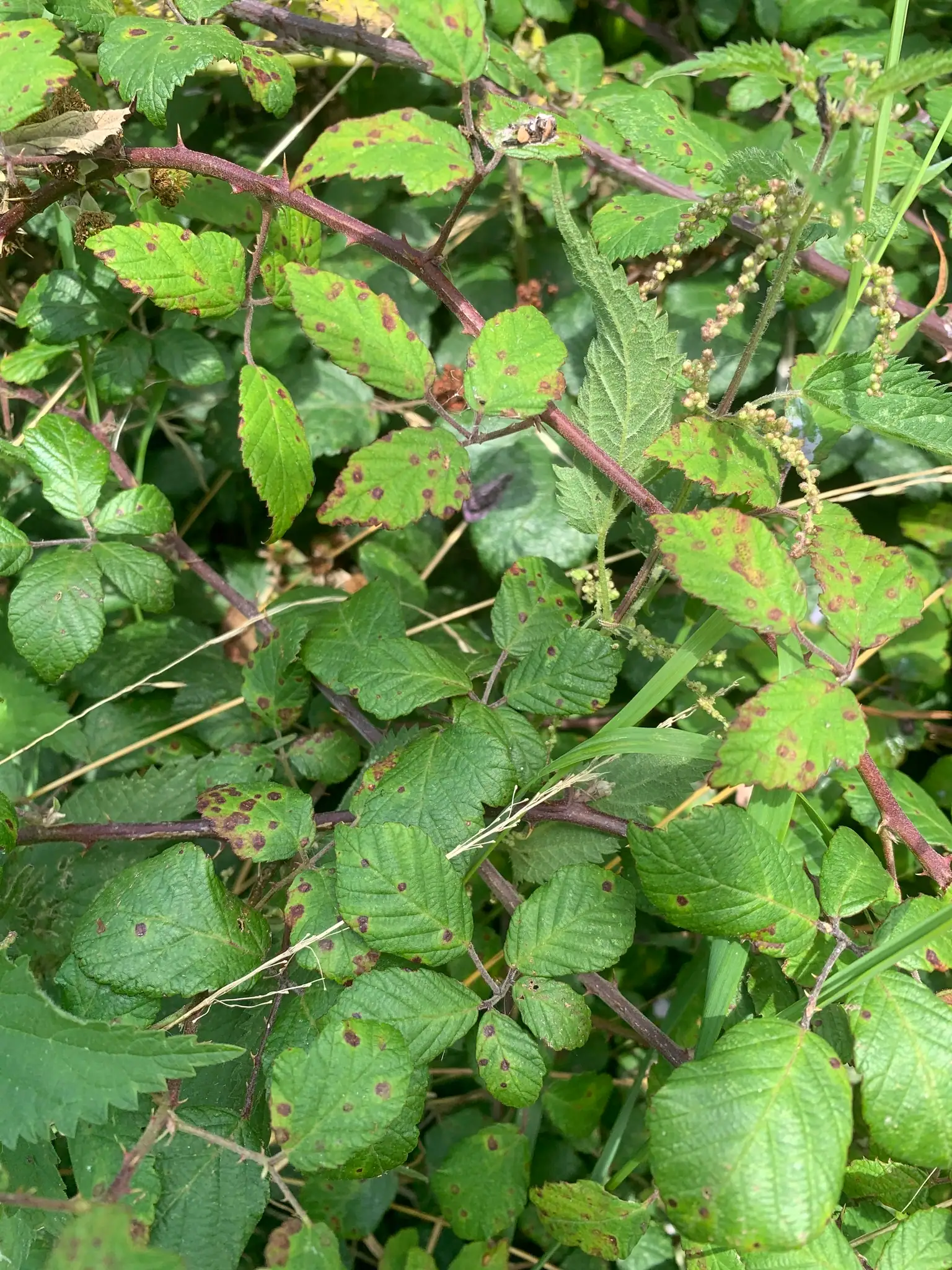
— Blackberry | Home & Garden Information Center [1] Diseases: crown gall, fusarium wilt, anthracnose cane spot, cane blight, cane rust, orange cane blotch
Crown diseases include crown gall and fusarium wilt. Cane diseases include Anthracnose cane spot, cane blight, cane rust, and orange cane blotch.
— Blackberry | Home & Garden Information Center [1]
Overview
Blackberry is grown in full sun in well-drained soil with a pH of 6.0-6.5. [1] Floricanes are removed after fruiting and thinned during the dormant season. [1] Plants are set out in early spring and need about 1 inch [2.5 cm] of water per week when rain is short. [1]
This record is incomplete: the sources we read do not cover every field yet.
Not yet covered by our sources: Spacing, Propagation
Rubus fruticosus care
Measurements in square brackets are our conversion into the other unit system; the quoted text is unchanged.
How to water Rubus fruticosus
Watering
About 1 inch [2.5 cm] of water per week by irrigation if rainfall does not meet the need
What the sources say (1)
Apply about 1 inch of water per week by irrigation if rainfall does not meet the need.Watering notes
Drought-tolerant, but needs considerable water during establishment and fruiting
What the sources say (1)
Though blackberries are drought-tolerant, they require considerable water during the establishment and fruiting period.How much light Rubus fruticosus needs
Full sun
What the sources say (1)
Blackberries should be planted in full sun for optimal plant health and production.Best soil for Rubus fruticosus
Soil pH, minimum
6.0
What the sources say (1)
Blackberries should be planted in well-drained soils with a pH in the 6.0-6.5 range.Soil pH, maximum
6.5
What the sources say (1)
Blackberries should be planted in well-drained soils with a pH in the 6.0-6.5 range.Where to grow Rubus fruticosus
The sources give different values depending on region, zone or growing conditions.
What each source says
semi-trailing varieties: 183-244 cm in the row (6-8 ft), rows 305 cm (10 ft) apart
erect varieties: 61-122 cm in the row (2-4 ft), rows 305 cm (10 ft) apart
What the sources say (2)
semi-trailing varieties: Semi-trailing varieties should be planted 6 to 8 feet apart in the row, with rows 10 feet apart.erect varieties: Erect varieties should be planted 2 to 4 feet apart in the row and 10 feet between rows.How to propagate Rubus fruticosus
Not stated in the sources we read.
How to grow Rubus fruticosus
Sowing and growth
Row spacing
304.8 cm (10 ft)
What the sources say (1)
Semi-trailing varieties should be planted 6 to 8 feet apart in the row, with rows 10 feet apart.Harvest and storage
How to harvest
Pick when the berries lose their glossy shine and turn slightly dull
What the sources say (1)
Blackberries are ripe and at peak flavor when they lose their glossy shine and turn slightly dull.Storage
Refrigerate berries after harvest to remove field heat; store in a breathable container no more than 2 to 3 berries deep
What the sources say (1)
Once harvested, refrigerate berries to remove field heat. The faster the field heat is removed, the longer shelf-life the berry will have. Store berries in a breathable container with no more than a 2 to 3 berry depth.Pests and diseases
Pests
aphids, Japanese beetles, stink bugs, spotted-wing drosophila, spider mites
What the sources say (1)
Pests that are commonly problematic on blackberries include aphids, Japanese beetles, stink bugs, spotted-wing drosophila, and spider mites.Diseases
crown gall, fusarium wilt, anthracnose cane spot, cane blight, cane rust, orange cane blotch
What the sources say (1)
Crown diseases include crown gall and fusarium wilt. Cane diseases include Anthracnose cane spot, cane blight, cane rust, and orange cane blotch.Fertilizing
When
Early spring when growth starts, and again just after harvest
What the sources say (1)
Fertilize blackberries in early spring when growth starts and again just after harvest.How often
Twice a year
What the sources say (1)
Fertilize blackberries in early spring when growth starts and again just after harvest.Natural fertilizers
Compost mixed with native soil in the planting hole
What the sources say (1)
Amend each planting hole with a mix of compost and native soil.Winter chill
Chill hours
200–900 hours between 0 and 7.2 °C [32–45 °F]
What each source says
coltura «Cane Berries»: 200–800 hours
coltura «Blackberry»: 200–600 hours
coltura «blackberry»: 300–900 hours
cultivar 'Navaho': 800 hours
cultivar 'Natchez': 300 hours
What the sources say (11)
coltura «Cane Berries»: Cane Berries Chill hours: 200 to 800 Blackberry Blackberries are adapted to all three zones.coltura «Blackberry»: Fruit Crop Chilling Hours Required Apples 200–1,000 Blackberry 200–600 Blueberry 150–700coltura «blackberry»: Current blackberry cultivars require 300 to 900 chill hours below 45°F (McWhirt 2016).cultivar 'Navaho': Navaho * Thornless. Mid-late season harvest with good storage potential. Moderate yield with small to medium size fruit. Susceptible to orange rust. Requires an estimated 800 hours of chill.cultivar 'Natchez': Natchez * Thornless. Early season harvest, very large fruit. Strong growing canes, which must be winter pruned to avoid over-cropping. Low chill requirements, estimated to be around 300 hours.Cane Berries Chill hours: 200 to 800 Blackberry Blackberries are adapted to all three zones.Fruit Crop Chilling Hours Required Apples 200–1,000 Blackberry 200–600 Blueberry 150–700Current blackberry cultivars require 300 to 900 chill hours below 45°F (McWhirt 2016).Chill hours are accumulated from November through February when temperatures are between 32° and 45°F.Different models exist to estimate chilling. One model defines a chill hour as each hour below 45°F starting on October 1.Current blackberry cultivars require 300 to 900 chill hours below 45°F (McWhirt 2016).Rubus fruticosus pests and problems
Spider mites
Symptom: Stippling of the leaves
What to do: Biological control and mechanical removal of pests
What the sources say (2)
Stippling of the leaves is a classic symptom of spider mite damage on blackberry foliage.
— Blackberry | Home & Garden Information Center [1] Biological control and mechanical removal of these pests are often enough to minimize damage.
— Blackberry | Home & Garden Information Center [1]
Remedies
Each remedy shows what official sources say about it; traditional remedies without an official source are marked as such. Harmful ones are listed so you know to avoid them.
Treating the plant
aphids, japanese beetles, stink bugs, spider mites
mechanical removal of pests Partly works
How: Biological control and mechanical removal of the pests are often enough to minimize damage.
Biological control and mechanical removal of these pests are often enough to minimize damage.
— Blackberry | Home & Garden Information Center [1] What the evidence says Biological control and mechanical removal of these pests are often enough to minimize damage.
— Blackberry | Home & Garden Information Center [1]
spotted wing drosophila
removing ripe and overripe fruit Official source, not independently tested
How: Remove fruit as it ripens and do not leave overripe fruit on the plant.
Another insect management tool is removing fruit as they ripen and not leaving overripe fruit on the plant.
— Blackberry | Home & Garden Information Center [1]
blackberry diseases
removing infected tissue Official source, not independently tested
How: Once a disease develops, remove infected tissue from the garden and throw it away.
Once a disease develops, remove infected tissue from the garden and throw it away, reducing the spread of the disease.
— Blackberry | Home & Garden Information Center [1]
Getting rid of it
bramble seedlings
pulling or forking out seedlings Partly works
It is an offence under the Wildlife & Countryside Act 1981 to damage or destroy the nest of any wild bird while it is in use or being built.
— rhs.org.uk [6] How: Promptly remove any bramble seedlings that appear in spring, before they have a chance to get established.
Pull or fork out seedlings – promptly remove any bramble seedlings that appear in spring, before they have a chance to get established.
— rhs.org.uk [6] What the evidence says Small infestations can be removed by hand-pulling or mechanical grubbing.
— ipm.ucanr.edu [7] organic mulch on bare soil Official source, not independently tested
How: Cover bare soil in beds and borders with a 7.5cm (3in) deep layer of organic matter in late winter or early spring.
borders – cover bare soil in beds and borders with a 7.5cm (3in) deep layer of organic matter in late winter or early spring. This makes it easier to pull out bramble seedlings.
— rhs.org.uk [6]
established brambles
cutting back and digging out stump and roots Partly works
It is an offence under the Wildlife & Countryside Act 1981 to damage or destroy the nest of any wild bird while it is in use or being built.
— rhs.org.uk [6] it is best not to put any roots, seedlings or whole lengths of stem in your home compost bin as it may not reach high enough temperatures to kill them.
— rhs.org.uk [6] How: Shorten all stems to around 30cm (1ft), then dig out the main stump and as many roots as possible, and monitor regrowth.
Once all stems are cut and cleared, use a sharp spade and border fork to dig out the main stump and as many roots as possible.
— rhs.org.uk [6] What the evidence says Digging out roots (cultivation) only once, however, can fragment the rhizomes and spread the weed.
— ipm.ucanr.edu [7]
Calendar
Planting
Early spring, about 4 to 6 weeks before the last frost
What the sources say (1)
Plant blackberries in early spring, about 4 to 6 weeks before the last frost.Harvest
Trailing and semi-trailing varieties begin to ripen in late June in the Piedmont
What the sources say (1)
Trailing and semi-trailing varieties begin to ripen in late June in the PiedmontPruning
Dormant season (dead, diseased or weak floricanes)
What the sources say (1)
Prune out and discard dead, diseased, or weak floricanes during the dormant season.Months as given by the sources, which are mostly from the United States (northern hemisphere). In the southern hemisphere they shift by about six months.
Relative to frost
Less precise estimate: there is no weather station within 300 km.
Find frost dates by ZIP code or city
Plant: 4 to 6 weeks before the last frost
Plant blackberries in early spring, about 4 to 6 weeks before the last frost.
— Blackberry | Home & Garden Information Center [1]
Count from the average frost dates where you live.
Edibility
Reported by the source, quoted verbatim. Do not eat a plant on the basis of this page alone: identification mistakes can be dangerous.
Blackberries are ripe and at peak flavor when they lose their glossy shine and turn slightly dull.
[1]
Similar plants
- Blackberry Rubus allegheniensis
- Blackberry Rubus bifrons
- Blackberry Rubus canadensis
- Blackberry Rubus cuneifolius
- Blackberry Rubus laciniatus
- Blackberry Rubus pascuus
- Blackberry Rubus pensilvanicus
- Creeping Raspberry Rubus rolfei
Sources
Every value above is quoted from these documents. Links lead to the original publisher.
- Blackberry | Home & Garden Information Center · hgic.clemson.edu, consulted
- escholarship.org · escholarship.org
- extension.msstate.edu · extension.msstate.edu
- edis.ifas.ufl.edu · edis.ifas.ufl.edu
- content.ces.ncsu.edu · content.ces.ncsu.edu
- rhs.org.uk · rhs.org.uk
- ipm.ucanr.edu · ipm.ucanr.edu
Written by Emilio Marruso · last checked