
How to Grow and Care for Elaeagnus willow
Salix eleagnos
Written by Emilio Marruso · last checked
At a glance
This willow is an easygoing choice for beginners: it grows in full sun to part shade and accepts soil from acidic to alkaline, pH 5.0 to 8.0. It copes with soil that is sometimes very wet, steady moisture and even short dry spells. It reaches 4–8 feet tall and rarely needs feeding; a layer of garden compost or manure beneath it is enough.
- Sun
Full sun to part shade
What the sources say (1)
Light: Full sun to part shade
Light: Full sun, Part shade
— Woody Plants Database [1] - Water
Likes moist, well-drained soil; handles very wet soil now and then and short dry spells
What the sources say (1)
Watering notes: Tolerates occasionally saturated or very wet soil, consistently moist well-drained soil and occasional periods of dry soil
Occasionally saturated or very wet soil; Consistently moist, well-drained soil; Occasional periods of dry soil
— Woody Plants Database [1] - Cold
Survives winters down to −30 °F (−34.4 °C)
Very hardy · USDA 4a · RHS H7 · Z4
What the sources say (1)
Hardiness, coldest zone: 4a [winter low −34.4 to −31.7 °C (−30 to −25 °F)]
Hardy To Zone: 4a
— Woody Plants Database [1] - Soil
Acidic to alkaline soil, pH 5.0–8.0
- Feeding
No regular feeding; mulch beneath it with garden compost or well-rotted manure
What the sources say (2)
How often: Not routinely; feed only if the tree shows signs of nutrient deficiency
Most willow trees are robust and vigorous and shouldn’t need feeding unless they are showing signs of nutrient deficiencies
— [4] Natural fertilizers: Mulch the soil beneath the tree with well-rotted organic matter such as garden compost or farmyard manure
Most willow trees are robust and vigorous and shouldn’t need feeding unless they are showing signs of nutrient deficiencies - Mulching around the tree with well-rotted organic matter , such as garden compost or farmyard manure
— [4] - Size
4 to 8 ft tall
What the sources say (1)
Mature height: 121.92-243.84 cm (4-8 ft)
Size: Shrub 4 to 8 feet Height: 4-8 feet
— Woody Plants Database [1]
Overview
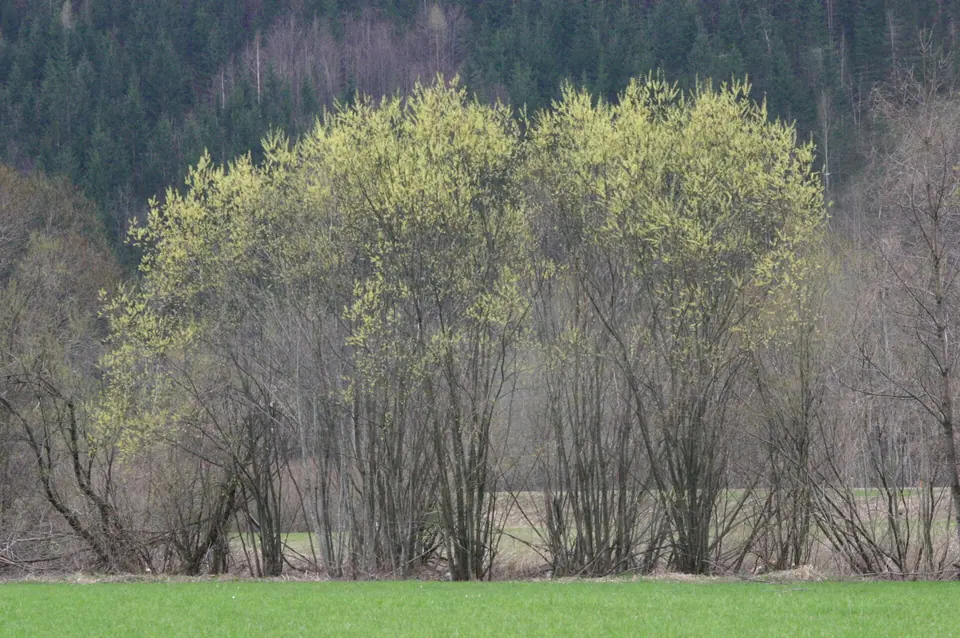
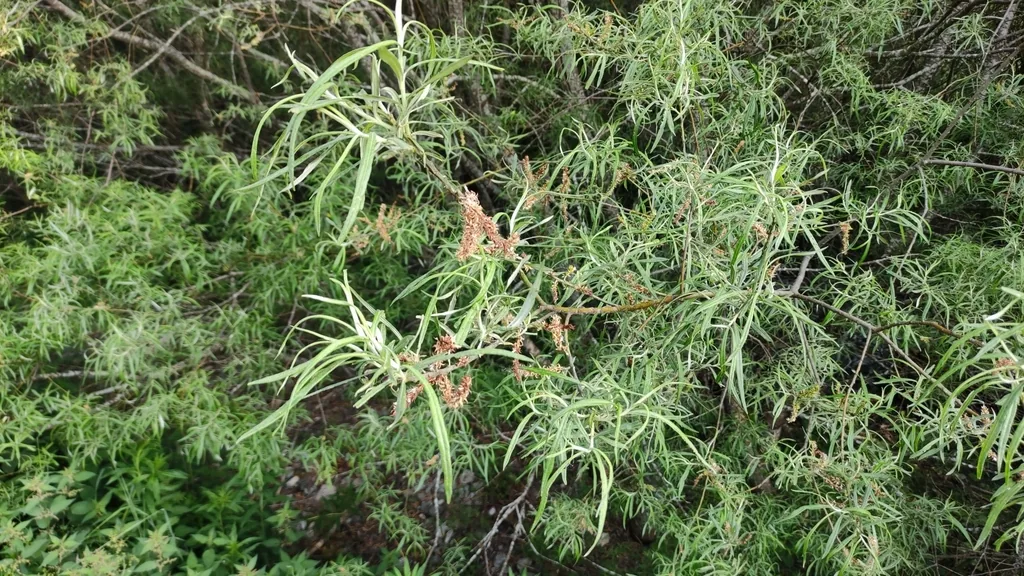
Salix eleagnos is a deciduous shrub of about 4 to 8 feet [1.2–2.4 m] that is native to Europe and reaches Türkiye and Morocco. [1][2] It grows in full sun or part shade and tolerates acid to alkaline soil. [1] In New Zealand it is recorded as invading communities dominated by native plants. [3]
This record is incomplete: the sources we read do not cover every field yet.
Not yet covered by our sources: Watering, Hardiness, warmest zone, Pruning, Propagation
Elaeagnus willow care
Measurements in square brackets are our conversion into the other unit system; the quoted text is unchanged.
How to water Elaeagnus willow
Watering
Not stated in the sources we read.
Watering notes
Tolerates occasionally saturated or very wet soil, consistently moist well-drained soil and occasional periods of dry soil
What the sources say (1)
Occasionally saturated or very wet soil; Consistently moist, well-drained soil; Occasional periods of dry soilHow much light Elaeagnus willow needs
Full sun to part shade
What the sources say (1)
Light:
Full sun, Part shadeHow much cold Elaeagnus willow can take
Hardiness, coldest zone
4a [winter low −34.4 to −31.7 °C (−30 to −25 °F)]
What the sources say (1)
Hardy To Zone:
4aHardiness, warmest zone
Not stated in the sources we read.
Best soil for Elaeagnus willow
Soil pH, minimum
5.0
What the sources say (1)
Can tolerate acid to alkaline soil (pH 5.0 to 8.0)Soil pH, maximum
8.0
What the sources say (1)
Can tolerate acid to alkaline soil (pH 5.0 to 8.0)How to propagate Elaeagnus willow
Not stated in the sources we read.
How to grow Elaeagnus willow
The plant
Mature height
121.92-243.84 cm (4-8 ft)
What the sources say (1)
Size:
Shrub 4 to 8 feet
Height:
4-8 feetFertilizing
How often
Not routinely; feed only if the tree shows signs of nutrient deficiency
What the sources say (1)
Most willow trees are robust and vigorous and shouldn’t need feeding unless they are showing signs of nutrient deficienciesNatural fertilizers
Mulch the soil beneath the tree with well-rotted organic matter such as garden compost or farmyard manure
What the sources say (1)
Most willow trees are robust and vigorous and shouldn’t need feeding unless they are showing signs of nutrient deficiencies
- Mulching around the tree with well-rotted organic matter , such as garden compost or farmyard manureMineral fertilizers
The sources give different values depending on region, zone or growing conditions.
What each source says
shrub willow grown as a short-rotation bioenergy crop: Few fertilizer inputs; nitrogen fertilizer as needed
What the sources say (1)
shrub willow grown as a short-rotation bioenergy crop: No annual maintenance of the crop should be necessary, and compared to other crops, willow requires few fertilizer inputs, but nitrogen fertilizer can be applied as needed.Remedies
Each remedy shows what official sources say about it; traditional remedies without an official source are marked as such. Harmful ones are listed so you know to avoid them.
Treating the plant
cytospora canker
pruning out cankered wood Official source, not independently tested
How: Prune out and destroy dead and cankered parts.
Cankers enlarge and gradually girdle infected parts causing death to portions beyond. Weeping willow is susceptible, but rarely occurs on black willow. Prune out and destroy dead and cankered parts.
— plantdiseasehandbook.tamu.edu [6]
tarspot
raking and burning dead leaves Official source, not independently tested
How: Rake up and burn dead leaves, as the fungus overwinters on them.
Rake up an burn dead leaves, as the fungus overwinters on them.
— plantdiseasehandbook.tamu.edu [6]
Calendar
Pruning
Not stated in the sources we read.
Months as given by the sources, which are mostly from the United States (northern hemisphere). In the southern hemisphere they shift by about six months.
Similar plants
- Black Willow Salix nigra
- Carolina Willow Salix caroliniana
- Japanese Pussy Willow Salix chaenomeloides
- Narrowleaf willow Salix exigua
- Purple Osier Willow Salix purpurea
- Pussy Willow Salix discolor
- Weeping Willow Salix babylonica
- White Willow Salix alba
Sources
Every value above is quoted from these documents. Links lead to the original publisher.
- Woody Plants Database · woodyplants.cals.cornell.edu, consulted
- Salix eleagnos Scop. | Plants of the World Online | Kew Science · powo.science.kew.org, consulted
- Salix eleagnos • New Zealand Plant Conservation Network · nzpcn.org.nz, consulted
- rhs.org.uk · rhs.org.uk
- extension.psu.edu · extension.psu.edu
- plantdiseasehandbook.tamu.edu · plantdiseasehandbook.tamu.edu
Written by Emilio Marruso · last checked