
How to Grow and Care for Red-berried Elder
Sambucus racemosa
Written by Emilio Marruso · last checked
Toxic to: People · Why
At a glance
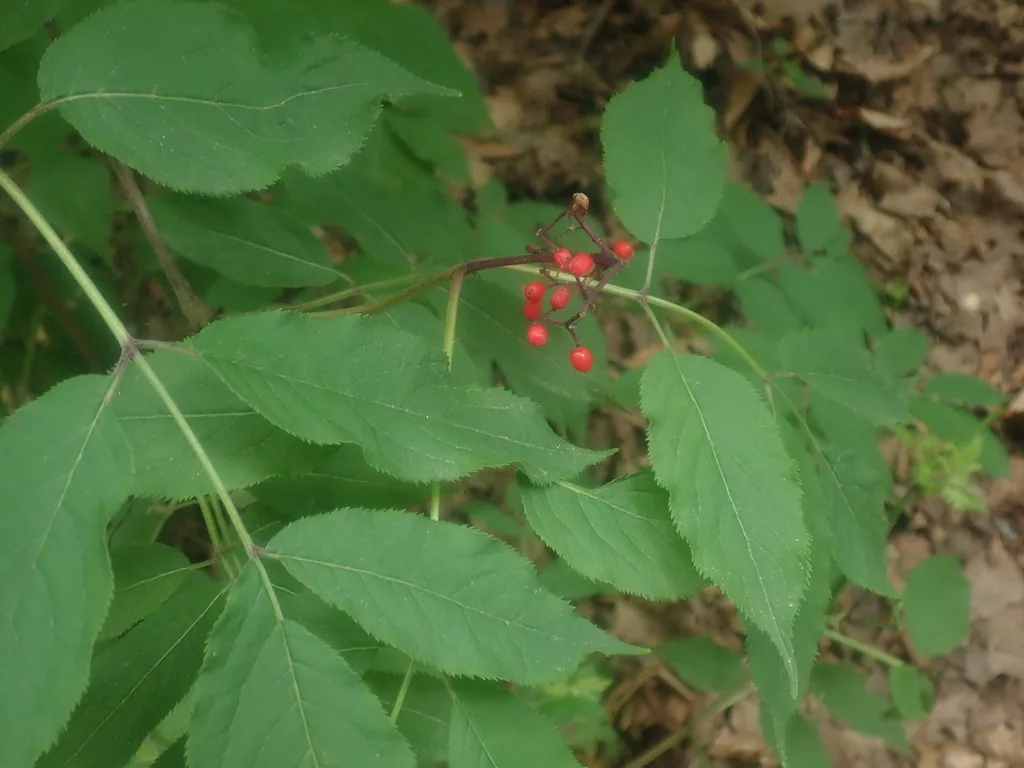
Red elderberry is an easygoing plant that grows in full sun or partial shade, in soils from pH 5.0 to 8.0. It doesn't need much water, though it suffers in very dry conditions. Its red berries hold the seeds for new plants, and once cooked they can be eaten, but never eat them raw.
- Sun
Full sun to partial shade
- Water
Doesn't need much water, but suffers in very dry conditions
What the sources say (1)
Watering: Does not require much water but suffers in extremely dry conditions
It does not require much water but will suffer in extremely dry conditions.
—  [5] - Soil
Grows in soil from pH 5.0 to 8.0
- Pruning
Prune in winter or early spring
What the sources say (1)
Pruning: Winter or early spring
Prune in winter or early spring to keep a desirable form
—  [5] - Harvest
The berries are edible only when cooked
- Pests
Borers, spider mites and aphids; canker, powdery mildew and leaf spot
What the sources say (2)
Pests: borers, spider mites, aphids
Some susceptibility to canker, powdery mildew, leaf spot, borers, spider mites and aphids.
— Woody Plants Database [1] Diseases: canker, powdery mildew, leaf spot
Some susceptibility to canker, powdery mildew, leaf spot, borers, spider mites and aphids.
— Woody Plants Database [1] - Propagation
From seed: collect the red berries, remove the fruit and rinse the seeds
What the sources say (1)
Propagation: Seed (collect red berries, remove the fruit, rinse the seeds)
To grow from seed, collect red berries, remove the fruit and rinse the seeds.
—  [5] - Safety
Raw berries are toxic to people: never eat them uncooked
Overview
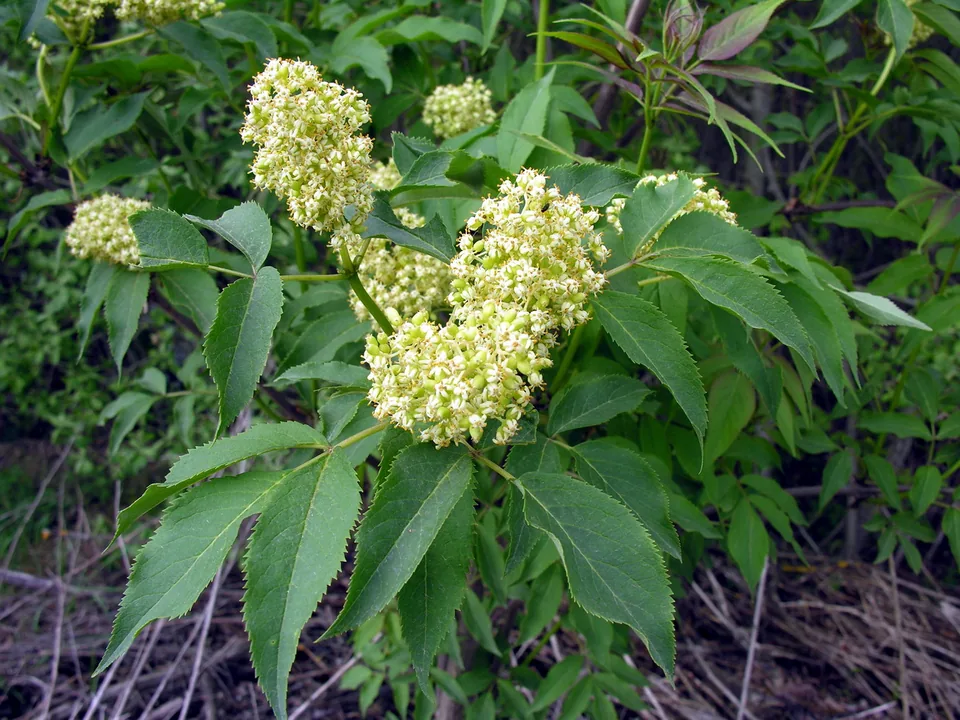
Red elderberry is a deciduous multi-stem shrub that suckers to form large colonies. [1] It tolerates acid to alkaline soil and grows in full sun to part shade. [1] Raw berries are toxic to humans but can be edible if cooked. [5]
This record is incomplete: the sources we read do not cover every field yet.
Not yet covered by our sources: Hardiness, coldest zone, Hardiness, warmest zone
Red-berried Elder care
How to water Red-berried Elder
Does not require much water but suffers in extremely dry conditions
What the sources say (1)
It does not require much water but will suffer in extremely dry conditions.How much light Red-berried Elder needs
How much cold Red-berried Elder can take
Hardiness, coldest zone
Not stated in the sources we read.
Hardiness, warmest zone
Not stated in the sources we read.
Best soil for Red-berried Elder
Soil pH, minimum
5.0
What the sources say (1)
Can tolerate acid to alkaline soil (pH 5.0 to 8.0)Soil pH, maximum
8.0
What the sources say (1)
Can tolerate acid to alkaline soil (pH 5.0 to 8.0)How to propagate Red-berried Elder
Seed (collect red berries, remove the fruit, rinse the seeds)
What the sources say (1)
To grow from seed, collect red berries, remove the fruit and rinse the seeds.How to grow Red-berried Elder
The plant
Family
Viburnaceae
What the sources say (1)
Viburnaceae Sambucus ## Sambucus racemosa L. First published in Sp. Pl.: 270 (1753) This species is acceptedPests and diseases
Pests
borers, spider mites, aphids
What the sources say (1)
Some susceptibility to canker, powdery mildew, leaf spot, borers, spider mites and aphids.Diseases
canker, powdery mildew, leaf spot
What the sources say (1)
Some susceptibility to canker, powdery mildew, leaf spot, borers, spider mites and aphids.Red-berried Elder pests and problems
Pests and diseases
Symptom: Some susceptibility to canker, powdery mildew, leaf spot, borers, spider mites and aphids.
What the sources say (1)
Some susceptibility to canker, powdery mildew, leaf spot, borers, spider mites and aphids.
— Woody Plants Database [1]
Remedies
Each remedy shows what official sources say about it; traditional remedies without an official source are marked as such. Harmful ones are listed so you know to avoid them.
Treating the plant
aphids
strong water spray Works
How: washing off the pests with a strong spray of water. Aphids can be washed off plants with a garden hose.
You did the correct control by washing off the pests with a strong spray of water.
— extension.umaine.edu [7] What the evidence says You did the correct control by washing off the pests with a strong spray of water.
— extension.umaine.edu [7]
aphids and spider mites
insecticidal soap Works
How: Use insecticidal soap or neem oil to treat infestations, following the product's directions.
Use insecticidal soap or neem oil to treat infestations, following the product’s directions.
— ask.extension.org [8] What the evidence says Use insecticidal soap or neem oil to treat infestations, following the product’s directions.
— ask.extension.org [8] neem oil Works
How: Use insecticidal soap or neem oil to treat infestations, following the product's directions.
Use insecticidal soap or neem oil to treat infestations, following the product’s directions.
— ask.extension.org [8] What the evidence says Use insecticidal soap or neem oil to treat infestations, following the product’s directions.
— ask.extension.org [8]
leaf spot
rake up and burn fallen leaves Official source, not independently tested
How: Rake up and burn all leaves at season's end.
Rake up and burn all leaves at season's end.
— pnwhandbooks.org [9]
Is Red-berried Elder poisonous?
Reported by the source, quoted verbatim. This is not medical or veterinary advice: if a person or an animal may have eaten this plant, contact a poison control centre or a veterinarian.
Calendar
Pruning
Winter or early spring
What the sources say (1)
Prune in winter or early spring to keep a desirable formMonths as given by the sources, which are mostly from the United States (northern hemisphere). In the southern hemisphere they shift by about six months.
Edibility
Reported by the source, quoted verbatim. Do not eat a plant on the basis of this page alone: identification mistakes can be dangerous.
Raw berries are toxic to humans but can be edible if cooked.
[5]
Indicative values
Values from a secondary source, not checked word for word like the rest of this page. Use them as a starting point.
- Life cycle
- PerennialIndicative value, adapt it to your climate · Secondary source
- Mature height
- 243.8-365.8 cm (8-12 ft)Indicative value, adapt it to your climate · Secondary source
- Hours of sun
- 6-8 hoursIndicative value, adapt it to your climate · Secondary source
- Soil
- Loamy Clay HumusIndicative value, adapt it to your climate · Secondary source
- USDA hardiness zones
- 3-7 [winter low −40 to −12.2 °C (−40 to 10 °F)]Indicative value, adapt it to your climate · Secondary source
- Care level
- MediumIndicative value, adapt it to your climate · Secondary source
- Growth rate
- LowIndicative value, adapt it to your climate · Secondary source
Similar plants
- Elder Sambucus nigra
- Blue elder Sambucus cerulea
- Arrow-wood Viburnum Viburnum dentatum
- Blackhaw Viburnum prunifolium
- Blue Haw Viburnum cassinoides
- Bracted Viburnum Viburnum bracteatum
- Chinese Evergreen Viburnum Viburnum propinquum
- Chinese Snowball Viburnum Viburnum macrocephalum
Sources
Every value above is quoted from these documents. Links lead to the original publisher.
- Woody Plants Database · woodyplants.cals.cornell.edu, consulted
- Sambucus racemosa L. | Plants of the World Online | Kew Science · powo.science.kew.org, consulted
- How to Grow Sambucus - Elderberry · harvesttotable.com, consulted
- Ethnobotanical Plant Sambucus racemosa | Dr. Duke's Phytochemical and Ethnobotanical Databases · phytochem.nal.usda.gov, consulted
-  · bwsr.state.mn.us, consulted
- Sambucus racemosa | Euro+Med-Plantbase · europlusmed.org, consulted
- extension.umaine.edu · extension.umaine.edu
- ask.extension.org · ask.extension.org
- pnwhandbooks.org · pnwhandbooks.org
Written by Emilio Marruso · last checked