
How to Grow and Care for Blue elder
Sambucus cerulea
Written by Emilio Marruso · last checked
Toxic to: People · Why
At a glance
Blue elderberry grows into a big, easygoing plant for full sun or partial shade, and once established it needs only regular to little water. Its small dark blue berries are not very tasty fresh, but cooked they make a good jam, pie and wine. Just remember: only the ripe blue berries and the cooked flowers are safe to eat.
- Sun
Full sun to partial shade
What the sources say (4)
Light: Full sun to partial shade
Sun Exposure: Full sun to light shade Origin: Western North America
— Blue Elderberry (Sambucus nigra ssp. cerulea ) [4] Sun Requirements: | Full Sun Full Sun to Partial Shade
— Blue Elderberry (Sambucus cerulea) - Garden.org [6] Heat tolerant: Yes. Drought tolerant: Yes, but loses leaves and fruit. Sun: Full sun to part shade.
— Growing Blue Elderberry: Sambucus cerulea [7] Sun, prefers forest-edge location and moist soils. - Hardy to USDA Zone 4
— Sambucus cerulea | Landscape Plants | Oregon State University [3] - Water
Little to regular water once established; water deeply once or twice a week while flowering and fruiting
What the sources say (2)
Watering: Regular to little water needed when established; prefers moist, well drained, sunny sites
Watering Needs: Regular to little water needed when established, prefers moist, well drained, sunny sites
— Blue Elderberry (Sambucus nigra ssp. cerulea ) [4] Watering notes: Deep water once or twice a week when flowering and fruiting
Water once established: Deep water once or twice a week when flowering and fruiting.
— Growing Blue Elderberry: Sambucus cerulea [7] - Cold
Survives winters down to −30 °F (−34.4 °C)
Very hardy · USDA 4 · RHS H7 · Z4
What the sources say (2)
Hardiness, coldest zone: 4 [winter low −34.4 to −28.9 °C (−30 to −20 °F)]
Sun, prefers forest-edge location and moist soils. - Hardy to USDA Zone 4
— Sambucus cerulea | Landscape Plants | Oregon State University [3] USDA: 4-10 Frost Tolerance: Hardy to 0°F (-18°C)
— Blue Elderberry (Sambucus nigra ssp. cerulea ) [4] - Soil
Moist, well-drained soil, pH 6.1–7.8
What the sources say (3)
Soil pH, minimum: 6.1
This plant is tolerant of soil types with a pH range of 6.1-7.8 (slightly acidic to slightly alkaline).
— Growing Blue Elderberry: Sambucus cerulea [7] Soil pH, maximum: 7.8
This plant is tolerant of soil types with a pH range of 6.1-7.8 (slightly acidic to slightly alkaline).
— Growing Blue Elderberry: Sambucus cerulea [7] Watering: Regular to little water needed when established; prefers moist, well drained, sunny sites
Watering Needs: Regular to little water needed when established, prefers moist, well drained, sunny sites
— Blue Elderberry (Sambucus nigra ssp. cerulea ) [4] - Spacing
At least 15 ft between plants
What the sources say (1)
Spacing: At least 457.2 cm (15 ft)
Space the plants at least 15' (4.5m) apart.
— Growing Blue Elderberry: Sambucus cerulea [7] - Pruning
Prune in late winter, while the plant is dormant
What the sources say (1)
Pruning: Late winter, during dormancy
Prune: In late winter, during dormancy, remove dead, weak and broken canes, as well as all canes older than 3 years.
— Growing Blue Elderberry: Sambucus cerulea [7] - Harvest
Ripe dark blue berries: bland fresh, but cooked they make good jam, pie and wine
- Size
30–49 ft tall and up to 20 ft wide
What the sources say (2)
Mature height: 900-1500 cm (9-15 m)
Broadleaf deciduous (nearly evergreen mild climates) tree or large shrub,15-30 ft (9-15 m) high, may form a thicket, has pithy stems.
— Sambucus cerulea | Landscape Plants | Oregon State University [3] Mature width: up to 610 cm (20 ft)
Height To 30 feet Width To 20 feet ## Habitat Habitat description
— Sambucus nigra ssp. cerulea - blue elderberry | Yavapai County Native and Naturalized Plants [2] - Propagation
From cuttings, offsets or seeds; the seeds need a chilling period first
What the sources say (2)
Propagation: Cuttings, seeds (need stratification), offsets
Propagation: Offset, seeds, cuttings Three varieties are grenerally recognized
— Blue Elderberry (Sambucus nigra ssp. cerulea ) [4] Propagation: Cuttings are easy. Seeds need stratification. List of All
— Blue Elderberry (Sambucus nigra ssp. cerulea ) [4] - Safety
Poisonous: leaves, roots and green berries; eat only ripe berries, cooked
Overview
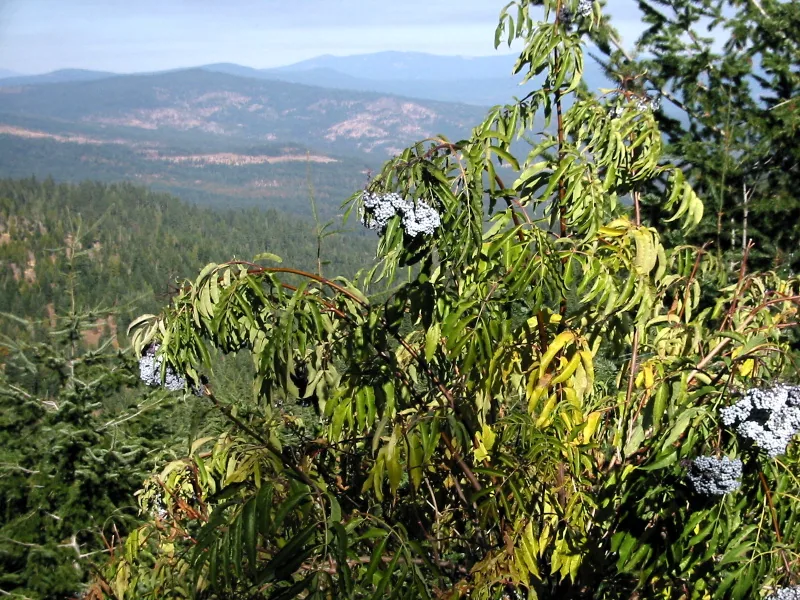
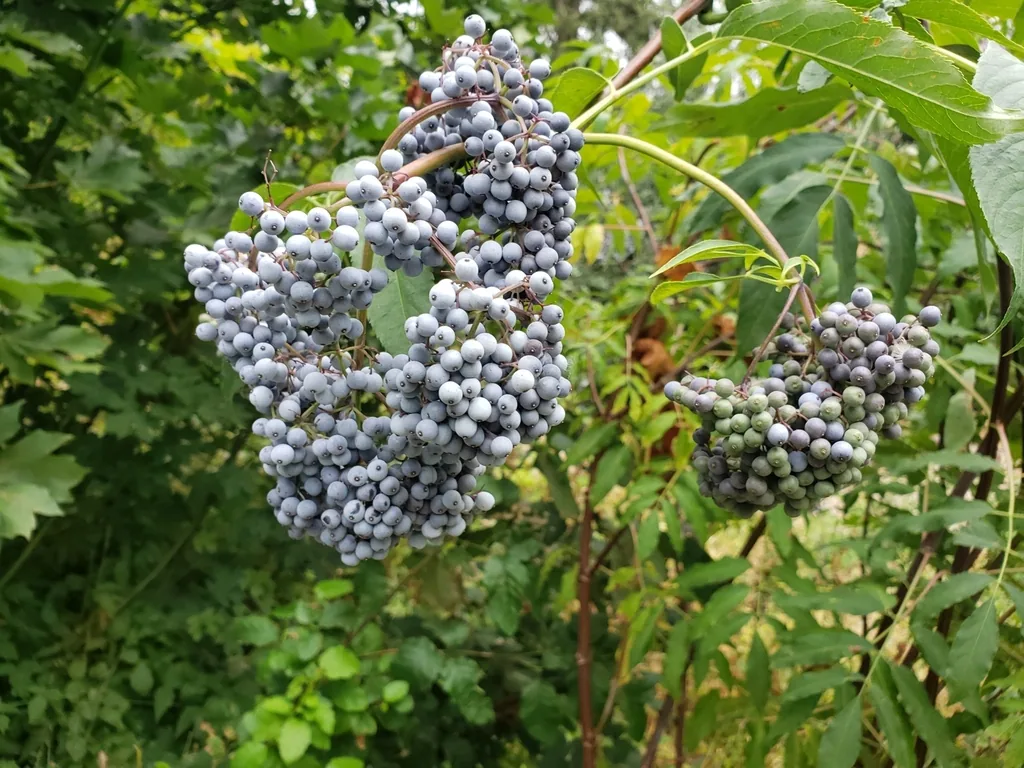
Blue elderberry is a deciduous tree or large shrub 15-30 ft [4.6–9.1 m] high that may form a thicket. [3] Its dark blue fruit is edible but not very palatable fresh, and makes a good jam, pie, and wine when cooked. [3] All parts are poisonous except ripe blue to purple berries and cooked flowers. [7]
This record is incomplete: the sources we read do not cover every field yet.
Not yet covered by our sources: Planting, Harvest
Blue elder care
Measurements in square brackets are our conversion into the other unit system; the quoted text is unchanged.
How to water Blue elder
Watering
Regular to little water needed when established; prefers moist, well drained, sunny sites
What the sources say (1)
Watering Needs: Regular to little water needed when established, prefers moist, well drained, sunny sitesWatering notes
Deep water once or twice a week when flowering and fruiting
What the sources say (1)
Water once established:
Deep water once or twice a week when flowering and
fruiting.How much light Blue elder needs
Full sun to partial shade
What the sources say (4)
Sun Exposure: Full sun to light shade
Origin: Western North AmericaSun Requirements:
| Full Sun
Full Sun to Partial ShadeHeat tolerant:
Yes.
Drought tolerant:
Yes, but loses leaves and fruit.
Sun:
Full sun to part shade.Sun, prefers forest-edge location and moist soils.
-
Hardy to USDA Zone 4How much cold Blue elder can take
4 [winter low −34.4 to −28.9 °C (−30 to −20 °F)]
Best soil for Blue elder
Soil pH, minimum
6.1
What the sources say (1)
This plant is tolerant of soil types with a pH range of 6.1-7.8 (slightly acidic to slightly
alkaline).Soil pH, maximum
7.8
What the sources say (1)
This plant is tolerant of soil types with a pH range of 6.1-7.8 (slightly acidic to slightly
alkaline).Where to grow Blue elder
At least 457.2 cm (15 ft)
What the sources say (1)
Space the plants at least 15' (4.5m) apart.How to propagate Blue elder
Cuttings, seeds (need stratification), offsets
How to grow Blue elder
The plant
Life cycle
perennial
What the sources say (1)
All three subspecies are winter deciduous, perennial, multi-stemmed shrubs/small trees which, in the summer, produce prolific clusters of small berries borne on large flat cymes.Family
Caprifoliaceae (also listed as Adoxaceae)
What the sources say (2)
Scientific Family
Caprifoliaceae
Synonyms
Sambucus mexicana, Sambucus neomexicanaFamily:
Adoxaceae, Caprifoliaceae
Genus:
Sambucus
Synonyms:
Sambucus nigra subsp. ceruleaMature height
900-1500 cm (9-15 m)
What the sources say (1)
Broadleaf deciduous (nearly evergreen mild climates) tree or large shrub,15-30 ft (9-15 m) high, may form a thicket, has pithy stems.Mature width
up to 610 cm (20 ft)
What the sources say (1)
Height
To 30 feet
Width
To 20 feet
## Habitat
Habitat descriptionRemedies
The sources we checked give no remedies for this plant.
Is Blue elder poisonous?
Reported by the source, quoted verbatim. This is not medical or veterinary advice: if a person or an animal may have eaten this plant, contact a poison control centre or a veterinarian.
Toxic / Danger: All parts are poisonous except ripe, blue to purple berries and cooked flowers. Green berries are poisonous.
[7]- Poisonous parts
Toxic / Danger: All parts are poisonous except ripe, blue to purple berries and cooked flowers. Green berries are poisonous.
[7]
Toxicity: | Leaves are poisonous Roots are poisonous Fruit is poisonous Other: Berries are not edible to humans unless cooked.
[6]- Poisonous parts
Toxicity: | Leaves are poisonous Roots are poisonous Fruit is poisonous Other: Berries are not edible to humans unless cooked.
[6]
Calendar
Planting
Not stated in the sources we read.
Harvest
Not stated in the sources we read.
Pruning
Late winter, during dormancy
What the sources say (1)
Prune:
In late winter, during dormancy, remove dead, weak and broken canes, as well as all canes
older than 3 years.Months as given by the sources, which are mostly from the United States (northern hemisphere). In the southern hemisphere they shift by about six months.
Edibility
Reported by the source, quoted verbatim. Do not eat a plant on the basis of this page alone: identification mistakes can be dangerous.
Fruit 6 mm, dark blue with whitish bloom, edible, but not very palatable fresh. When cooked makes a good jam, pie, and wine.
[3]
Indicative values
Values from a secondary source, not checked word for word like the rest of this page. Use them as a starting point.
- Soil
- LoamyIndicative value, adapt it to your climate · Secondary source
- Care level
- MediumIndicative value, adapt it to your climate · Secondary source
- Growth rate
- LowIndicative value, adapt it to your climate · Secondary source
Similar plants
- Elder Sambucus nigra
- Red-berried Elder Sambucus racemosa
- Aconite Aconitum napellus
- Adam's Needle Yucca flaccida
- Afghan Cherry Prunus jacquemontii
- African Blood Lily Scadoxus multiflorus
- African Blue Lily Agapanthus praecox
- African Marigold Tagetes erecta
Sources
Every value above is quoted from these documents. Links lead to the original publisher.
- Blue Elderberry Compared to Black · ucanr.edu, consulted
- Sambucus nigra ssp. cerulea - blue elderberry | Yavapai County Native and Naturalized Plants · yavapaiplants.extension.arizona.edu, consulted
- Sambucus cerulea | Landscape Plants | Oregon State University · landscapeplants.oregonstate.edu, consulted
- Blue Elderberry (Sambucus nigra ssp. cerulea ) · desert-tropicals.com, consulted
- blue-berry elder · tidcf.nrcan.gc.ca, consulted
- Blue Elderberry (Sambucus cerulea) - Garden.org · garden.org, consulted
- Growing Blue Elderberry: Sambucus cerulea · gardenoracle.com, consulted
Written by Emilio Marruso · last checked