
How to Grow and Care for Sweet Box
Sarcococca confusa
Written by Emilio Marruso · last checked
Toxic to: Cats, Dogs, Horses · Why
At a glance
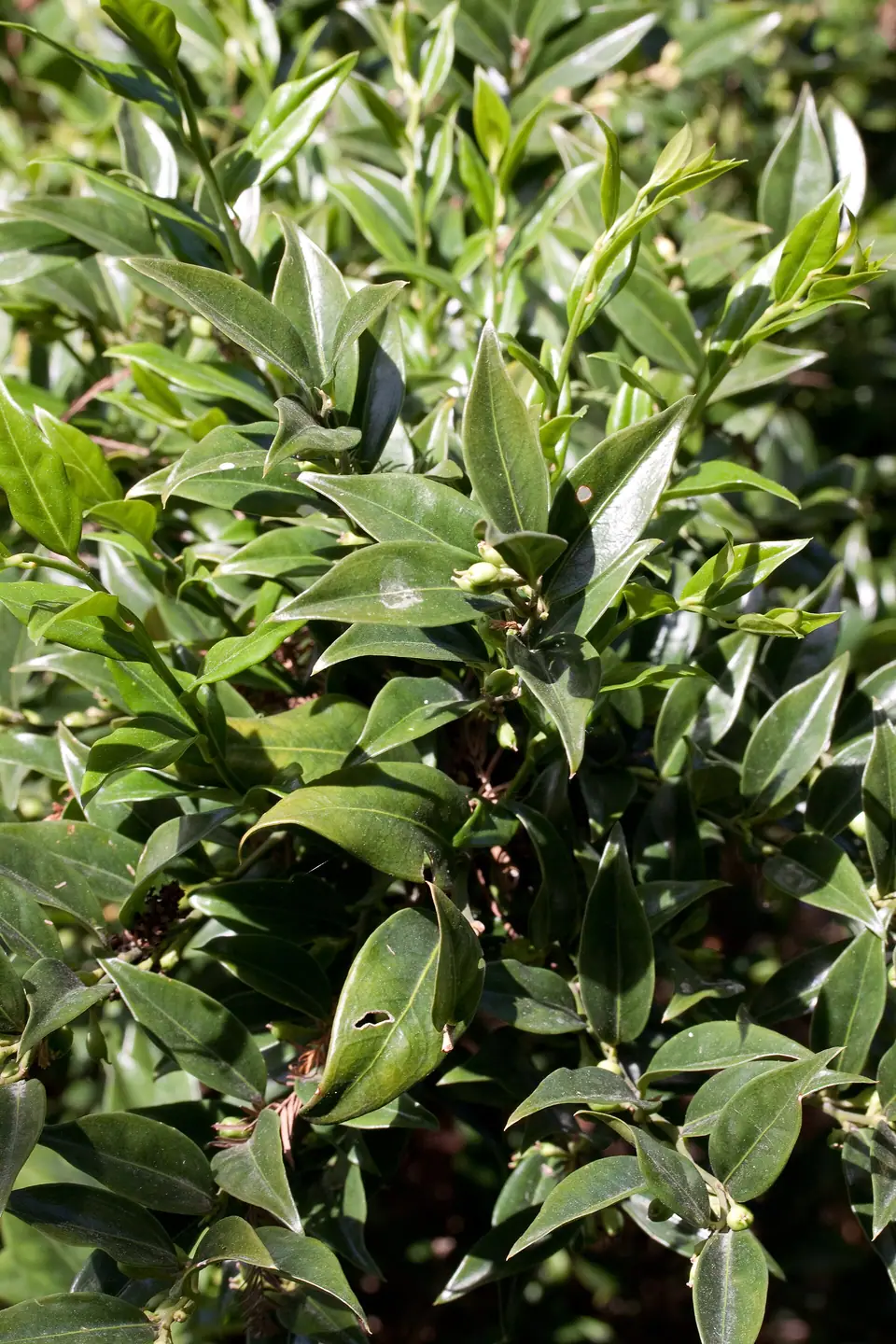
Sweet box is a shrub made for the shady corners of your garden: it is happy in full to partial shade and tolerates dry shade once established. It flowers in February and March, grows 3–5 ft tall and wide, and generally needs no pruning at all. Plant it from September to November in a sheltered spot, and it will reward you for years.
- Sun
Full to partial shade; sun only if the soil stays moist
What the sources say (3)
Light: Full to partial shade; tolerates sun if the soil stays moist
This shrub prefers full to partial shade and tolerates most soil and pH types.
— Sarcococca confusa (Fragrant Sarcococca, Sweet Box) | North Carolina Extension Gardener Plant Toolbox [1] Preferring full or partial shade, they are ideal for a troublesome north-facing spot or in the shade of a tree.
— Grow Sweet Box For Winter Interest In The Colder Months - Horticulturists Share How | Horticulture.co.uk [6] It can cope with a sunny location, provided there is sufficient moisture in the soil, but in full sun the leaves can lose their intense colour.
— Perfumed Shrub Ticks Multiple Boxes | Dunedin Botanic Garden Official Website [4] - Water
Keep the soil moist; water well in dry spells for the first couple of seasons
What the sources say (6)
Watering: Keep soil moist but well-drained; tolerates drought if planted in shade
container-grown plants: However, when grown in a pot or container it can be easy for them to dry out, with their leaves turning crinkly and yellow or brown, unless watered deeply and often during the summer months.
— Grow Sweet Box For Winter Interest In The Colder Months - Horticulturists Share How | Horticulture.co.uk [6] The shrub is resistant to deer and rabbits and is tolerant of pollution and drought if planted in the shade.
— Sarcococca confusa (Fragrant Sarcococca, Sweet Box) | North Carolina Extension Gardener Plant Toolbox [1] S. confusa is a tolerant shrub and will cope well when grown in most soil types, whether clay, loam, chalk or sand, as long as it is free-draining and can be kept moist.
— Grow Sweet Box For Winter Interest In The Colder Months - Horticulturists Share How | Horticulture.co.uk [6] Drought: Tolerates dry shade and drought once established, when planted in shade; water well during dry spells for the first couple of seasons after planting.
Sarcococcas like rich, moisture-retentive soil, but will tolerate dry shade once established
— [8] The shrub is resistant to deer and rabbits and is tolerant of pollution and drought if planted in the shade.
— Sarcococca confusa (Fragrant Sarcococca, Sweet Box) | North Carolina Extension Gardener Plant Toolbox [1] For the first couple of seasons after planting, water well during dry spells, aiming to keep the soil moist but not soggy.
— [8] - Cold
Survives winters down to −5 °F (−20.6 °C)
Very hardy · USDA 6b · RHS H7 · Z6
What the sources say (2)
Hardiness, coldest zone: 6b [winter low −20.6 to −17.8 °C (−5 to 0 °F)]
USDA Plant Hardiness Zone: 6b, 7a, 7b, 8a, 8b, 9a, 9b
— Sarcococca confusa (Fragrant Sarcococca, Sweet Box) | North Carolina Extension Gardener Plant Toolbox [1] Hardiness, warmest zone: 9b [winter low −3.9 to −1.1 °C (25 to 30 °F)]
USDA Plant Hardiness Zone: 6b, 7a, 7b, 8a, 8b, 9a, 9b
— Sarcococca confusa (Fragrant Sarcococca, Sweet Box) | North Carolina Extension Gardener Plant Toolbox [1] - Planting
September to November; potted plants almost any time, unless the ground is frozen or soggy
What the sources say (4)
Planting: September to November; potted plants almost any time except when the ground is frozen or waterlogged
According to BBC Gardeners' World: Jun | Jul | Aug | Sep | Oct | Nov | Dec | Plant | | | | | | | | | yes | yes | yes |
— Sarcococca confusa | BBC Gardeners World Magazine [5] potted shrubs: Commonly available as a potted shrub, sarcococcas can be planted at almost any time of year, except when the ground is frozen or waterlogged.
— Grow Sweet Box For Winter Interest In The Colder Months - Horticulturists Share How | Horticulture.co.uk [6] Commonly available as a potted shrub, sarcococcas can be planted at almost any time of year, except when the ground is frozen or waterlogged.
— Grow Sweet Box For Winter Interest In The Colder Months - Horticulturists Share How | Horticulture.co.uk [6] Jun | Jul | Aug | Sep | Oct | Nov | Dec | Plant | | | | | | | | | yes | yes | yes |
— Sarcococca confusa | BBC Gardeners World Magazine [5] - Feeding
Feed in early spring if needed; add compost or rotted manure as a yearly 2-inch mulch
What the sources say (3)
When: Early spring, if the plant needs a boost
If your plant needs a boost, feed in early spring with a general-purpose fertiliser
— [8] Natural fertilizers: Well-rotted farmyard manure or garden compost: worked into dry, poor soil before planting, and as an annual mulch 5 cm [2 in] thick
If you have dry, poor soil, improve it with well-rotted organic matter such as farmyard manure or garden compost before planting, and mulch the surface afterwards with a 5cm (2in) layer
— [8] Particularly in dry locations, plants will benefit from an annual mulch . Apply well-rotted farmyard manure or garden compost to damp soil around the plant, in a 5cm (2in) thick layer
— [8] - Pruning
Rarely needed; if it gets too big, prune right after flowering in February–March
What the sources say (4)
When to prune: Generally no pruning is needed; if a plant gets too large for its space, prune in spring after flowering.
As sarcococcas are low-growing shrubs, they don’t generally need pruning.
— [8] But if a plant gets too large for its space, you can prune in spring after flowering.
— [8] Pruning: Right after flowering (February-March); dead or damaged branches in mid-spring
However, they can be pruned with a clean and sharp pair of secateurs or shears right after flowering in February or March to keep them to size and shape.
— Grow Sweet Box For Winter Interest In The Colder Months - Horticulturists Share How | Horticulture.co.uk [6] During mid-spring prune dead or damaged branches. Prune for symmetry after flowering.
— Sarcococca confusa | SWEET BOX [3] - Watch out
Shelter it from cold, drying winds; yellow, crinkly leaves mean it needs more shade
- Size
3–5 ft tall and wide
What the sources say (2)
Mature height: 91-152 cm (3-5 ft)
The fragrant sarcococca is a bushy broadleaf evergreen shrub that measures 3 to 5 feet tall and as wide.
— Sarcococca confusa (Fragrant Sarcococca, Sweet Box) | North Carolina Extension Gardener Plant Toolbox [1] Mature width: 91-152 cm (3-5 ft)
The fragrant sarcococca is a bushy broadleaf evergreen shrub that measures 3 to 5 feet tall and as wide.
— Sarcococca confusa (Fragrant Sarcococca, Sweet Box) | North Carolina Extension Gardener Plant Toolbox [1] - Propagation
From suckers, semi-hardwood cuttings in late summer, or seed
What the sources say (5)
Propagation: Suckers; semi-hardwood cuttings; seed
Perhaps the easiest method of increasing your sweet box stock, either for the garden or to give away to family and friends, is by using the suckers.
— Grow Sweet Box For Winter Interest In The Colder Months - Horticulturists Share How | Horticulture.co.uk [6] Sweet box can also be propagated by semi-hardwood cuttings taken at the end of the summer or in early autumn.
— Grow Sweet Box For Winter Interest In The Colder Months - Horticulturists Share How | Horticulture.co.uk [6] Sow seed into containers in spring or autumn and place in cold frame.
— Sarcococca confusa | SWEET BOX [3] Cuttings: Semi-hardwood cuttings in late summer; nodal greenwood cuttings in spring or semi-ripe cuttings later in the season.
Propagate by semi- hardwood cuttings in late summer or propagate by seed sown in containers outdoors in autumn or spring
— [9] Take nodal greenwood cuttings in spring, or semi-ripe cuttings later in the season
— [8] - Sowing
Sow in spring or fall, in pots in a cold frame
What the sources say (1)
Sowing: Spring or autumn, in containers in a cold frame
Sow seed into containers in spring or autumn and place in cold frame.
— Sarcococca confusa | SWEET BOX [3] - Containers
Grows in containers; water deeply and often in summer
What the sources say (4)
In containers: Yes
A tough and easy-to-grow evergreen shrub, it needs little care and grows equally well when planted in a border or in a pot.
— Grow Sweet Box For Winter Interest In The Colder Months - Horticulturists Share How | Horticulture.co.uk [6] Watering: Keep soil moist but well-drained; tolerates drought if planted in shade
container-grown plants: However, when grown in a pot or container it can be easy for them to dry out, with their leaves turning crinkly and yellow or brown, unless watered deeply and often during the summer months.
— Grow Sweet Box For Winter Interest In The Colder Months - Horticulturists Share How | Horticulture.co.uk [6] The shrub is resistant to deer and rabbits and is tolerant of pollution and drought if planted in the shade.
— Sarcococca confusa (Fragrant Sarcococca, Sweet Box) | North Carolina Extension Gardener Plant Toolbox [1] S. confusa is a tolerant shrub and will cope well when grown in most soil types, whether clay, loam, chalk or sand, as long as it is free-draining and can be kept moist.
— Grow Sweet Box For Winter Interest In The Colder Months - Horticulturists Share How | Horticulture.co.uk [6] - Safety
No reported toxicity to cats, dogs or horses
Overview
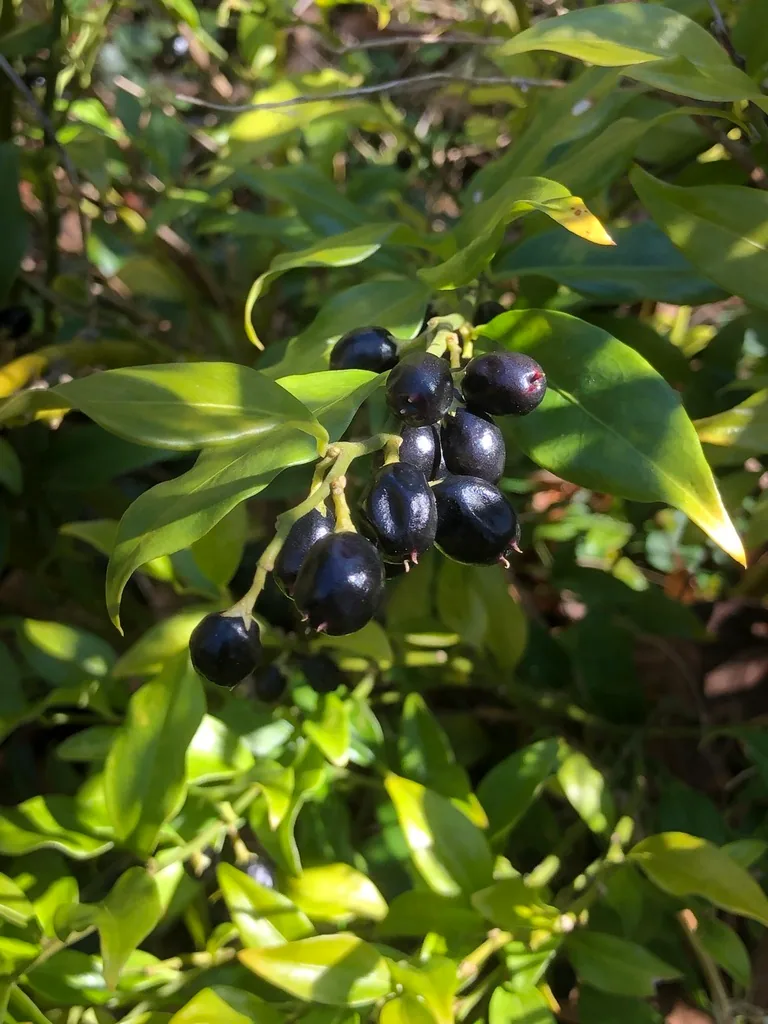
Sweet box is a dense broadleaf evergreen shrub with tiny, sweetly scented creamy-white flowers in winter followed by berries that turn black. [1] It grows best in full to partial shade in moist, well-drained soil and is hardy in USDA zones 6b-9b. [1] It can be grown in a border or in a pot and used as a low hedge. [6]
Sweet Box care
How to water Sweet Box
Watering
Keep soil moist but well-drained; tolerates drought if planted in shade
What each source says
container-grown plants: Water deeply and often during the summer months
What the sources say (3)
container-grown plants: However, when grown in a pot or container it can be easy for them to dry out, with their leaves turning crinkly and yellow or brown, unless watered deeply and often during the summer months.The shrub is resistant to deer and rabbits and is tolerant of pollution and drought if planted in the shade.S. confusa is a tolerant shrub and will cope well when grown in most soil types, whether clay, loam, chalk or sand, as long as it is free-draining and can be kept moist.Watering notes
Needs enough moisture to establish, especially when planted in warm months; plants in dry soil may suffer until established
What the sources say (2)
Care must be taken if planting during the warmer months though as they will need enough moisture to help them get established and not dry out.Make sure your Sarcococca is planted moist but well-drained soil. Plants in dry soil may suffer until they are well established.How much light Sweet Box needs
Full to partial shade; tolerates sun if the soil stays moist
What the sources say (3)
This shrub prefers full to partial shade and tolerates most soil and pH types.Preferring full or partial shade, they are ideal for a troublesome north-facing spot or in the shade of a tree.It can cope with a sunny location, provided there is sufficient moisture in the soil, but in full sun the leaves can lose their intense colour.How much cold Sweet Box can take
Hardiness, coldest zone
6b [winter low −20.6 to −17.8 °C (−5 to 0 °F)]
What the sources say (1)
USDA Plant Hardiness Zone:
6b, 7a, 7b, 8a, 8b, 9a, 9bHardiness, warmest zone
9b [winter low −3.9 to −1.1 °C (25 to 30 °F)]
What the sources say (1)
USDA Plant Hardiness Zone:
6b, 7a, 7b, 8a, 8b, 9a, 9bWhere to grow Sweet Box
Yes
What the sources say (1)
A tough and easy-to-grow evergreen shrub, it needs little care and grows equally well when planted in a border or in a pot.How to propagate Sweet Box
Suckers; semi-hardwood cuttings; seed
What the sources say (3)
Perhaps the easiest method of increasing your sweet box stock, either for the garden or to give away to family and friends, is by using the suckers.Sweet box can also be propagated by semi-hardwood cuttings taken at the end of the summer or in early autumn.Sow seed into containers in spring or autumn and place in cold frame.How to grow Sweet Box
The plant
Life cycle
perennial (woody shrub)
What the sources say (1)
Whole Plant Traits: Plant Type: Perennial Shrub Woody Plant Leaf Characteristics: Broadleaf EvergreenFamily
Buxaceae
What the sources say (1)
After flowering shiny red berries appear that transition to black and may persist through winter. It is a member of the Buxaceae or boxwood family.Mature height
91-152 cm (3-5 ft)
What the sources say (1)
The fragrant sarcococca is a bushy broadleaf evergreen shrub that measures 3 to 5 feet tall and as wide.Mature width
91-152 cm (3-5 ft)
What the sources say (1)
The fragrant sarcococca is a bushy broadleaf evergreen shrub that measures 3 to 5 feet tall and as wide.Fertilizing
When
Early spring, if the plant needs a boost
What the sources say (1)
If your plant needs a boost, feed in early spring with a general-purpose fertiliserNatural fertilizers
Well-rotted farmyard manure or garden compost: worked into dry, poor soil before planting, and as an annual mulch 5 cm [2 in] thick
What the sources say (2)
If you have dry, poor soil, improve it with well-rotted organic matter such as farmyard manure or garden compost before planting, and mulch the surface afterwards with a 5cm (2in) layerParticularly in dry locations, plants will benefit from an annual mulch . Apply well-rotted farmyard manure or garden compost to damp soil around the plant, in a 5cm (2in) thick layerMineral fertilizers
General-purpose fertilizer
What the sources say (1)
If your plant needs a boost, feed in early spring with a general-purpose fertiliserPropagation
Cuttings
Semi-hardwood cuttings in late summer; nodal greenwood cuttings in spring or semi-ripe cuttings later in the season.
Heat and drought
Drought
Tolerates dry shade and drought once established, when planted in shade; water well during dry spells for the first couple of seasons after planting.
What the sources say (3)
Sarcococcas like rich, moisture-retentive soil, but will tolerate dry shade once establishedThe shrub is resistant to deer and rabbits and is tolerant of pollution and drought if planted in the shade.For the first couple of seasons after planting, water well during dry spells, aiming to keep the soil moist but not soggy.Pruning
When to prune
Generally no pruning is needed; if a plant gets too large for its space, prune in spring after flowering.
Sweet Box pests and problems
Yellowing, crinkly leaves
Symptom: Leaves going yellow and crinkly
What to do: Give the plant some shade, especially if the soil is dry; plant in a sheltered position
What the sources say (1)
If your sweet box is looking sickly and the leaves are going yellow and crinkly, check that your plant has some shade, as Sarcococca grows best out of full sun, especially if the soil is dry.
— Sarcococca confusa | BBC Gardeners World Magazine [5] Cold drying winds
Symptom: Plant suffers when exposed
What to do: Plant in a sheltered position
What the sources say (1)
It can also suffer when exposed to cold, drying winds, so make sure your plant is in a sheltered position.
— Sarcococca confusa | BBC Gardeners World Magazine [5]
Remedies
Each remedy shows what official sources say about it; traditional remedies without an official source are marked as such. Harmful ones are listed so you know to avoid them.
Treating the plant
yellow leaves
move to shade Not verified
Traditional remedy, not verified by an official source.
How: If the leaves go yellow and crinkly, check that the plant has some shade: it grows best out of full sun, especially if the soil is dry.
wind damage
sheltered position Not verified
Traditional remedy, not verified by an official source.
How: The plant can suffer when exposed to cold, drying winds: plant it in a sheltered position and consider winter protection in hard, prolonged frost and snow.
Is Sweet Box toxic to pets?
Reported by the source, quoted verbatim. This is not medical or veterinary advice: if a person or an animal may have eaten this plant, contact a poison control centre or a veterinarian.
No reported toxicity to: Is not known to attract Birds Birds Is not known to attract Cats Cats
[5]The source flags the risk for this animal but does not explain why.
No reported toxicity to: Is not known to attract Birds Birds Is not known to attract Cats Cats Is not known to attract Dogs Dogs
[5]The source flags the risk for this animal but does not explain why.
No reported toxicity to: Is not known to attract Birds Birds Is not known to attract Cats Cats Is not known to attract Dogs Dogs Is not known to attract Horses Horses
[5]The source flags the risk for this animal but does not explain why.
Calendar
Sowing
Spring or autumn, in containers in a cold frame
What the sources say (1)
Sow seed into containers in spring or autumn and place in cold frame.Planting
September to November; potted plants almost any time except when the ground is frozen or waterlogged
What each source says
According to BBC Gardeners' World: September-November
potted shrubs: Almost any time of year except when the ground is frozen or waterlogged
What the sources say (4)
According to BBC Gardeners' World: Jun | Jul | Aug | Sep | Oct | Nov | Dec
| Plant | | | | | | | | | yes | yes | yes |potted shrubs: Commonly available as a potted shrub, sarcococcas can be planted at almost any time of year, except when the ground is frozen or waterlogged.Commonly available as a potted shrub, sarcococcas can be planted at almost any time of year, except when the ground is frozen or waterlogged.Jun | Jul | Aug | Sep | Oct | Nov | Dec
| Plant | | | | | | | | | yes | yes | yes |Pruning
Right after flowering (February-March); dead or damaged branches in mid-spring
What the sources say (2)
However, they can be pruned with a clean and sharp pair of secateurs or shears right after flowering in February or March to keep them to size and shape.During mid-spring prune dead or damaged branches. Prune for symmetry after flowering.Months as given by the sources, which are mostly from the United States (northern hemisphere). In the southern hemisphere they shift by about six months.
Similar plants
- Fragrant Sweet Box Sarcococca ruscifolia
- Sweet box Sarcococca hookeriana
- Boxwood Buxus sempervirens
- Boxwood Buxus sinica
- Harland Boxwood Buxus harlandii
- Balearic boxwood Buxus balearica
- Japanese Spurge Pachysandra terminalis
- Littleleaf Box Buxus microphylla
Sources
Every value above is quoted from these documents. Links lead to the original publisher.
- Sarcococca confusa (Fragrant Sarcococca, Sweet Box) | North Carolina Extension Gardener Plant Toolbox · plants.ces.ncsu.edu, consulted
- Sarcococca confusa - Trees and Shrubs Online · treesandshrubsonline.org, consulted
- Sarcococca confusa | SWEET BOX · rainyside.com, consulted
- Perfumed Shrub Ticks Multiple Boxes | Dunedin Botanic Garden Official Website · dunedinbotanicgarden.co.nz, consulted
- Sarcococca confusa | BBC Gardeners World Magazine · gardenersworld.com, consulted
- Grow Sweet Box For Winter Interest In The Colder Months - Horticulturists Share How | Horticulture.co.uk · horticulture.co.uk, consulted
- Sarcococca, profumo d’inverno · rivistadiagraria.org, consulted
- rhs.org.uk · rhs.org.uk
- rhs.org.uk · rhs.org.uk
Written by Emilio Marruso · last checked