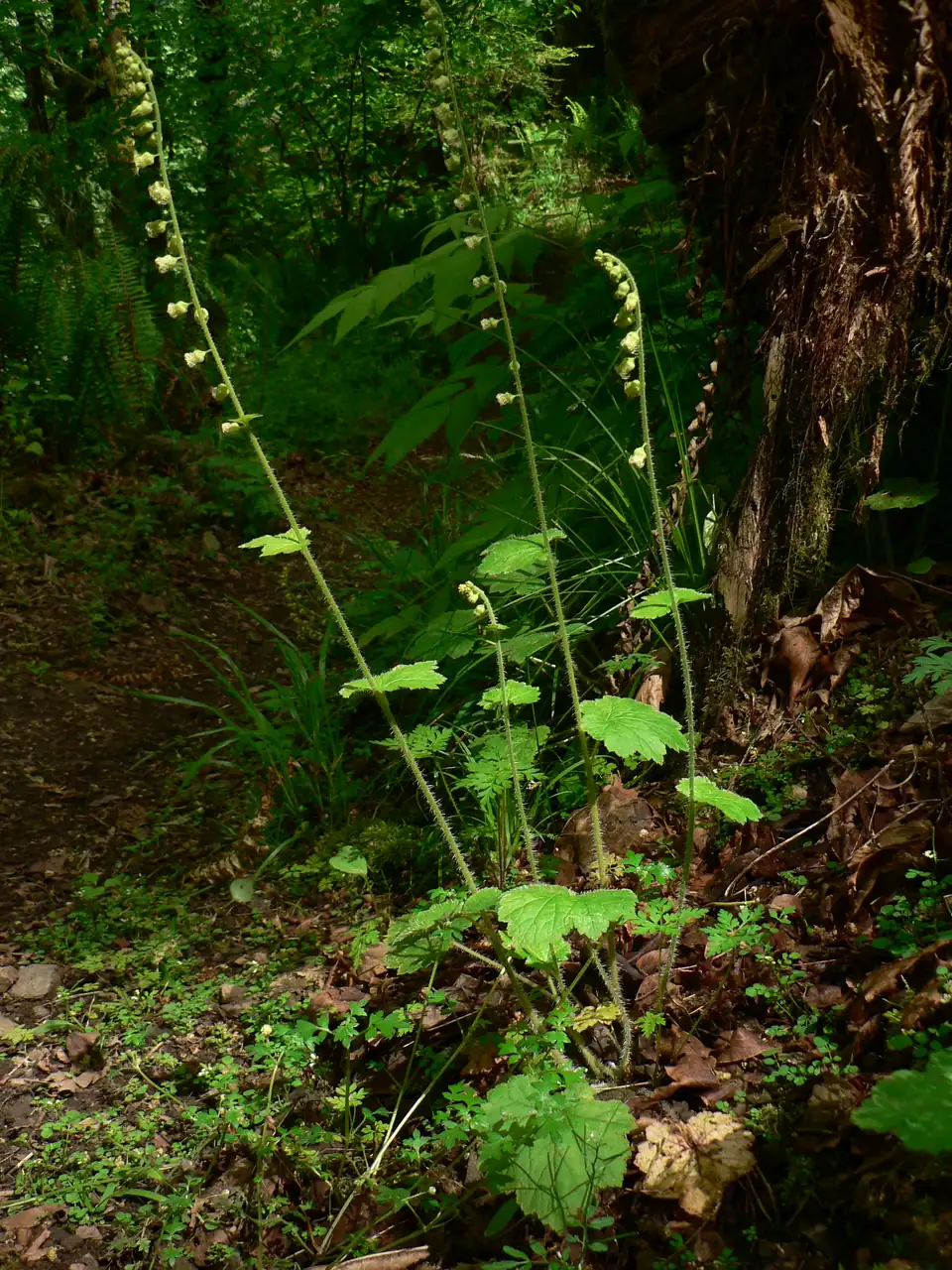
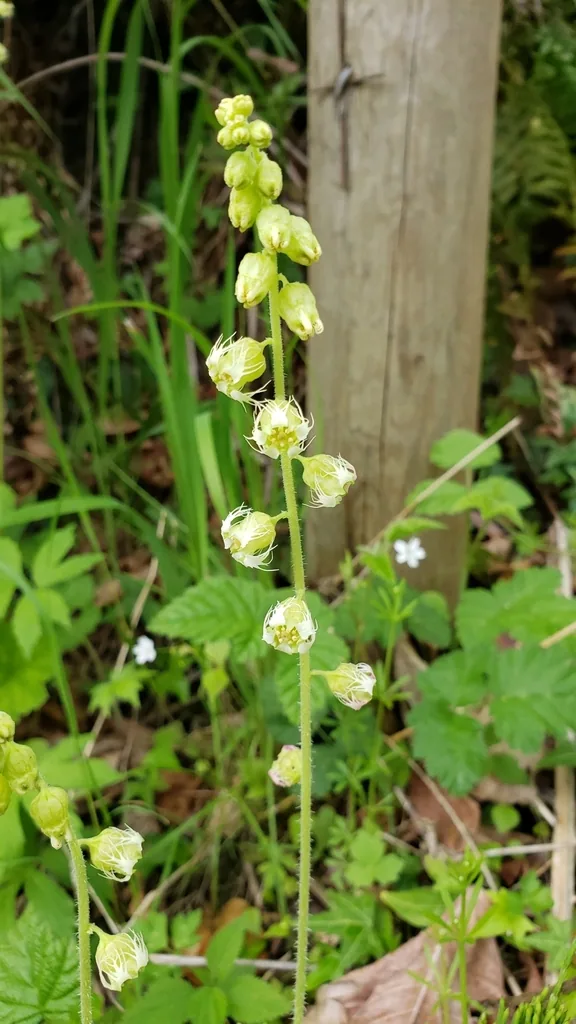

How to Grow and Care for Bigflower tellima
Tellima grandiflora
Written by Emilio Marruso · last checked
At a glance
Tellima is an easygoing perennial for the shadier corners of the garden: it prefers part shade, yet also tolerates full sun and shade. Give it regular water, space plants 12 inches apart and plant in spring or fall. It even grows in containers, and you can multiply it from seed or by dividing the plant.
- Sun
Part shade is best; full sun only if the soil stays moist
What the sources say (7)
Light: Part shade; tolerates full sun and shade
According to Lady Bird Johnson Wildflower Center: Light Requirement: Sun , Part Shade , Shade Soil Moisture: Moist
— Lady Bird Johnson Wildflower Center - The University of Texas at Austin [3] According to Kwantlen Polytechnic University: | Exposure: | Full sun only if soil kept moist, Part sun/part shade, Filtered shade
— Tellima grandiflora - Kwantlen Polytechnic University, School of Horticulture - Plant Database [7] According to Practical Plants: Light full sun Shade tolerance light shade Water moderate
— Fringe Cups (Tellima grandiflora) — Practical Plants [2] According to Temperate Plants Database: Grows well in humus-rich soils in a shady position
— Tellima grandiflora - Useful Temperate Plants [1] Plant Tellima in partial shade; will tolerate full sun.
— How to Grow Tellima – Fringe Cups [6] Light Requirement: Sun , Part Shade , Shade Soil Moisture: Moist
— Lady Bird Johnson Wildflower Center - The University of Texas at Austin [3] | Exposure: | Full sun only if soil kept moist, Part sun/part shade, Filtered shade
— Tellima grandiflora - Kwantlen Polytechnic University, School of Horticulture - Plant Database [7] - Water
Water regularly
What the sources say (1)
Watering: Regular water
Give Tellima regular water. - Feed Tellima with an all-purpose organic fertilizer in spring.
— How to Grow Tellima – Fringe Cups [6] - Spacing
12 in between plants
What the sources say (1)
Spacing: 30 cm (12 in)
Space Tellima 12 inches (30cm) apart. - Mix compost into the soil when transplanting Tellima.
— How to Grow Tellima – Fringe Cups [6] - Planting
Plant in spring or fall
What the sources say (4)
Planting: Spring or autumn
container-grown plants: Set container-grown Tellima in the garden in spring or autumn.
— How to Grow Tellima – Fringe Cups [6] seedlings from spring sowing: Prick out the seedlings when they are large enough to handle and plant them out into their permanent positions in late spring or early summer.
— Fringe Cups (Tellima grandiflora) — Practical Plants [2] divisions: Divisions � clump portions with ample roots in fall to late winter
— Species (common name, Latin name) [5] Set container-grown Tellima in the garden in spring or autumn.
— How to Grow Tellima – Fringe Cups [6] - Pests
Slugs and weevils attack the leaves; it can get mildew
- Watch out
Dislikes wet soil, high humidity and heat, especially with poor drainage
- Propagation
From seed or by dividing the plant; divide from fall to late winter
What the sources say (7)
Propagation: Seed; division
Description: Propagate by division or seeds. Seed Treatment: No treatment necessary.
— Lady Bird Johnson Wildflower Center - The University of Texas at Austin [3] Divide Tellima in spring every four or five years to maintain vigor and renew the soil; they grow by offsets.
— How to Grow Tellima – Fringe Cups [6] Seed - sow early spring in a warm greenhouse and only just cover the seed.
— Fringe Cups (Tellima grandiflora) — Practical Plants [2] Planting: Spring or autumn
container-grown plants: Set container-grown Tellima in the garden in spring or autumn.
— How to Grow Tellima – Fringe Cups [6] seedlings from spring sowing: Prick out the seedlings when they are large enough to handle and plant them out into their permanent positions in late spring or early summer.
— Fringe Cups (Tellima grandiflora) — Practical Plants [2] divisions: Divisions � clump portions with ample roots in fall to late winter
— Species (common name, Latin name) [5] Set container-grown Tellima in the garden in spring or autumn.
— How to Grow Tellima – Fringe Cups [6] - Sowing
Sow outdoors in spring or midsummer
What the sources say (8)
Sowing: Spring; mid-summer (outdoor seedbed); as soon as ripe (cold frame)
warm greenhouse: Seed - sow early spring in a warm greenhouse and only just cover the seed.
— Fringe Cups (Tellima grandiflora) — Practical Plants [2] outdoor seedbed: The seed can also be sown in the middle of spring in an outdoor seedbed and planted out in early summer.
— Fringe Cups (Tellima grandiflora) — Practical Plants [2] outdoor seedbed, for planting out the following spring: Alternatively, you can sow the seed in an outdoor seedbed in the middle of summer for planting out in the following spring.
— Fringe Cups (Tellima grandiflora) — Practical Plants [2] containers in a cold frame: Sow Tellima in containers in a cold frame as soon as ripe or in spring.
— How to Grow Tellima – Fringe Cups [6] Seed - sow early spring in a warm greenhouse and only just cover the seed.
— Fringe Cups (Tellima grandiflora) — Practical Plants [2] The seed can also be sown in the middle of spring in an outdoor seedbed and planted out in early summer.
— Fringe Cups (Tellima grandiflora) — Practical Plants [2] Alternatively, you can sow the seed in an outdoor seedbed in the middle of summer for planting out in the following spring.
— Fringe Cups (Tellima grandiflora) — Practical Plants [2] Sow Tellima in containers in a cold frame as soon as ripe or in spring.
— How to Grow Tellima – Fringe Cups [6] - Containers
Grows in containers too
What the sources say (1)
In containers: Yes
| Landscape Uses: | Container planting, Fragrance, Ground cover, Group or mass planting
— Tellima grandiflora - Kwantlen Polytechnic University, School of Horticulture - Plant Database [7]
Overview
Tellima is a herbaceous perennial used as a groundcover in a shrub border or woodland garden. [6] It is placed in partial shade, tolerates full sun, and is given regular water. [6] It is propagated by seed or by division. [3][6]
This record is incomplete: the sources we read do not cover every field yet.
Not yet covered by our sources: Pruning
Bigflower tellima care
How to water Bigflower tellima
Regular water
What the sources say (1)
Give Tellima regular water.
- Feed Tellima with an all-purpose organic fertilizer in spring.How much light Bigflower tellima needs
Part shade; tolerates full sun and shade
What each source says
According to Lady Bird Johnson Wildflower Center: Sun, part shade or shade
According to Kwantlen Polytechnic University: Full sun only if soil kept moist; part sun/part shade; filtered shade
According to Practical Plants: Full sun; light shade tolerance
According to Temperate Plants Database: Shady position
What the sources say (7)
According to Lady Bird Johnson Wildflower Center: Light Requirement: Sun , Part Shade , Shade
Soil Moisture: Moist According to Kwantlen Polytechnic University: | Exposure:
| Full sun only if soil kept moist, Part sun/part shade, Filtered shadeAccording to Practical Plants: Light
full sun
Shade tolerance
light shade
Water
moderateAccording to Temperate Plants Database: Grows well in humus-rich soils in a shady positionPlant Tellima in partial shade; will tolerate full sun.Light Requirement: Sun , Part Shade , Shade
Soil Moisture: Moist | Exposure:
| Full sun only if soil kept moist, Part sun/part shade, Filtered shadeHow much cold Bigflower tellima can take
Hardiness, coldest zone
The sources give different values depending on region, zone or growing conditions.
What each source says
According to Kwantlen Polytechnic University: 5 [winter low −28.9 to −23.3 °C (−20 to −10 °F)]
According to Harvest to Table: 5 [winter low −28.9 to −23.3 °C (−20 to −10 °F)]
According to Practical Plants: 6 [winter low −23.3 to −17.8 °C (−10 to 0 °F)]
What the sources say (3)
According to Kwantlen Polytechnic University: | Hardiness Zone:
| Zone 5: (-29 to -23 °C)According to Harvest to Table: Growing zones and range: Zones 5 to 8According to Practical Plants: Water
moderate
Hardiness
Zone 6+
Soil textures
sandy, loamy, clayHardiness, warmest zone
8 [winter low −12.2 to −6.7 °C (10 to 20 °F)]
What the sources say (1)
Growing zones and range: Zones 5 to 8Where to grow Bigflower tellima
In containers
Yes
What the sources say (1)
| Landscape Uses:
| Container planting, Fragrance, Ground cover, Group or mass plantingSpacing
30 cm (12 in)
What the sources say (1)
Space Tellima 12 inches (30cm) apart.
- Mix compost into the soil when transplanting Tellima.How to propagate Bigflower tellima
Seed; division
What the sources say (3)
Description: Propagate by division or seeds.
Seed Treatment: No treatment necessary.Divide Tellima in spring every four or five years to maintain vigor and renew the soil; they grow by offsets.Seed - sow early spring in a warm greenhouse and only just cover the seed.How to grow Bigflower tellima
The plant
Life cycle
perennial
What the sources say (1)
Generation: Perennial
- Fun fact: Genus name Tellima comes from an anagram of Mitella, another genus that is very closely relatedFamily
Saxifragaceae
What the sources say (1)
Family: Saxifragaceae
- Plant Type: Mostly basal (sometimes spreading) herb with tall flowering stalksBigflower tellima pests and problems
Slugs and weevils
Symptom: Leaves are susceptible to attacks by slugs or weevils.
What the sources say (1)
Tellima leaves are susceptible to attacks by slugs or weevils; they are otherwise pest-free.
— How to Grow Tellima – Fringe Cups [6] Mildew
Symptom: The plants are susceptible to mildew.
What the sources say (1)
Fringe cups can be somewhat aggressive. The plants are susceptible to mildew.
— Lady Bird Johnson Wildflower Center - The University of Texas at Austin [3] Wet soil, humidity and heat
Symptom: Does not do well in wet soil, high humidity and heat, especially combined or with poor drainage.
What the sources say (1)
Tellima does not do well in wet soil, high humidity, and heat, especially when combined, or with poor drainage.
— How to Grow Tellima – Fringe Cups [6]
Remedies
The sources we checked give no remedies for this plant.
Calendar
Sowing
Spring; mid-summer (outdoor seedbed); as soon as ripe (cold frame)
What each source says
warm greenhouse: Early spring
outdoor seedbed: Mid-spring
outdoor seedbed, for planting out the following spring: Mid-summer
containers in a cold frame: As soon as ripe or in spring
What the sources say (8)
warm greenhouse: Seed - sow early spring in a warm greenhouse and only just cover the seed.outdoor seedbed: The seed can also be sown in the middle of spring in an outdoor seedbed and planted out in early summer.outdoor seedbed, for planting out the following spring: Alternatively, you can sow the seed in an outdoor seedbed in the middle of summer for planting out in the following spring.containers in a cold frame: Sow Tellima in containers in a cold frame as soon as ripe or in spring.Seed - sow early spring in a warm greenhouse and only just cover the seed.The seed can also be sown in the middle of spring in an outdoor seedbed and planted out in early summer.Alternatively, you can sow the seed in an outdoor seedbed in the middle of summer for planting out in the following spring.Sow Tellima in containers in a cold frame as soon as ripe or in spring.Planting
Spring or autumn
What each source says
container-grown plants: Spring or autumn
seedlings from spring sowing: Late spring or early summer
divisions: Fall to late winter
What the sources say (4)
container-grown plants: Set container-grown Tellima in the garden in spring or autumn.seedlings from spring sowing: Prick out the seedlings when they are large enough to handle and plant them out into their permanent positions in late spring or early summer.divisions: Divisions
� clump portions with ample roots in fall to late winterSet container-grown Tellima in the garden in spring or autumn.Pruning
Not stated in the sources we read.
Months as given by the sources, which are mostly from the United States (northern hemisphere). In the southern hemisphere they shift by about six months.
Indicative values
Values from a secondary source, not checked word for word like the rest of this page. Use them as a starting point.
- Mature height
- 30.5-61 cm (1-2 ft)Indicative value, adapt it to your climate · Secondary source
- Hours of sun
- 2-5 hoursIndicative value, adapt it to your climate · Secondary source
- Soil
- Loamy HumusIndicative value, adapt it to your climate · Secondary source
- Soil pH
- 5.5-7.5Indicative value, adapt it to your climate · Secondary source
- Care level
- MediumIndicative value, adapt it to your climate · Secondary source
- Growth rate
- HighIndicative value, adapt it to your climate · Secondary source
- Pruning
- May, June, July, MayIndicative value, adapt it to your climate · Secondary source
- Pests
- Slugs, snails, Pest resistant, Disease resistantIndicative value, adapt it to your climate · Secondary source
Similar plants
- Alumroot Heuchera americana
- Early Saxifrage Micranthes virginiensis
- Golden currant Ribes aureum
- Hairy Alumroot Heuchera villosa
- Miterwort Mitella diphylla
- Piggyback Plant Tolmiea menziesii
- Rodgersia podophylla Rodgersia podophylla
- Strawberry Begonia Saxifraga stolonifera
Sources
Every value above is quoted from these documents. Links lead to the original publisher.
- Tellima grandiflora - Useful Temperate Plants · temperate.theferns.info, consulted
- Fringe Cups (Tellima grandiflora) — Practical Plants · practicalplants.org, consulted
- Lady Bird Johnson Wildflower Center - The University of Texas at Austin · wildflower.org, consulted
- Fringecup - North Creek Wetland · uwb.edu, consulted
- Species (common name, Latin name) · depts.washington.edu, consulted
- How to Grow Tellima – Fringe Cups · harvesttotable.com, consulted
- Tellima grandiflora - Kwantlen Polytechnic University, School of Horticulture - Plant Database · plantdatabase.kpu.ca, consulted
- Tellima grandiflora | Fragrant Fringecup | Wildflowers of the Pacific Northwest · pnwflowers.com, consulted
Written by Emilio Marruso · last checked