
How to Grow and Care for European White Elm
Ulmus laevis
Written by Emilio Marruso · last checked
At a glance
This elm is a tough, easygoing tree: it loves moist, fertile ground, yet it can also grow in moderately dry, deep soil, and it puts up with flooding for long periods. You can start new trees from cuttings. In some places people even gather it from the wild as food and medicine. Just keep an eye out for Dutch elm disease.
- Water
Likes moist soil but handles moderately dry, deep soil; puts up with long floods
What the sources say (2)
Watering notes: Typically found on moist and fertile sites but can grow on moderately dry, deep soils; tolerates flooding for long periods
It grows in riparian deciduous forests, where it tolerates flooding for long periods. It is typically found in moist and fertile sites, but can grow
— Ulmus laevis - EUFORGEN European forest genetic resources programme [1] It is typically found in moist and fertile sites, but can grow on moderately dry, deep soils.
— Ulmus laevis - EUFORGEN European forest genetic resources programme [1] - Harvest
Gathered from the wild in some places for local use as food and medicine
- Pests
Watch out for Dutch elm disease
What the sources say (1)
Diseases: Dutch elm disease
Dutch elm disease (DED) has, however, limited its use, especially in Central and Eastern Europe.
— Ulmus laevis - EUFORGEN European forest genetic resources programme [1] - Propagation
Grow new trees from cuttings
What the sources say (1)
Propagation: Cuttings
which should not be difficult as European white elm can easily be propagated by cuttings (Collin, 2003).
— Ulmus laevis - EUFORGEN European forest genetic resources programme [1]
Overview
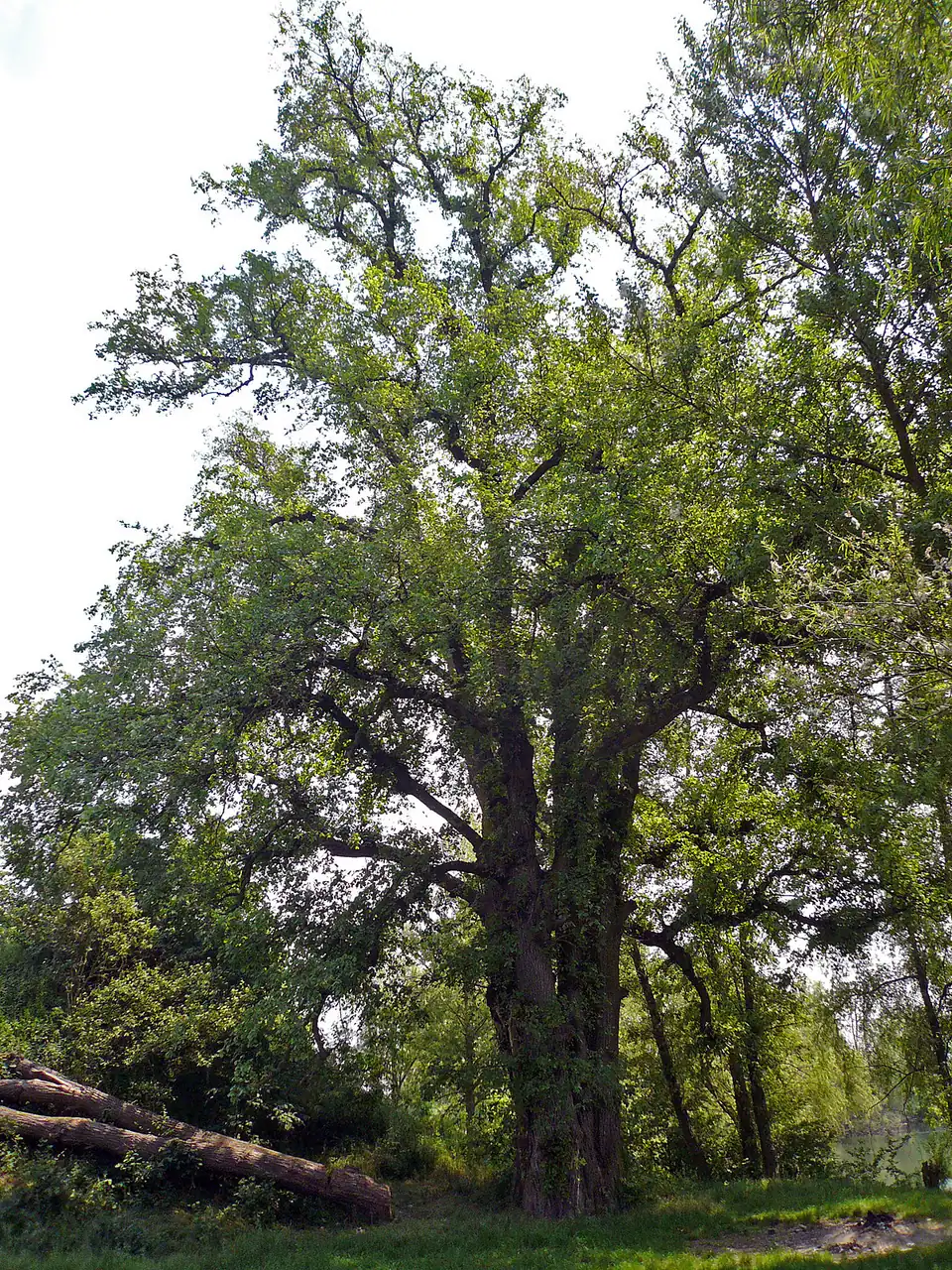
European white elm is a deciduous tree native to Europe and western Asia that grows in riparian forests and tolerates long flooding. [1] It has been used for amenity plantings because of its fast growth and tolerance to soil compaction, de-icing salts and air pollution. [1]
This record is incomplete: the sources we read do not cover every field yet.
Not yet covered by our sources: Watering, Light, Hardiness, coldest zone, Hardiness, warmest zone, Pruning
European White Elm care
How to water European White Elm
Watering
Not stated in the sources we read.
Watering notes
Typically found on moist and fertile sites but can grow on moderately dry, deep soils; tolerates flooding for long periods
What the sources say (2)
It grows in riparian deciduous forests, where it tolerates flooding for long periods. It is typically found in moist and fertile sites, but can growIt is typically found in moist and fertile sites, but can grow on moderately dry, deep soils.How much light European White Elm needs
Not stated in the sources we read.
How much cold European White Elm can take
Hardiness, coldest zone
Not stated in the sources we read.
Hardiness, warmest zone
Not stated in the sources we read.
How to propagate European White Elm
Cuttings
What the sources say (1)
which should not be difficult as European white elm can easily be propagated by cuttings (Collin, 2003).How to grow European White Elm
Pests and diseases
Diseases
Dutch elm disease
What the sources say (1)
Dutch elm disease (DED) has, however, limited its use, especially in Central and Eastern Europe.Fertilizing
When
The sources give different values depending on region, zone or growing conditions.
What each source says
Ulmus in general, trees affected by Verticillium wilt: Spring
What the sources say (1)
Ulmus in general, trees affected by Verticillium wilt: Maintaining tree vigor with adequate water during dry seasons and applications of fertilizer in the spring can help the trees resist the pathogenEuropean White Elm pests and problems
Dutch elm disease
What to do: Dutch elm disease has limited its use in Central and Eastern Europe.
What the sources say (1)
Dutch elm disease (DED) has, however, limited its use, especially in Central and Eastern
— Ulmus laevis - EUFORGEN European forest genetic resources programme [1]
Remedies
Each remedy shows what official sources say about it; traditional remedies without an official source are marked as such. Harmful ones are listed so you know to avoid them.
Treating the plant
aphids
strong water spray Official source, not independently tested
How: Wash aphids from foliage with a strong stream of water.
Wash aphids from foliage with a strong stream of water.
— hortsense.cahnrs.wsu.edu [9] hand-wiping or pruning Official source, not independently tested
How: Hand-wipe or prune to control small, localized infestations when practical.
Hand-wipe or prune to control small, localized infestations when practical.
— hortsense.cahnrs.wsu.edu [9]
dutch elm disease
removing dead and dying elms and debarking or chipping elm wood Works
Without community-wide sanitation, Dutch elm disease is almost impossible to control.
— extension.illinois.edu [10] How: Prompt removal of dead and dying elm trees and proper sanitation (chipping or debarking) of elm wood.
Prompt removal of dead and dying elm trees and proper sanitation (chipping or debarking) of elm wood
— extension.illinois.edu [10] What the evidence says Prompt removal of dead and dying elm trees and proper sanitation (chipping or debarking) of elm wood are initial steps of effective management.
— extension.illinois.edu [10] pruning out the diseased limb Partly works
How: If a new, upper-crown infection is detected early enough, immediately prune out the diseased limb or limbs.
If a new, upper-crown DED infection is detected early enough, the DED fungus can be eradicated from the tree by immediately pruning out the diseased limb or limbs.
— extension.illinois.edu [10] What the evidence says the DED fungus can be eradicated from the tree by immediately pruning out the diseased limb or limbs. However, the fungus often moves too quickly for this method to be effective.
— extension.illinois.edu [10]
Calendar
Pruning
Not stated in the sources we read.
Months as given by the sources, which are mostly from the United States (northern hemisphere). In the southern hemisphere they shift by about six months.
Edibility
Reported by the source, quoted verbatim. Do not eat a plant on the basis of this page alone: identification mistakes can be dangerous.
The tree is harvested from the wild for local use as a food and medicine. It is harvested on a
[3]
Similar plants
- American Elm Ulmus americana
- Chinese Elm Ulmus parvifolia
- Siberian Elm Ulmus pumila
- Slippery Elm Ulmus rubra
- Smoothleaf Elm Ulmus minor
- Winged Elm Ulmus alata
- Wych Elm Ulmus glabra
- Aaron's Beard Hypericum calycinum
Sources
Every value above is quoted from these documents. Links lead to the original publisher.
- Ulmus laevis - EUFORGEN European forest genetic resources programme · euforgen.org, consulted
- Ulmus laevis | Resistant Elms · resistantelms.co.uk, consulted
- Ulmus laevis - Useful Temperate Plants · temperate.theferns.info, consulted
- · naturblick.museumfuernaturkunde.berlin, consulted
- Ulmus - Trees and Shrubs Online · treesandshrubsonline.org, consulted
- Flatterulme – Herkunftsempfehlungen und Verbesserung der Erntebasis - waldwissen.net · waldwissen.net, consulted
- Die Flatterulme – Baum des Jahres 2019 · sbs.sachsen.de, consulted
- portal.ct.gov · portal.ct.gov
- hortsense.cahnrs.wsu.edu · hortsense.cahnrs.wsu.edu
- extension.illinois.edu · extension.illinois.edu
Written by Emilio Marruso · last checked