
Cómo cultivar y cuidar Tree roofleek, Tree aeonium
Aeonium arboreum
Escrito por Emilio Marruso · última revisión
Tóxica para: Gatos, Aves · Por qué
De un vistazo
El eonio arbóreo es una suculenta agradecida que crece feliz en maceta, dentro o fuera de casa. Dale sol pleno o semisombra, con algo de sombra en las tardes de verano, y déjala descansar: tolera la sequía, así que dejas de regar durante su reposo de verano. Además no es tóxica, es segura con niños y mascotas, y una sola roseta cortada puede enraizar y darte otra planta.
- Sol
Sol pleno o semisombra; algo de sombra en las tardes de verano
Qué dicen las fuentes (4)
Luz: Pleno sol a semisombra; sombra ligera en las tardes de verano.
Según Gardeners World: For best results grow Aeonium arboreum in well-drained soil or containers in a sunny, sheltered position.
— Aeonium arboreum | BBC Gardeners World Magazine [5] Según World of Succulents: Light: Aeonium arboreum thrives in full sun to partial shade, but in summer, light shade may be necessary, especially during the hotter afternoon hours.
— Aeonium arboreum (Tree Aeonium) - World of Succulents [7] Light: Aeonium arboreum thrives in full sun to partial shade, but in summer, light shade may be necessary, especially during the hotter afternoon hours.
— Aeonium arboreum (Tree Aeonium) - World of Succulents [7] Position it in full to part sun in a sheltered spot, but the bright light enhances the rich hues of the darker Aeoniums
— Aeonium arboreum [6] - Riego
Tolera la sequía; deja de regar en su reposo de verano, porque el exceso de humedad pudre las raíces
Qué dicen las fuentes (3)
Notas sobre el riego: Deja de regar durante la dormancia estival, salvo en condiciones áridas; el exceso de humedad puede provocar la pudrición de las raíces.
Stop watering except in arid conditions when it is in summer dormancy.
— Aeonium arboreum (Tree Aeonium) - World of Succulents [7] While this plant requires more water than most succulents, too much moisture can lead to root rot.
— Aeonium arboreum (Tree Aeonium) - World of Succulents [7] Sequía: Tolerante a la sequía y a la sal (género Aeonium).
For container plants it is best to use a cactus mix to insure adequate drainage. The plants in this genus are drought and salt-tolerant and deer-resistant.
— Aeonium (Aeonium, Tree Houseleek) | North Carolina Extension Gardener Plant Toolbox [2] - Frío
Aguanta inviernos de hasta −3,9 °C (25 °F)
Semirrústica: inviernos suaves o invernadero sin calefacción · USDA 9b · RHS H3 · Z9
Qué dicen las fuentes (6)
Rusticidad, zona más fría: 9b [mínima invernal de −3,9 a −1,1 °C (de 25 a 30 °F)]
Según World of Succulents: It grows best in USDA Plant Hardiness Zones 9b to 11b, with average minimum winter temperatures ranging from 25°F to 50°F
— Aeonium arboreum (Tree Aeonium) - World of Succulents [7] Según LLIFLE: Plants in containers however, suffered major leaf loss. USDA Zone 9b to 12. Over winter under glass in all but the mildest of gardens.
— Aeonium arboreum [6] It grows best in USDA Plant Hardiness Zones 9b to 11b, with average minimum winter temperatures ranging from 25°F to 50°F
— Aeonium arboreum (Tree Aeonium) - World of Succulents [7] Rusticidad, zona más cálida: 11b [mínima invernal de 7,2 a 10 °C (de 45 a 50 °F)]
Según World of Succulents: It grows best in USDA Plant Hardiness Zones 9b to 11b, with average minimum winter temperatures ranging from 25°F to 50°F
— Aeonium arboreum (Tree Aeonium) - World of Succulents [7] Según LLIFLE: Plants in containers however, suffered major leaf loss. USDA Zone 9b to 12. Over winter under glass in all but the mildest of gardens.
— Aeonium arboreum [6] It grows best in USDA Plant Hardiness Zones 9b to 11b, with average minimum winter temperatures ranging from 25°F to 50°F
— Aeonium arboreum (Tree Aeonium) - World of Succulents [7] - Plantación
Planta en mayo–junio
Qué dicen las fuentes (1)
Plantación: Mayo-junio
Mar | Apr | May | Jun | Jul | Aug | Sep | Oct | Nov | Dec | Plant | | | | | yes | yes | | | | | |
— Aeonium arboreum | BBC Gardeners World Magazine [5] - Poda
Pódala a finales de verano
Qué dicen las fuentes (1)
Poda: Finales del verano
trimming back is often necessary. Cut back in late summer. Because the rosettes grow at the ends of the stems, it becomes lanky unless made to branch.
— Aeonium arboreum [6] - Plagas
La podredumbre de raíz es el principal problema: evita el exceso de humedad
- Tamaño
61–91 cm de alto
- Multiplicación
Corta una roseta en primavera o verano, déjala secar 3 días o más y enraízala en arena gruesa
Qué dicen las fuentes (6)
Propagación: Esquejes de tallo (primavera, de abril a julio), semilla, división.
is easily propagated by cuttings in the spring. When the stem becomes too tall, just cut the top rosette with a piece of stem and plant it.
— Aeonium arboreum [6] Time to take cuttings: April to July. Once established this pant provides a source of cuttings
— Aeonium arboreum [6] This plant is easy to propagate by taking cuttings in spring. Before placing it in the soil, allow the cut end to dry for several days. It is also easy to start from seeds.
— Aeonium arboreum (Tree Aeonium) - World of Succulents [7] | Divide | | | | | yes | yes | yes | yes | yes | | |
— Aeonium arboreum | BBC Gardeners World Magazine [5] Esquejes: Toma esquejes de primavera a verano: corta una roseta, déjala endurecer durante tres días o más, y luego enraízala en arena gruesa o en una mezcla sin tierra bien drenada.
Take cuttings in spring through summer. Cut off a rosette and let it harden off for three days or more.
— Aeonium – Wisconsin Horticulture [1] Place the hardened cutting directly into sharp sand or a well-drained soilless mix to root.
— Aeonium – Wisconsin Horticulture [1] - Siembra
Siembra en primavera
Qué dicen las fuentes (1)
Siembra: Primavera
It is also easy to start from seeds. For best results, sow the seeds in spring.
— Aeonium arboreum (Tree Aeonium) - World of Succulents [7] - Maceta
Crece en maceta y en interior; usa una maceta con agujeros de drenaje
Qué dicen las fuentes (4)
En maceta: Sí
For best results grow Aeonium arboreum in well-drained soil or containers in a sunny, sheltered position.
— Aeonium arboreum | BBC Gardeners World Magazine [5] They can also be used effectively planted in containers. | Your Actions
— Aeonium arboreum [6] En interior: Sí
Aeonium Cactus or succulent, Conservatory, House plant, Perennial Family: Crassulaceae
— Aeonium arboreum | BBC Gardeners World Magazine [5] When growing indoors, ensure it receives as much bright indirect light as possible to prevent it from becoming leggy and stretched.
— Aeonium arboreum (Tree Aeonium) - World of Succulents [7] - Seguridad
No es tóxica: segura con niños y mascotas
Resumen
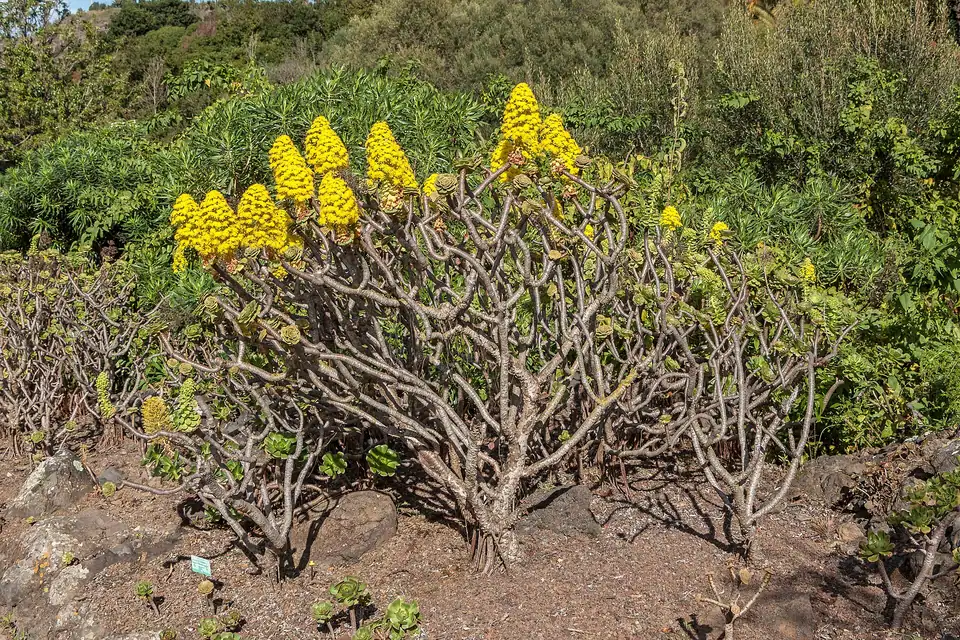
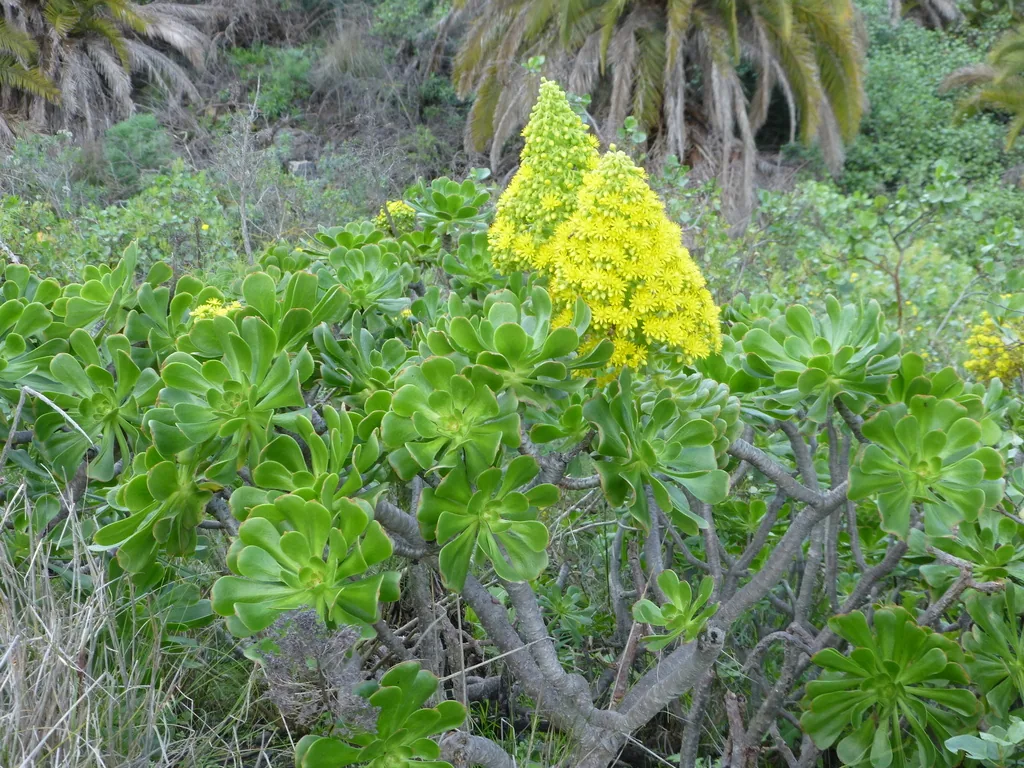
El Aeonium arboreum es un arbusto suculento originario de las Islas Canarias que presenta rosetas terminales de hojas carnosas, brillantes y verdes; cada roseta muere después de florecer. [7][6] Necesita un suelo muy bien drenado, riego profundo pero poco frecuente y protección contra las heladas severas. [6][5] El verano es su temporada natural de dormancia, y se propaga fácilmente mediante esquejes en primavera. [6]
Citado en inglés, como en la fuente.
Cuidados
Riego
Riego
Las fuentes dan valores distintos según la región, la zona o las condiciones de cultivo.
Lo que dice cada fuente
Según LLIFLE: Riega profundamente pero con poca frecuencia; en invierno, aproximadamente una vez al mes
Según World of Succulents: Riega abundantemente en primavera y otoño, dejando secar el suelo; con más moderación en invierno
Según Gardeners World: Con moderación
Qué dicen las fuentes (5)
Según LLIFLE: Water deeply but infrequently. Plants are allowed to thoroughly dry in-between waterings. During the winter months restrict water to about once a month, or just enough to keep the foliage from shrivelling.Según World of Succulents: Water the plant thoroughly in spring and fall, allowing the soil to dry before watering again. Water it more sparingly during the winter.Según Gardeners World: For best results grow Aeonium arboreum in well-drained soil or containers in a sunny, sheltered position. Water plants sparingly.Water deeply but infrequently. Plants are allowed to thoroughly dry in-between waterings. During the winter months restrict water to about once a month, or just enough to keep the foliage from shrivelling.Water the plant thoroughly in spring and fall, allowing the soil to dry before watering again. Water it more sparingly during the winter.Notas sobre el riego
Deja de regar durante la dormancia estival, salvo en condiciones áridas; el exceso de humedad puede provocar la pudrición de las raíces.
Qué dicen las fuentes (2)
Stop watering except in arid conditions when it is in summer dormancy.While this plant requires more water than most succulents, too much moisture can lead to root rot.Luz
Pleno sol a semisombra; sombra ligera en las tardes de verano.
Lo que dice cada fuente
Según Gardeners World: Pleno sol
Según World of Succulents: Pleno sol a semisombra; sombra ligera en las tardes de verano.
Qué dicen las fuentes (4)
Según Gardeners World: For best results grow Aeonium arboreum in well-drained soil or containers in a sunny, sheltered position.Según World of Succulents: Light: Aeonium arboreum thrives in full sun to partial shade, but in summer, light shade may be necessary, especially during the hotter afternoon hours.Light: Aeonium arboreum thrives in full sun to partial shade, but in summer, light shade may be necessary, especially during the hotter afternoon hours.Position it in full to part sun in a sheltered spot, but the bright light enhances the rich hues of the darker AeoniumsClima y frío
Rusticidad, zona más fría
9b [mínima invernal de −3,9 a −1,1 °C (de 25 a 30 °F)]
Lo que dice cada fuente
Según World of Succulents: 9b-11b [mínima invernal de −3,9 a 10 °C (de 25 a 50 °F)]
Según LLIFLE: 9b-12 [mínima invernal de −3,9 a 15,6 °C (de 25 a 60 °F)]
Qué dicen las fuentes (3)
Según World of Succulents: It grows best in USDA Plant Hardiness Zones 9b to 11b, with average minimum winter temperatures ranging from 25°F to 50°FSegún LLIFLE: Plants in containers however, suffered major leaf loss. USDA Zone 9b to 12. Over winter under glass in all but the mildest of gardens.It grows best in USDA Plant Hardiness Zones 9b to 11b, with average minimum winter temperatures ranging from 25°F to 50°FRusticidad, zona más cálida
11b [mínima invernal de 7,2 a 10 °C (de 45 a 50 °F)]
Lo que dice cada fuente
Según World of Succulents: 9b-11b [mínima invernal de −3,9 a 10 °C (de 25 a 50 °F)]
Según LLIFLE: 9b-12 [mínima invernal de −3,9 a 15,6 °C (de 25 a 60 °F)]
Qué dicen las fuentes (3)
Según World of Succulents: It grows best in USDA Plant Hardiness Zones 9b to 11b, with average minimum winter temperatures ranging from 25°F to 50°FSegún LLIFLE: Plants in containers however, suffered major leaf loss. USDA Zone 9b to 12. Over winter under glass in all but the mildest of gardens.It grows best in USDA Plant Hardiness Zones 9b to 11b, with average minimum winter temperatures ranging from 25°F to 50°FDónde cultivarla
En interior
Sí
Qué dicen las fuentes (2)
Aeonium Cactus or succulent, Conservatory, House plant, Perennial Family: CrassulaceaeWhen growing indoors, ensure it receives as much bright indirect light as possible to prevent it from becoming leggy and stretched.Propagación
Esquejes de tallo (primavera, de abril a julio), semilla, división.
Qué dicen las fuentes (4)
is easily propagated by cuttings in the spring. When the stem becomes too tall, just cut the top rosette with a piece of stem and plant it.Time to take cuttings: April to July. Once established this pant provides a source of cuttingsThis plant is easy to propagate by taking cuttings in spring. Before placing it in the soil, allow the cut end to dry for several days. It is also easy to start from seeds.| Divide | | | | | yes | yes | yes | yes | yes | | | Cultivo
La planta
Familia
Crassulaceae
Qué dicen las fuentes (1)
Aeonium is a group of about 35 species of small to medium-sized subtropical succulents in the family CrassulaceaePlagas y enfermedades
Plagas
Las fuentes dan valores distintos según la región, la zona o las condiciones de cultivo.
Lo que dice cada fuente
género Aeonium: pulgones, cochinillas, arañas rojas, escamas, hormigas
Qué dicen las fuentes (1)
género Aeonium: Typically, these plants have no serious insect or disease problems. Monitor for aphids, mealybugs, spider mites, scale and ants.Enfermedades
Las fuentes dan valores distintos según la región, la zona o las condiciones de cultivo.
Lo que dice cada fuente
género Aeonium: pudrición de raíz (por exceso de riego)
Qué dicen las fuentes (1)
género Aeonium: Monitor for aphids, mealybugs, spider mites, scale and ants. Overwatering can cause root rot.Propagación
Esquejes
Toma esquejes de primavera a verano: corta una roseta, déjala endurecer durante tres días o más, y luego enraízala en arena gruesa o en una mezcla sin tierra bien drenada.
Calor y sequía
Sequía
Tolerante a la sequía y a la sal (género Aeonium).
Qué dicen las fuentes (1)
For container plants it is best to use a cactus mix to insure adequate drainage. The plants in this genus are drought and salt-tolerant and deer-resistant.Problemas
Podredumbre de la raíz
Qué hacer: Evita el exceso de humedad; usa un contenedor con agujeros de drenaje.
Qué dicen las fuentes (2)
While this plant requires more water than most succulents, too much moisture can lead to root rot.
— Aeonium arboreum (Tree Aeonium) - World of Succulents [7] Choose a container with drainage holes to prevent root rot.
— Aeonium arboreum (Tree Aeonium) - World of Succulents [7]
Remedios
Cada remedio indica qué dicen las fuentes oficiales; los remedios tradicionales sin fuente oficial aparecen marcados. Los perjudiciales están para que sepas evitarlos.
Cuidar la planta
cochinillas harinosas
spray de aceite de neem y jabón de castilla Funciona en parte
Cómo: Mezcla 2 cucharaditas de aceite de neem y 1 cucharadita de jabón líquido de Castilla con 1 cuarto de galón (1 l) de agua tibia en una botella rociadora; rocía generosamente las hojas cada siete días. También se usa contra pulgones y arañas rojas.
To make a neem oil solution, mix 2 teaspoons neem oil and 1 teaspoon liquid Castile soap with 1 quart (1 l) lukewarm water.
— leafyplace.com [9] Qué dicen las pruebas Less toxic alternatives such as insecticidal soap or horticultural oils can be effective, but must be applied to the hard-to-reach places the mealybugs inhabit to kill the insects.
— hort.extension.wisc.edu [10]
pulgones
fuerte chorro de agua Funciona en parte
Use care that the water stream does not damage flowers or young leaves.
— hortsense.cahnrs.wsu.edu [11] Cómo: Limpia los pulgones de la planta con un chorro fuerte de agua.
Aphids are more common on tree aeoniums that grow outdoors. The best way to remove aphids is by hosing them off the plant with a strong jet of water.
— leafyplace.com [9] Qué dicen las pruebas Apply a fairly strong stream of water to the plant. Use care that the water stream does not damage flowers or young leaves.
— hortsense.cahnrs.wsu.edu [11]
pudrición de la raíz
Trasplanta a tierra fresca. No verificado
Remedio tradicional, no verificado por una fuente oficial.
Unfortunately, extensive root damage may mean that the plant is beyond saving.
— leafyplace.com [9] Cómo: Si las raíces están dañadas por el suelo empapado e infecciones fúngicas, trasplanta la planta a tierra fresca; riega solo cuando la tierra se seque parcialmente.
Venenosa para los animales
Según la fuente, citada textualmente. No es un consejo médico ni veterinario: si una persona o un animal pudo haber ingerido esta planta, contacta con un centro de toxicología o con un veterinario.
Aeonium arboreum is considered non-toxic, so it is safe for growing around children and pets.
[7]La fuente señala el riesgo para este animal pero no explica por qué.
No reported toxicity to: Is not known to attract Birds Birds Is not known to attract Cats Cats
[5]La fuente señala el riesgo para este animal pero no explica por qué.
Aeonium ‘Arboreum’ has no toxic effects reported. No reported toxicity to: Is not known to attract Birds Birds
[5]La fuente señala el riesgo para este animal pero no explica por qué.
Calendario
Primavera
Qué dicen las fuentes (1)
It is also easy to start from seeds. For best results, sow the seeds in spring.Mayo-junio
Qué dicen las fuentes (1)
Mar | Apr | May | Jun | Jul | Aug | Sep | Oct | Nov | Dec
| Plant | | | | | yes | yes | | | | | | Finales del verano
Qué dicen las fuentes (1)
trimming back is often necessary. Cut back in late summer. Because the rosettes grow at the ends of the stems, it becomes lanky unless made to branch.Meses tal como los dan las fuentes, en su mayoría de Estados Unidos (hemisferio norte). En el hemisferio sur se desplazan unos seis meses.
Plantas similares
- Haworth's aeonium Aeonium haworthii
- Allegheny Stonecrop Hylotelephium telephioides
- Conchita Echeveria secunda
- Carpet Sedum Sedum lineare
- Chandelier Plant Kalanchoe delagoensis
- Copper Rose Echeveria multicaulis
- Evergreen Orpine Hylotelephium anacampseros
- Graptopétalo Graptopetalum paraguayense
Fuentes
Cada valor anterior se cita de estos documentos. Los enlaces llevan al editor original.
- Aeonium – Wisconsin Horticulture · hort.extension.wisc.edu, consultado
- Aeonium (Aeonium, Tree Houseleek) | North Carolina Extension Gardener Plant Toolbox · plants.ces.ncsu.edu, consultado
- Aeonium arboreum · plantselector.botanicgardens.sa.gov.au, consultado
- VicFlora: Aeonium arboreum · vicflora.rbg.vic.gov.au, consultado
- Aeonium arboreum | BBC Gardeners World Magazine · gardenersworld.com, consultado
- Aeonium arboreum · llifle.com, consultado
- Aeonium arboreum (Tree Aeonium) - World of Succulents · worldofsucculents.com, consultado
- Aeonium · nathistoc.bio.uci.edu, consultado
- leafyplace.com · leafyplace.com
- hort.extension.wisc.edu · hort.extension.wisc.edu
- hortsense.cahnrs.wsu.edu · hortsense.cahnrs.wsu.edu
Escrito por Emilio Marruso · última revisión