
How to Grow and Care for Tree roofleek, Tree aeonium
Aeonium arboreum
Written by Emilio Marruso · last checked
Toxic to: Cats, Birds · Why
At a glance
Tree aeonium is an easygoing succulent that grows happily in pots, indoors or out. Give it full sun to partial shade, with light shade on summer afternoons, and let it rest: it tolerates drought, so you stop watering during its summer dormancy. Best of all, it is non-toxic and safe around children and pets, and one cut rosette can root into a new plant.
- Sun
Full sun to partial shade; light shade on summer afternoons
What the sources say (4)
Light: Full sun to partial shade; light shade in summer afternoons
According to Gardeners World: For best results grow Aeonium arboreum in well-drained soil or containers in a sunny, sheltered position.
— Aeonium arboreum | BBC Gardeners World Magazine [5] According to World of Succulents: Light: Aeonium arboreum thrives in full sun to partial shade, but in summer, light shade may be necessary, especially during the hotter afternoon hours.
— Aeonium arboreum (Tree Aeonium) - World of Succulents [7] Light: Aeonium arboreum thrives in full sun to partial shade, but in summer, light shade may be necessary, especially during the hotter afternoon hours.
— Aeonium arboreum (Tree Aeonium) - World of Succulents [7] Position it in full to part sun in a sheltered spot, but the bright light enhances the rich hues of the darker Aeoniums
— Aeonium arboreum [6] - Water
Tolerates drought; stop watering in its summer rest, as too much moisture rots the roots
What the sources say (3)
Watering notes: Stop watering during summer dormancy except in arid conditions; too much moisture can lead to root rot
Stop watering except in arid conditions when it is in summer dormancy.
— Aeonium arboreum (Tree Aeonium) - World of Succulents [7] While this plant requires more water than most succulents, too much moisture can lead to root rot.
— Aeonium arboreum (Tree Aeonium) - World of Succulents [7] Drought: Drought and salt tolerant (genus Aeonium).
For container plants it is best to use a cactus mix to insure adequate drainage. The plants in this genus are drought and salt-tolerant and deer-resistant.
— Aeonium (Aeonium, Tree Houseleek) | North Carolina Extension Gardener Plant Toolbox [2] - Cold
Survives winters down to 25 °F (−3.9 °C)
Half hardy: mild winters or an unheated greenhouse · USDA 9b · RHS H3 · Z9
What the sources say (6)
Hardiness, coldest zone: 9b [winter low −3.9 to −1.1 °C (25 to 30 °F)]
According to World of Succulents: It grows best in USDA Plant Hardiness Zones 9b to 11b, with average minimum winter temperatures ranging from 25°F to 50°F
— Aeonium arboreum (Tree Aeonium) - World of Succulents [7] According to LLIFLE: Plants in containers however, suffered major leaf loss. USDA Zone 9b to 12. Over winter under glass in all but the mildest of gardens.
— Aeonium arboreum [6] It grows best in USDA Plant Hardiness Zones 9b to 11b, with average minimum winter temperatures ranging from 25°F to 50°F
— Aeonium arboreum (Tree Aeonium) - World of Succulents [7] Hardiness, warmest zone: 11b [winter low 7.2 to 10 °C (45 to 50 °F)]
According to World of Succulents: It grows best in USDA Plant Hardiness Zones 9b to 11b, with average minimum winter temperatures ranging from 25°F to 50°F
— Aeonium arboreum (Tree Aeonium) - World of Succulents [7] According to LLIFLE: Plants in containers however, suffered major leaf loss. USDA Zone 9b to 12. Over winter under glass in all but the mildest of gardens.
— Aeonium arboreum [6] It grows best in USDA Plant Hardiness Zones 9b to 11b, with average minimum winter temperatures ranging from 25°F to 50°F
— Aeonium arboreum (Tree Aeonium) - World of Succulents [7] - Planting
Plant in May–June
What the sources say (1)
Planting: May-June
Mar | Apr | May | Jun | Jul | Aug | Sep | Oct | Nov | Dec | Plant | | | | | yes | yes | | | | | |
— Aeonium arboreum | BBC Gardeners World Magazine [5] - Pruning
Prune in late summer
What the sources say (1)
Pruning: Late summer
trimming back is often necessary. Cut back in late summer. Because the rosettes grow at the ends of the stems, it becomes lanky unless made to branch.
— Aeonium arboreum [6] - Pests
Root rot is the main problem: avoid excess moisture
- Size
2–3 ft tall
- Propagation
Cut off a rosette in spring or summer, let it dry 3 days or more, then root it in sharp sand
What the sources say (6)
Propagation: Stem cuttings (spring, April to July), seed, division
is easily propagated by cuttings in the spring. When the stem becomes too tall, just cut the top rosette with a piece of stem and plant it.
— Aeonium arboreum [6] Time to take cuttings: April to July. Once established this pant provides a source of cuttings
— Aeonium arboreum [6] This plant is easy to propagate by taking cuttings in spring. Before placing it in the soil, allow the cut end to dry for several days. It is also easy to start from seeds.
— Aeonium arboreum (Tree Aeonium) - World of Succulents [7] | Divide | | | | | yes | yes | yes | yes | yes | | |
— Aeonium arboreum | BBC Gardeners World Magazine [5] Cuttings: Take cuttings in spring through summer: cut off a rosette, let it harden off for three days or more, then root it in sharp sand or a well-drained soilless mix.
Take cuttings in spring through summer. Cut off a rosette and let it harden off for three days or more.
— Aeonium – Wisconsin Horticulture [1] Place the hardened cutting directly into sharp sand or a well-drained soilless mix to root.
— Aeonium – Wisconsin Horticulture [1] - Sowing
Sow in spring
What the sources say (1)
Sowing: Spring
It is also easy to start from seeds. For best results, sow the seeds in spring.
— Aeonium arboreum (Tree Aeonium) - World of Succulents [7] - Containers
Grows in pots and indoors; use a pot with drainage holes
What the sources say (4)
In containers: Yes
For best results grow Aeonium arboreum in well-drained soil or containers in a sunny, sheltered position.
— Aeonium arboreum | BBC Gardeners World Magazine [5] They can also be used effectively planted in containers. | Your Actions
— Aeonium arboreum [6] Indoors: Yes
Aeonium Cactus or succulent, Conservatory, House plant, Perennial Family: Crassulaceae
— Aeonium arboreum | BBC Gardeners World Magazine [5] When growing indoors, ensure it receives as much bright indirect light as possible to prevent it from becoming leggy and stretched.
— Aeonium arboreum (Tree Aeonium) - World of Succulents [7] - Safety
Non-toxic: safe around children and pets
Overview
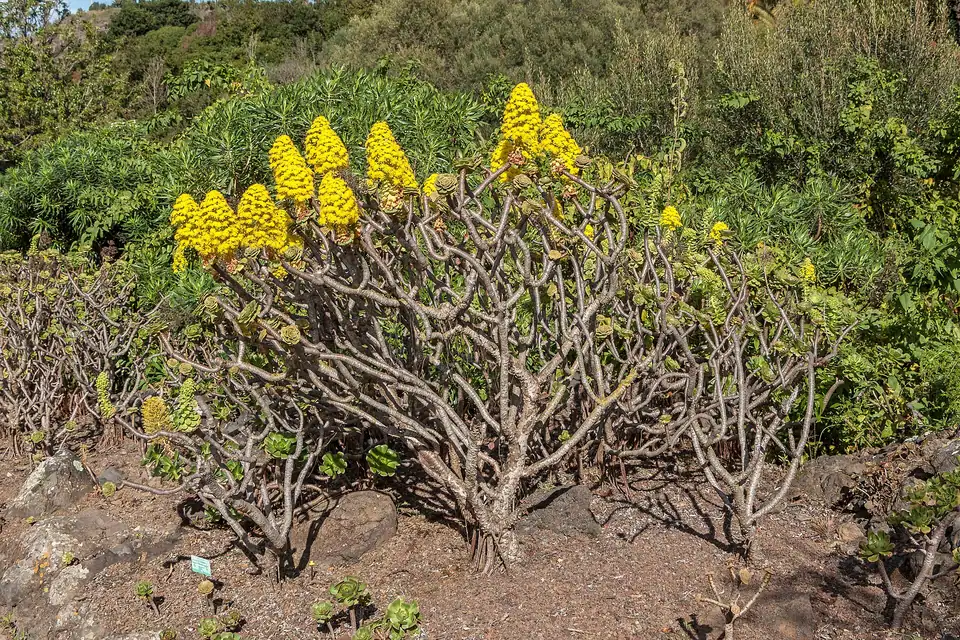
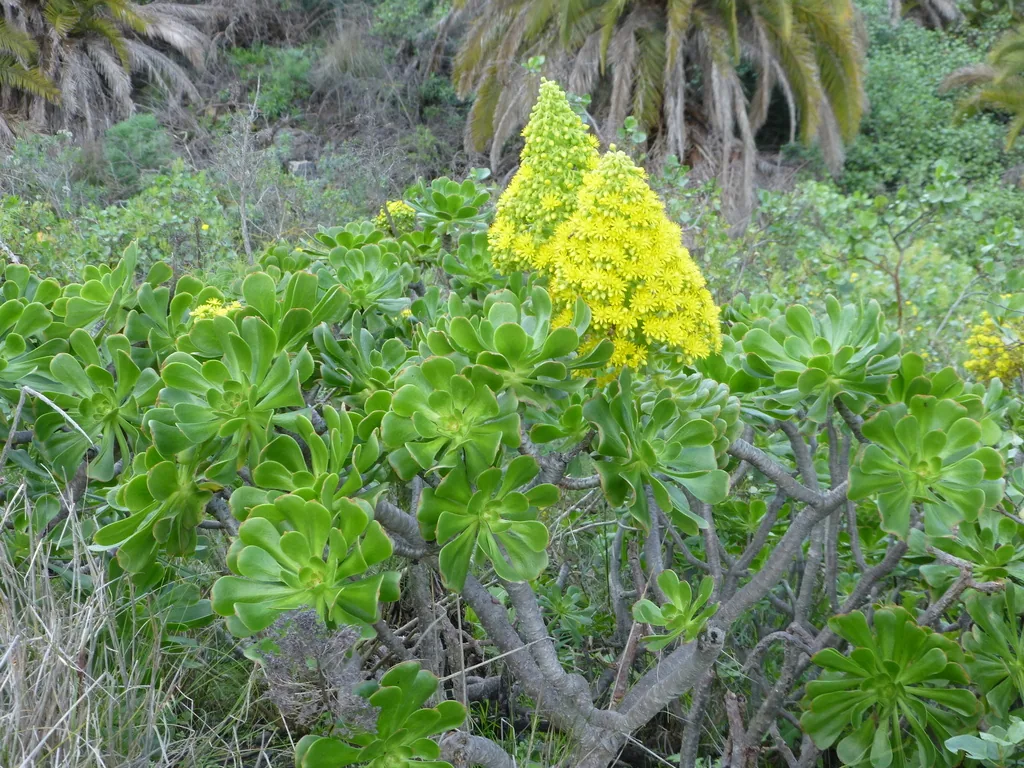
Aeonium arboreum is a succulent shrub from the Canary Islands that bears terminal rosettes of fleshy, glossy green leaves; each rosette dies after flowering. [7][6] It needs very free-draining soil, deep but infrequent watering and protection from severe frost. [6][5] Summer is its natural dormant season, and it is easily propagated from cuttings in spring. [6]
Tree roofleek, Tree aeonium care
How to water Tree roofleek, Tree aeonium
Watering
The sources give different values depending on region, zone or growing conditions.
What each source says
According to LLIFLE: Water deeply but infrequently; in winter about once a month
According to World of Succulents: Thoroughly in spring and fall, letting soil dry; more sparingly in winter
According to Gardeners World: Sparingly
What the sources say (5)
According to LLIFLE: Water deeply but infrequently. Plants are allowed to thoroughly dry in-between waterings. During the winter months restrict water to about once a month, or just enough to keep the foliage from shrivelling.According to World of Succulents: Water the plant thoroughly in spring and fall, allowing the soil to dry before watering again. Water it more sparingly during the winter.According to Gardeners World: For best results grow Aeonium arboreum in well-drained soil or containers in a sunny, sheltered position. Water plants sparingly.Water deeply but infrequently. Plants are allowed to thoroughly dry in-between waterings. During the winter months restrict water to about once a month, or just enough to keep the foliage from shrivelling.Water the plant thoroughly in spring and fall, allowing the soil to dry before watering again. Water it more sparingly during the winter.Watering notes
Stop watering during summer dormancy except in arid conditions; too much moisture can lead to root rot
What the sources say (2)
Stop watering except in arid conditions when it is in summer dormancy.While this plant requires more water than most succulents, too much moisture can lead to root rot.How much light Tree roofleek, Tree aeonium needs
Full sun to partial shade; light shade in summer afternoons
What each source says
According to Gardeners World: Full sun
According to World of Succulents: Full sun to partial shade; light shade on summer afternoons
What the sources say (4)
According to Gardeners World: For best results grow Aeonium arboreum in well-drained soil or containers in a sunny, sheltered position.According to World of Succulents: Light: Aeonium arboreum thrives in full sun to partial shade, but in summer, light shade may be necessary, especially during the hotter afternoon hours.Light: Aeonium arboreum thrives in full sun to partial shade, but in summer, light shade may be necessary, especially during the hotter afternoon hours.Position it in full to part sun in a sheltered spot, but the bright light enhances the rich hues of the darker AeoniumsHow much cold Tree roofleek, Tree aeonium can take
Hardiness, coldest zone
9b [winter low −3.9 to −1.1 °C (25 to 30 °F)]
What each source says
According to World of Succulents: 9b-11b [winter low −3.9 to 10 °C (25 to 50 °F)]
According to LLIFLE: 9b-12 [winter low −3.9 to 15.6 °C (25 to 60 °F)]
What the sources say (3)
According to World of Succulents: It grows best in USDA Plant Hardiness Zones 9b to 11b, with average minimum winter temperatures ranging from 25°F to 50°FAccording to LLIFLE: Plants in containers however, suffered major leaf loss. USDA Zone 9b to 12. Over winter under glass in all but the mildest of gardens.It grows best in USDA Plant Hardiness Zones 9b to 11b, with average minimum winter temperatures ranging from 25°F to 50°FHardiness, warmest zone
11b [winter low 7.2 to 10 °C (45 to 50 °F)]
What each source says
According to World of Succulents: 9b-11b [winter low −3.9 to 10 °C (25 to 50 °F)]
According to LLIFLE: 9b-12 [winter low −3.9 to 15.6 °C (25 to 60 °F)]
What the sources say (3)
According to World of Succulents: It grows best in USDA Plant Hardiness Zones 9b to 11b, with average minimum winter temperatures ranging from 25°F to 50°FAccording to LLIFLE: Plants in containers however, suffered major leaf loss. USDA Zone 9b to 12. Over winter under glass in all but the mildest of gardens.It grows best in USDA Plant Hardiness Zones 9b to 11b, with average minimum winter temperatures ranging from 25°F to 50°FWhere to grow Tree roofleek, Tree aeonium
Indoors
Yes
What the sources say (2)
Aeonium Cactus or succulent, Conservatory, House plant, Perennial Family: CrassulaceaeWhen growing indoors, ensure it receives as much bright indirect light as possible to prevent it from becoming leggy and stretched.How to propagate Tree roofleek, Tree aeonium
Stem cuttings (spring, April to July), seed, division
What the sources say (4)
is easily propagated by cuttings in the spring. When the stem becomes too tall, just cut the top rosette with a piece of stem and plant it.Time to take cuttings: April to July. Once established this pant provides a source of cuttingsThis plant is easy to propagate by taking cuttings in spring. Before placing it in the soil, allow the cut end to dry for several days. It is also easy to start from seeds.| Divide | | | | | yes | yes | yes | yes | yes | | | How to grow Tree roofleek, Tree aeonium
The plant
Family
Crassulaceae
What the sources say (1)
Aeonium is a group of about 35 species of small to medium-sized subtropical succulents in the family CrassulaceaePests and diseases
Pests
The sources give different values depending on region, zone or growing conditions.
What each source says
genus Aeonium: aphids, mealybugs, spider mites, scale, ants
What the sources say (1)
genus Aeonium: Typically, these plants have no serious insect or disease problems. Monitor for aphids, mealybugs, spider mites, scale and ants.Diseases
The sources give different values depending on region, zone or growing conditions.
What each source says
genus Aeonium: root rot (from overwatering)
What the sources say (1)
genus Aeonium: Monitor for aphids, mealybugs, spider mites, scale and ants. Overwatering can cause root rot.Propagation
Cuttings
Take cuttings in spring through summer: cut off a rosette, let it harden off for three days or more, then root it in sharp sand or a well-drained soilless mix.
Heat and drought
Drought
Drought and salt tolerant (genus Aeonium).
What the sources say (1)
For container plants it is best to use a cactus mix to insure adequate drainage. The plants in this genus are drought and salt-tolerant and deer-resistant.Tree roofleek, Tree aeonium pests and problems
Root rot
What to do: Avoid excess moisture; use a container with drainage holes.
Remedies
Each remedy shows what official sources say about it; traditional remedies without an official source are marked as such. Harmful ones are listed so you know to avoid them.
Treating the plant
mealybugs
neem oil and castile soap spray Partly works
How: Mix 2 teaspoons neem oil and 1 teaspoon liquid Castile soap with 1 quart (1 l) lukewarm water in a spray bottle; spray liberally on the leaves every seven days. Also used against aphids and spider mites.
To make a neem oil solution, mix 2 teaspoons neem oil and 1 teaspoon liquid Castile soap with 1 quart (1 l) lukewarm water.
— leafyplace.com [9] What the evidence says Less toxic alternatives such as insecticidal soap or horticultural oils can be effective, but must be applied to the hard-to-reach places the mealybugs inhabit to kill the insects.
— hort.extension.wisc.edu [10]
aphids
strong jet of water Partly works
Use care that the water stream does not damage flowers or young leaves.
— hortsense.cahnrs.wsu.edu [11] How: Hose the aphids off the plant with a strong jet of water.
Aphids are more common on tree aeoniums that grow outdoors. The best way to remove aphids is by hosing them off the plant with a strong jet of water.
— leafyplace.com [9] What the evidence says Apply a fairly strong stream of water to the plant. Use care that the water stream does not damage flowers or young leaves.
— hortsense.cahnrs.wsu.edu [11]
root rot
repotting in fresh soil Not verified
Traditional remedy, not verified by an official source.
Unfortunately, extensive root damage may mean that the plant is beyond saving.
— leafyplace.com [9] How: If the roots are damaged by soggy soil and fungal infections, repot the plant in fresh soil; water only when the soil partially dries.
Is Tree roofleek, Tree aeonium toxic to pets?
Reported by the source, quoted verbatim. This is not medical or veterinary advice: if a person or an animal may have eaten this plant, contact a poison control centre or a veterinarian.
Aeonium arboreum is considered non-toxic, so it is safe for growing around children and pets.
[7]The source flags the risk for this animal but does not explain why.
No reported toxicity to: Is not known to attract Birds Birds Is not known to attract Cats Cats
[5]The source flags the risk for this animal but does not explain why.
Aeonium ‘Arboreum’ has no toxic effects reported. No reported toxicity to: Is not known to attract Birds Birds
[5]The source flags the risk for this animal but does not explain why.
Calendar
Spring
What the sources say (1)
It is also easy to start from seeds. For best results, sow the seeds in spring.May-June
What the sources say (1)
Mar | Apr | May | Jun | Jul | Aug | Sep | Oct | Nov | Dec
| Plant | | | | | yes | yes | | | | | | Late summer
What the sources say (1)
trimming back is often necessary. Cut back in late summer. Because the rosettes grow at the ends of the stems, it becomes lanky unless made to branch.Months as given by the sources, which are mostly from the United States (northern hemisphere). In the southern hemisphere they shift by about six months.
Similar plants
- Haworth's aeonium Aeonium haworthii
- Allegheny Stonecrop Hylotelephium telephioides
- Blue Echeveria Echeveria secunda
- Carpet Sedum Sedum lineare
- Chandelier Plant Kalanchoe delagoensis
- Copper Rose Echeveria multicaulis
- Evergreen Orpine Hylotelephium anacampseros
- Ghost Plant Graptopetalum paraguayense
Sources
Every value above is quoted from these documents. Links lead to the original publisher.
- Aeonium – Wisconsin Horticulture · hort.extension.wisc.edu, consulted
- Aeonium (Aeonium, Tree Houseleek) | North Carolina Extension Gardener Plant Toolbox · plants.ces.ncsu.edu, consulted
- Aeonium arboreum · plantselector.botanicgardens.sa.gov.au, consulted
- VicFlora: Aeonium arboreum · vicflora.rbg.vic.gov.au, consulted
- Aeonium arboreum | BBC Gardeners World Magazine · gardenersworld.com, consulted
- Aeonium arboreum · llifle.com, consulted
- Aeonium arboreum (Tree Aeonium) - World of Succulents · worldofsucculents.com, consulted
- Aeonium · nathistoc.bio.uci.edu, consulted
- leafyplace.com · leafyplace.com
- hort.extension.wisc.edu · hort.extension.wisc.edu
- hortsense.cahnrs.wsu.edu · hortsense.cahnrs.wsu.edu
Written by Emilio Marruso · last checked