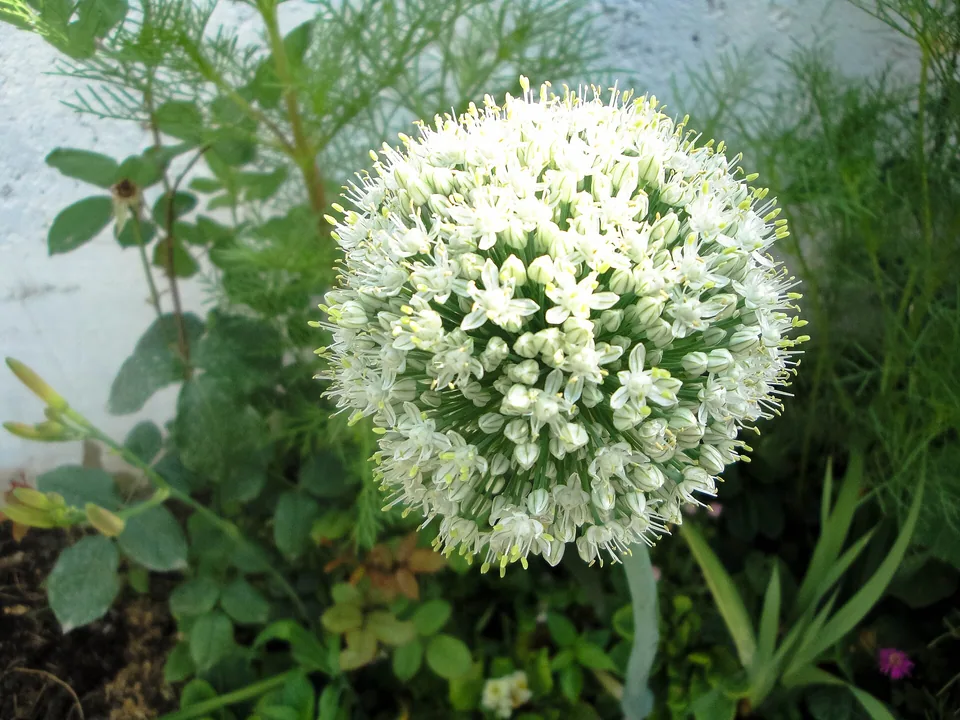
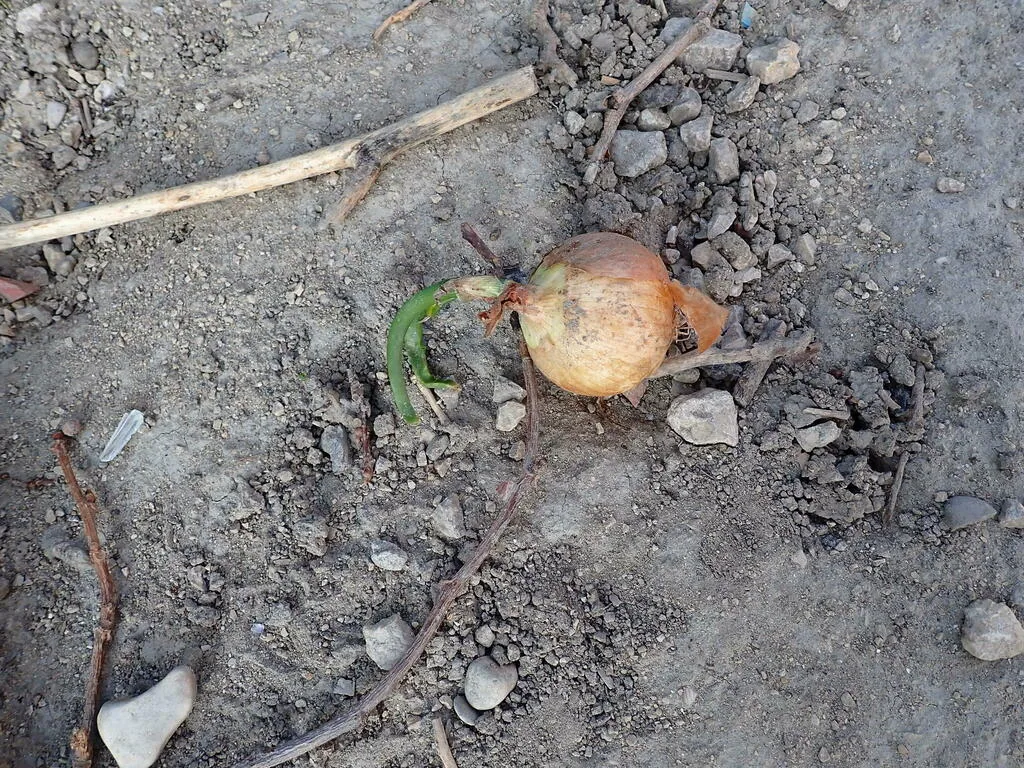

Cómo cultivar y cuidar Cebolla
Allium cepa
Escrito por Emilio Marruso · última revisión
Tóxica para: Gatos, Perros, Caballos, Personas · Por qué
De un vistazo
La cebolla pone en marcha tu huerto muy pronto: plántala a principios de primavera, en cuanto se pueda trabajar la tierra, a partir de semillas, bulbillos o plantones. Dale sol pleno y una tierra húmeda pero bien drenada, y en 80–120 días arrancarás tus propios bulbos. ¿No puedes esperar tanto? Las cebolletas están listas cuando sus hojas alcanzan 15 cm.
- Sol
Sol pleno: al menos 6 horas al día, mejor 8–10
Qué dicen las fuentes (5)
Luz: Pleno sol
Según University of Maryland Extension (bulb onions): Full sun requires at least 6 hours direct light/day; prefers 8 - 10 hours/day.
— Growing Onions in a Home Garden | University of Maryland Extension [5] cebollas verdes (Extensión de la Universidad de Maryland): Green onions will grow with 5 hours of sun per day.
— Growing Onions in a Home Garden | University of Maryland Extension [5] Según Ohio State University Extension: Onion grows best in an area that has full sun, loose, well-drained, fertile, sandy-loam to silt-loam soils soil with plenty of organic matter.
— Growing Onions in the Garden | CFAES Knowledge Hub [6] Onion grows best in an area that has full sun, loose, well-drained, fertile, sandy-loam to silt-loam soils soil with plenty of organic matter.
— Growing Onions in the Garden | CFAES Knowledge Hub [6] Full sun requires at least 6 hours direct light/day; prefers 8 - 10 hours/day. Green onions will grow with 5 hours of sun per day.
— Growing Onions in a Home Garden | University of Maryland Extension [5] - Riego
Tierra húmeda pero bien drenada, sobre todo cuando engordan los bulbos; el encharcamiento los pudre
Qué dicen las fuentes (5)
Riego: Asegura suficiente humedad, especialmente después de que los bulbos comiencen a agrandarse; mantén el suelo húmedo pero bien drenado.
Watering - Ensure ample moisture, especially after bulbs begin enlarging. Onion bulb size is directly proportional to the amount of water applied to the onions during the growing season.
— Growing Onions in a Home Garden | University of Maryland Extension [5] Onions are cool season crops and should be planted in moist but well-drained fertile loose soils in full sun as soon as the ground can be worked in spring.
— Allium cepa (Green onion, Onion, Onions, Scallion, Shallot, Spring onion) | North Carolina Extension Gardener Plant Toolbox [1] Notas sobre el riego: El mantillo orgánico mantiene la humedad del suelo; los períodos de lluvia intensa o riego continuo pueden aumentar la posibilidad de deficiencias de nutrientes; la pudrición del bulbo puede ocurrir en suelos demasiado húmedos
Maintain a weed-free bed and apply an organic mulch to maintain soil moisture.
— Growing Onions in a Home Garden | University of Maryland Extension [5] Periods of high rainfall or continual irrigation may increase the potential for nutrient deficiencies.
— Growing Onions in the Garden | CFAES Knowledge Hub [6] Insects, Diseases, and Other Plant Problems: Bulb mites can occur. Bulb rot in too-wet soils can occur.
— Allium cepa (Green onion, Onion, Onions, Scallion, Shallot, Spring onion) | North Carolina Extension Gardener Plant Toolbox [1] - Frío
Aguanta inviernos de hasta −28,9 °C (−20 °F)
Muy rústica · USDA 5a · RHS H7 · Z5
Qué dicen las fuentes (2)
Rusticidad, zona más fría: 5a [mínima invernal de −28,9 a −26,1 °C (de −20 a −15 °F)]
USDA Plant Hardiness Zone: 5a, 5b, 6a, 6b, 7a, 7b, 8a, 8b, 9a, 9b, 10a, 10b
— Allium cepa (Green onion, Onion, Onions, Scallion, Shallot, Spring onion) | North Carolina Extension Gardener Plant Toolbox [1] Rusticidad, zona más cálida: 10b [mínima invernal de 1,7 a 4,4 °C (de 35 a 40 °F)]
USDA Plant Hardiness Zone: 5a, 5b, 6a, 6b, 7a, 7b, 8a, 8b, 9a, 9b, 10a, 10b
— Allium cepa (Green onion, Onion, Onions, Scallion, Shallot, Spring onion) | North Carolina Extension Gardener Plant Toolbox [1] - Suelo
Suelo ligeramente ácido, pH 6,0–6,8
Qué dicen las fuentes (2)
pH del suelo, mínimo: 6.0
Onions are easily affected by high acid soils and prefer soil pH between 6.0 and 6.8.
— Growing Onions in the Garden | CFAES Knowledge Hub [6] pH del suelo, máximo: 6.8
Onions are easily affected by high acid soils and prefer soil pH between 6.0 and 6.8.
— Growing Onions in the Garden | CFAES Knowledge Hub [6] - Distancia
10 cm entre plantas para bulbos medianos, 20 cm para grandes; hileras a 30–60 cm
Qué dicen las fuentes (14)
Distancia de plantación: 2.5-20.3 cm (1-8 pulgadas) en la hilera, hileras separadas 30.5-61.0 cm (12-24 pulgadas); aclara a 5.1 cm (2 pulgadas) para cebollas verdes, 10.2 cm (4 pulgadas) para bulbos de tamaño moderado, 20.3 cm (8 pulgadas) para bulbos grandes
cebollas de bulbo, siembra estándar (Extensión de la Universidad de Maryland): Spacing: Standard 1" - 8" in-rows x 12" - 24" between rows;
— Growing Onions in a Home Garden | University of Maryland Extension [5] conjuntos de cebolla para cebollas secas (Extensión de la Universidad de Illinois): To produce dry onions, plant the smaller sets one inch deep, with 2 to 4 inches between sets. Allow 12 to 18 inches between rows.
— Onion (Allium cepa)-Hort Answers - University of Illinois Extension [2] conjuntos de cebolla para cebollas verdes (Extensión de la Universidad de Illinois): To produce green onions, plant the larger sets 1/4 inches deep and close enough to touch one another
— Onion (Allium cepa)-Hort Answers - University of Illinois Extension [2] conjuntos de cebolla (Extensión de la Universidad Estatal de Ohio): Then, once the plants begin to grow, thin them to 3 to 4 inches apart.
— Growing Onions in the Garden | CFAES Knowledge Hub [6] conjuntos de cebolla (Extensión de la Universidad de Arkansas): The basal plate (where the roots emerge) should be planted about an inch and one half deep with three inches between sets.
— Allium cepa Onion [3] Según NC State Extension: Plant bulbs about 1/2 to 1 inch deep and 6 inches apart.
— Allium cepa (Green onion, Onion, Onions, Scallion, Shallot, Spring onion) | North Carolina Extension Gardener Plant Toolbox [1] cebollas perennes: chalotas y cebollas multiplicadoras (Extensión de la Universidad de Maryland): Both types are generally thinned to a 4-6 in. spacing for maximum growth, but spacing requirements may vary by cultivar.
— Growing Onions in a Home Garden | University of Maryland Extension [5] cebollas caminantes egipcias (Extensión de la Universidad de Maryland): Egyptian walking onions are planted 9 in. apart and can be left in the ground throughout the summer as long as you manage weeds around the plants.
— Growing Onions in a Home Garden | University of Maryland Extension [5] Spacing: Standard 1" - 8" in-rows x 12" - 24" between rows; wide row and block planting 4" x 4" equidistant spacing.
— Growing Onions in a Home Garden | University of Maryland Extension [5] onions should be thinned to a spacing of 2 inches apart in the row if you intend to harvest green onions, and 4 inches apart if you intend to harvest moderate-size bulbs, and 8 inches apart for large bulbs.
— Growing Onions in a Home Garden | University of Maryland Extension [5] Entre plantas: Aclara a 5.1 cm [2 in] en la hilera para cebollas verdes, 10.2 cm [4 in] para bulbos de tamaño moderado y 20.3 cm [8 in] para bulbos grandes.
hileras anchas y bloques: Spacing: Standard 1" - 8" in-rows x 12" - 24" between rows; wide row and block planting 4" x 4" equidistant spacing.
— Growing Onions in a Home Garden | University of Maryland Extension [5] tandas (Ohio, EE. UU.): Onion sets should be planted 1 to 2 inches deep and 2 to 3 inches apart. Then, once the plants begin to grow, thin them to 3 to 4 inches apart.
— Growing Onions in the Garden | CFAES Knowledge Hub [6] onions should be thinned to a spacing of 2 inches apart in the row if you intend to harvest green onions, and 4 inches apart if you intend to harvest moderate-size bulbs, and 8 inches apart for large bulbs
— Growing Onions in a Home Garden | University of Maryland Extension [5] Distancia entre hileras: 30-61 cm (12-24 in)
Spacing: Standard 1" - 8" in-rows x 12" - 24" between rows;
— Growing Onions in a Home Garden | University of Maryland Extension [5] - Plantación
A principios de primavera, en cuanto se pueda trabajar la tierra
Qué dicen las fuentes (6)
Plantación: A principios de primavera, tan pronto como el suelo pueda trabajarse (generalmente a finales de marzo o principios de abril); los conjuntos de tipos perennes o multiplicadores también en otoño
regiones productoras de cebolla principales (Extensión de la Universidad de Illinois): Onions can be planted as soon as the garden can be tilled in the spring, usually late March or early April in prime regions for producing onions.
— Onion (Allium cepa)-Hort Answers - University of Illinois Extension [2] conjuntos de cebolla (Extensión de la Universidad de Arkansas): Because onions are a cool weather crop, sets are best planted in early spring from early March through mid-April.
— Allium cepa Onion [3] cebollas perennes o multiplicadoras, Maryland (Extensión de la Universidad de Maryland): Cloves planted in late March-April may be less likely to bolt but those planted in late September through mid-October may produce larger bulbs in spring
— Growing Onions in a Home Garden | University of Maryland Extension [5] Según NC State Extension: Onions are cool season crops and should be planted in moist but well-drained fertile loose soils in full sun as soon as the ground can be worked in spring.
— Allium cepa (Green onion, Onion, Onions, Scallion, Shallot, Spring onion) | North Carolina Extension Gardener Plant Toolbox [1] Onions can be planted as soon as the garden can be tilled in the spring, usually late March or early April in prime regions for producing onions.
— Onion (Allium cepa)-Hort Answers - University of Illinois Extension [2] Sets: Plant onion sets in the spring for early onions, and in the fall for perennial or multiplier types of onions.
— Growing Onions in a Home Garden | University of Maryland Extension [5] - Abonado
Abono completo con bastante nitrógeno; nada de estiércol fresco al plantar, para evitar la mosca de la cebolla
Qué dicen las fuentes (4)
Abonos minerales: Fertilizante completo; fertilizante de inicio para trasplantes; mantén el nivel de nutrientes del suelo alto, especialmente el nitrógeno
Onions require more nutrients than other vegetable plants. Three fertilizer applications of a complete fertilizer is recommended throughout the growing season.
— Growing Onions in the Garden | CFAES Knowledge Hub [6] Apply fertilizer before planting, use starter fertilizer for transplants, and side-dress 1 to 2 weeks after bulb enlargement begins.
— Growing Onions in a Home Garden | University of Maryland Extension [5] Keep plants moist, but not wet, and assure that the nutrient status of the soil is on the high end, especially with regard to nitrogen.
— Allium cepa Onion [3] Evitar: Materia orgánica sin descomponer, como estiércol fresco, al plantar (para reducir los gusanos de la cebolla)
To reduce onion maggots, avoid planting onion plants in undecomposed organic matter such as manure.
— Growing Onions in the Garden | CFAES Knowledge Hub [6] - Cosecha
Arranca los bulbos cuando dos tercios de las hojas se hayan doblado; las cebolletas, a los 15 cm
Qué dicen las fuentes (7)
Cómo cosechar: Cosecha las cebollas de bulbo cuando aproximadamente dos tercios de las puntas se hayan secado y caído; saca o excava los bulbos suavemente, evitando magulladuras, y luego cúralos hasta que las escamas exteriores estén finas como papel. Las cebollas verdes se pueden sacar una vez que las puntas tengan 6 pulgadas (15 cm) de alto.
Onions are ready to harvest when at least 2/3 of the tops have died down. Dig onions with a garden fork to prevent damage and allow to dry or "cure" for 2-3 weeks before using.
— Allium cepa (Green onion, Onion, Onions, Scallion, Shallot, Spring onion) | North Carolina Extension Gardener Plant Toolbox [1] Bulb onions should be harvested when about two-thirds of the dried tops have fallen over. Careful handling to avoid bruising helps prevent storage rots.
— Growing Onions in a Home Garden | University of Maryland Extension [5] Curing is the process of drying the cut top or neck of the bulb. This process can take two to four weeks, or until the outer scales of the bulb are papery thin.
— Growing Onions in the Garden | CFAES Knowledge Hub [6] Pull green onions anytime after the tops are 6 inches tall.
— Onion (Allium cepa)-Hort Answers - University of Illinois Extension [2] Días hasta la madurez: 80-120 días para que maduren los bulbos (90-120 contados desde la siembra)
Days to maturity: 85 - 120 (mature bulbs).
— Growing Onions in a Home Garden | University of Maryland Extension [5] Onions are usually ready to pull and air dry for storage in 80 to 90 days.
— Allium cepa Onion [3] Onions may be harvested when the majority of the tops have wilted, which is approximately 90 to 120 days after planting.
— Growing Onions in the Garden | CFAES Knowledge Hub [6] - Plagas
Trips, mosca de la cebolla y gusanos grises; la podredumbre del cuello aparece en el almacén
Qué dicen las fuentes (9)
Plagas: trips de la cebolla, gusano de la cebolla, gusanos cortadores, gusanos de alambre, ácaros del bulbo, minador de las hojas de allium
Thrips and maggots are the two insect pests that can destroy an onion crop.
— Growing Onions in the Garden | CFAES Knowledge Hub [6] Insects - Onion maggot - Thrips - Cutworms - Wireworm
— Onion (Allium cepa)-Hort Answers - University of Illinois Extension [2] Insects, Diseases, and Other Plant Problems: Bulb mites can occur.
— Allium cepa (Green onion, Onion, Onions, Scallion, Shallot, Spring onion) | North Carolina Extension Gardener Plant Toolbox [1] Onion problems Allium leafminer Flower stalk forms-bolting White rot
— Growing Onions in a Home Garden | University of Maryland Extension [5] Enfermedades: tizón de la hoja por Botrytis, pudrición del cuello por Botrytis, pudrición rosada, mancha púrpura, tizón, carbón, pudrición blanca, piel resbaladiza, pudrición blanda, piel agria, aster amarillo, mildiu velloso, pudrición basal por Fusarium, enfermedades por nematodos (nudo de raíz, lesión de raíz, nematodo del tallo y del bulbo)
Botrytis leaf blight ( Botrytis squamosa ) - Botrytis neck rots ( Botrytis allii ) - Pink rot ( Phoma terrestris ) - Purple blotch ( Alternaria porri ) - Smudge ( Colletotrichum circinans )
— Onion (Allium cepa)-Hort Answers - University of Illinois Extension [2] Smut ( Urocystis colchici ) - White rot ( Sclerotium cepivorum ) - Slippery skin ( Psuedomonas gladioli pv. alliicola ) - Soft rot ( Erwinia carotovora subsp. carotovora ) - Sour skin ( Psuedomonas cepacia ) - Aster yellows ( Phytoplasma )
— Onion (Allium cepa)-Hort Answers - University of Illinois Extension [2] Nematode diseases: Root knot nematode ( Meloifogyne spp.), Root lesion nematode ( Pratylenchus penetrans ), Stem and bulb nematode ( Ditylenchus dipsaci )
— Onion (Allium cepa)-Hort Answers - University of Illinois Extension [2] Downy mildew is a fungus ( Peronospora destructor ) that develops when the weather is cool and wet.
— Growing Onions in the Garden | CFAES Knowledge Hub [6] Fusarium basal rot is caused by the fungi Fusarium spp. that appears on the onion in the field and storage.
— Growing Onions in the Garden | CFAES Knowledge Hub [6] - Atención
Si la plantas demasiado pronto, con frío, se espiga y saca tallo floral
- Tamaño
30–46 cm de alto y 15–30 cm de ancho
Qué dicen las fuentes (2)
Altura adulta: 30-46 cm (1 pie - 1 pie 6 pulgadas)
Height: 1 ft. 0 in. - 1 ft. 6 in.
— Allium cepa (Green onion, Onion, Onions, Scallion, Shallot, Spring onion) | North Carolina Extension Gardener Plant Toolbox [1] Anchura adulta: 15-30 cm (6 pulgadas - 1 pie)
Width: 0 ft. 6 in. - 1 ft. 0 in.
— Allium cepa (Green onion, Onion, Onions, Scallion, Shallot, Spring onion) | North Carolina Extension Gardener Plant Toolbox [1] - Multiplicación
Por semillas, bulbillos o plantones; las perennes, dividiendo los bulbos
Qué dicen las fuentes (2)
Propagación: Semillas, conjuntos, trasplantes; tipos perennes dividiendo y replantando bulbos
Onions can be grown from seeds, sets, or transplants.
— Growing Onions in the Garden | CFAES Knowledge Hub [6] You can divide and store some to re-plant in the fall.
— Growing Onions in a Home Garden | University of Maryland Extension [5] - Siembra
Siembra a 1 cm de profundidad; las semillas germinan mejor con la tierra a 24 °C
Qué dicen las fuentes (4)
Profundidad de siembra: 0.6-1.3 cm (1/4-1/2 pulg) cuando se siembra a partir de semilla
Direct seed - sow seed ¼ inch to a ½ inch deep and cover lightly with fine soil.
— Growing Onions in a Home Garden | University of Maryland Extension [5] Sow the seeds ½ inch deep.
— Growing Onions in the Garden | CFAES Knowledge Hub [6] Germinación: Las semillas germinan por encima de 4,4 °C [40 °F]; la temperatura óptima del suelo es 23,9 °C [75 °F]; en suelos fríos la germinación y la emergencia tardan 15-25 días.
Onion seeds germinate at temperatures above 40 °F; the optimum soil temperature is 75 °F.
— [7] If seeds are planted too early, cooler air and soil temperatures will delay germination and emergence (15-25 day requirement)
— [7] - Seguridad
Tóxica para perros, gatos y caballos: puede causar vómitos y anemia
Resumen
La cebolla es un bulbo de estación fría que se planta a pleno sol tan pronto como el suelo se pueda trabajar en primavera. [1] Se puede cultivar a partir de semillas, bulbillos o trasplantes, y los bulbos se cosechan cuando la mayoría de los tallos se han caído. [6][5] Se necesita humedad abundante, especialmente después de que los bulbos comiencen a agrandarse. [5]
Citado en inglés, como en la fuente.
Cuidados
Las medidas entre corchetes son nuestra conversión al otro sistema de unidades; el texto citado no cambia.
Riego
Riego
Asegura suficiente humedad, especialmente después de que los bulbos comiencen a agrandarse; mantén el suelo húmedo pero bien drenado.
Qué dicen las fuentes (2)
Watering - Ensure ample moisture, especially after bulbs begin enlarging. Onion bulb size is directly proportional to the amount of water applied to the onions during the growing season.Onions are cool season crops and should be planted in moist but well-drained fertile loose soils in full sun as soon as the ground can be worked in spring.Notas sobre el riego
El mantillo orgánico mantiene la humedad del suelo; los períodos de lluvia intensa o riego continuo pueden aumentar la posibilidad de deficiencias de nutrientes; la pudrición del bulbo puede ocurrir en suelos demasiado húmedos
Qué dicen las fuentes (3)
Maintain a weed-free bed and apply an organic mulch to maintain soil moisture.Periods of high rainfall or continual irrigation may increase the potential for nutrient deficiencies.Insects, Diseases, and Other Plant Problems: Bulb mites can occur. Bulb rot in too-wet soils can occur.Luz
Pleno sol
Lo que dice cada fuente
Según University of Maryland Extension (bulb onions): Al menos 6 horas de luz directa al día; prefiere 8-10 horas
cebollas verdes (Extensión de la Universidad de Maryland): 5 horas de sol al día
Según Ohio State University Extension: Pleno sol
Qué dicen las fuentes (5)
Según University of Maryland Extension (bulb onions): Full sun requires at least 6 hours direct light/day; prefers 8 - 10 hours/day.cebollas verdes (Extensión de la Universidad de Maryland): Green onions will grow with 5 hours of sun per day.Según Ohio State University Extension: Onion grows best in an area that has full sun, loose, well-drained, fertile, sandy-loam to silt-loam soils soil with plenty of organic matter.Onion grows best in an area that has full sun, loose, well-drained, fertile, sandy-loam to silt-loam soils soil with plenty of organic matter.Full sun requires at least 6 hours direct light/day; prefers 8 - 10 hours/day. Green onions will grow with 5 hours of sun per day.Clima y frío
Rusticidad, zona más fría
5a [mínima invernal de −28,9 a −26,1 °C (de −20 a −15 °F)]
Qué dicen las fuentes (1)
USDA Plant Hardiness Zone:
5a, 5b, 6a, 6b, 7a, 7b, 8a, 8b, 9a, 9b, 10a, 10bRusticidad, zona más cálida
10b [mínima invernal de 1,7 a 4,4 °C (de 35 a 40 °F)]
Qué dicen las fuentes (1)
USDA Plant Hardiness Zone:
5a, 5b, 6a, 6b, 7a, 7b, 8a, 8b, 9a, 9b, 10a, 10bSuelo
pH del suelo, mínimo
6.0
Qué dicen las fuentes (1)
Onions are easily affected by high acid soils and prefer soil pH between 6.0 and 6.8.pH del suelo, máximo
6.8
Qué dicen las fuentes (1)
Onions are easily affected by high acid soils and prefer soil pH between 6.0 and 6.8.Dónde cultivarla
2.5-20.3 cm (1-8 pulgadas) en la hilera, hileras separadas 30.5-61.0 cm (12-24 pulgadas); aclara a 5.1 cm (2 pulgadas) para cebollas verdes, 10.2 cm (4 pulgadas) para bulbos de tamaño moderado, 20.3 cm (8 pulgadas) para bulbos grandes
Lo que dice cada fuente
cebollas de bulbo, siembra estándar (Extensión de la Universidad de Maryland): 2.5-20.3 cm (1-8 pulgadas) en la fila, filas separadas 30.5-61.0 cm (12-24 pulgadas)
conjuntos de cebolla para cebollas secas (Extensión de la Universidad de Illinois): 5.1-10.2 cm (2-4 pulgadas) entre los conjuntos; filas separadas 30.5-45.7 cm (12-18 pulgadas)
conjuntos de cebolla para cebollas verdes (Extensión de la Universidad de Illinois): Lo suficientemente cerca como para tocarse
conjuntos de cebolla (Extensión de la Universidad Estatal de Ohio): 5.1-7.6 cm (2-3 pulgadas) de separación, aclarado a 7.6-10.2 cm (3-4 pulgadas)
conjuntos de cebolla (Extensión de la Universidad de Arkansas): 7.6 cm (3 pulgadas) entre los conjuntos
Según NC State Extension: 15.2 cm (6 pulgadas) de separación
cebollas perennes: chalotas y cebollas multiplicadoras (Extensión de la Universidad de Maryland): 10.2-15.2 cm (4-6 pulgadas)
cebollas caminantes egipcias (Extensión de la Universidad de Maryland): 22,9 cm (9 pulgadas) de separación
Qué dicen las fuentes (10)
cebollas de bulbo, siembra estándar (Extensión de la Universidad de Maryland): Spacing: Standard 1" - 8" in-rows x 12" - 24" between rows;conjuntos de cebolla para cebollas secas (Extensión de la Universidad de Illinois): To produce dry onions, plant the smaller sets one inch deep, with 2 to 4 inches between sets. Allow 12 to 18 inches between rows.conjuntos de cebolla para cebollas verdes (Extensión de la Universidad de Illinois): To produce green onions, plant the larger sets 1/4 inches deep and close enough to touch one anotherconjuntos de cebolla (Extensión de la Universidad Estatal de Ohio): Then, once the plants begin to grow, thin them to 3 to 4 inches apart.conjuntos de cebolla (Extensión de la Universidad de Arkansas): The basal plate (where the roots emerge) should be planted about an inch and one half deep with three inches between sets.Según NC State Extension: Plant bulbs about 1/2 to 1 inch deep and 6 inches apart.cebollas perennes: chalotas y cebollas multiplicadoras (Extensión de la Universidad de Maryland): Both types are generally thinned to a 4-6 in. spacing for maximum growth, but spacing requirements may vary by cultivar.cebollas caminantes egipcias (Extensión de la Universidad de Maryland): Egyptian walking onions are planted 9 in. apart and can be left in the ground throughout the summer as long as you manage weeds around the plants.Spacing: Standard 1" - 8" in-rows x 12" - 24" between rows; wide row and block planting 4" x 4" equidistant spacing.onions should be thinned to a spacing of 2 inches apart in the row if you intend to harvest green onions, and 4 inches apart if you intend to harvest moderate-size bulbs, and 8 inches apart for large bulbs.Propagación
Semillas, conjuntos, trasplantes; tipos perennes dividiendo y replantando bulbos
Cultivo
La planta
Ciclo de vida
bienal (cultivada como anual)
Qué dicen las fuentes (2)
Bulb and green onions are biennials (two years required to complete life cycle) treated as annuals.Onions are biennial in nature, with bulb production during the first season and flowering during the spring of the second.Familia
Amaryllidaceae
Qué dicen las fuentes (2)
The onion is a cultivated bulb from the amaryllis family (Amaryllidaceae).Over 700 species of alliums, now assigned to the amaryllis family, are known around the world.Altura adulta
30-46 cm (1 pie - 1 pie 6 pulgadas)
Qué dicen las fuentes (1)
Height: 1 ft. 0 in. - 1 ft. 6 in.Anchura adulta
15-30 cm (6 pulgadas - 1 pie)
Qué dicen las fuentes (1)
Width: 0 ft. 6 in. - 1 ft. 0 in.Siembra y crecimiento
Profundidad de siembra
0.6-1.3 cm (1/4-1/2 pulg) cuando se siembra a partir de semilla
Distancia entre hileras
30-61 cm (12-24 in)
Qué dicen las fuentes (1)
Spacing: Standard 1" - 8" in-rows x 12" - 24" between rows;Días hasta la madurez
80-120 días para que maduren los bulbos (90-120 contados desde la siembra)
Qué dicen las fuentes (3)
Days to maturity: 85 - 120 (mature bulbs).Onions are usually ready to pull and air dry for storage in 80 to 90 days.Onions may be harvested when the majority of the tops have wilted, which is approximately 90 to 120 days after planting.Cosecha y conservación
Cómo cosechar
Cosecha las cebollas de bulbo cuando aproximadamente dos tercios de las puntas se hayan secado y caído; saca o excava los bulbos suavemente, evitando magulladuras, y luego cúralos hasta que las escamas exteriores estén finas como papel. Las cebollas verdes se pueden sacar una vez que las puntas tengan 6 pulgadas (15 cm) de alto.
Qué dicen las fuentes (4)
Onions are ready to harvest when at least 2/3 of the tops have died down. Dig onions with a garden fork to prevent damage and allow to dry or "cure" for 2-3 weeks before using.Bulb onions should be harvested when about two-thirds of the dried tops have fallen over. Careful handling to avoid bruising helps prevent storage rots.Curing is the process of drying the cut top or neck of the bulb. This process can take two to four weeks, or until the outer scales of the bulb are papery thin.Pull green onions anytime after the tops are 6 inches tall.Conservación
Después del curado, almacena en un lugar fresco y seco a 0-4 °C (32-40 °F) en contenedores ventilados como una bolsa de malla, cesta de alambre o caja abierta; mantenidas a 0 °C (32 °F) y 65-70% de humedad relativa duran hasta 6-7 meses. Las temperaturas cálidas causan brotes y la congelación daña los bulbos.
Qué dicen las fuentes (3)
Store onion in a moderately cool (32 to 40 degrees F) and dry area in ventilated containers such as a mesh bag, wire basket, or open crate.Onions can be kept under very cool (32 degrees F), dry (65%-70% RH) conditions for up to 6 to 7 months.Warm temperatures induce sprouting and sub-freezing temperatures will injure bulbs.Plagas y enfermedades
Plagas
trips de la cebolla, gusano de la cebolla, gusanos cortadores, gusanos de alambre, ácaros del bulbo, minador de las hojas de allium
Qué dicen las fuentes (4)
Thrips and maggots are the two insect pests that can destroy an onion crop.Insects - Onion maggot - Thrips - Cutworms - WirewormInsects, Diseases, and Other Plant Problems: Bulb mites can occur.Onion problems Allium leafminer Flower stalk forms-bolting White rotEnfermedades
tizón de la hoja por Botrytis, pudrición del cuello por Botrytis, pudrición rosada, mancha púrpura, tizón, carbón, pudrición blanca, piel resbaladiza, pudrición blanda, piel agria, aster amarillo, mildiu velloso, pudrición basal por Fusarium, enfermedades por nematodos (nudo de raíz, lesión de raíz, nematodo del tallo y del bulbo)
Qué dicen las fuentes (5)
Botrytis leaf blight ( Botrytis squamosa ) - Botrytis neck rots ( Botrytis allii ) - Pink rot ( Phoma terrestris ) - Purple blotch ( Alternaria porri ) - Smudge ( Colletotrichum circinans )Smut ( Urocystis colchici ) - White rot ( Sclerotium cepivorum ) - Slippery skin ( Psuedomonas gladioli pv. alliicola ) - Soft rot ( Erwinia carotovora subsp. carotovora ) - Sour skin ( Psuedomonas cepacia ) - Aster yellows ( Phytoplasma )Nematode diseases: Root knot nematode ( Meloifogyne spp.), Root lesion nematode ( Pratylenchus penetrans ), Stem and bulb nematode ( Ditylenchus dipsaci )Downy mildew is a fungus ( Peronospora destructor ) that develops when the weather is cool and wet.Fusarium basal rot is caused by the fungi Fusarium spp. that appears on the onion in the field and storage.Abonado
Cuándo
Las fuentes no coinciden:
Apply fertilizer before planting, use starter fertilizer for transplants, and side-dress 1 to 2 weeks after bulb enlargement begins.
[5]The first application applied 40 to 60 days after planting, the second application in the middle of the growing season, and the last application applied four weeks before harvest.
[6]
Frecuencia
Las fuentes no coinciden:
Abonos minerales
Fertilizante completo; fertilizante de inicio para trasplantes; mantén el nivel de nutrientes del suelo alto, especialmente el nitrógeno
Qué dicen las fuentes (3)
Onions require more nutrients than other vegetable plants. Three fertilizer applications of a complete fertilizer is recommended throughout the growing season.Apply fertilizer before planting, use starter fertilizer for transplants, and side-dress 1 to 2 weeks after bulb enlargement begins.Keep plants moist, but not wet, and assure that the nutrient status of the soil is on the high end, especially with regard to nitrogen.Evitar
Materia orgánica sin descomponer, como estiércol fresco, al plantar (para reducir los gusanos de la cebolla)
Qué dicen las fuentes (1)
To reduce onion maggots, avoid planting onion plants in undecomposed organic matter such as manure.Distancias
Entre plantas
Aclara a 5.1 cm [2 in] en la hilera para cebollas verdes, 10.2 cm [4 in] para bulbos de tamaño moderado y 20.3 cm [8 in] para bulbos grandes.
Lo que dice cada fuente
hileras anchas y bloques: 10.2 x 10.2 cm [4 in] equidistante
tandas (Ohio, EE. UU.): los plantones se colocan a 5.1-7.6 cm [2–3 in] de distancia y se aclaran a 7.6-10.2 cm [3–4 in] una vez que están creciendo
Qué dicen las fuentes (3)
hileras anchas y bloques: Spacing: Standard 1" - 8" in-rows x 12" - 24" between rows; wide row and block planting 4" x 4" equidistant spacing.tandas (Ohio, EE. UU.): Onion sets should be planted 1 to 2 inches deep and 2 to 3 inches apart. Then, once the plants begin to grow, thin them to 3 to 4 inches apart.onions should be thinned to a spacing of 2 inches apart in the row if you intend to harvest green onions, and 4 inches apart if you intend to harvest moderate-size bulbs, and 8 inches apart for large bulbsEntre hileras
30,5-61 cm [12–24 in] entre hileras.
Qué dicen las fuentes (1)
Spacing: Standard 1" - 8" in-rows x 12" - 24" between rows; wide row and block planting 4" x 4" equidistant spacing.Propagación
Germinación
Las semillas germinan por encima de 4,4 °C [40 °F]; la temperatura óptima del suelo es 23,9 °C [75 °F]; en suelos fríos la germinación y la emergencia tardan 15-25 días.
Tras la cosecha
Conservación
Cura 1-3 semanas en un lugar bien ventilado y fuera del sol directo antes de almacenar; almacena a 0 °C [32 °F] y 65-70% de humedad relativa hasta 6-7 meses, o a 0-4,4 °C [32–40 °F], seco, en contenedores ventilados como bolsas de malla o cajas abiertas. Las temperaturas cálidas provocan brotes; el congelamiento daña los bulbos.
Qué dicen las fuentes (5)
Dig onions with a garden fork to prevent damage and allow to dry or "cure" for 2-3 weeks before using.then cured, with tops intact, in a well-ventilated attic or porch out of the direct sun for 1 to 2 weeksOnions can be kept under very cool (32 degrees F), dry (65%-70% RH) conditions for up to 6 to 7 months.Store onion in a moderately cool (32 to 40 degrees F) and dry area in ventilated containers such as a mesh bag, wire basket, or open crate.Warm temperatures induce sprouting and sub-freezing temperatures will injure bulbs.Calor y sequía
Calor
Las temperaturas altas y la baja humedad favorecen la formación de bulbos y el curado; en siembras tardías, el calor del verano induce la formación de bulbos antes de que haya suficiente crecimiento de hojas.
Problemas
Podredumbre del cuello por Botrytis
Síntoma: Las escamas de la cebolla se vuelven marrones, se marchitan y se ablandan; se nota por primera vez durante el almacenamiento.
Qué hacer: Permite suficiente tiempo para que los tejidos del cuello se sequen completamente en el campo; evita dañar la cebolla al cortar las puntas.
Qué dicen las fuentes (1)
Botrytis neck rot is a fungus caused by Botrytis spp. that appears brown, and causes the onion scales to shrivel and become soft.
— Growing Onions in the Garden | CFAES Knowledge Hub [6] Trips
Síntoma: Las hojas adquieren un color plateado con manchas y a menudo se doblan.
Qué hacer: Evita plantar cerca de granos pequeños o planta variedades de cebolla resistentes o tolerantes.
Qué dicen las fuentes (2)
After the damage has occurred, the leaves take on silvery color with specks on the leaves and often fold over.
— Growing Onions in the Garden | CFAES Knowledge Hub [6] To help decrease the chances of thrips moving to your onions, avoid planting near small grains or plant resistant/tolerant onion varieties.
— Growing Onions in the Garden | CFAES Knowledge Hub [6] Gusano de la cebolla
Síntoma: Las larvas se alimentan de las raíces y del bulbo, lo que provoca pudrición del bulbo durante el almacenamiento.
Qué hacer: Evita materia orgánica sin descomponer, como estiércol, y rota los cultivos.
Qué dicen las fuentes (1)
To reduce onion maggots, avoid planting onion plants in undecomposed organic matter such as manure.
— Growing Onions in the Garden | CFAES Knowledge Hub [6] Espigado
Síntoma: Desarrollo del tallo floral.
Qué hacer: Evita plantar demasiado temprano con exposición a temperaturas frías.
Qué dicen las fuentes (1)
Planting too early, with exposure to cold temperatures, can cause seed stalk development.
— Growing Onions in a Home Garden | University of Maryland Extension [5]
Remedios
Cada remedio indica qué dicen las fuentes oficiales; los remedios tradicionales sin fuente oficial aparecen marcados. Los perjudiciales están para que sepas evitarlos.
Cuidar la planta
trips
spray de aceite de neem Funciona en parte
Always spot-test a small section of your onion patch first, waiting 24 hours to check for any adverse reactions.
— cultivatedearth.com [8] Cómo: Diluye el aceite de neem según la etiqueta (generalmente unas dos cucharaditas por cuarto de agua) y rocía directamente sobre el follaje de la cebolla por la mañana temprano o al final de la tarde para minimizar la quemadura de las hojas; vuelve a aplicar cada 7-10 días o después de lluvias intensas.
Neem oil, available at garden centers, should be diluted according to the label—usually about two teaspoons per quart of water—and sprayed directly on onion foliage in the early morning or late afternoon to minimize leaf burn.
— cultivatedearth.com [8] Qué dicen las pruebas However, neem oil is not effective against every insect and disease, and often must be frequently reapplied to reach the desired outcome.
— extension.unh.edu [9] spray de jabón insecticida Funciona
Always spot-test a small section of your onion patch first, waiting 24 hours to check for any adverse reactions.
— cultivatedearth.com [8] When “oils and soaps” are mentioned in UC IPM publications, we are referring to commercially available oils and soaps that are formulated specifically for use as pesticides- not household oils and soaps meant for cooking, cleaning, or other purposes.
— ucanr.edu [11] Cómo: Mezcla una cucharada de jabón líquido puro sin perfume (no detergente) en un cuarto de galón de agua y rocía sobre las hojas de la cebolla, especialmente en el envés; vuelve a aplicar cada 7-10 días o después de lluvias intensas.
Insecticidal soap is another safe choice; you can make your own by mixing one tablespoon of pure, unscented liquid soap (not detergent) into one quart of water.
— cultivatedearth.com [8] Qué dicen las pruebas For example, insecticidal soap is a safe, effective organic insecticide with minimal environmental impact.
— extension.psu.edu [10] rociado de ajo No verificado
Remedio tradicional, no verificado por una fuente oficial.
Always spot-test a small section of your onion patch first, waiting 24 hours to check for any adverse reactions.
— cultivatedearth.com [8] You can find lots of homemade recipes online, but be very cautious using these substances because their efficacy, toxicity, and environmental effects have not been university tested.
— extension.unh.edu [9] Penn State Extension does not recommend using home remedies for many reasons.
— extension.psu.edu [12] Cómo: Mezcla dos bulbos de ajo con un cuarto de galón de agua, cuela los sólidos y luego diluye con otro cuarto de galón de agua antes de aplicar sobre las cebollas.
gusano de la cebolla
cobertura flotante de hileras Funciona en parte
Cómo: Las coberturas flotantes de hileras pueden brindar protección al impedir que las hembras pongan huevos alrededor de las plantas.
floating row covers may provide protection by preventing females from laying eggs around the plants
— plantvillage.psu.edu [13] Qué dicen las pruebas Barriers (such as floating row covers) may help protect onions from the adult fly.
— extension.umaine.edu [14]
mildiú velloso
spray de aceite de neem Funciona en parte
You can find lots of homemade recipes online, but be very cautious using these substances because their efficacy, toxicity, and environmental effects have not been university tested.
— extension.unh.edu [9] Cómo: Aplica rocíos de aceite de neem al primer signo de infección y repite después de lluvias intensas.
Organic Fungicides: Apply copper or neem oil sprays at the first sign of infection and repeat after heavy rains.
— thegroundedhomestead.com [15] Qué dicen las pruebas However, neem oil is not effective against every insect and disease, and often must be frequently reapplied to reach the desired outcome.
— extension.unh.edu [9]
Podredumbre blanca.
solarización del suelo No verificado
Remedio tradicional, no verificado por una fuente oficial.
Cómo: Cubre el suelo húmedo con plástico transparente durante 4–6 semanas en la parte más caliente del verano para matar los esclerocios.
Venenosa para los animales
Según la fuente, citada textualmente. No es un consejo médico ni veterinario: si una persona o un animal pudo haber ingerido esta planta, contacta con un centro de toxicología o con un veterinario.
Animales
#problem for dogs #problem for horses #problem for cats
[1]La fuente señala el riesgo para este animal pero no explica por qué.
Personas
Calendario
Siembra
Las fuentes dan valores distintos según la región, la zona o las condiciones de cultivo.
Lo que dice cada fuente
en interiores (Extensión de la Universidad Estatal de Ohio): 4 a 6 semanas antes de plantar al aire libre
en interiores (Extensión de la Universidad de Maryland): Aproximadamente 8 semanas antes de la siembra
directamente al aire libre, Ohio (Extensión de la Universidad Estatal de Ohio): Una vez que el suelo sea trabajable, aproximadamente desde finales de marzo hasta abril
Qué dicen las fuentes (5)
en interiores (Extensión de la Universidad Estatal de Ohio): Sow seeds indoors 4 to 6 weeks before planting outside.en interiores (Extensión de la Universidad de Maryland): Either buy bunches of onion transplants or start your own by sowing seeds indoors about 8 weeks prior to planting.directamente al aire libre, Ohio (Extensión de la Universidad Estatal de Ohio): Seeds can also be directly sown in the ground once the soil is workable, approximately late March to April.Sow seeds indoors 4 to 6 weeks before planting outside.Seeds can also be directly sown in the ground once the soil is workable, approximately late March to April.Plantación
A principios de primavera, tan pronto como el suelo pueda trabajarse (generalmente a finales de marzo o principios de abril); los conjuntos de tipos perennes o multiplicadores también en otoño
Lo que dice cada fuente
regiones productoras de cebolla principales (Extensión de la Universidad de Illinois): Tan pronto como el jardín pueda labrarse, generalmente a finales de marzo o principios de abril
conjuntos de cebolla (Extensión de la Universidad de Arkansas): Desde principios de marzo hasta mediados de abril
cebollas perennes o multiplicadoras, Maryland (Extensión de la Universidad de Maryland): Otoño (desde fines de septiembre hasta mediados de octubre) o desde fines de marzo hasta abril
Según NC State Extension: En cuanto se pueda trabajar el suelo en primavera
Qué dicen las fuentes (6)
regiones productoras de cebolla principales (Extensión de la Universidad de Illinois): Onions can be planted as soon as the garden can be tilled in the spring, usually late March or early April in prime regions for producing onions.conjuntos de cebolla (Extensión de la Universidad de Arkansas): Because onions are a cool weather crop, sets are best planted in early spring from early March through mid-April.cebollas perennes o multiplicadoras, Maryland (Extensión de la Universidad de Maryland): Cloves planted in late March-April may be less likely to bolt but those planted in late September through mid-October may produce larger bulbs in springSegún NC State Extension: Onions are cool season crops and should be planted in moist but well-drained fertile loose soils in full sun as soon as the ground can be worked in spring.Onions can be planted as soon as the garden can be tilled in the spring, usually late March or early April in prime regions for producing onions.Sets: Plant onion sets in the spring for early onions, and in the fall for perennial or multiplier types of onions.Cosecha
Las fuentes dan valores distintos según la región, la zona o las condiciones de cultivo.
Lo que dice cada fuente
cebollas de bulbo (Extensión de la Universidad de Maryland): 85-120 días hasta la madurez; cuando aproximadamente dos tercios de las puntas secas se hayan caído
Según Ohio State University Extension: Aproximadamente de 90 a 120 días después de la siembra
Según University of Arkansas Extension: Listas para arrancar y secar al aire en 80 a 90 días
cebollas verdes (Extensión de la Universidad de Illinois): En cualquier momento después de que las puntas tengan 6 pulgadas [15 cm] de alto
Qué dicen las fuentes (7)
cebollas de bulbo (Extensión de la Universidad de Maryland): Days to maturity: 85 - 120 (mature bulbs).Según Ohio State University Extension: Onions may be harvested when the majority of the tops have wilted, which is approximately 90 to 120 days after planting.Según University of Arkansas Extension: Onions are usually ready to pull and air dry for storage in 80 to 90 days.cebollas verdes (Extensión de la Universidad de Illinois): Pull green onions anytime after the tops are 6 inches tall.Bulb onions should be harvested when about two-thirds of the dried tops have fallen over.Onions may be harvested when the majority of the tops have wilted, which is approximately 90 to 120 days after planting.Pull green onions anytime after the tops are 6 inches tall.Meses tal como los dan las fuentes, en su mayoría de Estados Unidos (hemisferio norte). En el hemisferio sur se desplazan unos seis meses.
Comestibilidad
Según la fuente, citada textualmente. No comas una planta basándote solo en esta página: los errores de identificación pueden ser peligrosos.
Valores orientativos
Valores de una fuente secundaria, no comprobados palabra por palabra como el resto de esta página. Úselos como punto de partida.
- Horas de sol
- 6-8 horasValor orientativo, adáptalo a tu clima · Fuente secundaria
- En interior
- SíValor orientativo, adáptalo a tu clima · Fuente secundaria
- Nivel de cuidado
- MedioValor orientativo, adáptalo a tu clima · Fuente secundaria
- Crecimiento
- AltaValor orientativo, adáptalo a tu clima · Fuente secundaria
- Poda
- Mayo, junio, julio, agostoValor orientativo, adáptalo a tu clima · Fuente secundaria
Plantas similares
- Allium triquetrum Allium triquetrum
- Blue Globe Onion Allium caeruleum
- Ajoporro Allium ampeloprasum
- Ajo salvaje Allium vineale
- Garlic Chives Allium tuberosum
- Lily Leek Allium moly
- Ornamental Onion Allium aflatunense
- Ornamental Onion Allium giganteum
Fuentes
Cada valor anterior se cita de estos documentos. Los enlaces llevan al editor original.
- Allium cepa (Green onion, Onion, Onions, Scallion, Shallot, Spring onion) | North Carolina Extension Gardener Plant Toolbox · plants.ces.ncsu.edu, consultado
- Onion (Allium cepa)-Hort Answers - University of Illinois Extension · web.extension.illinois.edu, consultado
- Allium cepa Onion · uaex.uada.edu, consultado
- Onion - Allium cepa | North Carolina Extension Gardener Plant Toolbox · plants.ces.ncsu.edu, consultado
- Growing Onions in a Home Garden | University of Maryland Extension · extension.umd.edu, consultado
- Growing Onions in the Garden | CFAES Knowledge Hub · cfaes.osu.edu, consultado
- extension.usu.edu · extension.usu.edu
- cultivatedearth.com · cultivatedearth.com
- extension.unh.edu · extension.unh.edu
- extension.psu.edu · extension.psu.edu
- ucanr.edu · ucanr.edu
- extension.psu.edu · extension.psu.edu
- plantvillage.psu.edu · plantvillage.psu.edu
- extension.umaine.edu · extension.umaine.edu
- thegroundedhomestead.com · thegroundedhomestead.com
Escrito por Emilio Marruso · última revisión