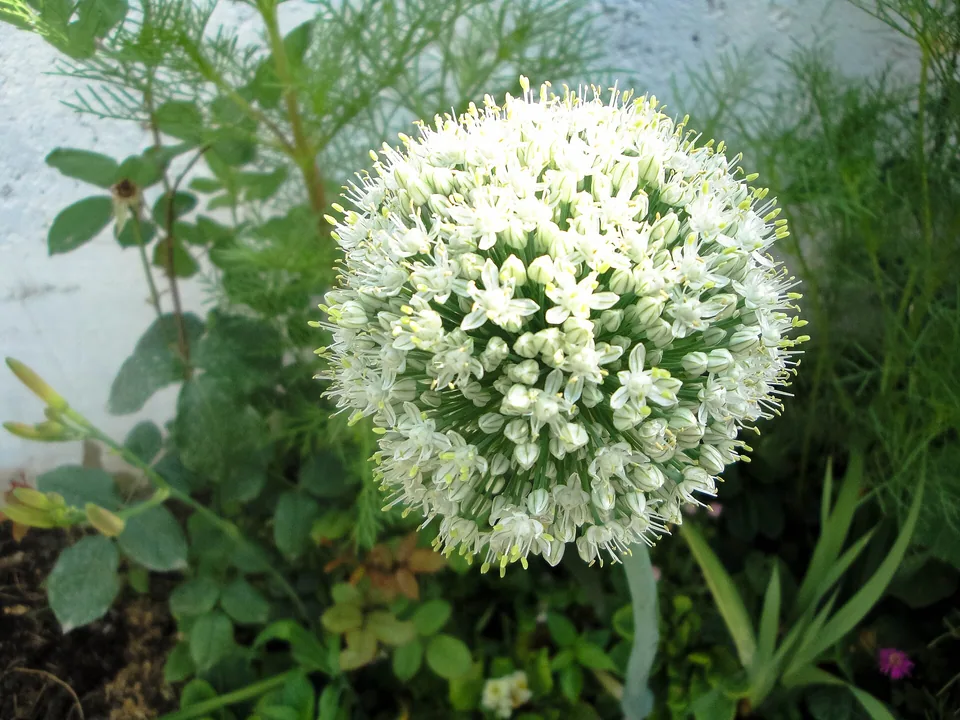
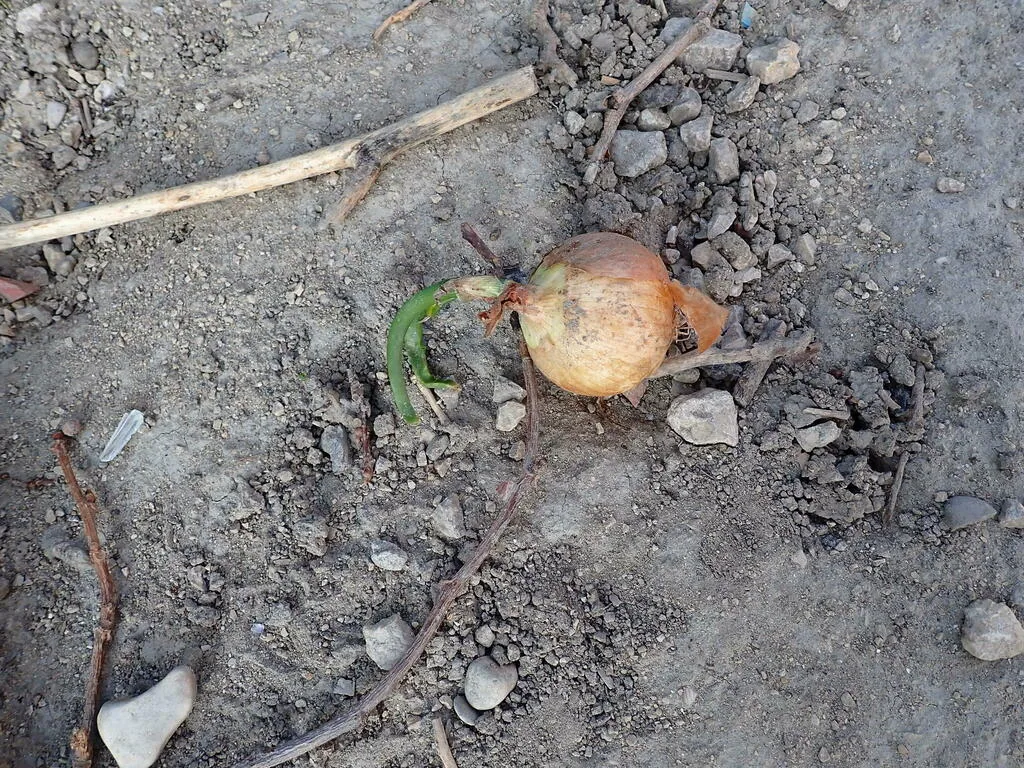

How to Grow and Care for Onion
Allium cepa
Written by Emilio Marruso · last checked
Toxic to: Cats, Dogs, Horses, People · Why
At a glance
Onions get your garden going early: plant them in early spring, as soon as the soil can be worked, from seeds, sets or transplants. Give them full sun and soil that stays moist but drains well, and in 80–120 days you'll pull your own bulbs. Can't wait that long? Green onions are ready once their tops reach 6 inches.
- Sun
Full sun: at least 6 hours a day, 8–10 is best
What the sources say (5)
Light: Full sun
According to University of Maryland Extension (bulb onions): Full sun requires at least 6 hours direct light/day; prefers 8 - 10 hours/day.
— Growing Onions in a Home Garden | University of Maryland Extension [5] green onions (University of Maryland Extension): Green onions will grow with 5 hours of sun per day.
— Growing Onions in a Home Garden | University of Maryland Extension [5] According to Ohio State University Extension: Onion grows best in an area that has full sun, loose, well-drained, fertile, sandy-loam to silt-loam soils soil with plenty of organic matter.
— Growing Onions in the Garden | CFAES Knowledge Hub [6] Onion grows best in an area that has full sun, loose, well-drained, fertile, sandy-loam to silt-loam soils soil with plenty of organic matter.
— Growing Onions in the Garden | CFAES Knowledge Hub [6] Full sun requires at least 6 hours direct light/day; prefers 8 - 10 hours/day. Green onions will grow with 5 hours of sun per day.
— Growing Onions in a Home Garden | University of Maryland Extension [5] - Water
Keep soil moist but well drained, especially as bulbs swell; soggy soil rots them
What the sources say (5)
Watering: Ensure ample moisture, especially after bulbs begin enlarging; keep soil moist but well-drained
Watering - Ensure ample moisture, especially after bulbs begin enlarging. Onion bulb size is directly proportional to the amount of water applied to the onions during the growing season.
— Growing Onions in a Home Garden | University of Maryland Extension [5] Onions are cool season crops and should be planted in moist but well-drained fertile loose soils in full sun as soon as the ground can be worked in spring.
— Allium cepa (Green onion, Onion, Onions, Scallion, Shallot, Spring onion) | North Carolina Extension Gardener Plant Toolbox [1] Watering notes: Organic mulch maintains soil moisture; periods of high rainfall or continual irrigation may increase the potential for nutrient deficiencies; bulb rot can occur in too-wet soils
Maintain a weed-free bed and apply an organic mulch to maintain soil moisture.
— Growing Onions in a Home Garden | University of Maryland Extension [5] Periods of high rainfall or continual irrigation may increase the potential for nutrient deficiencies.
— Growing Onions in the Garden | CFAES Knowledge Hub [6] Insects, Diseases, and Other Plant Problems: Bulb mites can occur. Bulb rot in too-wet soils can occur.
— Allium cepa (Green onion, Onion, Onions, Scallion, Shallot, Spring onion) | North Carolina Extension Gardener Plant Toolbox [1] - Cold
Survives winters down to −20 °F (−28.9 °C)
Very hardy · USDA 5a · RHS H7 · Z5
What the sources say (2)
Hardiness, coldest zone: 5a [winter low −28.9 to −26.1 °C (−20 to −15 °F)]
USDA Plant Hardiness Zone: 5a, 5b, 6a, 6b, 7a, 7b, 8a, 8b, 9a, 9b, 10a, 10b
— Allium cepa (Green onion, Onion, Onions, Scallion, Shallot, Spring onion) | North Carolina Extension Gardener Plant Toolbox [1] Hardiness, warmest zone: 10b [winter low 1.7 to 4.4 °C (35 to 40 °F)]
USDA Plant Hardiness Zone: 5a, 5b, 6a, 6b, 7a, 7b, 8a, 8b, 9a, 9b, 10a, 10b
— Allium cepa (Green onion, Onion, Onions, Scallion, Shallot, Spring onion) | North Carolina Extension Gardener Plant Toolbox [1] - Soil
Slightly acidic soil, pH 6.0–6.8
What the sources say (2)
Soil pH, minimum: 6.0
Onions are easily affected by high acid soils and prefer soil pH between 6.0 and 6.8.
— Growing Onions in the Garden | CFAES Knowledge Hub [6] Soil pH, maximum: 6.8
Onions are easily affected by high acid soils and prefer soil pH between 6.0 and 6.8.
— Growing Onions in the Garden | CFAES Knowledge Hub [6] - Spacing
4 in between plants for medium bulbs, 8 in for large ones; rows 1–2 ft apart
What the sources say (14)
Spacing: 2.5-20.3 cm (1-8 in) in the row, rows 30.5-61.0 cm (12-24 in) apart; thin to 5.1 cm (2 in) for green onions, 10.2 cm (4 in) for moderate-size bulbs, 20.3 cm (8 in) for large bulbs
bulb onions, standard planting (University of Maryland Extension): Spacing: Standard 1" - 8" in-rows x 12" - 24" between rows;
— Growing Onions in a Home Garden | University of Maryland Extension [5] onion sets for dry onions (University of Illinois Extension): To produce dry onions, plant the smaller sets one inch deep, with 2 to 4 inches between sets. Allow 12 to 18 inches between rows.
— Onion (Allium cepa)-Hort Answers - University of Illinois Extension [2] onion sets for green onions (University of Illinois Extension): To produce green onions, plant the larger sets 1/4 inches deep and close enough to touch one another
— Onion (Allium cepa)-Hort Answers - University of Illinois Extension [2] onion sets (Ohio State University Extension): Then, once the plants begin to grow, thin them to 3 to 4 inches apart.
— Growing Onions in the Garden | CFAES Knowledge Hub [6] onion sets (University of Arkansas Extension): The basal plate (where the roots emerge) should be planted about an inch and one half deep with three inches between sets.
— Allium cepa Onion [3] According to NC State Extension: Plant bulbs about 1/2 to 1 inch deep and 6 inches apart.
— Allium cepa (Green onion, Onion, Onions, Scallion, Shallot, Spring onion) | North Carolina Extension Gardener Plant Toolbox [1] perennial onions: shallots and multiplier onions (University of Maryland Extension): Both types are generally thinned to a 4-6 in. spacing for maximum growth, but spacing requirements may vary by cultivar.
— Growing Onions in a Home Garden | University of Maryland Extension [5] Egyptian walking onions (University of Maryland Extension): Egyptian walking onions are planted 9 in. apart and can be left in the ground throughout the summer as long as you manage weeds around the plants.
— Growing Onions in a Home Garden | University of Maryland Extension [5] Spacing: Standard 1" - 8" in-rows x 12" - 24" between rows; wide row and block planting 4" x 4" equidistant spacing.
— Growing Onions in a Home Garden | University of Maryland Extension [5] onions should be thinned to a spacing of 2 inches apart in the row if you intend to harvest green onions, and 4 inches apart if you intend to harvest moderate-size bulbs, and 8 inches apart for large bulbs.
— Growing Onions in a Home Garden | University of Maryland Extension [5] Between plants: Thin to 5.1 cm [2 in] in the row for green onions, 10.2 cm [4 in] for moderate-size bulbs and 20.3 cm [8 in] for large bulbs.
wide rows and blocks: Spacing: Standard 1" - 8" in-rows x 12" - 24" between rows; wide row and block planting 4" x 4" equidistant spacing.
— Growing Onions in a Home Garden | University of Maryland Extension [5] sets (Ohio, USA): Onion sets should be planted 1 to 2 inches deep and 2 to 3 inches apart. Then, once the plants begin to grow, thin them to 3 to 4 inches apart.
— Growing Onions in the Garden | CFAES Knowledge Hub [6] onions should be thinned to a spacing of 2 inches apart in the row if you intend to harvest green onions, and 4 inches apart if you intend to harvest moderate-size bulbs, and 8 inches apart for large bulbs
— Growing Onions in a Home Garden | University of Maryland Extension [5] Row spacing: 30-61 cm (12-24 in)
Spacing: Standard 1" - 8" in-rows x 12" - 24" between rows;
— Growing Onions in a Home Garden | University of Maryland Extension [5] - Planting
Early spring, as soon as the soil can be worked
What the sources say (6)
Planting: Early spring, as soon as the soil can be worked (usually late March or early April); sets of perennial or multiplier types also in fall
prime onion-producing regions (University of Illinois Extension): Onions can be planted as soon as the garden can be tilled in the spring, usually late March or early April in prime regions for producing onions.
— Onion (Allium cepa)-Hort Answers - University of Illinois Extension [2] onion sets (University of Arkansas Extension): Because onions are a cool weather crop, sets are best planted in early spring from early March through mid-April.
— Allium cepa Onion [3] perennial or multiplier onions, Maryland (University of Maryland Extension): Cloves planted in late March-April may be less likely to bolt but those planted in late September through mid-October may produce larger bulbs in spring
— Growing Onions in a Home Garden | University of Maryland Extension [5] According to NC State Extension: Onions are cool season crops and should be planted in moist but well-drained fertile loose soils in full sun as soon as the ground can be worked in spring.
— Allium cepa (Green onion, Onion, Onions, Scallion, Shallot, Spring onion) | North Carolina Extension Gardener Plant Toolbox [1] Onions can be planted as soon as the garden can be tilled in the spring, usually late March or early April in prime regions for producing onions.
— Onion (Allium cepa)-Hort Answers - University of Illinois Extension [2] Sets: Plant onion sets in the spring for early onions, and in the fall for perennial or multiplier types of onions.
— Growing Onions in a Home Garden | University of Maryland Extension [5] - Feeding
Complete fertilizer with plenty of nitrogen; no fresh manure at planting, to keep onion maggots away
What the sources say (4)
Mineral fertilizers: Complete fertilizer; starter fertilizer for transplants; soil nutrient status kept high, especially nitrogen
Onions require more nutrients than other vegetable plants. Three fertilizer applications of a complete fertilizer is recommended throughout the growing season.
— Growing Onions in the Garden | CFAES Knowledge Hub [6] Apply fertilizer before planting, use starter fertilizer for transplants, and side-dress 1 to 2 weeks after bulb enlargement begins.
— Growing Onions in a Home Garden | University of Maryland Extension [5] Keep plants moist, but not wet, and assure that the nutrient status of the soil is on the high end, especially with regard to nitrogen.
— Allium cepa Onion [3] Avoid: Undecomposed organic matter such as fresh manure at planting (to reduce onion maggots)
To reduce onion maggots, avoid planting onion plants in undecomposed organic matter such as manure.
— Growing Onions in the Garden | CFAES Knowledge Hub [6] - Harvest
Pull bulbs when two-thirds of the tops have fallen over; green onions once 6 in tall
What the sources say (7)
How to harvest: Harvest bulb onions when about two-thirds of the tops have died down and fallen over; pull or dig the bulbs gently, avoiding bruising, then cure them until the outer scales are papery thin. Green onions can be pulled once the tops are 6 inches (15 cm) tall.
Onions are ready to harvest when at least 2/3 of the tops have died down. Dig onions with a garden fork to prevent damage and allow to dry or "cure" for 2-3 weeks before using.
— Allium cepa (Green onion, Onion, Onions, Scallion, Shallot, Spring onion) | North Carolina Extension Gardener Plant Toolbox [1] Bulb onions should be harvested when about two-thirds of the dried tops have fallen over. Careful handling to avoid bruising helps prevent storage rots.
— Growing Onions in a Home Garden | University of Maryland Extension [5] Curing is the process of drying the cut top or neck of the bulb. This process can take two to four weeks, or until the outer scales of the bulb are papery thin.
— Growing Onions in the Garden | CFAES Knowledge Hub [6] Pull green onions anytime after the tops are 6 inches tall.
— Onion (Allium cepa)-Hort Answers - University of Illinois Extension [2] Days to maturity: 80-120 days to mature bulbs (90-120 counted from planting)
Days to maturity: 85 - 120 (mature bulbs).
— Growing Onions in a Home Garden | University of Maryland Extension [5] Onions are usually ready to pull and air dry for storage in 80 to 90 days.
— Allium cepa Onion [3] Onions may be harvested when the majority of the tops have wilted, which is approximately 90 to 120 days after planting.
— Growing Onions in the Garden | CFAES Knowledge Hub [6] - Pests
Thrips, onion maggots and cutworms; neck rot shows up in storage
What the sources say (9)
Pests: onion thrips, onion maggot, cutworms, wireworms, bulb mites, allium leafminer
Thrips and maggots are the two insect pests that can destroy an onion crop.
— Growing Onions in the Garden | CFAES Knowledge Hub [6] Insects - Onion maggot - Thrips - Cutworms - Wireworm
— Onion (Allium cepa)-Hort Answers - University of Illinois Extension [2] Insects, Diseases, and Other Plant Problems: Bulb mites can occur.
— Allium cepa (Green onion, Onion, Onions, Scallion, Shallot, Spring onion) | North Carolina Extension Gardener Plant Toolbox [1] Onion problems Allium leafminer Flower stalk forms-bolting White rot
— Growing Onions in a Home Garden | University of Maryland Extension [5] Diseases: Botrytis leaf blight, Botrytis neck rot, pink rot, purple blotch, smudge, smut, white rot, slippery skin, soft rot, sour skin, aster yellows, downy mildew, Fusarium basal rot, nematode diseases (root knot, root lesion, stem and bulb nematode)
Botrytis leaf blight ( Botrytis squamosa ) - Botrytis neck rots ( Botrytis allii ) - Pink rot ( Phoma terrestris ) - Purple blotch ( Alternaria porri ) - Smudge ( Colletotrichum circinans )
— Onion (Allium cepa)-Hort Answers - University of Illinois Extension [2] Smut ( Urocystis colchici ) - White rot ( Sclerotium cepivorum ) - Slippery skin ( Psuedomonas gladioli pv. alliicola ) - Soft rot ( Erwinia carotovora subsp. carotovora ) - Sour skin ( Psuedomonas cepacia ) - Aster yellows ( Phytoplasma )
— Onion (Allium cepa)-Hort Answers - University of Illinois Extension [2] Nematode diseases: Root knot nematode ( Meloifogyne spp.), Root lesion nematode ( Pratylenchus penetrans ), Stem and bulb nematode ( Ditylenchus dipsaci )
— Onion (Allium cepa)-Hort Answers - University of Illinois Extension [2] Downy mildew is a fungus ( Peronospora destructor ) that develops when the weather is cool and wet.
— Growing Onions in the Garden | CFAES Knowledge Hub [6] Fusarium basal rot is caused by the fungi Fusarium spp. that appears on the onion in the field and storage.
— Growing Onions in the Garden | CFAES Knowledge Hub [6] - Watch out
Planting too early in cold weather makes it send up a flower stalk
- Size
1–1.5 ft tall and 6 in–1 ft wide
What the sources say (2)
Mature height: 30-46 cm (1 ft - 1 ft 6 in)
Height: 1 ft. 0 in. - 1 ft. 6 in.
— Allium cepa (Green onion, Onion, Onions, Scallion, Shallot, Spring onion) | North Carolina Extension Gardener Plant Toolbox [1] Mature width: 15-30 cm (6 in - 1 ft)
Width: 0 ft. 6 in. - 1 ft. 0 in.
— Allium cepa (Green onion, Onion, Onions, Scallion, Shallot, Spring onion) | North Carolina Extension Gardener Plant Toolbox [1] - Propagation
From seeds, sets or transplants; perennial types by dividing the bulbs
What the sources say (2)
Propagation: Seeds, sets, transplants; perennial types by dividing and replanting bulbs
Onions can be grown from seeds, sets, or transplants.
— Growing Onions in the Garden | CFAES Knowledge Hub [6] You can divide and store some to re-plant in the fall.
— Growing Onions in a Home Garden | University of Maryland Extension [5] - Sowing
Sow 1/4–1/2 in deep; seeds sprout best in warm soil, 75 °F (24 °C)
What the sources say (4)
Sowing depth: 0.6-1.3 cm (1/4-1/2 in) when sown from seed
Direct seed - sow seed ¼ inch to a ½ inch deep and cover lightly with fine soil.
— Growing Onions in a Home Garden | University of Maryland Extension [5] Sow the seeds ½ inch deep.
— Growing Onions in the Garden | CFAES Knowledge Hub [6] Germination: Seeds germinate above 4.4 °C [40 °F]; optimum soil temperature 23.9 °C [75 °F]; in cool soils germination and emergence take 15-25 days.
Onion seeds germinate at temperatures above 40 °F; the optimum soil temperature is 75 °F.
— [7] If seeds are planted too early, cooler air and soil temperatures will delay germination and emergence (15-25 day requirement)
— [7] - Safety
Toxic to dogs, cats and horses: it can cause vomiting and anemia
Overview
Onion is a cool-season bulb vegetable planted in full sun as soon as the ground can be worked in spring. [1] It can be grown from seeds, sets, or transplants, and bulbs are harvested when most of the tops have fallen over. [6][5] Ample moisture is needed, especially after bulbs begin enlarging. [5]
Onion care
Measurements in square brackets are our conversion into the other unit system; the quoted text is unchanged.
How to water Onion
Watering
Ensure ample moisture, especially after bulbs begin enlarging; keep soil moist but well-drained
What the sources say (2)
Watering - Ensure ample moisture, especially after bulbs begin enlarging. Onion bulb size is directly proportional to the amount of water applied to the onions during the growing season.Onions are cool season crops and should be planted in moist but well-drained fertile loose soils in full sun as soon as the ground can be worked in spring.Watering notes
Organic mulch maintains soil moisture; periods of high rainfall or continual irrigation may increase the potential for nutrient deficiencies; bulb rot can occur in too-wet soils
What the sources say (3)
Maintain a weed-free bed and apply an organic mulch to maintain soil moisture.Periods of high rainfall or continual irrigation may increase the potential for nutrient deficiencies.Insects, Diseases, and Other Plant Problems: Bulb mites can occur. Bulb rot in too-wet soils can occur.How much light Onion needs
Full sun
What each source says
According to University of Maryland Extension (bulb onions): At least 6 hours of direct light per day; prefers 8-10 hours
green onions (University of Maryland Extension): 5 hours of sun per day
According to Ohio State University Extension: Full sun
What the sources say (5)
According to University of Maryland Extension (bulb onions): Full sun requires at least 6 hours direct light/day; prefers 8 - 10 hours/day.green onions (University of Maryland Extension): Green onions will grow with 5 hours of sun per day.According to Ohio State University Extension: Onion grows best in an area that has full sun, loose, well-drained, fertile, sandy-loam to silt-loam soils soil with plenty of organic matter.Onion grows best in an area that has full sun, loose, well-drained, fertile, sandy-loam to silt-loam soils soil with plenty of organic matter.Full sun requires at least 6 hours direct light/day; prefers 8 - 10 hours/day. Green onions will grow with 5 hours of sun per day.How much cold Onion can take
Hardiness, coldest zone
5a [winter low −28.9 to −26.1 °C (−20 to −15 °F)]
What the sources say (1)
USDA Plant Hardiness Zone:
5a, 5b, 6a, 6b, 7a, 7b, 8a, 8b, 9a, 9b, 10a, 10bHardiness, warmest zone
10b [winter low 1.7 to 4.4 °C (35 to 40 °F)]
What the sources say (1)
USDA Plant Hardiness Zone:
5a, 5b, 6a, 6b, 7a, 7b, 8a, 8b, 9a, 9b, 10a, 10bBest soil for Onion
Soil pH, minimum
6.0
What the sources say (1)
Onions are easily affected by high acid soils and prefer soil pH between 6.0 and 6.8.Soil pH, maximum
6.8
What the sources say (1)
Onions are easily affected by high acid soils and prefer soil pH between 6.0 and 6.8.Where to grow Onion
2.5-20.3 cm (1-8 in) in the row, rows 30.5-61.0 cm (12-24 in) apart; thin to 5.1 cm (2 in) for green onions, 10.2 cm (4 in) for moderate-size bulbs, 20.3 cm (8 in) for large bulbs
What each source says
bulb onions, standard planting (University of Maryland Extension): 2.5-20.3 cm (1-8 in) in the row, rows 30.5-61.0 cm (12-24 in) apart
onion sets for dry onions (University of Illinois Extension): 5.1-10.2 cm (2-4 in) between sets; rows 30.5-45.7 cm (12-18 in) apart
onion sets for green onions (University of Illinois Extension): Close enough to touch one another
onion sets (Ohio State University Extension): 5.1-7.6 cm (2-3 in) apart, thinned to 7.6-10.2 cm (3-4 in)
onion sets (University of Arkansas Extension): 7.6 cm (3 in) between sets
According to NC State Extension: 15.2 cm (6 in) apart
perennial onions: shallots and multiplier onions (University of Maryland Extension): 10.2-15.2 cm (4-6 in)
Egyptian walking onions (University of Maryland Extension): 22.9 cm (9 in) apart
What the sources say (10)
bulb onions, standard planting (University of Maryland Extension): Spacing: Standard 1" - 8" in-rows x 12" - 24" between rows;onion sets for dry onions (University of Illinois Extension): To produce dry onions, plant the smaller sets one inch deep, with 2 to 4 inches between sets. Allow 12 to 18 inches between rows.onion sets for green onions (University of Illinois Extension): To produce green onions, plant the larger sets 1/4 inches deep and close enough to touch one anotheronion sets (Ohio State University Extension): Then, once the plants begin to grow, thin them to 3 to 4 inches apart.onion sets (University of Arkansas Extension): The basal plate (where the roots emerge) should be planted about an inch and one half deep with three inches between sets.According to NC State Extension: Plant bulbs about 1/2 to 1 inch deep and 6 inches apart.perennial onions: shallots and multiplier onions (University of Maryland Extension): Both types are generally thinned to a 4-6 in. spacing for maximum growth, but spacing requirements may vary by cultivar.Egyptian walking onions (University of Maryland Extension): Egyptian walking onions are planted 9 in. apart and can be left in the ground throughout the summer as long as you manage weeds around the plants.Spacing: Standard 1" - 8" in-rows x 12" - 24" between rows; wide row and block planting 4" x 4" equidistant spacing.onions should be thinned to a spacing of 2 inches apart in the row if you intend to harvest green onions, and 4 inches apart if you intend to harvest moderate-size bulbs, and 8 inches apart for large bulbs.How to propagate Onion
Seeds, sets, transplants; perennial types by dividing and replanting bulbs
How to grow Onion
The plant
Life cycle
biennial (grown as an annual)
What the sources say (2)
Bulb and green onions are biennials (two years required to complete life cycle) treated as annuals.Onions are biennial in nature, with bulb production during the first season and flowering during the spring of the second.Family
Amaryllidaceae
What the sources say (2)
The onion is a cultivated bulb from the amaryllis family (Amaryllidaceae).Over 700 species of alliums, now assigned to the amaryllis family, are known around the world.Mature height
30-46 cm (1 ft - 1 ft 6 in)
What the sources say (1)
Height: 1 ft. 0 in. - 1 ft. 6 in.Mature width
15-30 cm (6 in - 1 ft)
What the sources say (1)
Width: 0 ft. 6 in. - 1 ft. 0 in.Sowing and growth
Sowing depth
0.6-1.3 cm (1/4-1/2 in) when sown from seed
Row spacing
30-61 cm (12-24 in)
What the sources say (1)
Spacing: Standard 1" - 8" in-rows x 12" - 24" between rows;Days to maturity
80-120 days to mature bulbs (90-120 counted from planting)
What the sources say (3)
Days to maturity: 85 - 120 (mature bulbs).Onions are usually ready to pull and air dry for storage in 80 to 90 days.Onions may be harvested when the majority of the tops have wilted, which is approximately 90 to 120 days after planting.Harvest and storage
How to harvest
Harvest bulb onions when about two-thirds of the tops have died down and fallen over; pull or dig the bulbs gently, avoiding bruising, then cure them until the outer scales are papery thin. Green onions can be pulled once the tops are 6 inches (15 cm) tall.
What the sources say (4)
Onions are ready to harvest when at least 2/3 of the tops have died down. Dig onions with a garden fork to prevent damage and allow to dry or "cure" for 2-3 weeks before using.Bulb onions should be harvested when about two-thirds of the dried tops have fallen over. Careful handling to avoid bruising helps prevent storage rots.Curing is the process of drying the cut top or neck of the bulb. This process can take two to four weeks, or until the outer scales of the bulb are papery thin.Pull green onions anytime after the tops are 6 inches tall.Storage
After curing, store in a cool, dry place at 0-4 C (32-40 F) in ventilated containers such as a mesh bag, wire basket or open crate; kept at 0 C (32 F) and 65-70% relative humidity they last up to 6-7 months. Warm temperatures cause sprouting and freezing injures the bulbs.
What the sources say (3)
Store onion in a moderately cool (32 to 40 degrees F) and dry area in ventilated containers such as a mesh bag, wire basket, or open crate.Onions can be kept under very cool (32 degrees F), dry (65%-70% RH) conditions for up to 6 to 7 months.Warm temperatures induce sprouting and sub-freezing temperatures will injure bulbs.Pests and diseases
Pests
onion thrips, onion maggot, cutworms, wireworms, bulb mites, allium leafminer
What the sources say (4)
Thrips and maggots are the two insect pests that can destroy an onion crop.Insects - Onion maggot - Thrips - Cutworms - WirewormInsects, Diseases, and Other Plant Problems: Bulb mites can occur.Onion problems Allium leafminer Flower stalk forms-bolting White rotDiseases
Botrytis leaf blight, Botrytis neck rot, pink rot, purple blotch, smudge, smut, white rot, slippery skin, soft rot, sour skin, aster yellows, downy mildew, Fusarium basal rot, nematode diseases (root knot, root lesion, stem and bulb nematode)
What the sources say (5)
Botrytis leaf blight ( Botrytis squamosa ) - Botrytis neck rots ( Botrytis allii ) - Pink rot ( Phoma terrestris ) - Purple blotch ( Alternaria porri ) - Smudge ( Colletotrichum circinans )Smut ( Urocystis colchici ) - White rot ( Sclerotium cepivorum ) - Slippery skin ( Psuedomonas gladioli pv. alliicola ) - Soft rot ( Erwinia carotovora subsp. carotovora ) - Sour skin ( Psuedomonas cepacia ) - Aster yellows ( Phytoplasma )Nematode diseases: Root knot nematode ( Meloifogyne spp.), Root lesion nematode ( Pratylenchus penetrans ), Stem and bulb nematode ( Ditylenchus dipsaci )Downy mildew is a fungus ( Peronospora destructor ) that develops when the weather is cool and wet.Fusarium basal rot is caused by the fungi Fusarium spp. that appears on the onion in the field and storage.Fertilizing
When
The sources disagree:
Apply fertilizer before planting, use starter fertilizer for transplants, and side-dress 1 to 2 weeks after bulb enlargement begins.
[5]The first application applied 40 to 60 days after planting, the second application in the middle of the growing season, and the last application applied four weeks before harvest.
[6]
How often
The sources disagree:
Mineral fertilizers
Complete fertilizer; starter fertilizer for transplants; soil nutrient status kept high, especially nitrogen
What the sources say (3)
Onions require more nutrients than other vegetable plants. Three fertilizer applications of a complete fertilizer is recommended throughout the growing season.Apply fertilizer before planting, use starter fertilizer for transplants, and side-dress 1 to 2 weeks after bulb enlargement begins.Keep plants moist, but not wet, and assure that the nutrient status of the soil is on the high end, especially with regard to nitrogen.Avoid
Undecomposed organic matter such as fresh manure at planting (to reduce onion maggots)
What the sources say (1)
To reduce onion maggots, avoid planting onion plants in undecomposed organic matter such as manure.Spacing
Between plants
Thin to 5.1 cm [2 in] in the row for green onions, 10.2 cm [4 in] for moderate-size bulbs and 20.3 cm [8 in] for large bulbs.
What each source says
wide rows and blocks: 10.2 x 10.2 cm [4 in] equidistant
sets (Ohio, USA): sets 5.1-7.6 cm [2–3 in] apart, thinned to 7.6-10.2 cm [3–4 in] once growing
What the sources say (3)
wide rows and blocks: Spacing: Standard 1" - 8" in-rows x 12" - 24" between rows; wide row and block planting 4" x 4" equidistant spacing.sets (Ohio, USA): Onion sets should be planted 1 to 2 inches deep and 2 to 3 inches apart. Then, once the plants begin to grow, thin them to 3 to 4 inches apart.onions should be thinned to a spacing of 2 inches apart in the row if you intend to harvest green onions, and 4 inches apart if you intend to harvest moderate-size bulbs, and 8 inches apart for large bulbsBetween rows
30.5-61 cm [12–24 in] between rows.
What the sources say (1)
Spacing: Standard 1" - 8" in-rows x 12" - 24" between rows; wide row and block planting 4" x 4" equidistant spacing.Propagation
Germination
Seeds germinate above 4.4 °C [40 °F]; optimum soil temperature 23.9 °C [75 °F]; in cool soils germination and emergence take 15-25 days.
After harvest
Storage
Cure 1-3 weeks in a well-ventilated place out of direct sun before storing; store at 0 °C [32 °F] and 65-70% relative humidity for up to 6-7 months, or at 0-4.4 °C [32–40 °F], dry, in ventilated containers such as mesh bags or open crates. Warm temperatures cause sprouting, freezing injures bulbs.
What the sources say (5)
Dig onions with a garden fork to prevent damage and allow to dry or "cure" for 2-3 weeks before using.then cured, with tops intact, in a well-ventilated attic or porch out of the direct sun for 1 to 2 weeksOnions can be kept under very cool (32 degrees F), dry (65%-70% RH) conditions for up to 6 to 7 months.Store onion in a moderately cool (32 to 40 degrees F) and dry area in ventilated containers such as a mesh bag, wire basket, or open crate.Warm temperatures induce sprouting and sub-freezing temperatures will injure bulbs.Heat and drought
Heat
High temperatures and low humidity favour bulbing and curing; in late sowings summer heat induces bulbing before enough leaf growth.
Onion pests and problems
Botrytis neck rot
Symptom: Onion scales brown, shrivel and become soft; first noticed in storage.
What to do: Allow ample time for the neck tissues to dry completely in the field; avoid injuring the onion when cutting tops.
What the sources say (1)
Botrytis neck rot is a fungus caused by Botrytis spp. that appears brown, and causes the onion scales to shrivel and become soft.
— Growing Onions in the Garden | CFAES Knowledge Hub [6] Thrips
Symptom: Leaves take on a silvery color with specks and often fold over.
What to do: Avoid planting near small grains or plant resistant or tolerant onion varieties.
What the sources say (2)
After the damage has occurred, the leaves take on silvery color with specks on the leaves and often fold over.
— Growing Onions in the Garden | CFAES Knowledge Hub [6] To help decrease the chances of thrips moving to your onions, avoid planting near small grains or plant resistant/tolerant onion varieties.
— Growing Onions in the Garden | CFAES Knowledge Hub [6] Onion maggot
Symptom: Larvae feed on the roots and bulb, resulting in bulb rot during storage.
What to do: Avoid undecomposed organic matter such as manure and rotate crops.
What the sources say (1)
To reduce onion maggots, avoid planting onion plants in undecomposed organic matter such as manure.
— Growing Onions in the Garden | CFAES Knowledge Hub [6] Bolting
Symptom: Seed stalk development.
What to do: Avoid planting too early with exposure to cold temperatures.
What the sources say (1)
Planting too early, with exposure to cold temperatures, can cause seed stalk development.
— Growing Onions in a Home Garden | University of Maryland Extension [5]
Remedies
Each remedy shows what official sources say about it; traditional remedies without an official source are marked as such. Harmful ones are listed so you know to avoid them.
Treating the plant
thrips
neem oil spray Partly works
Always spot-test a small section of your onion patch first, waiting 24 hours to check for any adverse reactions.
— cultivatedearth.com [8] How: Dilute neem oil according to the label (usually about two teaspoons per quart of water) and spray directly on the onion foliage in the early morning or late afternoon to minimize leaf burn; reapply every 7-10 days or after heavy rainfall.
Neem oil, available at garden centers, should be diluted according to the label—usually about two teaspoons per quart of water—and sprayed directly on onion foliage in the early morning or late afternoon to minimize leaf burn.
— cultivatedearth.com [8] What the evidence says However, neem oil is not effective against every insect and disease, and often must be frequently reapplied to reach the desired outcome.
— extension.unh.edu [9] insecticidal soap spray Works
Always spot-test a small section of your onion patch first, waiting 24 hours to check for any adverse reactions.
— cultivatedearth.com [8] When “oils and soaps” are mentioned in UC IPM publications, we are referring to commercially available oils and soaps that are formulated specifically for use as pesticides- not household oils and soaps meant for cooking, cleaning, or other purposes.
— ucanr.edu [11] How: Mix one tablespoon of pure, unscented liquid soap (not detergent) into one quart of water and spray on the onion leaves, especially the undersides; reapply every 7-10 days or after heavy rainfall.
Insecticidal soap is another safe choice; you can make your own by mixing one tablespoon of pure, unscented liquid soap (not detergent) into one quart of water.
— cultivatedearth.com [8] What the evidence says For example, insecticidal soap is a safe, effective organic insecticide with minimal environmental impact.
— extension.psu.edu [10] garlic spray Not verified
Traditional remedy, not verified by an official source.
Always spot-test a small section of your onion patch first, waiting 24 hours to check for any adverse reactions.
— cultivatedearth.com [8] You can find lots of homemade recipes online, but be very cautious using these substances because their efficacy, toxicity, and environmental effects have not been university tested.
— extension.unh.edu [9] Penn State Extension does not recommend using home remedies for many reasons.
— extension.psu.edu [12] How: Blend two bulbs of garlic with one quart of water, strain out the solids, then dilute with another quart of water before applying to the onions.
onion maggot
floating row cover Partly works
How: Floating row covers may provide protection by preventing females from laying eggs around the plants.
floating row covers may provide protection by preventing females from laying eggs around the plants
— plantvillage.psu.edu [13] What the evidence says Barriers (such as floating row covers) may help protect onions from the adult fly.
— extension.umaine.edu [14]
downy mildew
neem oil spray Partly works
You can find lots of homemade recipes online, but be very cautious using these substances because their efficacy, toxicity, and environmental effects have not been university tested.
— extension.unh.edu [9] How: Apply neem oil sprays at the first sign of infection and repeat after heavy rains.
Organic Fungicides: Apply copper or neem oil sprays at the first sign of infection and repeat after heavy rains.
— thegroundedhomestead.com [15] What the evidence says However, neem oil is not effective against every insect and disease, and often must be frequently reapplied to reach the desired outcome.
— extension.unh.edu [9]
white rot
soil solarization Not verified
Traditional remedy, not verified by an official source.
How: Cover moist soil with clear plastic for 4–6 weeks in the hottest part of summer to kill sclerotia.
Is Onion toxic to pets?
Reported by the source, quoted verbatim. This is not medical or veterinary advice: if a person or an animal may have eaten this plant, contact a poison control centre or a veterinarian.
Animals
#problem for dogs #problem for horses #problem for cats
[1]The source flags the risk for this animal but does not explain why.
People
Calendar
Sowing
The sources give different values depending on region, zone or growing conditions.
What each source says
indoors (Ohio State University Extension): 4 to 6 weeks before planting outside
indoors (University of Maryland Extension): About 8 weeks prior to planting
directly outdoors, Ohio (Ohio State University Extension): Once the soil is workable, approximately late March to April
What the sources say (5)
indoors (Ohio State University Extension): Sow seeds indoors 4 to 6 weeks before planting outside.indoors (University of Maryland Extension): Either buy bunches of onion transplants or start your own by sowing seeds indoors about 8 weeks prior to planting.directly outdoors, Ohio (Ohio State University Extension): Seeds can also be directly sown in the ground once the soil is workable, approximately late March to April.Sow seeds indoors 4 to 6 weeks before planting outside.Seeds can also be directly sown in the ground once the soil is workable, approximately late March to April.Planting
Early spring, as soon as the soil can be worked (usually late March or early April); sets of perennial or multiplier types also in fall
What each source says
prime onion-producing regions (University of Illinois Extension): As soon as the garden can be tilled, usually late March or early April
onion sets (University of Arkansas Extension): Early March through mid-April
perennial or multiplier onions, Maryland (University of Maryland Extension): Fall (late September through mid-October) or late March to April
According to NC State Extension: As soon as the ground can be worked in spring
What the sources say (6)
prime onion-producing regions (University of Illinois Extension): Onions can be planted as soon as the garden can be tilled in the spring, usually late March or early April in prime regions for producing onions.onion sets (University of Arkansas Extension): Because onions are a cool weather crop, sets are best planted in early spring from early March through mid-April.perennial or multiplier onions, Maryland (University of Maryland Extension): Cloves planted in late March-April may be less likely to bolt but those planted in late September through mid-October may produce larger bulbs in springAccording to NC State Extension: Onions are cool season crops and should be planted in moist but well-drained fertile loose soils in full sun as soon as the ground can be worked in spring.Onions can be planted as soon as the garden can be tilled in the spring, usually late March or early April in prime regions for producing onions.Sets: Plant onion sets in the spring for early onions, and in the fall for perennial or multiplier types of onions.Harvest
The sources give different values depending on region, zone or growing conditions.
What each source says
bulb onions (University of Maryland Extension): 85-120 days to maturity; when about two-thirds of the dried tops have fallen over
According to Ohio State University Extension: Approximately 90 to 120 days after planting
According to University of Arkansas Extension: Ready to pull and air dry in 80 to 90 days
green onions (University of Illinois Extension): Any time after the tops are 6 inches [15 cm] tall
What the sources say (7)
bulb onions (University of Maryland Extension): Days to maturity: 85 - 120 (mature bulbs).According to Ohio State University Extension: Onions may be harvested when the majority of the tops have wilted, which is approximately 90 to 120 days after planting.According to University of Arkansas Extension: Onions are usually ready to pull and air dry for storage in 80 to 90 days.green onions (University of Illinois Extension): Pull green onions anytime after the tops are 6 inches tall.Bulb onions should be harvested when about two-thirds of the dried tops have fallen over.Onions may be harvested when the majority of the tops have wilted, which is approximately 90 to 120 days after planting.Pull green onions anytime after the tops are 6 inches tall.Months as given by the sources, which are mostly from the United States (northern hemisphere). In the southern hemisphere they shift by about six months.
Edibility
Reported by the source, quoted verbatim. Do not eat a plant on the basis of this page alone: identification mistakes can be dangerous.
Indicative values
Values from a secondary source, not checked word for word like the rest of this page. Use them as a starting point.
- Hours of sun
- 6-8 hoursIndicative value, adapt it to your climate · Secondary source
- Indoors
- yesIndicative value, adapt it to your climate · Secondary source
- Care level
- MediumIndicative value, adapt it to your climate · Secondary source
- Growth rate
- HighIndicative value, adapt it to your climate · Secondary source
- Pruning
- May, June, July, AugustIndicative value, adapt it to your climate · Secondary source
Similar plants
- Allium triquetrum Allium triquetrum
- Blue Globe Onion Allium caeruleum
- Broadleaf wild leek Allium ampeloprasum
- Field Garlic Allium vineale
- Garlic Chives Allium tuberosum
- Lily Leek Allium moly
- Ornamental Onion Allium aflatunense
- Ornamental Onion Allium giganteum
Sources
Every value above is quoted from these documents. Links lead to the original publisher.
- Allium cepa (Green onion, Onion, Onions, Scallion, Shallot, Spring onion) | North Carolina Extension Gardener Plant Toolbox · plants.ces.ncsu.edu, consulted
- Onion (Allium cepa)-Hort Answers - University of Illinois Extension · web.extension.illinois.edu, consulted
- Allium cepa Onion · uaex.uada.edu, consulted
- Onion - Allium cepa | North Carolina Extension Gardener Plant Toolbox · plants.ces.ncsu.edu, consulted
- Growing Onions in a Home Garden | University of Maryland Extension · extension.umd.edu, consulted
- Growing Onions in the Garden | CFAES Knowledge Hub · cfaes.osu.edu, consulted
- extension.usu.edu · extension.usu.edu
- cultivatedearth.com · cultivatedearth.com
- extension.unh.edu · extension.unh.edu
- extension.psu.edu · extension.psu.edu
- ucanr.edu · ucanr.edu
- extension.psu.edu · extension.psu.edu
- plantvillage.psu.edu · plantvillage.psu.edu
- extension.umaine.edu · extension.umaine.edu
- thegroundedhomestead.com · thegroundedhomestead.com
Written by Emilio Marruso · last checked