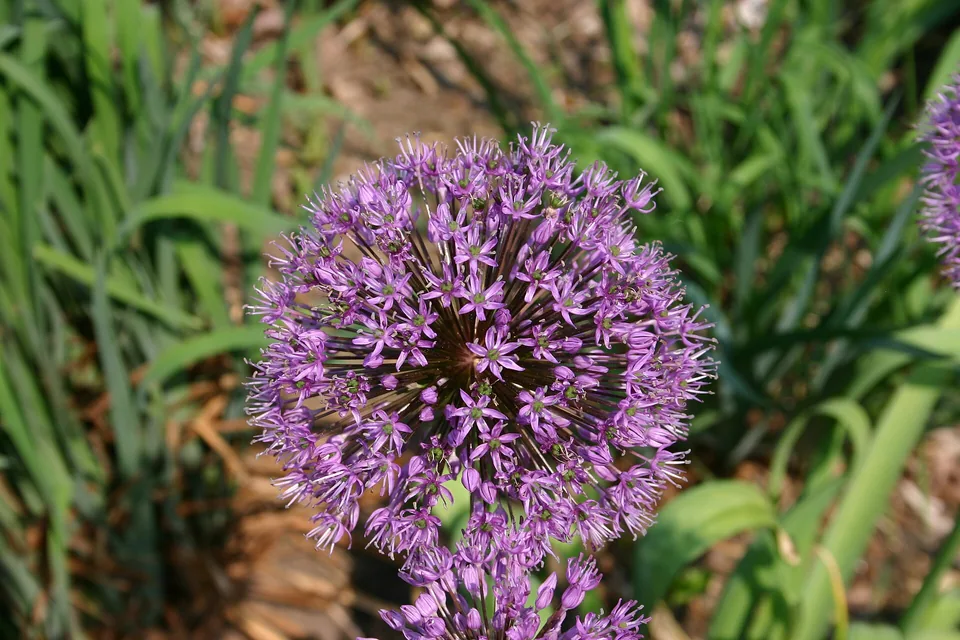


How to Grow and Care for Ornamental Onion
Allium aflatunense
Written by Emilio Marruso · last checked
Toxic to: Cats, Dogs, People · Why
At a glance
Plant the bulbs in fall and enjoy their blooms in spring. This perennial bulb sends up flowering stems 30–60 inches tall and is happy in full sun or partial shade. It shrugs off summer drought, asks only for a little moisture while blooming, and rarely needs any feeding at all: an easy, rewarding plant for beginners.
- Sun
Full sun to partial shade
What the sources say (1)
Light: Full sun to partial shade
Plant the bulbs 4-6 inches deep and 4-6 inches apart in well-drained soils in full sun to partial shade in the fall for spring blooms.
— Allium aflatunense (Ornamental Onion, Persian Onion) | North Carolina Extension Gardener Plant Toolbox [1] - Water
Handles dry summers; give it some water while it blooms
What the sources say (1)
Watering: Drought tolerant during the summer; appreciates some moisture when blooming
They are drought tolerant during the summer but appreciate some moisture when blooming.
— Allium aflatunense (Ornamental Onion, Persian Onion) | North Carolina Extension Gardener Plant Toolbox [1] - Cold
Survives winters down to −30 °F (−34.4 °C)
Very hardy · USDA 4a · RHS H7 · Z4
What the sources say (2)
Hardiness, coldest zone: 4a [winter low −34.4 to −31.7 °C (−30 to −25 °F)]
USDA Plant Hardiness Zone: 4a, 4b, 5a, 5b, 6a, 6b, 7a, 7b, 8a, 8b
— Allium aflatunense (Ornamental Onion, Persian Onion) | North Carolina Extension Gardener Plant Toolbox [1] Hardiness, warmest zone: 8b [winter low −9.4 to −6.7 °C (15 to 20 °F)]
USDA Plant Hardiness Zone: 4a, 4b, 5a, 5b, 6a, 6b, 7a, 7b, 8a, 8b
— Allium aflatunense (Ornamental Onion, Persian Onion) | North Carolina Extension Gardener Plant Toolbox [1] - Spacing
4–6 in between bulbs
What the sources say (1)
Spacing: 10.2-15.2 cm (4-6 in)
Plant the bulbs 4-6 inches deep and 4-6 inches apart in well-drained soils in full sun to partial shade in the fall for spring blooms.
— Allium aflatunense (Ornamental Onion, Persian Onion) | North Carolina Extension Gardener Plant Toolbox [1] - Planting
Plant the bulbs in fall for spring flowers
What the sources say (1)
Planting: Fall (bulbs, for spring blooms)
Plant the bulbs 4-6 inches deep and 4-6 inches apart in well-drained soils in full sun to partial shade in the fall for spring blooms.
— Allium aflatunense (Ornamental Onion, Persian Onion) | North Carolina Extension Gardener Plant Toolbox [1] - Feeding
Usually no feeding; a light all-purpose fertilizer in early spring only if a soil test shows a need
What the sources say (3)
When: Early spring as the foliage emerges, only if a soil test shows a need
Fertilizer is unnecessary, but a light fertilizer application every few years using an all-purpose fertilizer in early spring as the foliage emerges can be done if a soil test shows it's needed.
— All About Ornamental Onions | Yard and Garden [2] How often: Usually unnecessary; at most a light application every few years if a soil test shows a need
Fertilizer is unnecessary, but a light fertilizer application every few years using an all-purpose fertilizer in early spring as the foliage emerges can be done if a soil test shows it's needed.
— All About Ornamental Onions | Yard and Garden [2] Mineral fertilizers: All-purpose fertilizer, light application, only if a soil test shows a need
Fertilizer is unnecessary, but a light fertilizer application every few years using an all-purpose fertilizer in early spring as the foliage emerges can be done if a soil test shows it's needed.
— All About Ornamental Onions | Yard and Garden [2] - Pests
Watch for aphids, bulb mites, leafminers, rust and purple blotch
What the sources say (2)
Pests: bulb mites, aphids, allium leafminer
Fusarium basal rot, rust, purple blotch and onion yellow dwarf virus are potential diseases. Bulb mites, aphids and allium leafminer are potential insects.
— Allium aflatunense (Ornamental Onion, Persian Onion) | North Carolina Extension Gardener Plant Toolbox [1] Diseases: Fusarium basal rot, rust, purple blotch, onion yellow dwarf virus
Fusarium basal rot, rust, purple blotch and onion yellow dwarf virus are potential diseases. Bulb mites, aphids and allium leafminer are potential insects.
— Allium aflatunense (Ornamental Onion, Persian Onion) | North Carolina Extension Gardener Plant Toolbox [1] - Size
Flowering stems 30–60 in tall
What the sources say (2)
Mature height: 76.2-152.4 cm (30-60 in, flowering stems)
cultivar 'Purple Sensation': 50.8-76.2 cm (20-30 in): Allium aflatunense 'Purple Sensation' produces violet-purple flower heads the size of a baseball. Flowers appear in late spring or early summer on 20 to 30-inch stems.
— All About Ornamental Onions | Yard and Garden [2] The large clusters of lavender flowers occur in May, lasting 2 to 3 weeks on 30 to 60 inch tall leafless stems.
— Allium aflatunense (Ornamental Onion, Persian Onion) | North Carolina Extension Gardener Plant Toolbox [1] - Propagation
Multiply it by dividing the clumps
What the sources say (1)
Propagation: Division
Life Cycle: Bulb Perennial Recommended Propagation Strategy: Division
— Allium aflatunense (Ornamental Onion, Persian Onion) | North Carolina Extension Gardener Plant Toolbox [1] - Safety
Mildly toxic: eating a lot causes nausea, vomiting and diarrhea; harmful to cats and dogs
Overview
Ornamental onion is a flowering bulb native to central Asia, planted in the fall for spring blooms. [1] It is drought tolerant in summer but appreciates some moisture when blooming. [1] The plant is rated low severity poison, with sulfides as the toxic principle. [1]
This record is incomplete: the sources we read do not cover every field yet.
Not yet covered by our sources: Pruning
Ornamental Onion care
How to water Ornamental Onion
Drought tolerant during the summer; appreciates some moisture when blooming
What the sources say (1)
They are drought tolerant during the summer but appreciate some moisture when blooming.How much light Ornamental Onion needs
Full sun to partial shade
What the sources say (1)
Plant the bulbs 4-6 inches deep and 4-6 inches apart in well-drained soils in full sun to partial shade in the fall for spring blooms.How much cold Ornamental Onion can take
Hardiness, coldest zone
4a [winter low −34.4 to −31.7 °C (−30 to −25 °F)]
What the sources say (1)
USDA Plant Hardiness Zone:
4a, 4b, 5a, 5b, 6a, 6b, 7a, 7b, 8a, 8bHardiness, warmest zone
8b [winter low −9.4 to −6.7 °C (15 to 20 °F)]
What the sources say (1)
USDA Plant Hardiness Zone:
4a, 4b, 5a, 5b, 6a, 6b, 7a, 7b, 8a, 8bWhere to grow Ornamental Onion
10.2-15.2 cm (4-6 in)
What the sources say (1)
Plant the bulbs 4-6 inches deep and 4-6 inches apart in well-drained soils in full sun to partial shade in the fall for spring blooms.How to propagate Ornamental Onion
Division
What the sources say (1)
Life Cycle:
Bulb
Perennial
Recommended Propagation Strategy:
DivisionHow to grow Ornamental Onion
The plant
Life cycle
perennial (bulb)
What the sources say (1)
Genus: Allium Species: aflatunense Family: Amaryllidaceae Life Cycle: Bulb Perennial Recommended Propagation Strategy: Division Country Or Region Of Origin: Kazakhstan and Kyrgyzstan in Central AsiaFamily
Amaryllidaceae
What the sources say (1)
Genus: Allium Species: aflatunense Family: Amaryllidaceae Life Cycle: Bulb Perennial Recommended Propagation Strategy: Division Country Or Region Of Origin: Kazakhstan and Kyrgyzstan in Central AsiaMature height
76.2-152.4 cm (30-60 in, flowering stems)
What each source says
cultivar 'Purple Sensation': 50.8-76.2 cm (20-30 in):
What the sources say (2)
cultivar 'Purple Sensation': 50.8-76.2 cm (20-30 in): Allium aflatunense 'Purple Sensation' produces violet-purple flower heads the size of a baseball. Flowers appear in late spring or early summer on 20 to 30-inch stems.The large clusters of lavender flowers occur in May, lasting 2 to 3 weeks on 30 to 60 inch tall leafless stems.Pests and diseases
Pests
bulb mites, aphids, allium leafminer
What the sources say (1)
Fusarium basal rot, rust, purple blotch and onion yellow dwarf virus are potential diseases. Bulb mites, aphids and allium leafminer are potential insects.Diseases
Fusarium basal rot, rust, purple blotch, onion yellow dwarf virus
What the sources say (1)
Fusarium basal rot, rust, purple blotch and onion yellow dwarf virus are potential diseases. Bulb mites, aphids and allium leafminer are potential insects.Fertilizing
When
Early spring as the foliage emerges, only if a soil test shows a need
What the sources say (1)
Fertilizer is unnecessary, but a light fertilizer application every few years using an all-purpose fertilizer in early spring as the foliage emerges can be done if a soil test shows it's needed.How often
Usually unnecessary; at most a light application every few years if a soil test shows a need
What the sources say (1)
Fertilizer is unnecessary, but a light fertilizer application every few years using an all-purpose fertilizer in early spring as the foliage emerges can be done if a soil test shows it's needed.Mineral fertilizers
All-purpose fertilizer, light application, only if a soil test shows a need
What the sources say (1)
Fertilizer is unnecessary, but a light fertilizer application every few years using an all-purpose fertilizer in early spring as the foliage emerges can be done if a soil test shows it's needed.Ornamental Onion pests and problems
Diseases
Symptom: Fusarium basal rot, rust, purple blotch and onion yellow dwarf virus are potential diseases
What the sources say (1)
Fusarium basal rot, rust, purple blotch and onion yellow dwarf virus are potential diseases. Bulb mites, aphids and allium leafminer are potential insects.
— Allium aflatunense (Ornamental Onion, Persian Onion) | North Carolina Extension Gardener Plant Toolbox [1] Insects
Symptom: Bulb mites, aphids and allium leafminer are potential insects
What the sources say (1)
Fusarium basal rot, rust, purple blotch and onion yellow dwarf virus are potential diseases. Bulb mites, aphids and allium leafminer are potential insects.
— Allium aflatunense (Ornamental Onion, Persian Onion) | North Carolina Extension Gardener Plant Toolbox [1]
Remedies
Each remedy shows what official sources say about it; traditional remedies without an official source are marked as such. Harmful ones are listed so you know to avoid them.
First aid
First aid: not a substitute for a doctor
ingestion
do not induce vomiting, call a poison center Official source, not independently tested
Expert help is free, confidential, and available 24 hours a day, 7 days a week.
— poison.org [4] How: Do not induce vomiting, then get help from poison experts.
Do not induce vomiting. Ipecac syrup is no longer recommended. Then, get help from poison experts. There are 2 ways to get help:
— poison.org [4]
Treating the plant
thrips
insecticidal soap spray Partly works
How: Spray insecticidal soap on any visible thrips every three days for two weeks; yellow sticky traps set out about 4 weeks after last frost give early warning.
As soon as you spot thrips on the traps, spray insecticidal soap on any visible bugs every three days for two weeks.
— gardening.yardener.com [5] What the evidence says insecticidal soap-May require several applications. Some formulations are OMRI-listed for organic use.
— pnwhandbooks.org [6]
bulb rot
digging up and discarding infected bulbs Not verified
Traditional remedy, not verified by an official source.
How: Dig up and trash infected bulbs.
allium leafminer
row cover Works
How: Cover the crop ahead of each emergence period to block access to the egg-laying adult flies.
you can cover the crop ahead of each emergence period (February and September for placing row cover on) to block access to the egg-laying adult flies.
— ask.extension.org [7] What the evidence says you can cover the crop ahead of each emergence period (February and September for placing row cover on) to block access to the egg-laying adult flies.
— ask.extension.org [7] forking the soil to expose pupae Works
How: Till or fork the soil a bit to bury or expose the pupae.
it would be simpler to just till or fork the soil a bit to bury or expose the pupate that way, where they will either die or be eaten by predators like birds or predacious ground-hunting beetles.
— ask.extension.org [7] What the evidence says it would be simpler to just till or fork the soil a bit to bury or expose the pupate that way, where they will either die or be eaten by predators like birds or predacious ground-hunting beetles.
— ask.extension.org [7]
Is Ornamental Onion toxic to pets?
Reported by the source, quoted verbatim. This is not medical or veterinary advice: if a person or an animal may have eaten this plant, contact a poison control centre or a veterinarian.
Animals
Problems: Poisonous to Humans Problem for Cats Problem for Dogs
[1]The source flags the risk for this animal but does not explain why.
People
Poison Severity: Low Poison Symptoms: Symptoms may include: nausea, vomiting, diarrhea if eaten in quantity.
[1]- Poisonous parts
Poison Part: Flowers Fruits Leaves Roots Seeds Stems
[1]- Toxic principle
Poison Toxic Principle: Sulfides Causes Contact Dermatitis: No
[1]- Symptoms
Symptoms may include: nausea, vomiting, diarrhea if eaten in quantity.
[1]- Severity
This plant has low severity poison characteristics. See below
[1]
Calendar
Planting
Fall (bulbs, for spring blooms)
What the sources say (1)
Plant the bulbs 4-6 inches deep and 4-6 inches apart in well-drained soils in full sun to partial shade in the fall for spring blooms.Pruning
Not stated in the sources we read.
Months as given by the sources, which are mostly from the United States (northern hemisphere). In the southern hemisphere they shift by about six months.
Edibility
Reported by the source, quoted verbatim. Do not eat a plant on the basis of this page alone: identification mistakes can be dangerous.
Not normally used for food but is potentially edible as is most in this Genus
[1]
Similar plants
- Allium triquetrum Allium triquetrum
- Blue Globe Onion Allium caeruleum
- Broadleaf wild leek Allium ampeloprasum
- Field Garlic Allium vineale
- Garlic Chives Allium tuberosum
- Lily Leek Allium moly
- Nodding Onion Allium cernuum
- Onion Allium cepa
Sources
Every value above is quoted from these documents. Links lead to the original publisher.
- Allium aflatunense (Ornamental Onion, Persian Onion) | North Carolina Extension Gardener Plant Toolbox · plants.ces.ncsu.edu, consulted
- All About Ornamental Onions | Yard and Garden · yardandgarden.extension.iastate.edu, consulted
- Allium (Onion, Ornamental Onions) | North Carolina Extension Gardener Plant Toolbox · plants.ces.ncsu.edu, consulted
- poison.org · poison.org
- gardening.yardener.com · gardening.yardener.com
- pnwhandbooks.org · pnwhandbooks.org
- ask.extension.org · ask.extension.org
Written by Emilio Marruso · last checked