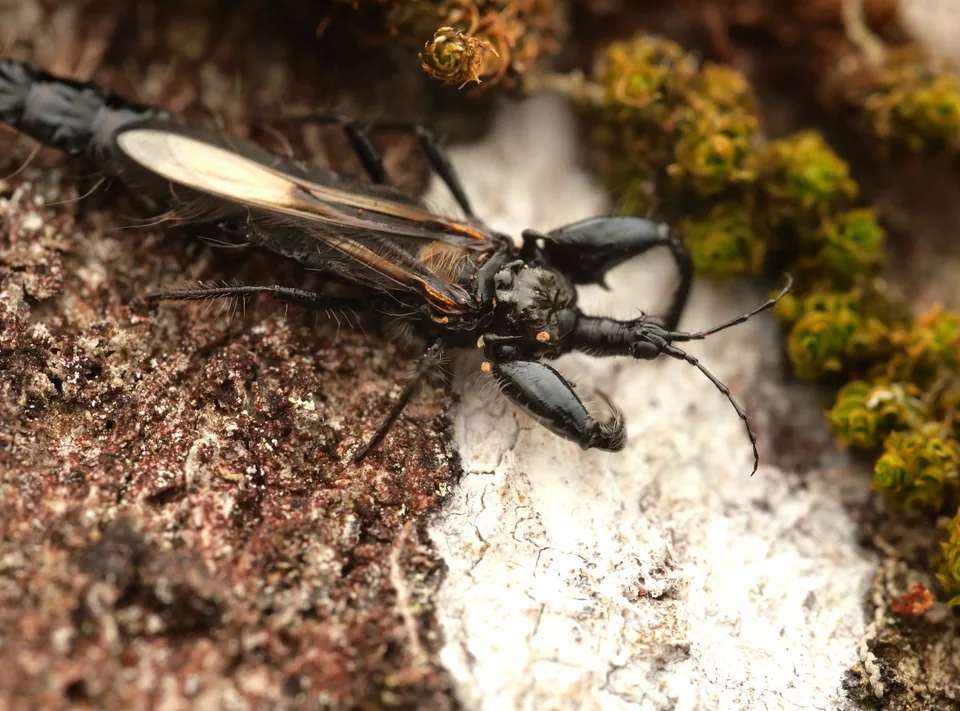
Insect
Thrips
Thysanoptera
Written by Emilio Marruso
Classification: Arthropoda › Hexapoda › Insecta
Plants it attacks
Plants in our guide where this problem is reported. Open a plant to see the sources.
- Hardy Kiwi
Symptom: High populations at bloom may cause scarring running from the base of the fruit to the tip.
- Kiwi
Symptom: Occasional root-knot nematodes, thrips, passion vine hopper, crown gall and root rot may affect the plant.
- Onion
Symptom: Leaves take on a silvery color with specks and often fold over.
- Ornamental Onion
Symptom: Leaf spots and thrips
- Chives
Symptom: Tiny, slender insects that feed on leaves; leaves turn silver or gray, may twist and die.
- Cockscomb
Symptom: Most common pests of celosia.
- Coffee
Symptom: Coffee plants are susceptible to scale, mealybug, thrips, caterpillars and mites.
- Giant Bamburanta
Symptom: Potential pests
- False Heather
Symptom: Pests to monitor for, particularly on indoor plants.
- Corn Plant
Symptom: Susceptible to thrips and mealybugs.
- Creeping Fig
Symptom: Pests to watch for
- Fennel
Symptom: Insects including aphids, thrips, and cabbage moth larva may cause leaf damage resulting in smaller bulbs.
Also reported on: African Marigold, Barberton Daisy, Bean, Black cardamom, Blackberry, Blanket Flower, Blue Iris, Cardamom, Carolina Rose, Castor Bean, Catnip, Cayenne Pepper, Chicory, Chinese Pittosporum, Cowpea, Cultivated garlic, Daylily, Dixie Iris, Fragrant Gladiolus, French Marigold, Gloxinia, Hairy Solomon's Seal, Hairystem Spiderwort, Hardy Fushia, Hardy Ice Plant, Jewel Orchid, Kaufmanniana Tulips, Kiwi, Lemon Marigold, Monstera, Myrtle, New Guinea Impatiens, Nodding Onion, Ornamental Onion, Peanut, Pigtail Plant, Royal Azalea, Sierra Snapdragon, Speedwell, Stock, Strawberry, Sweet Viburnum, Switchgrass, Tall Cosmos, Tea Camellia, Torch Lily, Umbrella Tree, Vine Honeysuckle, Virginia Rose, Walter's Viburnum, Watermelon, Wintergreen, Wollemia, Yellow Cosmos, Zinnia
Remedies
What our plant sheets report, with the outcome checked against official sources. Traditional remedies without an official source are flagged.
Treat
insecticidal soap spray Works
How: Mix one tablespoon of pure, unscented liquid soap (not detergent) into one quart of water and spray on the onion leaves, especially the undersides; reapply every 7-10 days or after heavy rainfall.
Reported for 6 plants: Onion, Ornamental Onion, Chicory, Daylily, Catnip, Castor Bean
insecticidal soap Works
How: Insecticidal soaps and horticultural oils will work with good coverage.
neem oil spray Works
How: Mix a couple of teaspoons with water and a few drops of mild soap, then spray it on affected plants.
Reported for 2 plants: Chives, Watermelon
cold storage of corms Works
How: Store the corms at 40-45 F for the winter; low temperatures kill thrips. Do not freeze the corms.
Reported for 1 plant: Fragrant Gladiolus
handpicking infested blossoms Works
How: Control in the home begins with buying clean plants and, if needed, handpicking of infested blossoms.
Reported for 1 plant: Gloxinia
neem oil Works
How: Apply neem oil thoroughly, especially to the undersides of leaves.
Reported for 1 plant: Tea Camellia
neem oil spray Partly works
How: Dilute neem oil according to the label (usually about two teaspoons per quart of water) and spray directly on the onion foliage in the early morning or late afternoon to minimize leaf burn; reapply every 7-10 days or after heavy rainfall.
Reported for 2 plants: Onion, African Marigold
aluminum foil mulch Partly works
How: In the home garden, planting in aluminum foil that has been laid on the bed tends to repel thrips.
Reported for 1 plant: Cowpea
aluminum foil under plants Partly works
How: Plant in aluminum foil laid on the bed.
Reported for 1 plant: Bean
horticultural oil Partly works
How: Similarly, horticultural oil, neem products, and kaolin clay have been shown to reduce populations of some thrips.
Reported for 1 plant: Vine Honeysuckle
hose water spray Partly works
How: Apply a stiff spray of water from a hose to wash thrips from plants when they are observed.
Reported for 1 plant: Nodding Onion
insecticidal soap spray Partly works
How: Spray insecticidal soap on any visible thrips every three days for two weeks; yellow sticky traps set out about 4 weeks after last frost give early warning.
Reported for 1 plant: Ornamental Onion
clipping spent blossoms Official source, not independently tested
How: Clip and remove spent blossoms regularly.
Reported for 1 plant: Virginia Rose
disposal of spent blossoms Official source, not independently tested
How: Dispose of spent blossoms to help remove thrips.
Reported for 1 plant: Dixie Iris
horticultural oil Official source, not independently tested
How: A treatment with horticultural oil, secondarily to lessening plant stress.
Reported for 1 plant: Hardy Ice Plant
insecticidal soap Official source, not independently tested
How: A treatment with insecticidal soap, secondarily to lessening plant stress.
Reported for 1 plant: Hardy Ice Plant
neem oil Official source, not independently tested
How: Spray as a growing-season treatment.
Reported for 1 plant: Blackberry
spunbonded row cover cages Official source, not independently tested
How: Enclose prized plants in cages wrapped with spunbonded row cover fabric to exclude thrips.
Reported for 1 plant: Dixie Iris
neem oil spray Not verified
How: Spray botanical insecticides such as neem oil (2%) during early infestation, with regular monitoring.
Reported for 3 plants: Cardamom, Chinese Pittosporum, Castor Bean
blue sticky traps Not verified
How: Blue chromatic traps help capture thrips.
Reported for 2 plants: Giant Bamburanta, Monstera
neem oil Not verified
How: Neem oil and azadirachtin can both be applied to help deal with a thrips issue; good coverage is important.
Reported for 2 plants: Pigtail Plant, Kaufmanniana Tulips
reflective mulch Not verified
How: Lay silver-colored plastic mulch around the plants
Reported for 2 plants: Cayenne Pepper, Barberton Daisy
strong stream of water Not verified
How: Blast the affected areas with a strong stream of water; soap sprays are usually effective but must be repeated regularly.
blue or yellow sticky traps Not verified
How: Attach bright blue or yellow sticky traps to stakes near the flowering bulbs.
Reported for 1 plant: Fragrant Gladiolus
22 more remedies are reported in single plant sheets.
Where it is found
No distribution data.