
How to Grow and Care for Ornamental Onion
Allium giganteum
Written by Emilio Marruso · last checked
Toxic to: Cats, Dogs, People · Why
At a glance
Giant allium is a perennial bulb that can reach 6 feet tall, a real eye-catcher in a sunny bed. Plant the bulbs in fall, 12 inches apart in full sun, and keep them moist while they grow; they handle summer drought well. It rarely needs feeding, so this tall beauty asks for very little in return.
- Sun
Full sun: 6 or more hours a day
What the sources say (2)
Light: Full sun (6 or more hours of direct sunlight a day)
Light: Full sun (6 or more hours of direct sunlight a day)
— Allium giganteum (Giant Ornamental Onion, Ornamental Onion) | North Carolina Extension Gardener Plant Toolbox [1] The plants can grow up to 6 feet tall and 2 feet wide and prefer full sun in well-drained amended garden soil.
— Allium giganteum (Giant Ornamental Onion, Ornamental Onion) | North Carolina Extension Gardener Plant Toolbox [1] - Water
Keep moist while growing; it handles summer drought, but soggy soil causes rot
What the sources say (2)
Watering: Keep moist during the growing season; tolerates summer drought
Although ornamental onion tolerates summer drought, it should be kept moist during the growing season.
— Allium giganteum (Giant Ornamental Onion, Ornamental Onion) | North Carolina Extension Gardener Plant Toolbox [1] Watering notes: Overly damp conditions leave plants prone to fungal issues, including black rot
Overly damp conditions leave ornamental onions prone to fungal issues, including a black rot that appears on the leaves and bulbs
— Allium giganteum (Giant Ornamental Onion, Ornamental Onion) | North Carolina Extension Gardener Plant Toolbox [1] - Cold
Survives winters down to −30 °F (−34.4 °C)
Very hardy · USDA 4a · RHS H7 · Z4
What the sources say (2)
Hardiness, coldest zone: 4a [winter low −34.4 to −31.7 °C (−30 to −25 °F)]
USDA Plant Hardiness Zone: 4a, 4b, 5a, 5b, 6a, 6b, 7a, 7b, 8a, 8b
— Allium giganteum (Giant Ornamental Onion, Ornamental Onion) | North Carolina Extension Gardener Plant Toolbox [1] Hardiness, warmest zone: 8b [winter low −9.4 to −6.7 °C (15 to 20 °F)]
USDA Plant Hardiness Zone: 4a, 4b, 5a, 5b, 6a, 6b, 7a, 7b, 8a, 8b
— Allium giganteum (Giant Ornamental Onion, Ornamental Onion) | North Carolina Extension Gardener Plant Toolbox [1] - Spacing
12 in between bulbs: one bulb per square foot
What the sources say (1)
Spacing: 30.48 cm (12 in) apart; one bulb per square foot
Plant in fall at a depth of 8 inches and 12 inches apart. A good rule for spacing ornamental onions is one bulb per square foot.
— Allium giganteum (Giant Ornamental Onion, Ornamental Onion) | North Carolina Extension Gardener Plant Toolbox [1] - Planting
Plant bulbs in fall; potted plants in spring or early fall
What the sources say (4)
Planting: Fall
According to NC State Extension: Plant in fall at a depth of 8 inches and 12 inches apart.
— Allium giganteum (Giant Ornamental Onion, Ornamental Onion) | North Carolina Extension Gardener Plant Toolbox [1] bulbs (Iowa State Extension): Those started from bulbs should be planted in the fall (October).
— All About Ornamental Onions | Yard and Garden [2] nursery container plants (Iowa State Extension): Alliums purchased from the garden center grown in nursery containers can be planted like other perennials in spring or early fall.
— All About Ornamental Onions | Yard and Garden [2] Plant in fall at a depth of 8 inches and 12 inches apart.
— Allium giganteum (Giant Ornamental Onion, Ornamental Onion) | North Carolina Extension Gardener Plant Toolbox [1] - Feeding
Usually no feeding; only if a soil test shows a need, a light all-purpose feed in early spring
What the sources say (3)
When: Early spring as the foliage emerges, only if a soil test shows a need
Fertilizer is unnecessary, but a light fertilizer application every few years using an all-purpose fertilizer in early spring as the foliage emerges can be done if a soil test shows it's needed.
— All About Ornamental Onions | Yard and Garden [2] How often: Usually unnecessary; at most a light application every few years if a soil test shows a need
Fertilizer is unnecessary, but a light fertilizer application every few years using an all-purpose fertilizer in early spring as the foliage emerges can be done if a soil test shows it's needed.
— All About Ornamental Onions | Yard and Garden [2] Mineral fertilizers: All-purpose fertilizer, light application, only if a soil test shows a need
Fertilizer is unnecessary, but a light fertilizer application every few years using an all-purpose fertilizer in early spring as the foliage emerges can be done if a soil test shows it's needed.
— All About Ornamental Onions | Yard and Garden [2] - Pests
Bulb mites, black rot and bulb rot; avoid overly damp soil
What the sources say (2)
Pests: bulb mites
Overly damp conditions leave ornamental onions prone to fungal issues, including a black rot that appears on the leaves and bulbs, destroying the plant. Bulb mites and bulb rot can occur.
— Allium giganteum (Giant Ornamental Onion, Ornamental Onion) | North Carolina Extension Gardener Plant Toolbox [1] Diseases: black rot, bulb rot
Overly damp conditions leave ornamental onions prone to fungal issues, including a black rot that appears on the leaves and bulbs, destroying the plant. Bulb mites and bulb rot can occur.
— Allium giganteum (Giant Ornamental Onion, Ornamental Onion) | North Carolina Extension Gardener Plant Toolbox [1] - Watch out
The tall stems may flop over: stake them
- Size
Up to 6 ft tall and 2 ft wide
What the sources say (2)
Mature height: up to 183 cm (6 ft)
The plants can grow up to 6 feet tall and 2 feet wide and prefer full sun in well-drained amended garden soil.
— Allium giganteum (Giant Ornamental Onion, Ornamental Onion) | North Carolina Extension Gardener Plant Toolbox [1] Mature width: up to 61 cm (2 ft)
The plants can grow up to 6 feet tall and 2 feet wide and prefer full sun in well-drained amended garden soil.
— Allium giganteum (Giant Ornamental Onion, Ornamental Onion) | North Carolina Extension Gardener Plant Toolbox [1] - Propagation
By dividing the bulbs or from seed
What the sources say (1)
Propagation: Division, Seed
Life Cycle: Bulb Perennial Recommended Propagation Strategy: Division Seed
— Allium giganteum (Giant Ornamental Onion, Ornamental Onion) | North Carolina Extension Gardener Plant Toolbox [1] - Safety
Poisonous if eaten: nausea, vomiting and diarrhea; also harmful to cats and dogs
Overview
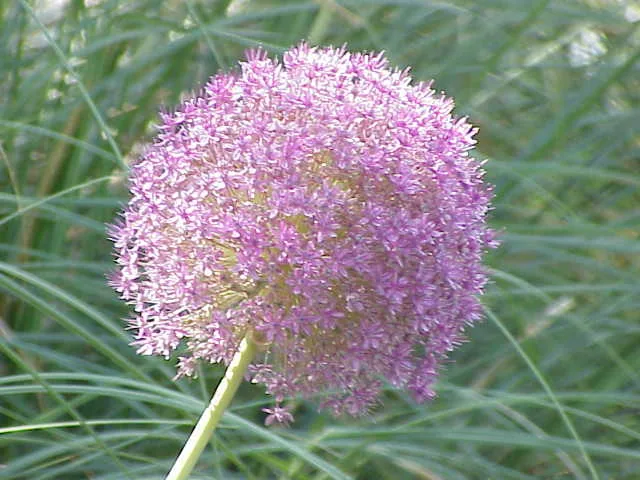
Giant ornamental onion is a bulbous herbaceous perennial native to the Himalaya region, growing up to 6 feet [1.8 m] tall. [1] It prefers full sun and well-drained soil, and should be kept moist during the growing season. [1] The showy pink flowers appear in early summer in a large umbel and last 2-3 weeks. [1]
This record is incomplete: the sources we read do not cover every field yet.
Not yet covered by our sources: Pruning
Ornamental Onion care
Measurements in square brackets are our conversion into the other unit system; the quoted text is unchanged.
How to water Ornamental Onion
Watering
Keep moist during the growing season; tolerates summer drought
What the sources say (1)
Although ornamental onion tolerates summer drought, it should be kept moist during the growing season.Watering notes
Overly damp conditions leave plants prone to fungal issues, including black rot
What the sources say (1)
Overly damp conditions leave ornamental onions prone to fungal issues, including a black rot that appears on the leaves and bulbsHow much light Ornamental Onion needs
Full sun (6 or more hours of direct sunlight a day)
What the sources say (2)
Light:
Full sun (6 or more hours of direct sunlight a day)The plants can grow up to 6 feet tall and 2 feet wide and prefer full sun in well-drained amended garden soil.How much cold Ornamental Onion can take
Hardiness, coldest zone
4a [winter low −34.4 to −31.7 °C (−30 to −25 °F)]
What the sources say (1)
USDA Plant Hardiness Zone:
4a, 4b, 5a, 5b, 6a, 6b, 7a, 7b, 8a, 8bHardiness, warmest zone
8b [winter low −9.4 to −6.7 °C (15 to 20 °F)]
What the sources say (1)
USDA Plant Hardiness Zone:
4a, 4b, 5a, 5b, 6a, 6b, 7a, 7b, 8a, 8bWhere to grow Ornamental Onion
30.48 cm (12 in) apart; one bulb per square foot
What the sources say (1)
Plant in fall at a depth of 8 inches and 12 inches apart. A good rule for spacing ornamental onions is one bulb per square foot.How to propagate Ornamental Onion
Division, Seed
What the sources say (1)
Life Cycle:
Bulb
Perennial
Recommended Propagation Strategy:
Division
SeedHow to grow Ornamental Onion
The plant
Life cycle
perennial
What the sources say (1)
Ornamental Onion is a bulbous herbaceous perennial in the onion family (Amaryllidaceae) native to the Himalaya regionFamily
Amaryllidaceae
What the sources say (1)
Ornamental Onion is a bulbous herbaceous perennial in the onion family (Amaryllidaceae) native to the Himalaya regionMature height
up to 183 cm (6 ft)
What the sources say (1)
The plants can grow up to 6 feet tall and 2 feet wide and prefer full sun in well-drained amended garden soil.Mature width
up to 61 cm (2 ft)
What the sources say (1)
The plants can grow up to 6 feet tall and 2 feet wide and prefer full sun in well-drained amended garden soil.Pests and diseases
Pests
bulb mites
What the sources say (1)
Overly damp conditions leave ornamental onions prone to fungal issues, including a black rot that appears on the leaves and bulbs, destroying the plant. Bulb mites and bulb rot can occur.Diseases
black rot, bulb rot
What the sources say (1)
Overly damp conditions leave ornamental onions prone to fungal issues, including a black rot that appears on the leaves and bulbs, destroying the plant. Bulb mites and bulb rot can occur.Fertilizing
When
Early spring as the foliage emerges, only if a soil test shows a need
What the sources say (1)
Fertilizer is unnecessary, but a light fertilizer application every few years using an all-purpose fertilizer in early spring as the foliage emerges can be done if a soil test shows it's needed.How often
Usually unnecessary; at most a light application every few years if a soil test shows a need
What the sources say (1)
Fertilizer is unnecessary, but a light fertilizer application every few years using an all-purpose fertilizer in early spring as the foliage emerges can be done if a soil test shows it's needed.Mineral fertilizers
All-purpose fertilizer, light application, only if a soil test shows a need
What the sources say (1)
Fertilizer is unnecessary, but a light fertilizer application every few years using an all-purpose fertilizer in early spring as the foliage emerges can be done if a soil test shows it's needed.Ornamental Onion pests and problems
Fungal issues and black rot
Symptom: Black rot on leaves and bulbs, destroying the plant
What to do: Avoid overly damp conditions
What the sources say (1)
Overly damp conditions leave ornamental onions prone to fungal issues, including a black rot that appears on the leaves and bulbs
— Allium giganteum (Giant Ornamental Onion, Ornamental Onion) | North Carolina Extension Gardener Plant Toolbox [1] Bulb mites and bulb rot
Symptom: Bulb mites and bulb rot can occur
What to do: Not specified in the source
What the sources say (1)
destroying the plant. Bulb mites and bulb rot can occur.
— Allium giganteum (Giant Ornamental Onion, Ornamental Onion) | North Carolina Extension Gardener Plant Toolbox [1] Tall stems
Symptom: Tall stems may flop
What to do: Stake the tall stems
What the sources say (1)
Although ornamental onion tolerates summer drought, it should be kept moist during the growing season. The tall stems may need to be staked.
— Allium giganteum (Giant Ornamental Onion, Ornamental Onion) | North Carolina Extension Gardener Plant Toolbox [1]
Remedies
Each remedy shows what official sources say about it; traditional remedies without an official source are marked as such. Harmful ones are listed so you know to avoid them.
Treating the plant
white rot
removing and destroying infected plants Not verified
Traditional remedy, not verified by an official source.
How: Promptly remove and destroy infected plant matter when symptoms are first noticed.
soil solarization Not verified
Traditional remedy, not verified by an official source.
How: Solarization of the growing space.
Is Ornamental Onion toxic to pets?
Reported by the source, quoted verbatim. This is not medical or veterinary advice: if a person or an animal may have eaten this plant, contact a poison control centre or a veterinarian.
Animals
Poisonous to Humans Problem for Cats Problem for Dogs
[1]The source flags the risk for this animal but does not explain why.
People
Poisonous through ingestion. Symptoms may include: nausea, vomiting, and diarrhea.
[1]
Calendar
Planting
Fall
What each source says
According to NC State Extension: Fall
bulbs (Iowa State Extension): Fall (October)
nursery container plants (Iowa State Extension): Spring or early fall
What the sources say (4)
According to NC State Extension: Plant in fall at a depth of 8 inches and 12 inches apart.bulbs (Iowa State Extension): Those started from bulbs should be planted in the fall (October).nursery container plants (Iowa State Extension): Alliums purchased from the garden center grown in nursery containers can be planted like other perennials in spring or early fall.Plant in fall at a depth of 8 inches and 12 inches apart.Pruning
Not stated in the sources we read.
Months as given by the sources, which are mostly from the United States (northern hemisphere). In the southern hemisphere they shift by about six months.
Similar plants
- Allium triquetrum Allium triquetrum
- Blue Globe Onion Allium caeruleum
- Broadleaf wild leek Allium ampeloprasum
- Field Garlic Allium vineale
- Garlic Chives Allium tuberosum
- Lily Leek Allium moly
- Nodding Onion Allium cernuum
- Onion Allium cepa
Sources
Every value above is quoted from these documents. Links lead to the original publisher.
- Allium giganteum (Giant Ornamental Onion, Ornamental Onion) | North Carolina Extension Gardener Plant Toolbox · plants.ces.ncsu.edu, consulted
- All About Ornamental Onions | Yard and Garden · yardandgarden.extension.iastate.edu, consulted
Written by Emilio Marruso · last checked