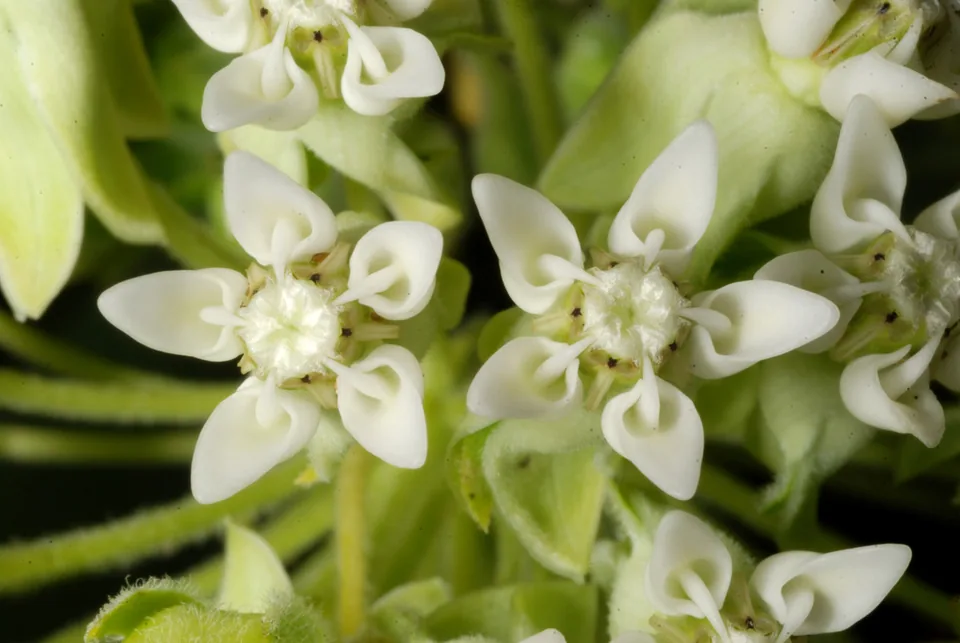
Cómo cultivar y cuidar Thlalayotl de México
Asclepias syriaca
Escrito por Emilio Marruso · última revisión
Tóxica para: Gatos, Perros, Caballos, Personas · Por qué
De un vistazo
El algodoncillo es una perenne resistente: una vez crecido, aguanta la sequía y los suelos secos, y prospera en casi cualquier tierra, de pH 4 a 10. Alcanza de 90 cm a 1,5 m de alto y se siembra fácilmente al aire libre en octubre o noviembre. Solo quita las vainas jóvenes si quieres frenar sus raíces invasoras.
- Riego
Aguanta la sequía cuando ya es adulto; las plántulas necesitan más agua y no tolera el suelo encharcado
Qué dicen las fuentes (4)
Riego: Tolerante a la sequía cuando está completamente desarrollada; tolera suelos secos
Full grown plants are drought tolerant because of their deep taproot, but seedlings are more drought sensitive than other weed species
— Common milkweed | CALS [4] It grows in average, well-drained soils in full sun but can tolerate poor or dry soils.
— Asclepias syriaca (Common Milkweed) | North Carolina Extension Gardener Plant Toolbox [1] Notas sobre el riego: Las plántulas son más sensibles a la sequía; no tolera suelos húmedos
Full grown plants are drought tolerant because of their deep taproot, but seedlings are more drought sensitive than other weed species
— Common milkweed | CALS [4] The species does not tolerate wet soils. It thrives on soils with a wide range of textures provided drainage is adequate
— Common milkweed | CALS [4] - Frío
Aguanta inviernos de hasta −40 °C (−40 °F)
Muy rústica · USDA 3a · RHS H7 · Z3
Qué dicen las fuentes (2)
Rusticidad, zona más fría: 3a [mínima invernal de −40 a −37,2 °C (de −40 a −35 °F)]
3a, 3b, 4a, 4b, 5a, 5b, 6a, 6b, 7a, 7b, 8a, 8b, 9a, 9b
— Asclepias syriaca (Common Milkweed) | North Carolina Extension Gardener Plant Toolbox [1] Rusticidad, zona más cálida: 9b [mínima invernal de −3,9 a −1,1 °C (de 25 a 30 °F)]
3a, 3b, 4a, 4b, 5a, 5b, 6a, 6b, 7a, 7b, 8a, 8b, 9a, 9b
— Asclepias syriaca (Common Milkweed) | North Carolina Extension Gardener Plant Toolbox [1] - Suelo
Crece en casi cualquier suelo, de pH 4 a 10
Qué dicen las fuentes (2)
pH del suelo, mínimo: 4
It tolerates pH from 4 to 10 (Cramer and Burnside 1982) but does best on slightly alkaline soils.
— Common milkweed | CALS [4] pH del suelo, máximo: 10
It tolerates pH from 4 to 10 (Cramer and Burnside 1982) but does best on slightly alkaline soils.
— Common milkweed | CALS [4] - Plantación
Trozos de raíz a principios de primavera; plántulas sin riesgo de heladas y con 4 hojas
Qué dicen las fuentes (4)
Plantación: A principios de primavera para esquejes de rizoma; los trasplantes salen al exterior una vez que el peligro de heladas haya pasado y la planta tenga 4 hojas
esquejes de rizoma: Rhizomes can be cut and transplanted early in the spring.
— Common Milkweed [2] trasplantes cultivados a partir de semilla: Once the danger of frost is past and the plant has 4 leaves, they are ready to go outside.
— Planting Milkweed in Your Home Garden | Iowa State University Extension and Outreach Linn County [7] Rhizomes can be cut and transplanted early in the spring.
— Common Milkweed [2] Once the danger of frost is past and the plant has 4 leaves, they are ready to go outside.
— Planting Milkweed in Your Home Garden | Iowa State University Extension and Outreach Linn County [7] - Cosecha
Recoge las vainas uno o dos días antes de que se abran, cuando las semillas estén marrones
Qué dicen las fuentes (3)
Cosecha: Vainas de semillas cuando están a uno o dos días de abrirse
Mature pods are those that are within a day or two of opening.
— Planting Milkweed in Your Home Garden | Iowa State University Extension and Outreach Linn County [7] Cómo cosechar: Las vainas están maduras cuando están a uno o dos días de abrirse y las semillas están maduras y marrones.
Mature pods are those that are within a day or two of opening.
— Planting Milkweed in Your Home Garden | Iowa State University Extension and Outreach Linn County [7] The seeds need to be mature and brown.
— Planting Milkweed in Your Home Garden | Iowa State University Extension and Outreach Linn County [7] - Plagas
Pulgones, trips y ácaros; arranca enseguida las plantas que amarilleen y se queden enanas
Qué dicen las fuentes (3)
Plagas: pulgones, trips, ácaros
Milkweed-feeding aphids are common
— Asclepias syriaca (Common Milkweed) | North Carolina Extension Gardener Plant Toolbox [1] If these tiny thrips or mites are present on the undersides of the leaves
— Common Milkweed [2] Enfermedades: amarillamiento del algodoncillo (fitoplasma)
Milkweed Yellows phytoplasma disease could show symptoms such as phyllody, virescence
— Common Milkweed [2] - Atención
Se extiende por sus raíces y puede volverse invasora; quita las vainas jóvenes para frenarla
- Tamaño
De 90 cm a 1,5 m de alto y 20–30 cm de ancho
Qué dicen las fuentes (2)
Altura adulta: 91-152 cm (3-5 pies)
Height: 3 ft. 0 in. - 5 ft. 0 in.
— Asclepias syriaca (Common Milkweed) | North Carolina Extension Gardener Plant Toolbox [1] Anchura adulta: 20-30 cm (8 pulgadas - 1 pie)
Width: 0 ft. 8 in. - 1 ft. 0 in.
— Asclepias syriaca (Common Milkweed) | North Carolina Extension Gardener Plant Toolbox [1] - Multiplicación
Por semilla o con trozos cortados de sus raíces rastreras
Qué dicen las fuentes (1)
Propagación: Semillas y esquejes de raíz (rizomas cortados y trasplantados)
It propagates easily by seed or root cuttings and will naturalize in the garden. Rhizomes can be cut and transplanted early in the spring.
— Common Milkweed [2] - Siembra
Siembra al aire libre en octubre–noviembre bajo 6 mm de tierra; en primavera, guarda las semillas en frío
Qué dicen las fuentes (5)
Siembra: Siembra directa en otoño (octubre y noviembre); para siembra de primavera, mantén las semillas frías hasta plantar
siembra directa en otoño: October & November are good months. The soil needs to be cool enough that the seeds do not germinate immediately.
— Planting Milkweed in Your Home Garden | Iowa State University Extension and Outreach Linn County [7] siembra de primavera: Plant in small pots or trays about 4-6 weeks before the last frost date.
— Planting Milkweed in Your Home Garden | Iowa State University Extension and Outreach Linn County [7] October & November are good months. The soil needs to be cool enough that the seeds do not germinate immediately.
— Planting Milkweed in Your Home Garden | Iowa State University Extension and Outreach Linn County [7] If planting is going to occur in the spring, keep seeds cold until ready to plant.
— Planting Milkweed in Your Home Garden | Iowa State University Extension and Outreach Linn County [7] Profundidad de siembra: aproximadamente 0.6 cm (1/4 de pulgada) de tierra sobre las semillas dispersas
Scatter seeds and cover with approximately ¼” soil.
— Planting Milkweed in Your Home Garden | Iowa State University Extension and Outreach Linn County [7] - Seguridad
Tóxica para personas, gatos, perros y caballos; su savia lechosa irrita la piel y los ojos
Resumen
Proporciona néctar para los polinizadores y es una planta hospedera larval para las mariposas monarca. [1] Se propaga desde su sistema de raíces y a menudo es demasiado agresiva para jardines y bordes. [5]
Citado en inglés, como en la fuente.
Esta ficha está incompleta: las fuentes consultadas aún no cubren todos los campos.
Aún no cubierto por nuestras fuentes: Poda
Cuidados
Riego
Riego
Tolerante a la sequía cuando está completamente desarrollada; tolera suelos secos
Qué dicen las fuentes (2)
Full grown plants are drought tolerant because of their deep taproot, but seedlings are more drought sensitive than other weed speciesIt grows in average, well-drained soils in full sun but can tolerate poor or dry soils.Notas sobre el riego
Las plántulas son más sensibles a la sequía; no tolera suelos húmedos
Qué dicen las fuentes (2)
Full grown plants are drought tolerant because of their deep taproot, but seedlings are more drought sensitive than other weed speciesThe species does not tolerate wet soils. It thrives on soils with a wide range of textures provided drainage is adequateLuz
Las fuentes dan valores distintos según la región, la zona o las condiciones de cultivo.
Lo que dice cada fuente
Según NC State Extension: Pleno sol; no tolera la sombra
Según University of Maine Extension: Prefiere pleno sol; puede tolerar semisombra
Según Cornell weed science: Crece mejor con 30-100% de luz solar plena
Qué dicen las fuentes (5)
Según NC State Extension: It does not tolerate shade.Según University of Maine Extension: -prefers full sun
- can tolerate part shadeSegún Cornell weed science: Common milkweed grows best in 30-100% of full sunlightIt grows in average, well-drained soils in full sun but can tolerate poor or dry soils.Milkweed grows best in sunny location, allowing plenty of room between plants for the roots to spread.Clima y frío
Rusticidad, zona más fría
3a [mínima invernal de −40 a −37,2 °C (de −40 a −35 °F)]
Qué dicen las fuentes (1)
3a, 3b, 4a, 4b, 5a, 5b, 6a, 6b, 7a, 7b, 8a, 8b, 9a, 9bRusticidad, zona más cálida
9b [mínima invernal de −3,9 a −1,1 °C (de 25 a 30 °F)]
Qué dicen las fuentes (1)
3a, 3b, 4a, 4b, 5a, 5b, 6a, 6b, 7a, 7b, 8a, 8b, 9a, 9bSuelo
pH del suelo, mínimo
4
Qué dicen las fuentes (1)
It tolerates pH from 4 to 10 (Cramer and Burnside 1982) but does best on slightly alkaline soils.pH del suelo, máximo
10
Qué dicen las fuentes (1)
It tolerates pH from 4 to 10 (Cramer and Burnside 1982) but does best on slightly alkaline soils.Propagación
Semillas y esquejes de raíz (rizomas cortados y trasplantados)
Qué dicen las fuentes (1)
It propagates easily by seed or root cuttings and will naturalize in the garden. Rhizomes can be cut and transplanted early in the spring.Cultivo
La planta
Ciclo de vida
perenne
Qué dicen las fuentes (1)
Life Cycle: PerennialFamilia
Apocynaceae
Altura adulta
91-152 cm (3-5 pies)
Qué dicen las fuentes (1)
Height: 3 ft. 0 in. - 5 ft. 0 in.Anchura adulta
20-30 cm (8 pulgadas - 1 pie)
Qué dicen las fuentes (1)
Width: 0 ft. 8 in. - 1 ft. 0 in.Siembra y crecimiento
Profundidad de siembra
aproximadamente 0.6 cm (1/4 de pulgada) de tierra sobre las semillas dispersas
Qué dicen las fuentes (1)
Scatter seeds and cover with approximately ¼” soil.Cosecha y conservación
Cómo cosechar
Las vainas están maduras cuando están a uno o dos días de abrirse y las semillas están maduras y marrones.
Qué dicen las fuentes (2)
Mature pods are those that are within a day or two of opening.The seeds need to be mature and brown.Conservación
Guarda las semillas secas en un ambiente fresco y seco.
Qué dicen las fuentes (1)
Store dried seeds in a cool dry environment.Guardar semillas
Seca las vainas recién recolectadas en un área abierta con buena circulación de aire; una vez completamente secas, separa las semillas de la coma (por ejemplo, desmenuzándolas en una bolsa de papel y agitándolas). No recolectes vainas abiertas que contengan chinches del algodoncillo.
Qué dicen las fuentes (2)
Dry freshly collected pods in an open area with good air circulation. Once the pods are thoroughly dry, it is time to separate the seeds from the comaDo not collect open pods containing these milkweed bugs.Plagas y enfermedades
Plagas
pulgones, trips, ácaros
Enfermedades
amarillamiento del algodoncillo (fitoplasma)
Qué dicen las fuentes (1)
Milkweed Yellows phytoplasma disease could show symptoms such as phyllody, virescenceProblemas
Pulgones
Síntoma: Los pulgones que se alimentan del algodoncillo son comunes.
Qué hacer: Se pueden dejar solos y atraerán insectos benéficos que se alimentan de ellos.
Qué dicen las fuentes (1)
Milkweed-feeding aphids are common, though can be left alone and will attract beneficial insects that will feed on them.
— Asclepias syriaca (Common Milkweed) | North Carolina Extension Gardener Plant Toolbox [1] Fitoplasma del amarillamiento del algodoncillo
Síntoma: Filidia, virescencia, escoba de bruja, amarillamiento, hoja pequeña y retraso del crecimiento.
Qué hacer: Elimina rápidamente los algodoncillos sospechosos de fitoplasma al primer signo; al desenterrar una planta infectada reduces la propagación por vectores insectos.
Qué dicen las fuentes (1)
one way to get phytoplasma under control is to quickly and effectively eliminate any milkweeds suspected of phytoplasma at the first sign of the disease.
— Common Milkweed [2] Propagación excesiva
Síntoma: La planta se propaga desde su sistema de rizomas y se vuelve maleza.
Qué hacer: Retira las vainas de semillas inmaduras para limitar la propagación.
Qué dicen las fuentes (1)
If you already have common milkweed in the garden, you can prevent further spread by removing immature seed pods.
— Milkweed is taking over my perennial garden. How can I save some for the monarch butterflies but keep it from spreading? | Extension [5]
Remedios
Cada remedio indica qué dicen las fuentes oficiales; los remedios tradicionales sin fuente oficial aparecen marcados. Los perjudiciales están para que sepas evitarlos.
Primeros auxilios
Primeros auxilios: no sustituyen al médico
irritación de la piel por la savia
lavarse la piel con jabón y agua Fuente oficial, sin prueba independiente
If there is any persistent skin or eye pain, seek medical examination and treatment.
— poison.org [8] Wear gloves when handling milkweed plants.
— poison.org [8] Cómo: Lava inmediatamente el área afectada a fondo con jabón y agua.
If your skin comes into contact with milkweed sap, you should immediately wash the affected area thoroughly with soap and water.
— poison.org [8]
irritación ocular por la savia
Enjuaga el ojo con agua a temperatura ambiente. Fuente oficial, sin prueba independiente
If there is any persistent skin or eye pain, seek medical examination and treatment.
— poison.org [8] Cómo: Enjuaga suavemente el ojo con agua a temperatura ambiente durante 10-15 minutos.
If someone experiences eye irritation after getting sap in their eye, gently rinse the eye with room-temperature water for 10–15 minutes.
— poison.org [8]
intoxicación por ingestión
llama al centro de toxicología Fuente oficial, sin prueba independiente
Eating milkweed, even when it is cooked or boiled, is not recommended and is potentially very dangerous.
— poison.org [8] Cómo: Usa la herramienta en línea de control de intoxicaciones o llama al centro de intoxicaciones; la orientación de expertos es gratuita, confidencial y está disponible las 24 horas del día.
or call your poison center at 1-800-222-1222
— poison.org [8]
Cuidar la planta
pulgones
chorro constante de agua Funciona en parte
Control measures need to be carefully weighed to avoid impacts to monarch caterpillars that may be feeding as well.
— extension.illinois.edu [9] Cómo: Un chorro constante de agua puede desprender los pulgones y romper las colonias, pero debe ser realmente dirigido.
A steady stream of water can be used to knock off aphids and break up colonies, but it must be really targeted.
— extension.illinois.edu [9] Qué dicen las pruebas A steady stream of water can be used to knock off aphids and break up colonies, but it must be really targeted.
— extension.illinois.edu [9] Aplasta y limpia Fuente oficial, sin prueba independiente
Cómo: Los pulgones regordetes son fáciles de aplastar y simplemente se limpian de las hojas.
The rapidly growing, plump aphids are really easy to squish and just wipe off leaves.
— extension.illinois.edu [9] Deja los pulgones solos para atraer insectos benéficos. Funciona en parte
Cómo: Los pulgones pueden dejarse solos y atraerán insectos benéficos que se alimentan de ellos.
Milkweed-feeding aphids are common, though can be left alone and will attract beneficial insects that will feed on them.
— Asclepias syriaca (Common Milkweed) | North Carolina Extension Gardener Plant Toolbox [1] Qué dicen las pruebas Many times, natural enemies of aphids can eventually even the playing field and achieve fairly good control over time.
— extension.illinois.edu [9] spray de jabón para platos Perjudicial
Be careful if monarch eggs or caterpillars are present.
— gardeningsolved.com [10] Control measures need to be carefully weighed to avoid impacts to monarch caterpillars that may be feeding as well.
— extension.illinois.edu [9] Cómo: Rocía las plantas afectadas con unas gotas de jabón para platos mezcladas con agua; ten cuidado si hay huevos u orugas de mariposa monarca presentes.
You can also spray affected plants with a few drops of dish soap mixed with water.
— gardeningsolved.com [10] Qué dicen las pruebas spraying home remedies that contain dish detergent on plants on a sunny day can injure the plant, essentially burning it.
— extension.psu.edu [11] spray de aceite esencial de clavo, menta, romero o tomillo No verificado
Remedio tradicional, no verificado por una fuente oficial.
Control measures need to be carefully weighed to avoid impacts to monarch caterpillars that may be feeding as well.
— extension.illinois.edu [9] Cómo: Un spray hecho con 4-5 gotas de aceites esenciales de clavo, menta, romero o tomillo mezclados con una taza de agua, aplicado cada 2-3 días por la mañana o por la tarde.
ácaros
fuerte chorro de agua en el envés de las hojas Fuente oficial, sin prueba independiente
Cómo: Rocía el envés de las hojas con una fuerte dosis de agua.
you can try to spray the undersides of the leaves with a strong dose of water.
— Common Milkweed [2]
enfermedades fúngicas
Poda el crecimiento enfermo Fuente oficial, sin prueba independiente
Cómo: Si se sospecha de un hongo o bacteria, intenta podar todo lo que parezca enfermo.
If you suspect a fungus or bacteria in your plants, you can try cutting back anything that looks diseased.
— Common Milkweed [2]
amarillamiento del algodoncillo
Desentierra las plantas infectadas Funciona
Cómo: Elimina rápidamente los algodoncillos sospechosos de fitoplasma al primer signo de la enfermedad desenterrándolos, para que los insectos no se alimenten de ellos y lo propaguen.
By digging out an infected plant, you reduce the chances of other insects feeding on that plant and becoming vectors of the disease.
— Common Milkweed [2] Qué dicen las pruebas By digging out an infected plant, you reduce the chances of other insects feeding on that plant and becoming vectors of the disease.
— Common Milkweed [2]
propagación excesiva
Elimina las vainas de semillas inmaduras. Funciona en parte
Cómo: Retira las vainas de semillas inmaduras para evitar que se propague más; la planta volverá a aparecer en el mismo lugar el próximo verano.
you can prevent further spread by removing immature seed pods.
— Milkweed is taking over my perennial garden. How can I save some for the monarch butterflies but keep it from spreading? | Extension [5] Qué dicen las pruebas you can prevent further spread by removing immature seed pods. Since milkweed is a perennial, it will emerge again in the same spot next summer, but its spread will be more limited.
— Milkweed is taking over my perennial garden. How can I save some for the monarch butterflies but keep it from spreading? | Extension [5]
Cómo eliminarla
algodoncillo no deseado
arrancado a mano Funciona en parte
Common milkweed is slightly toxic when eaten in large quantities and can cause rashes in some people when its milky sap touches the skin, so protect yourself by wearing gloves, long sleeves and long pants when working with the plant.
— hunker.com [12] Be patient and wait to remove milkweed plants until after the butterflies have emerged from their crysalids, or in the late spring before the butterflies arrive.
— Milkweed is taking over my perennial garden. How can I save some for the monarch butterflies but keep it from spreading? | Extension [5] Cómo: Arranca la planta entera, incluyendo la mayor parte del rizoma posible, mejor cuando las plantas son jóvenes; si no hay vainas de semillas, coloca las plantas en una capa fina para que se sequen durante unos 10 días antes de hacer compost.
To reduce the risk of severing rhizomes, hand pull the entire plant, including the roots.
— hunker.com [12] Qué dicen las pruebas Individual plants can also be repeatedly hand-pulled or treated with an herbicide, but don't be too hasty this season.
— Milkweed is taking over my perennial garden. How can I save some for the monarch butterflies but keep it from spreading? | Extension [5] Siega cada dos o tres semanas antes de que se formen las vainas. Funciona en parte
Common milkweed is slightly toxic when eaten in large quantities and can cause rashes in some people when its milky sap touches the skin, so protect yourself by wearing gloves, long sleeves and long pants when working with the plant.
— hunker.com [12] Cómo: Siega cada dos o tres semanas antes de que se formen las vainas de semillas; la siega debilita la planta y con el tiempo muere. Si las vainas ya se han formado, corta las plantas cerca de la base y recoge los restos.
One way to kill common milkweed is to mow it every two to three weeks before the seed pods form.
— hunker.com [12] Qué dicen las pruebas Rotation with alfalfa helps reduce vigor of common milkweed populations due to frequent mowing (Bhowmik 1994, Cramer and Burnside 1982).
— Common milkweed | CALS [4] cultivo superficial repetido Funciona
Cómo: Cultivos superficiales repetidos que cortan los brotes antes de que puedan reabastecer las raíces; un solo arado profundo no controlará la maleza.
Consequently, repeated shallow cultivations that cut shoots before they can replenish the roots are required.
— Common milkweed | CALS [4] Qué dicen las pruebas Consequently, repeated shallow cultivations that cut shoots before they can replenish the roots are required.
— Common milkweed | CALS [4] Desentierra los rizomas. No verificado
Remedio tradicional, no verificado por una fuente oficial.
Common milkweed is slightly toxic when eaten in large quantities and can cause rashes in some people when its milky sap touches the skin, so protect yourself by wearing gloves, long sleeves and long pants when working with the plant.
— hunker.com [12] Cómo: Desentierra los rizomas, teniendo mucho cuidado de no cortarlos y dejar alguno atrás, ya que nuevas plantas pueden volver a crecer a partir de estos.
capa de mantillo sobre la zona No verificado
Remedio tradicional, no verificado por una fuente oficial.
Cómo: Extiende una capa de mantillo de 3 a 4 pulgadas sobre la zona donde se eliminó el algodoncillo para evitar que vuelva a brotar.
Venenosa para los animales
Según la fuente, citada textualmente. No es un consejo médico ni veterinario: si una persona o un animal pudo haber ingerido esta planta, contacta con un centro de toxicología o con un veterinario.
Animales
The bark, flower, seed pods, leaves, roots, and stems are poisonous, which can be a problem for cats, dogs, and horses.
[1]
Personas
Can cause stomach upset, nausea, vomiting, abdominal pain, diarrhea, weakness, lethargy, and confusion if eaten in quantity.
[1]- Partes venenosas
Poison Part: Bark Flowers Fruits Leaves Roots Seeds Stems
[1]- Principio tóxico
Poison Toxic Principle: Cardiac glycosides and resinoids
[1]- Síntomas
Can cause stomach upset, nausea, vomiting, abdominal pain, diarrhea, weakness, lethargy, and confusion if eaten in quantity.
[1]- Gravedad
Poison Severity: Low
[1]
Milky sap can cause contact dermatitis and eye irritation.
[1]
Calendario
Siembra
Siembra directa en otoño (octubre y noviembre); para siembra de primavera, mantén las semillas frías hasta plantar
Lo que dice cada fuente
siembra directa en otoño: Octubre y noviembre
siembra de primavera: Mantén las semillas frías hasta plantar; en macetas o bandejas, unas 4-6 semanas antes de la última fecha de helada
Qué dicen las fuentes (4)
siembra directa en otoño: October & November are good months. The soil needs to be cool enough that the seeds do not germinate immediately.siembra de primavera: Plant in small pots or trays about 4-6 weeks before the last frost date.October & November are good months. The soil needs to be cool enough that the seeds do not germinate immediately.If planting is going to occur in the spring, keep seeds cold until ready to plant.Plantación
A principios de primavera para esquejes de rizoma; los trasplantes salen al exterior una vez que el peligro de heladas haya pasado y la planta tenga 4 hojas
Lo que dice cada fuente
esquejes de rizoma: Principios de primavera
trasplantes cultivados a partir de semilla: Al exterior una vez que el peligro de heladas haya pasado y la planta tenga 4 hojas
Qué dicen las fuentes (4)
esquejes de rizoma: Rhizomes can be cut and transplanted early in the spring.trasplantes cultivados a partir de semilla: Once the danger of frost is past and the plant has 4 leaves, they are ready to go outside.Rhizomes can be cut and transplanted early in the spring.Once the danger of frost is past and the plant has 4 leaves, they are ready to go outside.Cosecha
Vainas de semillas cuando están a uno o dos días de abrirse
Qué dicen las fuentes (1)
Mature pods are those that are within a day or two of opening.Poda
No figura en las fuentes consultadas.
Meses tal como los dan las fuentes, en su mayoría de Estados Unidos (hemisferio norte). En el hemisferio sur se desplazan unos seis meses.
Respecto a las heladas
Estimación menos precisa: no hay ninguna estación meteorológica a menos de 300 km.
Busca las fechas de heladas por código postal o ciudad
Siembra en interior: de 4 a 6 semanas antes de la última helada
Plant in small pots or trays about 4-6 weeks before the last frost date.
— Planting Milkweed in Your Home Garden | Iowa State University Extension and Outreach Linn County [7] Trasplante: hacia la última helada
Once the danger of frost is past and the plant has 4 leaves, they are ready to go outside.
— Planting Milkweed in Your Home Garden | Iowa State University Extension and Outreach Linn County [7]
Cuenta desde las fechas medias de las heladas de tu zona.
Valores orientativos
Valores de una fuente secundaria, no comprobados palabra por palabra como el resto de esta página. Úselos como punto de partida.
- Horas de sol
- 6-8 horasValor orientativo, adáptalo a tu clima · Fuente secundaria
- Resiste la sequía
- SíValor orientativo, adáptalo a tu clima · Fuente secundaria
- Suelo
- Arenoso Franco Arcilloso PedregosoValor orientativo, adáptalo a tu clima · Fuente secundaria
- Nivel de cuidado
- MedioValor orientativo, adáptalo a tu clima · Fuente secundaria
- Crecimiento
- BajoValor orientativo, adáptalo a tu clima · Fuente secundaria
- Poda
- Marzo, Abril, Mayo, Junio, Julio, AgostoValor orientativo, adáptalo a tu clima · Fuente secundaria
Plantas similares
- Butterfly Weed Asclepias tuberosa
- Clasping Milkweed Asclepias amplexicaulis
- Few-flower Milkweed Asclepias lanceolata
- Green Antelopehorn Asclepias viridis
- Green Comet Milkweed Asclepias viridiflora
- Poke Milkweed Asclepias exaltata
- Purple Milkweed Asclepias purpurascens
- Red Milkweed Asclepias rubra
Fuentes
Cada valor anterior se cita de estos documentos. Los enlaces llevan al editor original.
- Asclepias syriaca (Common Milkweed) | North Carolina Extension Gardener Plant Toolbox · plants.ces.ncsu.edu, consultado
- Common Milkweed · extension.psu.edu, consultado
- Common milkweed - Cooperative Extension: Maine Wild Blueberries - University of Maine Cooperative Extension · extension.umaine.edu, consultado
- Common milkweed | CALS · cals.cornell.edu, consultado
- Milkweed is taking over my perennial garden. How can I save some for the monarch butterflies but keep it from spreading? | Extension · extension.unh.edu, consultado
- Asclepias exaltata (Poke Milkweed) | North Carolina Extension Gardener Plant Toolbox · plants.ces.ncsu.edu, consultado
- Planting Milkweed in Your Home Garden | Iowa State University Extension and Outreach Linn County · extension.iastate.edu, consultado
- poison.org · poison.org
- extension.illinois.edu · extension.illinois.edu
- gardeningsolved.com · gardeningsolved.com
- extension.psu.edu · extension.psu.edu
- hunker.com · hunker.com
Escrito por Emilio Marruso · última revisión