
Cómo cultivar y cuidar Palmera capitata
Butia capitata
Escrito por Emilio Marruso · última revisión
Tóxica para: Personas · Por qué
De un vistazo
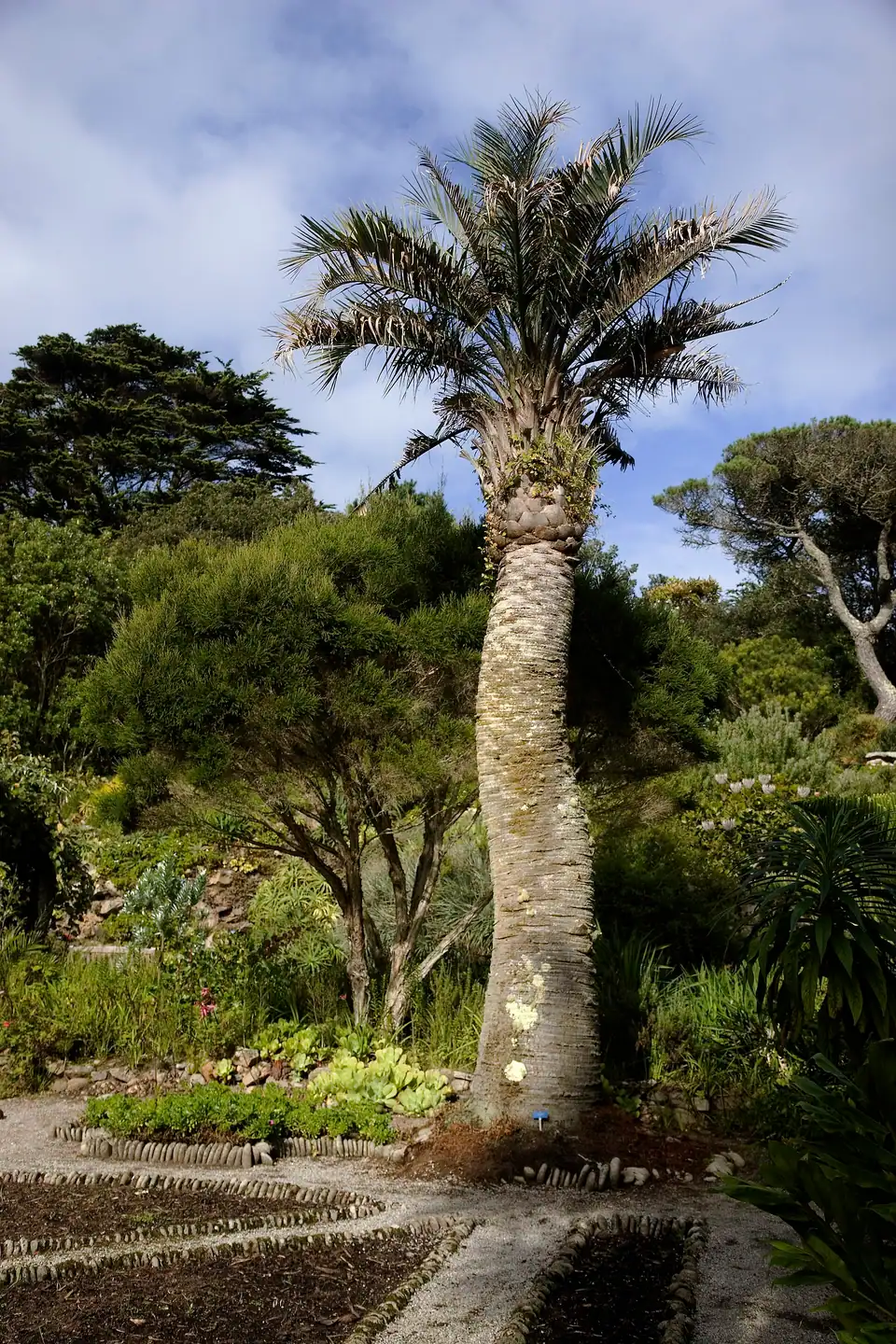
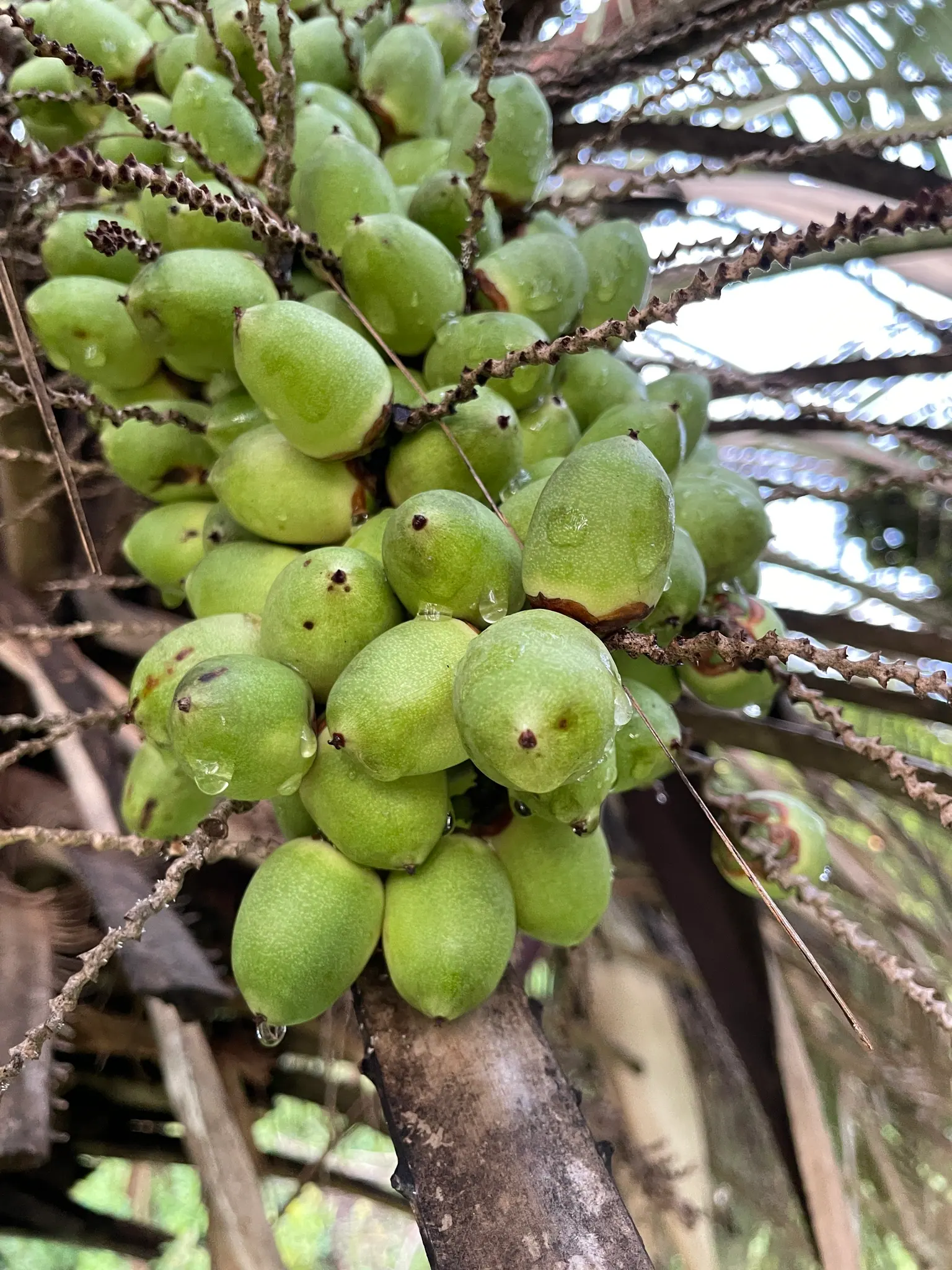
Esta palmera te regala frutos naranjas, fibrosos pero dulces, con los que se prepara jalea, y la almendra de su semilla da incluso un aceite comestible. Una vez establecida, aguanta la sequía, crece a pleno sol o en semisombra y alcanza 4,6–6,1 m de alto. Siémbrala en maceta en cuanto la semilla esté madura, o cultívala directamente en maceta.
- Sol
De pleno sol a semisombra
Qué dicen las fuentes (2)
- Riego
Aguanta la sequía una vez establecida
- Frío
Aguanta inviernos de hasta −12,2 °C (10 °F)
Rústica en inviernos fríos · USDA 8a · RHS H5 · Z8
- Plantación
Trasplanta las plántulas en cuanto crezcan las raíces o asome el primer brote
Qué dicen las fuentes (1)
Plantación: Plántulas: en cuanto se note el crecimiento de las raíces o en cuanto aparezca el crecimiento superior
Plant out into deep pots or the open ground either as soon as root growth is noticed or as soon as top growth appears.
— Butia capitata - Useful Tropical Plants [6] - Abonado
Abono para palmeras de liberación lenta, 3 veces al año; hojas viejas moteadas de naranja: falta potasio
Qué dicen las fuentes (5)
Abonos minerales: Fertilizante de palmera de liberación controlada, análisis 8-2-12-4Mg, más micronutrientes
To prevent or correct nutrient deficiencies in pindo palms, 3 (4 in south Florida) applications per year of a controlled release 8N-2P 2 O 5 -12K 2 O-4-Mg plus micronutrients fertilizer are recommended.
— ENH264/ST105: Butia odorata: Pindo Palm [2] As with most palms, the pindo palm will benefit from a regular fertilization schedule. Select a palm-specific fertilizer
— Pindo Palm – Gardening Solutions [4] Signos de carencia: Potasio: manchas amarillo-anaranjadas translúcidas y necróticas hacia las puntas de las hojas más viejas, menos hojas en el dosel; manganeso: puntas necróticas en los folíolos basales de las hojas recién emergentes
Occasionally, translucent yellow-orange and necrotic speckling can also be seen toward the tips of the oldest leaves (Figure 3).
— ENH264/ST105: Butia odorata: Pindo Palm [2] Since K deficiency causes premature leaf loss in palms, the best measure of K deficiency severity in this species is the number of leaves in the canopy.
— ENH264/ST105: Butia odorata: Pindo Palm [2] Symptoms appear as necrotic tips on basal leaflets of newly emerging leaves (Figure 4).
— ENH264/ST105: Butia odorata: Pindo Palm [2] - Cosecha
Frutos naranjas y dulces en verano o septiembre; ideales para jalea
Qué dicen las fuentes (4)
Cosecha: Septiembre (Villa Thuret, Francia); verano (Florida)
Según Villa Thuret (INRAE), France: A maturité (mois de septembre), les fruits ovoïdes, légèrement pointus au sommet, sont de couleur orangée
—  [1] Florida: edible yellow fruits that mature in summer and can be made into jelly
— Pindo Palm – Gardening Solutions [4] A maturité (mois de septembre), les fruits ovoïdes, légèrement pointus au sommet, sont de couleur orangée
—  [1] edible yellow fruits that mature in summer and can be made into jelly
— Pindo Palm – Gardening Solutions [4] - Tamaño
De 4,6 a 6,1 m de alto
Qué dicen las fuentes (1)
Altura adulta: 457-610 cm (15-20 pies)
The palm is slow-growing, eventually reaching 15–20 feet, making it suitable for planting under power lines
— ENH264/ST105: Butia odorata: Pindo Palm [2] - Multiplicación
Se multiplica por semilla
Qué dicen las fuentes (2)
Propagación: Semilla
Pindo palm seeds are notoriously slow and difficult to germinate, but research has shown that simply cracking the stony seed endocarps
— ENH264/ST105: Butia odorata: Pindo Palm [2] Seed - best sown as soon as it is ripe in containers. Stored seed is very slow to germinate.
— Butia capitata - Useful Tropical Plants [6] - Siembra
Siembra en macetas en cuanto la semilla esté madura
Qué dicen las fuentes (1)
Siembra: En cuanto la semilla esté madura, en contenedores
Seed - best sown as soon as it is ripe in containers. Stored seed is very slow to germinate.
— Butia capitata - Useful Tropical Plants [6] - Maceta
Crece también en maceta
Qué dicen las fuentes (1)
En maceta: Sí
it is prudent to grow the plants in containers for some years, giving them winter protection
— Butia capitata - Useful Tropical Plants [6] - Seguridad
Sin riesgos conocidos para las personas
Resumen
El palmera pindo es una palmera de plumas de crecimiento lento y un solo tronco, valorada por su tolerancia al frío, cultivada principalmente como ornamental con frutos comestibles. [2][6] Crece a pleno sol o semisombra y tolera la sequía una vez establecida. [4][7]
Citado en inglés, como en la fuente.
Esta ficha está incompleta: las fuentes consultadas aún no cubren todos los campos.
Aún no cubierto por nuestras fuentes: Rusticidad, zona más cálida, Poda
Cuidados
Riego
Luz
Pleno sol a semisombra
Clima y frío
Rusticidad, zona más fría
8a [mínima invernal de −12,2 a −9,4 °C (de 10 a 15 °F)]
Rusticidad, zona más cálida
No figura en las fuentes consultadas.
Dónde cultivarla
Sí
Qué dicen las fuentes (1)
it is prudent to grow the plants in containers for some years, giving them winter protectionPropagación
Semilla
Qué dicen las fuentes (2)
Pindo palm seeds are notoriously slow and difficult to germinate, but research has shown that simply cracking the stony seed endocarpsSeed - best sown as soon as it is ripe in containers. Stored seed is very slow to germinate.Cultivo
La planta
Altura adulta
457-610 cm (15-20 pies)
Qué dicen las fuentes (1)
The palm is slow-growing, eventually reaching 15–20 feet, making it suitable for planting under power linesAbonado
Frecuencia
Abonos minerales
Fertilizante de palmera de liberación controlada, análisis 8-2-12-4Mg, más micronutrientes
Qué dicen las fuentes (2)
To prevent or correct nutrient deficiencies in pindo palms, 3 (4 in south Florida) applications per year of a controlled release 8N-2P 2 O 5 -12K 2 O-4-Mg plus micronutrients fertilizer are recommended.As with most palms, the pindo palm will benefit from a regular fertilization schedule. Select a palm-specific fertilizerMicroelementos
Magnesio y micronutrientes incluidos en el fertilizante de palmera; se ha observado deficiencia de manganeso
Qué dicen las fuentes (2)
3 (4 in south Florida) applications per year of a controlled release 8N-2P 2 O 5 -12K 2 O-4-Mg plus micronutrients fertilizer are recommended.Although it is not common, manganese (Mn) deficiency (see Manganese Deficiency in Palms , https://edis.ifas.ufl.edu/ep267 ) has been observed in pindo palms.Signos de carencia
Potasio: manchas amarillo-anaranjadas translúcidas y necróticas hacia las puntas de las hojas más viejas, menos hojas en el dosel; manganeso: puntas necróticas en los folíolos basales de las hojas recién emergentes
Qué dicen las fuentes (3)
Occasionally, translucent yellow-orange and necrotic speckling can also be seen toward the tips of the oldest leaves (Figure 3).Since K deficiency causes premature leaf loss in palms, the best measure of K deficiency severity in this species is the number of leaves in the canopy.Symptoms appear as necrotic tips on basal leaflets of newly emerging leaves (Figure 4).Problemas
Deficiencia de potasio
Síntoma: Síntomas de puntas de folíolos necróticas y grises, menos conspicuos debido al follaje gris natural; el número de hojas en el dosel es la mejor medida de la severidad.
Qué hacer: Se recomiendan 3 (4 en el sur de Florida) aplicaciones por año de un fertilizante de liberación controlada 8N-2P 2 O 5 -12K 2 O-4-Mg más micronutrientes.
Qué dicen las fuentes (1)
Although they are susceptible to potassium (K) deficiency
— ENH264/ST105: Butia odorata: Pindo Palm [2]
Remedios
Cada remedio indica qué dicen las fuentes oficiales; los remedios tradicionales sin fuente oficial aparecen marcados. Los perjudiciales están para que sepas evitarlos.
Cuidar la planta
falso carbón
evita la eliminación excesiva de frondas Fuente oficial, sin prueba independiente
Cómo: Evita la eliminación excesiva de frondas, ya que las palmeras son sensibles a las deficiencias de nutrientes y la poda excesiva puede debilitar aún más el árbol.
Avoid excessive frond removal, as palms are sensitive to nutrient deficiencies, and over-pruning may further weaken the tree.
— hgic.clemson.edu [8] Espacia las palmeras y evita el riego por aspersión. Fuente oficial, sin prueba independiente
Cómo: Espacia las palmeras para mejorar el flujo de aire y evita el riego por aspersión siempre que sea posible.
Space palms to improve airflow. - Avoid overhead irrigation whenever possible.
— hgic.clemson.edu [8]
Toxicidad
Según la fuente, citada textualmente. No es un consejo médico ni veterinario: si una persona o un animal pudo haber ingerido esta planta, contacta con un centro de toxicología o con un veterinario.
## Known Hazards None known ## Botanical References
[6]
Calendario
Siembra
En cuanto la semilla esté madura, en contenedores
Qué dicen las fuentes (1)
Seed - best sown as soon as it is ripe in containers. Stored seed is very slow to germinate.Plantación
Plántulas: en cuanto se note el crecimiento de las raíces o en cuanto aparezca el crecimiento superior
Qué dicen las fuentes (1)
Plant out into deep pots or the open ground either as soon as root growth is noticed or as soon as top growth appears.Cosecha
Septiembre (Villa Thuret, Francia); verano (Florida)
Lo que dice cada fuente
Según Villa Thuret (INRAE), France: Septiembre
Florida: Verano
Qué dicen las fuentes (4)
Según Villa Thuret (INRAE), France: A maturité (mois de septembre), les fruits ovoïdes, légèrement pointus au sommet, sont de couleur orangéeFlorida: edible yellow fruits that mature in summer and can be made into jellyA maturité (mois de septembre), les fruits ovoïdes, légèrement pointus au sommet, sont de couleur orangéeedible yellow fruits that mature in summer and can be made into jellyPoda
No figura en las fuentes consultadas.
Meses tal como los dan las fuentes, en su mayoría de Estados Unidos (hemisferio norte). En el hemisferio sur se desplazan unos seis meses.
Comestibilidad
Según la fuente, citada textualmente. No comas una planta basándote solo en esta página: los errores de identificación pueden ser peligrosos.
Valores orientativos
Valores de una fuente secundaria, no comprobados palabra por palabra como el resto de esta página. Úselos como punto de partida.
- Ciclo de vida
- PerenneValor orientativo, adáptalo a tu clima · Fuente secundaria
- Horas de sol
- 6-8 horasValor orientativo, adáptalo a tu clima · Fuente secundaria
- Resiste la sequía
- SíValor orientativo, adáptalo a tu clima · Fuente secundaria
- pH del suelo
- 6-7.5Valor orientativo, adáptalo a tu clima · Fuente secundaria
- Nivel de cuidado
- ModeradoValor orientativo, adáptalo a tu clima · Fuente secundaria
- Crecimiento
- BajoValor orientativo, adáptalo a tu clima · Fuente secundaria
- Poda
- marzo, abril, marzo, abrilValor orientativo, adáptalo a tu clima · Fuente secundaria
Plantas similares
- Palmera butiá Butia odorata
- Abeto de Vancuver Abies grandis
- Abraham Trachystemon orientalis
- Bananero de Etiopía Ensete ventricosum
- Acacia longifolia Acacia longifolia
- Acanthus hungaricus Acanthus hungaricus
- Achlys triphylla Achlys triphylla
- Acónito común Aconitum napellus
Fuentes
Cada valor anterior se cita de estos documentos. Los enlaces llevan al editor original.
-  · jardin-thuret.hub.inrae.fr, consultado
- ENH264/ST105: Butia odorata: Pindo Palm · ask.ifas.ufl.edu, consultado
- ENH-60 · edis.ifas.ufl.edu, consultado
- Pindo Palm – Gardening Solutions · gardeningsolutions.ifas.ufl.edu, consultado
- Butia odorata - UF/IFAS Assessment - University of Florida, Institute of Food and Agricultural Sciences · assessment.ifas.ufl.edu, consultado
- Butia capitata - Useful Tropical Plants · tropical.theferns.info, consultado
- UNF: Butia capitata · unf.edu, consultado
- hgic.clemson.edu · hgic.clemson.edu
Escrito por Emilio Marruso · última revisión