
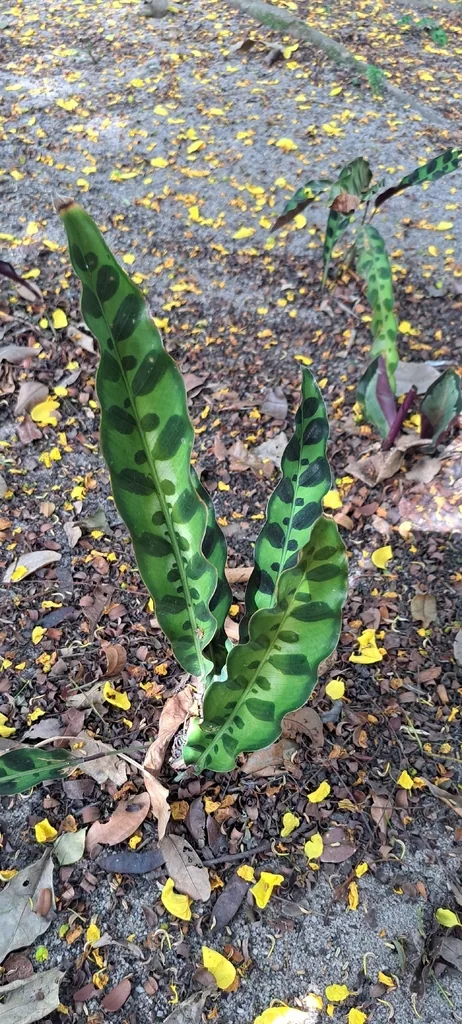

Cómo cultivar y cuidar Rattlesnake Plant
Calathea lancifolia
Escrito por Emilio Marruso · última revisión
No tóxica para gatos y perros, según las fuentes · Fuentes
De un vistazo
Esta planta vive feliz en interior y en maceta, y solo te pide sombra luminosa en lugar de sol pleno. Mantén la tierra húmeda pero no encharcada en primavera y verano, dale aire húmedo con una bandeja de guijarros mojados y abónala cada mes mientras crece. Y lo mejor: no es tóxica para gatos, perros ni caballos, así que es ideal si tienes mascotas.
- Sol
Sombra luminosa o sol suave de primera hora; nunca sol pleno
Qué dicen las fuentes (2)
Luz: Sol limitado a sombra brillante; tolera el sol temprano de la mañana o el sol difuso, no el pleno sol
in limited sun to bright shade locations.
— Goeppertia insignis (Prayer Plant, Rattlesnake Calathea, Rattlesnake Plant) | North Carolina Extension Gardener Plant Toolbox [1] It will tolerate early morning sun or diffused sun.
— Goeppertia insignis (Prayer Plant, Rattlesnake Calathea, Rattlesnake Plant) | North Carolina Extension Gardener Plant Toolbox [1] - Riego
Húmeda pero no encharcada en primavera y verano, menos en invierno; pon la maceta sobre guijarros mojados
Qué dicen las fuentes (4)
Riego: Mantén el suelo húmedo pero no mojado durante primavera y verano; reduce el riego en invierno.
During the growing season (spring and summer), water regularly to keep soils moist (but not wet)
— Goeppertia insignis (Prayer Plant, Rattlesnake Calathea, Rattlesnake Plant) | North Carolina Extension Gardener Plant Toolbox [1] Reduce watering and fertilization in winter when plant growth typically slows down.
— Goeppertia insignis (Prayer Plant, Rattlesnake Calathea, Rattlesnake Plant) | North Carolina Extension Gardener Plant Toolbox [1] Notas sobre el riego: Necesita mucha humedad: coloca la maceta sobre piedras mojadas o usa un ambiente humidificado; evita el agua estancada
To provide the required high humidity, consider standing a potted plant in a bed of wet pebbles or growing the plant in a humidified room.
— Goeppertia insignis (Prayer Plant, Rattlesnake Calathea, Rattlesnake Plant) | North Carolina Extension Gardener Plant Toolbox [1] do not allow the plant to sit in standing water.
— Learn About Growing Rattlesnake Plants Indoors | Gardening Know How [2] - Frío
Aguanta inviernos de hasta 7,2 °C (45 °F)
Necesita invernadero con calefacción · USDA 11b · RHS H1c · Z11
Qué dicen las fuentes (2)
Rusticidad, zona más fría: 11b [mínima invernal de 7,2 a 10 °C (de 45 a 50 °F)]
Hardiness zones: 11b - 12b
— Learn About Growing Rattlesnake Plants Indoors | Gardening Know How [2] Rusticidad, zona más cálida: 12b [mínima invernal de 12,8 a 15,6 °C (de 55 a 60 °F)]
Hardiness zones: 11b - 12b
— Learn About Growing Rattlesnake Plants Indoors | Gardening Know How [2] - Plantación
Planta desde finales de invierno hasta principios de primavera
Qué dicen las fuentes (1)
Plantación: Finales de invierno a principios de primavera
When to plant: End of winter to early spring
— Learn About Growing Rattlesnake Plants Indoors | Gardening Know How [2] - Abonado
Abono equilibrado una vez al mes en primavera y verano; abona menos en invierno
Qué dicen las fuentes (4)
Cuándo: Durante la temporada de crecimiento, primavera y verano
During the growing season (spring and summer), water regularly to keep soils moist (but not wet) and apply a balanced fertilizer monthly.
— Goeppertia insignis (Prayer Plant, Rattlesnake Calathea, Rattlesnake Plant) | North Carolina Extension Gardener Plant Toolbox [1] Frecuencia: Mensual
During the growing season (spring and summer), water regularly to keep soils moist (but not wet) and apply a balanced fertilizer monthly.
— Goeppertia insignis (Prayer Plant, Rattlesnake Calathea, Rattlesnake Plant) | North Carolina Extension Gardener Plant Toolbox [1] Abonos minerales: Fertilizante equilibrado
During the growing season (spring and summer), water regularly to keep soils moist (but not wet) and apply a balanced fertilizer monthly.
— Goeppertia insignis (Prayer Plant, Rattlesnake Calathea, Rattlesnake Plant) | North Carolina Extension Gardener Plant Toolbox [1] Evitar: Alimentación intensa en invierno: reduce la fertilización cuando el crecimiento se ralentiza
Reduce watering and fertilization in winter when plant growth typically slows down.
— Goeppertia insignis (Prayer Plant, Rattlesnake Calathea, Rattlesnake Plant) | North Carolina Extension Gardener Plant Toolbox [1] - Plagas
Pulgón, cochinillas y araña roja; trata la araña roja con jabón insecticida
Qué dicen las fuentes (1)
Plagas: pulgones, cochinillas, cochinillas harinosas, arañitas rojas
Watch for aphids, scale, mealybugs and spider mites. Overwatering can result in root rot, and fungal leaf spots can occur from wetting the leaves when watering.
— Goeppertia insignis (Prayer Plant, Rattlesnake Calathea, Rattlesnake Plant) | North Carolina Extension Gardener Plant Toolbox [1] - Atención
El exceso de agua pudre las raíces, mojar las hojas causa manchas y el aire seco oscurece las puntas
Qué dicen las fuentes (1)
Enfermedades: pudrición de raíces, manchas foliares por hongos
Watch for aphids, scale, mealybugs and spider mites. Overwatering can result in root rot, and fungal leaf spots can occur from wetting the leaves when watering.
— Goeppertia insignis (Prayer Plant, Rattlesnake Calathea, Rattlesnake Plant) | North Carolina Extension Gardener Plant Toolbox [1] - Tamaño
46 cm de alto en interior, hasta 76 cm en exterior; de 23 a 46 cm de ancho
Qué dicen las fuentes (2)
Altura adulta: 46 cm (1 1/2 pies) en interiores; hasta 76 (2 1/2 pies) en exteriores
This plant typically grows to 1 1/2 feet tall indoors but can reach up to 2 1/2 feet tall outdoors.
— Goeppertia insignis (Prayer Plant, Rattlesnake Calathea, Rattlesnake Plant) | North Carolina Extension Gardener Plant Toolbox [1] Anchura adulta: 23-46 cm (9 pulgadas-1 pie 6 pulgadas)
Dimensions: Height: 0 ft. 9 in. - 1 ft. 8 in. Width: 0 ft. 9 in. - 1 ft. 6 in.
— Goeppertia insignis (Prayer Plant, Rattlesnake Calathea, Rattlesnake Plant) | North Carolina Extension Gardener Plant Toolbox [1] - Multiplicación
Divide la mata desde el invierno hasta principios de primavera
Qué dicen las fuentes (1)
Propagación: División, en invierno o principios de primavera
the best option for propagation is division, which should occur in the winter to early spring.
— Learn About Growing Rattlesnake Plants Indoors | Gardening Know How [2] - Maceta
Crece bien en interior y en maceta
Qué dicen las fuentes (2)
En interior: Sí
it is typically grown as an indoor houseplant in most North American sites.
— Goeppertia insignis (Prayer Plant, Rattlesnake Calathea, Rattlesnake Plant) | North Carolina Extension Gardener Plant Toolbox [1] En maceta: Sí
#container plant
— Goeppertia insignis (Prayer Plant, Rattlesnake Calathea, Rattlesnake Plant) | North Carolina Extension Gardener Plant Toolbox [1] - Seguridad
No es tóxica para gatos, perros ni caballos
Resumen
La planta de serpiente de cascabel es una herbácea perenne tropical de las selvas brasileñas, que generalmente se cultiva como planta de interior. [1] Necesita semisombra, mucha humedad y suelo uniformemente húmedo, y no tolera el pleno sol ni las corrientes de aire. [1]
Citado en inglés, como en la fuente.
Cuidados
Riego
Riego
Mantén el suelo húmedo pero no mojado durante primavera y verano; reduce el riego en invierno.
Qué dicen las fuentes (2)
During the growing season (spring and summer), water regularly to keep soils moist (but not wet)Reduce watering and fertilization in winter when plant growth typically slows down.Notas sobre el riego
Necesita mucha humedad: coloca la maceta sobre piedras mojadas o usa un ambiente humidificado; evita el agua estancada
Qué dicen las fuentes (2)
To provide the required high humidity, consider standing a potted plant in a bed of wet pebbles or growing the plant in a humidified room.do not allow the plant to sit in standing water.Luz
Sol limitado a sombra brillante; tolera el sol temprano de la mañana o el sol difuso, no el pleno sol
Qué dicen las fuentes (2)
in limited sun to bright shade locations.It will tolerate early morning sun or diffused sun.Clima y frío
Rusticidad, zona más fría
11b [mínima invernal de 7,2 a 10 °C (de 45 a 50 °F)]
Qué dicen las fuentes (1)
Hardiness zones: 11b - 12bRusticidad, zona más cálida
12b [mínima invernal de 12,8 a 15,6 °C (de 55 a 60 °F)]
Qué dicen las fuentes (1)
Hardiness zones: 11b - 12bDónde cultivarla
En interior
Sí
Qué dicen las fuentes (1)
it is typically grown as an indoor houseplant in most North American sites.En maceta
Sí
Qué dicen las fuentes (1)
#container plantPropagación
División, en invierno o principios de primavera
Qué dicen las fuentes (1)
the best option for propagation is division, which should occur in the winter to early spring.Cultivo
La planta
Ciclo de vida
perenne
Qué dicen las fuentes (1)
The rattlesnake plant is a herbaceous perennial evergreen, native to Southeastern Brazilian rainforests, with striking foliage and showy yellow flowers.Familia
Marantaceae
Qué dicen las fuentes (1)
It is a member of the prayer plant family (Marantaceae). The specific epithet, insignis, is Latin and means "remarkable" or "distinguished by a mark"Altura adulta
46 cm (1 1/2 pies) en interiores; hasta 76 (2 1/2 pies) en exteriores
Qué dicen las fuentes (1)
This plant typically grows to 1 1/2 feet tall indoors but can reach up to 2 1/2 feet tall outdoors.Anchura adulta
23-46 cm (9 pulgadas-1 pie 6 pulgadas)
Qué dicen las fuentes (1)
Dimensions: Height: 0 ft. 9 in. - 1 ft. 8 in. Width: 0 ft. 9 in. - 1 ft. 6 in.Plagas y enfermedades
Plagas
pulgones, cochinillas, cochinillas harinosas, arañitas rojas
Qué dicen las fuentes (1)
Watch for aphids, scale, mealybugs and spider mites. Overwatering can result in root rot, and fungal leaf spots can occur from wetting the leaves when watering.Enfermedades
pudrición de raíces, manchas foliares por hongos
Qué dicen las fuentes (1)
Watch for aphids, scale, mealybugs and spider mites. Overwatering can result in root rot, and fungal leaf spots can occur from wetting the leaves when watering.Abonado
Cuándo
Durante la temporada de crecimiento, primavera y verano
Qué dicen las fuentes (1)
During the growing season (spring and summer), water regularly to keep soils moist (but not wet) and apply a balanced fertilizer monthly.Frecuencia
Mensual
Qué dicen las fuentes (1)
During the growing season (spring and summer), water regularly to keep soils moist (but not wet) and apply a balanced fertilizer monthly.Abonos minerales
Fertilizante equilibrado
Qué dicen las fuentes (1)
During the growing season (spring and summer), water regularly to keep soils moist (but not wet) and apply a balanced fertilizer monthly.Evitar
Alimentación intensa en invierno: reduce la fertilización cuando el crecimiento se ralentiza
Qué dicen las fuentes (1)
Reduce watering and fertilization in winter when plant growth typically slows down.Problemas
Pudrición de raíces y manchas en las hojas.
Síntoma: El riego excesivo puede causar pudrición de raíces; manchas foliares por hongos al mojar las hojas; amarillamiento por falta o exceso de riego; oscurecimiento o rizado de bordes y puntas de las hojas por baja humedad
Qué hacer: Evita el riego excesivo y mojar las hojas; aumenta la humedad
Qué dicen las fuentes (2)
Overwatering can result in root rot, and fungal leaf spots can occur from wetting the leaves when watering.
— Goeppertia insignis (Prayer Plant, Rattlesnake Calathea, Rattlesnake Plant) | North Carolina Extension Gardener Plant Toolbox [1] Browning or curling of the leaf edges and tips can result from low humidity.
— Goeppertia insignis (Prayer Plant, Rattlesnake Calathea, Rattlesnake Plant) | North Carolina Extension Gardener Plant Toolbox [1] Plagas
Síntoma: Áfidos, cochinillas, cochinillas harinosas y arañas rojas
Qué hacer: Controla las arañas rojas con un spray de jabón insecticida
Qué dicen las fuentes (2)
Watch for aphids, scale, mealybugs and spider mites.
— Goeppertia insignis (Prayer Plant, Rattlesnake Calathea, Rattlesnake Plant) | North Carolina Extension Gardener Plant Toolbox [1] The mites are usually easy to control with insecticidal soap spray.
— Learn About Growing Rattlesnake Plants Indoors | Gardening Know How [2]
Remedios
Cada remedio indica qué dicen las fuentes oficiales; los remedios tradicionales sin fuente oficial aparecen marcados. Los perjudiciales están para que sepas evitarlos.
Cuidar la planta
pulgones
rociado con jabón insecticida o limpieza Funciona en parte
Cómo: Controla los pulgones y los ácaros rociando o limpiando todas las superficies de las hojas y los tallos con jabón insecticida o aceite de neem.
Control aphids and spider mites with a spray or wipe-down of insecticidal soap or Neem oil on all surfaces of the leaves and stems.
— thenatureofhome.com [4] Qué dicen las pruebas Insecticidal soaps (potassium salts of fatty acids) are one of the most commonly available houseplant insecticides. These are used as dilute sprays (one to three percent concentration) and can help control many houseplant insects and spider mites.
— extension.colostate.edu [5] lavado con agua jabonosa Funciona en parte
Many liquid hand soaps and dishwashing detergents also have insecticidal effects, although there is potential for plant injury with such treatments.
— extension.colostate.edu [5] Cómo: Si ves alguna plaga, lava el follaje con agua jabonosa o usa un insecticida como aceite de Neem o jabón insecticida.
If you spot any pests, wash the foliage with soapy water or use an insecticide like Neem oil or insecticidal soap.
— plantcaretoday.com [7] Qué dicen las pruebas Many liquid hand soaps and dishwashing detergents also have insecticidal effects, although there is potential for plant injury with such treatments.
— extension.colostate.edu [5]
ácaros araña
rociado con aceite de neem o limpieza No verificado
Remedio tradicional, no verificado por una fuente oficial.
Cómo: Controla los pulgones y los ácaros rociando o limpiando todas las superficies de las hojas y los tallos con jabón insecticida o aceite de neem.
Lava la planta con agua Funciona
Cómo: Lleva las plantas a un fregadero de servicio y lávalas con agua. Asegúrate de lavar el envés de las hojas.
We recommend that you take the plants into a utility sink and wash the plants off with water. Be sure to wash off the leaf undersides.
— ask.extension.org [6] Qué dicen las pruebas Many household plant pests can be controlled, at least in part, by washing the plant periodically with a vigorous jet of water. This is particularly effective for spider mites and aphids, which are most readily dislodged.
— extension.colostate.edu [5]
cochinillas harinosas
Spray de alcohol isopropílico y jabón para platos Funciona en parte
Carefully test a small part of the plant if you attempt to use this method and be cautious to keep the alcohol limited to the insect pest.
— extension.colostate.edu [5] Cómo: Retira los insectos con pinzas y rocía la planta con jabón hortícola, aceite de Neem o una solución de 3:1 de agua y alcohol isopropílico al 92%.
You can control these bugs by picking them off with tweezers and spraying the plant with horticultural soap, Neem oil, or a 3:1 solution of water and 92% isopropyl alcohol
— thenatureofhome.com [4] Qué dicen las pruebas A spray of alcohol, or alcohol dabbed onto insects, is well known as a useful control of mealybugs. However, using alcohol on plants may cause injuries such as leaf burn.
— extension.colostate.edu [5]
Toxicidad
Según la fuente, citada textualmente. No es un consejo médico ni veterinario: si una persona o un animal pudo haber ingerido esta planta, contacta con un centro de toxicología o con un veterinario.
Calendario
Plantación
Finales de invierno a principios de primavera
Qué dicen las fuentes (1)
When to plant: End of winter to early springMeses tal como los dan las fuentes, en su mayoría de Estados Unidos (hemisferio norte). En el hemisferio sur se desplazan unos seis meses.
Valores orientativos
Valores de una fuente secundaria, no comprobados palabra por palabra como el resto de esta página. Úselos como punto de partida.
- pH del suelo
- 6-7Valor orientativo, adáptalo a tu clima · Fuente secundaria
- Nivel de cuidado
- MedioValor orientativo, adáptalo a tu clima · Fuente secundaria
- Crecimiento
- BajoValor orientativo, adáptalo a tu clima · Fuente secundaria
- Poda
- Marzo, abril, mayo, junio, julio, agosto, septiembre, marzo, abril, mayo, junio, julio, septiembre, octubre, noviembre, octubreValor orientativo, adáptalo a tu clima · Fuente secundaria
Plantas similares
- Peacock Plant Calathea makoyana
- Berijao Calathea crotalifera
- Zebra Plant Calathea zebrina
- Ctenanthe Ctenanthe lubbersiana
- Giant Bamburanta Ctenanthe oppenheimiana
- Hardy Canna Thalia dealbata
- Planta de la oración Maranta leuconeura
- Rose-Painted Calathea Goeppertia roseopicta
Fuentes
Cada valor anterior se cita de estos documentos. Los enlaces llevan al editor original.
- Goeppertia insignis (Prayer Plant, Rattlesnake Calathea, Rattlesnake Plant) | North Carolina Extension Gardener Plant Toolbox · plants.ces.ncsu.edu, consultado
- Learn About Growing Rattlesnake Plants Indoors | Gardening Know How · gardeningknowhow.com, consultado
- Calathea Care: Growing and Caring for Calatheas | BBC Gardeners World Magazine · gardenersworld.com, consultado
- thenatureofhome.com · thenatureofhome.com
- extension.colostate.edu · extension.colostate.edu
- ask.extension.org · ask.extension.org
- plantcaretoday.com · plantcaretoday.com
Escrito por Emilio Marruso · última revisión