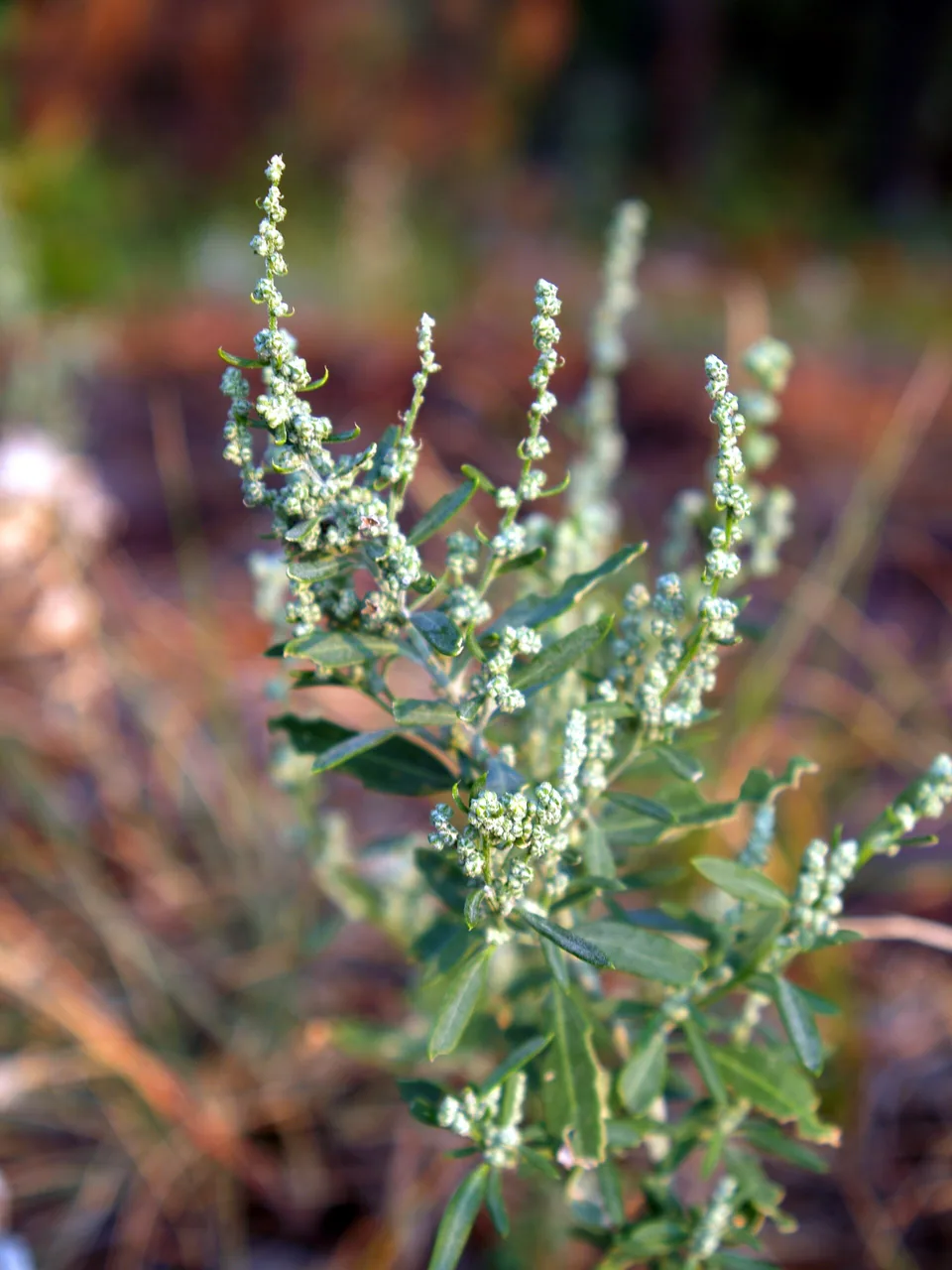
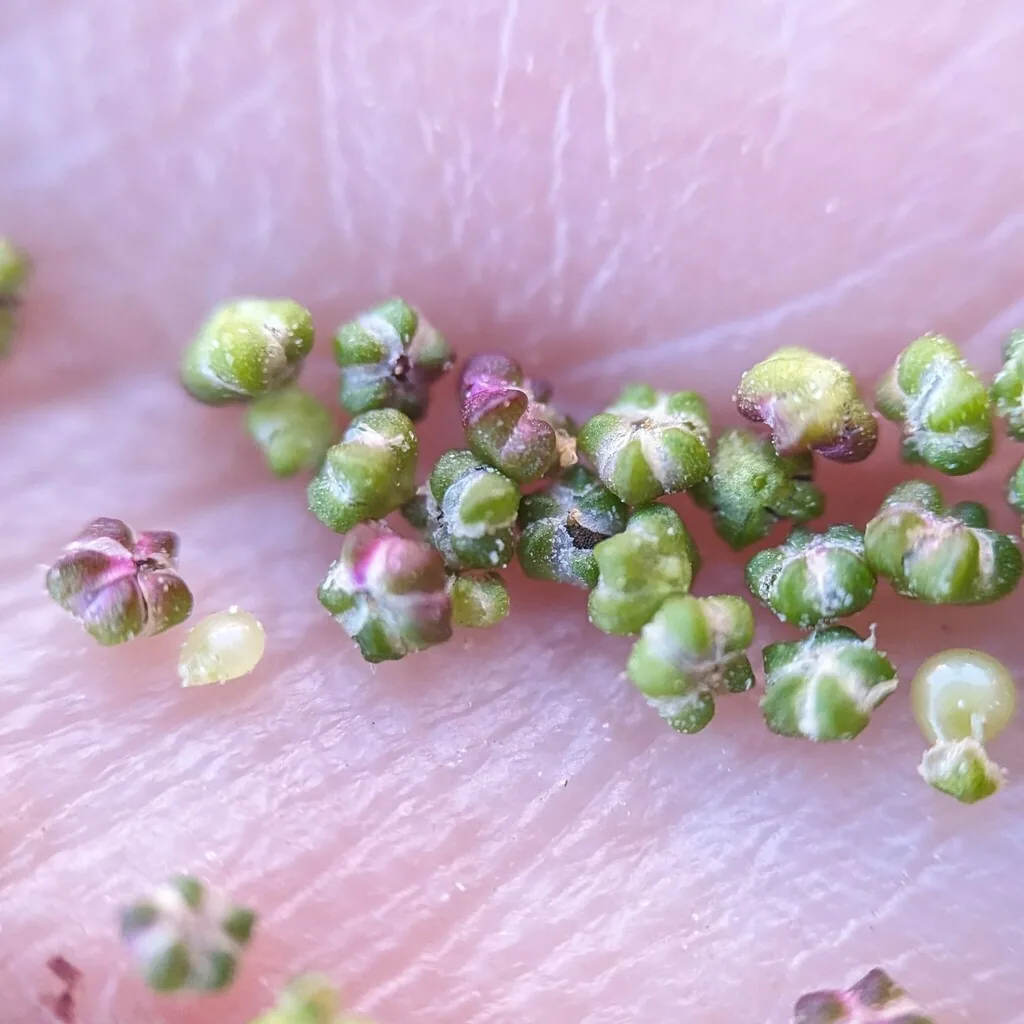

Cómo cultivar y cuidar Huauzontle
Chenopodium berlandieri
Escrito por Emilio Marruso · última revisión
Tóxica para: Personas · Por qué
De un vistazo
Esta planta anual es de lo más generosa: siémbrala directamente en el huerto en primavera y crecerá de 30 cm a 1,8 m. En primavera y verano puedes coger plantas jóvenes para comerlas crudas o cocinadas como espinacas, probar sus flores y, cuando las cabezuelas estén secas, recoger las semillas y molerlas para hacer pan.
- Riego
Si trasplantas plántulas, riégalas mucho hasta que arraiguen
Qué dicen las fuentes (1)
Notas sobre el riego: Si se trasplantan los plantones, riega mucho hasta que se hayan asentado
try to transplant when its still cool and make sure you’re ready to water a lot until they get settled in.
— Goosefoot guide | Lost crops | Washington University in St. Louis [6] - Cosecha
Hojas crudas o cocinadas como espinacas; recoge las semillas cuando caigan las hojas y estén secas
Qué dicen las fuentes (2)
Cosecha: A medida que las plantas envejecen, una vez que las hojas han caído, las flores han terminado y las cabezas de las semillas están secas
Ithaca, NY: In Ithaca, NY, I harvested my goosefoot between September 19 and November 11, as the plants senesced (died).
— Goosefoot guide | Lost crops | Washington University in St. Louis [6] You can tell that they are senesced when all the leaves fall off, there aren’t any more flowers, and the seed heads are dried up.
— Goosefoot guide | Lost crops | Washington University in St. Louis [6] - Tamaño
De 30 cm a 1,8 m de alto
Qué dicen las fuentes (1)
Altura adulta: 30.48-182.88 cm (1 a 6 pies)
Lifecycle Annual Similar species Chenopodium album Height 1 to 6 feet
— Chenopodium berlandieri - pitseed goosefoot | Yavapai County Native and Naturalized Plants [1] - Multiplicación
Se multiplica por semilla
Qué dicen las fuentes (1)
Propagación: Semilla
Seed - sow spring in situ. Most of the seed usually germinates within a few days of sowing.
— Chenopodium berlandieri - Useful Temperate Plants [3] - Siembra
Siembra directa en primavera, en otoño o a finales de invierno, cuando la tierra se deshiele
Qué dicen las fuentes (4)
Siembra: Primavera, sembrada in situ; también otoño, o finales de invierno en cuanto el suelo se haya descongelado
St. Louis: I had good success in 2020 in St. Louis with planting pre-stratified seeds out in mid-April.
— Goosefoot guide | Lost crops | Washington University in St. Louis [6] Seed - sow spring in situ. Most of the seed usually germinates within a few days of sowing.
— Chenopodium berlandieri - Useful Temperate Plants [3] Plant seeds in the late winter, as soon as the soil is thawed.
— Goosefoot guide | Lost crops | Washington University in St. Louis [6] Plant seeds in the fall to mimic natural dispersal.
— Goosefoot guide | Lost crops | Washington University in St. Louis [6] - Seguridad
Si tienes artritis, gota, reúma o cálculos renales, cómela con cuidado: puede empeorarlos
Resumen
El cenizo de semillas de hoyo es una planta anual nativa, variable y maleza, de terrenos perturbados en América del Norte. [2][1] Sus hojas, brotes jóvenes y semillas se comen. [3] Comenzar el cenizo en bandejas y trasplantar las plántulas no se recomienda. [6]
Citado en inglés, como en la fuente.
Esta ficha está incompleta: las fuentes consultadas aún no cubren todos los campos.
Aún no cubierto por nuestras fuentes: Rusticidad, zona más fría, Rusticidad, zona más cálida
Cuidados
Riego
Si se trasplantan los plantones, riega mucho hasta que se hayan asentado
Qué dicen las fuentes (1)
try to transplant when its still cool and make sure you’re ready to water a lot until they get settled in.Luz
Las fuentes dan valores distintos según la región, la zona o las condiciones de cultivo.
Lo que dice cada fuente
Según Minnesota Wildflowers: Semisombra, sol
Según Plants for a Future: No tolera la sombra
Qué dicen las fuentes (2)
Según Minnesota Wildflowers: | Habitat: | part shade, sun; disturbed soil; roadsides, railroads, waste places, cliffs, river banks, open woods,Según Plants for a Future: An easily grown plant, succeeding in most soils but disliking shadeClima y frío
Rusticidad, zona más fría
No figura en las fuentes consultadas.
Rusticidad, zona más cálida
No figura en las fuentes consultadas.
Propagación
Semilla
Qué dicen las fuentes (1)
Seed - sow spring in situ. Most of the seed usually germinates within a few days of sowing.Cultivo
La planta
Ciclo de vida
anual
Qué dicen las fuentes (1)
Origin Native Lifecycle Annual Similar species Chenopodium album HeightFamilia
Chenopodiaceae
Qué dicen las fuentes (1)
Scientific Family Chenopodiaceae Other common names netseed lambsquarters Plant typeAltura adulta
30.48-182.88 cm (1 a 6 pies)
Qué dicen las fuentes (1)
Lifecycle Annual Similar species Chenopodium album Height 1 to 6 feetRemedios
Las fuentes consultadas no dan remedios para esta planta.
Toxicidad
Según la fuente, citada textualmente. No es un consejo médico ni veterinario: si una persona o un animal pudo haber ingerido esta planta, contacta con un centro de toxicología o con un veterinario.
People with a tendency to rheumatism, arthritis, gout, kidney stones or hyperacidity should take especial caution if including this plant in their diet since it can aggravate their condition
[3]- Principio tóxico
The plants also contain some oxalic acid, which in large quantities can lock up some of the nutrients in the food.
[3]
Calendario
Siembra
Primavera, sembrada in situ; también otoño, o finales de invierno en cuanto el suelo se haya descongelado
Lo que dice cada fuente
St. Louis: Mediados de abril (semillas preestratificadas)
Qué dicen las fuentes (4)
St. Louis: I had good success in 2020 in St. Louis with planting pre-stratified seeds out in mid-April.Seed - sow spring in situ. Most of the seed usually germinates within a few days of sowing.Plant seeds in the late winter, as soon as the soil is thawed.Plant seeds in the fall to mimic natural dispersal.Cosecha
A medida que las plantas envejecen, una vez que las hojas han caído, las flores han terminado y las cabezas de las semillas están secas
Lo que dice cada fuente
Ithaca, NY: 19 de septiembre - 11 de noviembre
Qué dicen las fuentes (2)
Ithaca, NY: In Ithaca, NY, I harvested my goosefoot between September 19 and November 11, as the plants senesced (died).You can tell that they are senesced when all the leaves fall off, there aren’t any more flowers, and the seed heads are dried up.Meses tal como los dan las fuentes, en su mayoría de Estados Unidos (hemisferio norte). En el hemisferio sur se desplazan unos seis meses.
Comestibilidad
Según la fuente, citada textualmente. No comas una planta basándote solo en esta página: los errores de identificación pueden ser peligrosos.
Valores orientativos
Valores de una fuente secundaria, no comprobados palabra por palabra como el resto de esta página. Úselos como punto de partida.
- Riego
- MínimoValor orientativo, adáptalo a tu clima · Fuente secundaria
- Resiste la sequía
- SíValor orientativo, adáptalo a tu clima · Fuente secundaria
- pH del suelo
- 6-7.5Valor orientativo, adáptalo a tu clima · Fuente secundaria
- Nivel de cuidado
- MedioValor orientativo, adáptalo a tu clima · Fuente secundaria
- Crecimiento
- BajoValor orientativo, adáptalo a tu clima · Fuente secundaria
- Poda
- marzo, abril, mayoValor orientativo, adáptalo a tu clima · Fuente secundaria
Plantas similares
- Chenopodium giganteum Chenopodium giganteum
- Cenizo Chenopodium album
- Quinua Chenopodium quinoa
- Annual Sea-blite Suaeda maritima
- Chamiza Atriplex canescens
- Abraham Trachystemon orientalis
- Bananero de Etiopía Ensete ventricosum
- Acacia longifolia Acacia longifolia
Fuentes
Cada valor anterior se cita de estos documentos. Los enlaces llevan al editor original.
- Chenopodium berlandieri - pitseed goosefoot | Yavapai County Native and Naturalized Plants · yavapaiplants.extension.arizona.edu, consultado
- Chenopodium berlandieri (Pitseed Goosefoot): Minnesota Wildflowers · minnesotawildflowers.info, consultado
- Chenopodium berlandieri - Useful Temperate Plants · temperate.theferns.info, consultado
- Berlandier's goosefoot | Kansas Wildflowers · kswildflower.org, consultado
- Chenopodium berlandieri · coloradowildbuds.com, consultado
- Goosefoot guide | Lost crops | Washington University in St. Louis · sites.wustl.edu, consultado
Escrito por Emilio Marruso · última revisión