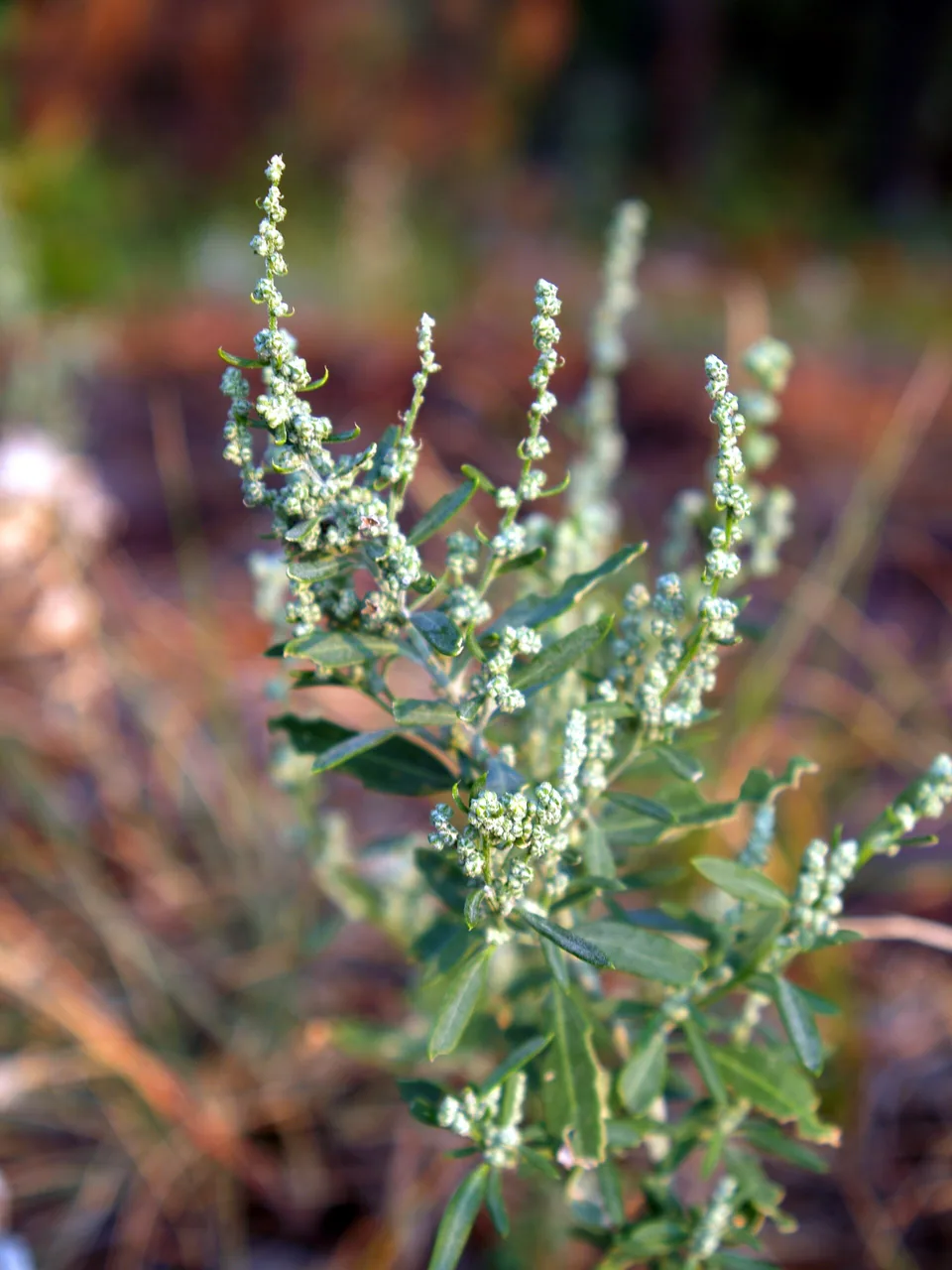
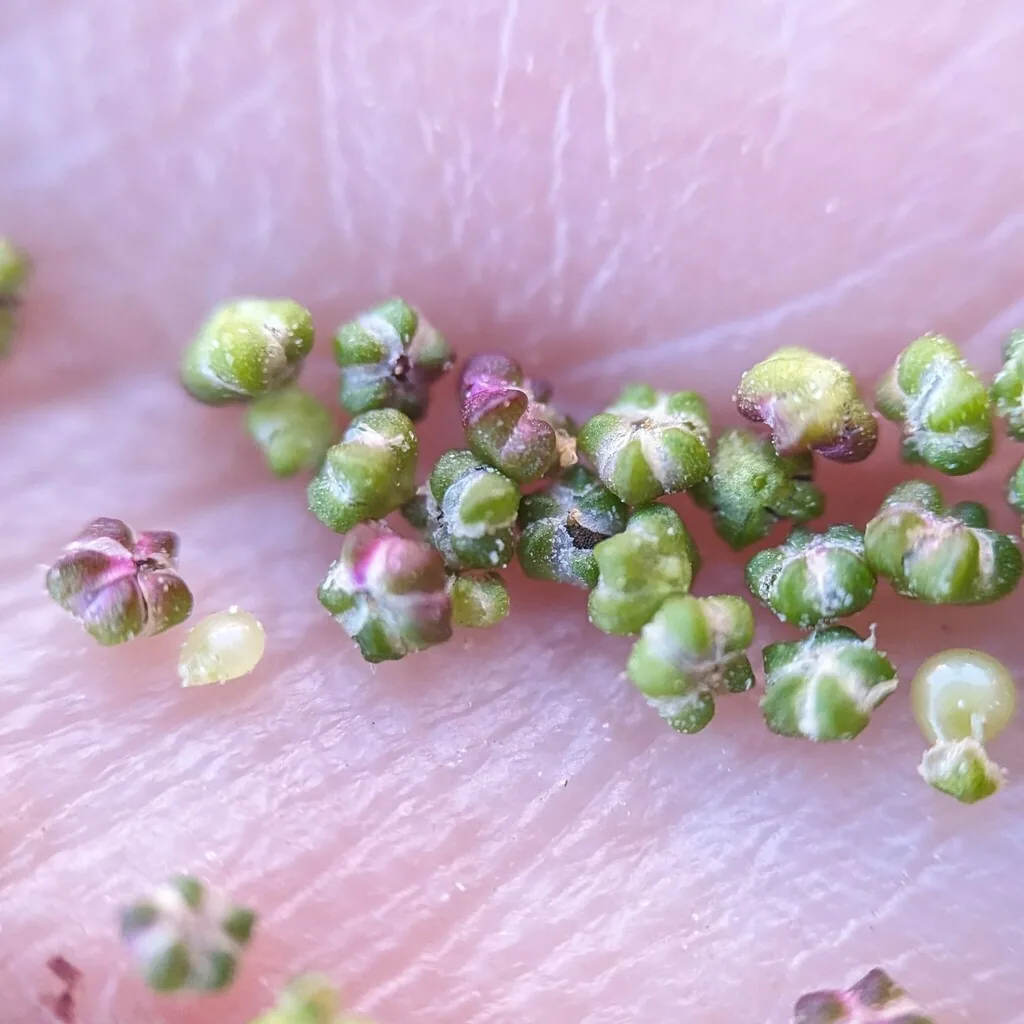

How to Grow and Care for Pitseed goosefoot
Chenopodium berlandieri
Written by Emilio Marruso · last checked
Toxic to: People · Why
At a glance
Pitseed goosefoot is a generous annual: sow it right in the garden in spring, and it grows 1 to 6 feet tall. Pick young plants in spring and summer to eat raw or cooked like spinach, enjoy the flowers too, then harvest the seeds once the seed heads are dry and grind them into flour for bread.
- Water
If you transplant seedlings, water a lot until they settle in
What the sources say (1)
Watering notes: If seedlings are transplanted, water a lot until they have settled in
try to transplant when its still cool and make sure you’re ready to water a lot until they get settled in.
— Goosefoot guide | Lost crops | Washington University in St. Louis [6] - Harvest
Eat leaves raw or cooked like spinach; pick seeds once leaves drop and seed heads are dry
What the sources say (2)
Harvest: As the plants senesce, once leaves have fallen, flowers are over and seed heads are dry
Ithaca, NY: In Ithaca, NY, I harvested my goosefoot between September 19 and November 11, as the plants senesced (died).
— Goosefoot guide | Lost crops | Washington University in St. Louis [6] You can tell that they are senesced when all the leaves fall off, there aren’t any more flowers, and the seed heads are dried up.
— Goosefoot guide | Lost crops | Washington University in St. Louis [6] - Size
1 to 6 ft tall
What the sources say (1)
Mature height: 30.48-182.88 cm (1 to 6 ft)
Lifecycle Annual Similar species Chenopodium album Height 1 to 6 feet
— Chenopodium berlandieri - pitseed goosefoot | Yavapai County Native and Naturalized Plants [1] - Propagation
Grows from seed
What the sources say (1)
Propagation: Seed
Seed - sow spring in situ. Most of the seed usually germinates within a few days of sowing.
— Chenopodium berlandieri - Useful Temperate Plants [3] - Sowing
Sow right in the garden in spring, in fall, or in late winter once the soil thaws
What the sources say (4)
Sowing: Spring, sown in situ; also fall, or late winter as soon as the soil has thawed
St. Louis: I had good success in 2020 in St. Louis with planting pre-stratified seeds out in mid-April.
— Goosefoot guide | Lost crops | Washington University in St. Louis [6] Seed - sow spring in situ. Most of the seed usually germinates within a few days of sowing.
— Chenopodium berlandieri - Useful Temperate Plants [3] Plant seeds in the late winter, as soon as the soil is thawed.
— Goosefoot guide | Lost crops | Washington University in St. Louis [6] Plant seeds in the fall to mimic natural dispersal.
— Goosefoot guide | Lost crops | Washington University in St. Louis [6] - Safety
If you have arthritis, gout, rheumatism or kidney stones, eat it with care: it can make them worse
Overview
Pitseed goosefoot is a variable, weedy native annual of disturbed ground in North America. [2][1] Its leaves, young shoots and seed are eaten. [3] Starting goosefoot in trays and transplanting the seedlings is not recommended. [6]
This record is incomplete: the sources we read do not cover every field yet.
Not yet covered by our sources: Hardiness, coldest zone, Hardiness, warmest zone
Pitseed goosefoot care
How to water Pitseed goosefoot
If seedlings are transplanted, water a lot until they have settled in
What the sources say (1)
try to transplant when its still cool and make sure you’re ready to water a lot until they get settled in.How much light Pitseed goosefoot needs
The sources give different values depending on region, zone or growing conditions.
What each source says
According to Minnesota Wildflowers: Part shade, sun
According to Plants for a Future: Dislikes shade
What the sources say (2)
According to Minnesota Wildflowers: | Habitat: | part shade, sun; disturbed soil; roadsides, railroads, waste places, cliffs, river banks, open woods,According to Plants for a Future: An easily grown plant, succeeding in most soils but disliking shadeHow much cold Pitseed goosefoot can take
Hardiness, coldest zone
Not stated in the sources we read.
Hardiness, warmest zone
Not stated in the sources we read.
How to propagate Pitseed goosefoot
Seed
What the sources say (1)
Seed - sow spring in situ. Most of the seed usually germinates within a few days of sowing.How to grow Pitseed goosefoot
The plant
Life cycle
annual
What the sources say (1)
Origin Native Lifecycle Annual Similar species Chenopodium album HeightFamily
Chenopodiaceae
What the sources say (1)
Scientific Family Chenopodiaceae Other common names netseed lambsquarters Plant typeMature height
30.48-182.88 cm (1 to 6 ft)
What the sources say (1)
Lifecycle Annual Similar species Chenopodium album Height 1 to 6 feetRemedies
The sources we checked give no remedies for this plant.
Is Pitseed goosefoot poisonous?
Reported by the source, quoted verbatim. This is not medical or veterinary advice: if a person or an animal may have eaten this plant, contact a poison control centre or a veterinarian.
People with a tendency to rheumatism, arthritis, gout, kidney stones or hyperacidity should take especial caution if including this plant in their diet since it can aggravate their condition
[3]- Toxic principle
The plants also contain some oxalic acid, which in large quantities can lock up some of the nutrients in the food.
[3]
Calendar
Sowing
Spring, sown in situ; also fall, or late winter as soon as the soil has thawed
What each source says
St. Louis: Mid-April (pre-stratified seeds)
What the sources say (4)
St. Louis: I had good success in 2020 in St. Louis with planting pre-stratified seeds out in mid-April.Seed - sow spring in situ. Most of the seed usually germinates within a few days of sowing.Plant seeds in the late winter, as soon as the soil is thawed.Plant seeds in the fall to mimic natural dispersal.Harvest
As the plants senesce, once leaves have fallen, flowers are over and seed heads are dry
What each source says
Ithaca, NY: September 19 - November 11
What the sources say (2)
Ithaca, NY: In Ithaca, NY, I harvested my goosefoot between September 19 and November 11, as the plants senesced (died).You can tell that they are senesced when all the leaves fall off, there aren’t any more flowers, and the seed heads are dried up.Months as given by the sources, which are mostly from the United States (northern hemisphere). In the southern hemisphere they shift by about six months.
Edibility
Reported by the source, quoted verbatim. Do not eat a plant on the basis of this page alone: identification mistakes can be dangerous.
Indicative values
Values from a secondary source, not checked word for word like the rest of this page. Use them as a starting point.
- Watering
- MinimalIndicative value, adapt it to your climate · Secondary source
- Drought tolerant
- yesIndicative value, adapt it to your climate · Secondary source
- Soil pH
- 6-7.5Indicative value, adapt it to your climate · Secondary source
- Care level
- MediumIndicative value, adapt it to your climate · Secondary source
- Growth rate
- LowIndicative value, adapt it to your climate · Secondary source
- Pruning
- March, April, May, MayIndicative value, adapt it to your climate · Secondary source
Similar plants
- Chenopodium giganteum Chenopodium giganteum
- Lamb's-quarters Chenopodium album
- Quinoa Chenopodium quinoa
- Annual Sea-blite Suaeda maritima
- Fourwing saltbush Atriplex canescens
- Abraham Trachystemon orientalis
- Abyssinian banana Ensete ventricosum
- Acacia longifolia Acacia longifolia
Sources
Every value above is quoted from these documents. Links lead to the original publisher.
- Chenopodium berlandieri - pitseed goosefoot | Yavapai County Native and Naturalized Plants · yavapaiplants.extension.arizona.edu, consulted
- Chenopodium berlandieri (Pitseed Goosefoot): Minnesota Wildflowers · minnesotawildflowers.info, consulted
- Chenopodium berlandieri - Useful Temperate Plants · temperate.theferns.info, consulted
- Berlandier's goosefoot | Kansas Wildflowers · kswildflower.org, consulted
- Chenopodium berlandieri · coloradowildbuds.com, consulted
- Goosefoot guide | Lost crops | Washington University in St. Louis · sites.wustl.edu, consulted
Written by Emilio Marruso · last checked