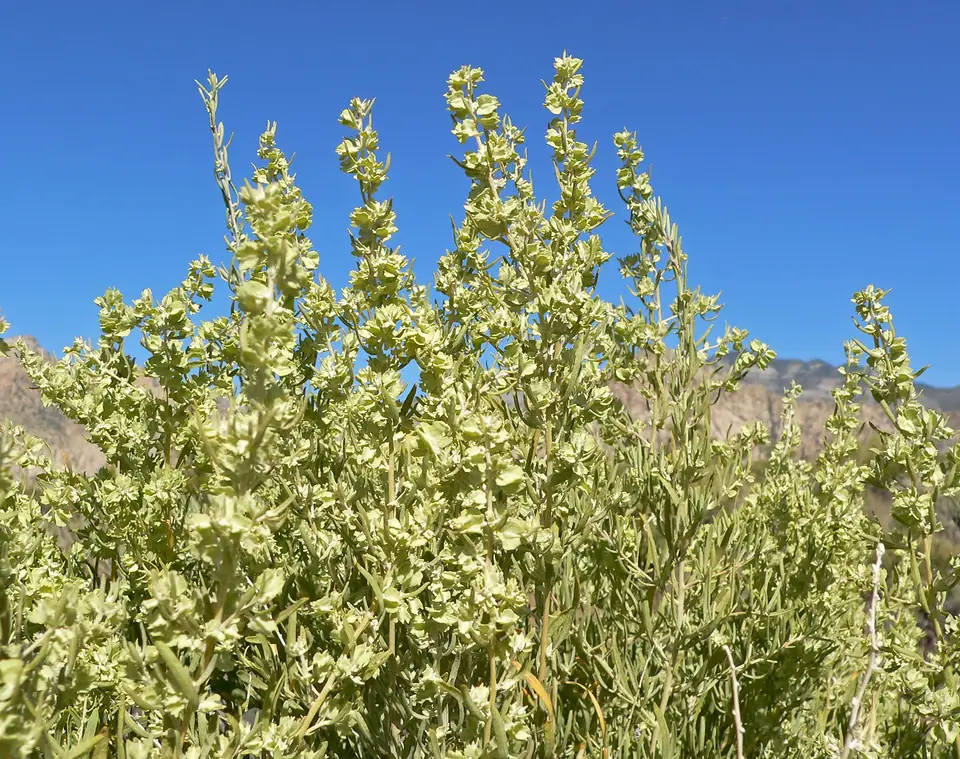
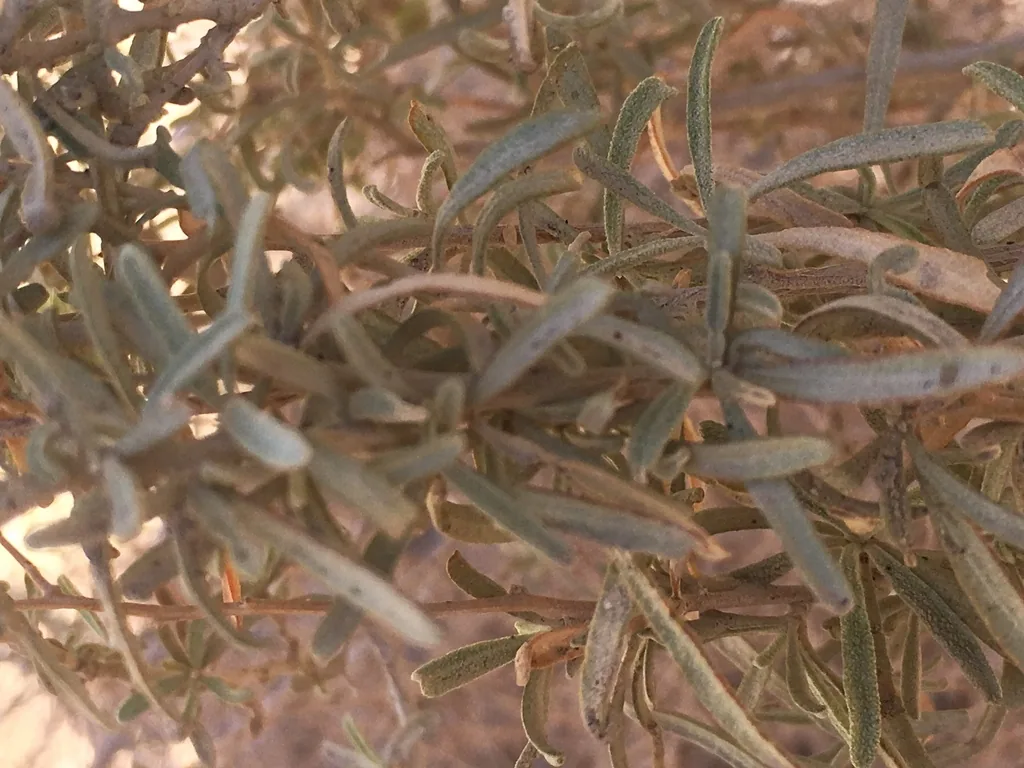

How to Grow and Care for Fourwing saltbush
Atriplex canescens
Written by Emilio Marruso · last checked
Toxic to: Livestock · Why
At a glance
Fourwing saltbush is a tough perennial that loves full sun and, once settled in, handles dry, sunny spots with ease. Sow the seeds in a cold frame in April or May and they sprout in 7–21 days; plant out in late spring or early summer, after the last frosts. Its leaves can even be eaten raw or cooked.
- Sun
Full sun
What the sources say (1)
Light: Full sun
Light full sun Shade tolerance no shade
— Grey Sage Brush (Atriplex canescens) — Practical Plants [7] - Water
Once settled in, it handles sunny, dry conditions very well
What the sources say (1)
Watering: Very tolerant of sunny, dry conditions once established
It is very tolerant of sunny, dry conditions once established.
— Saltbush [6] - Planting
Plant in late spring or early summer, after the last frosts
What the sources say (1)
Planting: Late spring or early summer after the last expected frosts
plant out in late spring or early summer after the last expected frosts.
— Grey Sage Brush (Atriplex canescens) — Practical Plants [7] - Harvest
Leaves can be eaten raw or cooked; seeds can be ground into flour
- Propagation
From seed or cuttings of half-ripe or mature wood; shoots at the base sometimes root
What the sources say (2)
Propagation: Seed; basal branch sprouts can sometimes root; cuttings of half-ripe or mature wood
Typically propagated by seed, though basal branch sprouts can sometimes root.
— Atriplex canescens - Fourwing Saltbush | UA Campus Arboretum [5] Cuttings of half-ripe wood, July/August in a very sandy compost in a frame.
— Grey Sage Brush (Atriplex canescens) — Practical Plants [7] - Sowing
Sow in a cold frame in April or May; seeds need a cold spell, then sprout in 7–21 days
What the sources say (2)
Sowing: April/May, in a cold frame
Seed - sow April/May in a cold frame in a compost of peat and sand. Germination usually takes place within 1 - 3 weeks at 13°c
— Grey Sage Brush (Atriplex canescens) — Practical Plants [7] Days to germination: 7-21 days after sowing (after stratification)
After stratification in the laboratory, 1st germinant emergence was 7 days after sowing; last emergence was 21 days after sowing.
— Species: Atriplex canescens [3] - Safety
Rarely, it has caused bloating, diarrhea and anemia in farm animals
Overview
Atriplex canescens is a perennial, much-branched evergreen shrub native to western North America. [1] It is highly tolerant of drought, salinity and alkalinity and grows on many soil types. [1] It is a valuable browse for wildlife and livestock. [1]
This record is incomplete: the sources we read do not cover every field yet.
Not yet covered by our sources: Hardiness, warmest zone, Pruning
Fourwing saltbush care
How to water Fourwing saltbush
Very tolerant of sunny, dry conditions once established
What the sources say (1)
It is very tolerant of sunny, dry conditions once established.How much light Fourwing saltbush needs
Full sun
What the sources say (1)
Light
full sun
Shade tolerance
no shadeHow much cold Fourwing saltbush can take
Hardiness, coldest zone
The sources give different values depending on region, zone or growing conditions.
What each source says
According to Water Wise Plants (Colorado): 4 [winter low −34.4 to −28.9 °C (−30 to −20 °F)]
According to Practical Plants: 7 [winter low −17.8 to −12.2 °C (0 to 10 °F)]
What the sources say (2)
According to Water Wise Plants (Colorado): Cold Hardiness
USDA zone 4
##
Elevation Limit
hardy to 8,000 ft.According to Practical Plants: Light
full sun
Shade tolerance
no shade
Water
moderate
Hardiness
Zone 7+Hardiness, warmest zone
Not stated in the sources we read.
How to propagate Fourwing saltbush
Seed; basal branch sprouts can sometimes root; cuttings of half-ripe or mature wood
What the sources say (2)
Typically propagated by seed, though basal branch sprouts can sometimes root.Cuttings of half-ripe wood, July/August in a very sandy compost in a frame.How to grow Fourwing saltbush
The plant
Life cycle
perennial
What the sources say (1)
Life Span: Perennial
Origin: Native
Season: Evergreen
Growth Characteristics: An erect, stout, and much-branched shrub, growing 1 to 7 feet tallFamily
Chenopodiaceae
What the sources say (1)
Scientific Family
Chenopodiaceae
Synonyms
Obione berlandieri, Obione canescens , Pterochiton occidentaleSowing and growth
Days to germination
7-21 days after sowing (after stratification)
What the sources say (1)
After stratification in the laboratory, 1st germinant emergence was 7 days after sowing; last emergence was 21 days after sowing.Remedies
The sources we checked give no remedies for this plant.
Is Fourwing saltbush toxic to pets?
Reported by the source, quoted verbatim. This is not medical or veterinary advice: if a person or an animal may have eaten this plant, contact a poison control centre or a veterinarian.
Calendar
April/May, in a cold frame
What the sources say (1)
Seed - sow April/May in a cold frame in a compost of peat and sand. Germination usually takes place within 1 - 3 weeks at 13°cLate spring or early summer after the last expected frosts
What the sources say (1)
plant out in late spring or early summer after the last expected frosts.Not stated in the sources we read.
Months as given by the sources, which are mostly from the United States (northern hemisphere). In the southern hemisphere they shift by about six months.
Edibility
Reported by the source, quoted verbatim. Do not eat a plant on the basis of this page alone: identification mistakes can be dangerous.
Indicative values
Values from a secondary source, not checked word for word like the rest of this page. Use them as a starting point.
- Mature height
- 0-0 cm [0 in]Indicative value, adapt it to your climate · Secondary source
- Hours of sun
- 8-10 hoursIndicative value, adapt it to your climate · Secondary source
- Drought tolerant
- yesIndicative value, adapt it to your climate · Secondary source
- Soil pH
- 6.5-8.5Indicative value, adapt it to your climate · Secondary source
- Care level
- LowIndicative value, adapt it to your climate · Secondary source
- Growth rate
- LowIndicative value, adapt it to your climate · Secondary source
- Pruning
- FebruaryIndicative value, adapt it to your climate · Secondary source
Similar plants
- Saltbush Atriplex halimus
- Garden orache Atriplex hortensis
- Annual Sea-blite Suaeda maritima
- Pitseed goosefoot Chenopodium berlandieri
- Abies grandis Abies grandis
- Abraham Trachystemon orientalis
- Abyssinian banana Ensete ventricosum
- Acacia longifolia Acacia longifolia
Sources
Every value above is quoted from these documents. Links lead to the original publisher.
- Fourwing Saltbush | USU · extension.usu.edu, consulted
- Atriplex canescens - fourwing saltbush | Yavapai County Native and Naturalized Plants · yavapaiplants.extension.arizona.edu, consulted
- Species: Atriplex canescens · fs.usda.gov, consulted
- Atriplex Canescens | Utah Valley University · uvu.edu, consulted
- Atriplex canescens - Fourwing Saltbush | UA Campus Arboretum · arboretum.arizona.edu, consulted
- Saltbush · waterwiseplants.org, consulted
- Grey Sage Brush (Atriplex canescens) — Practical Plants · practicalplants.org, consulted
Written by Emilio Marruso · last checked