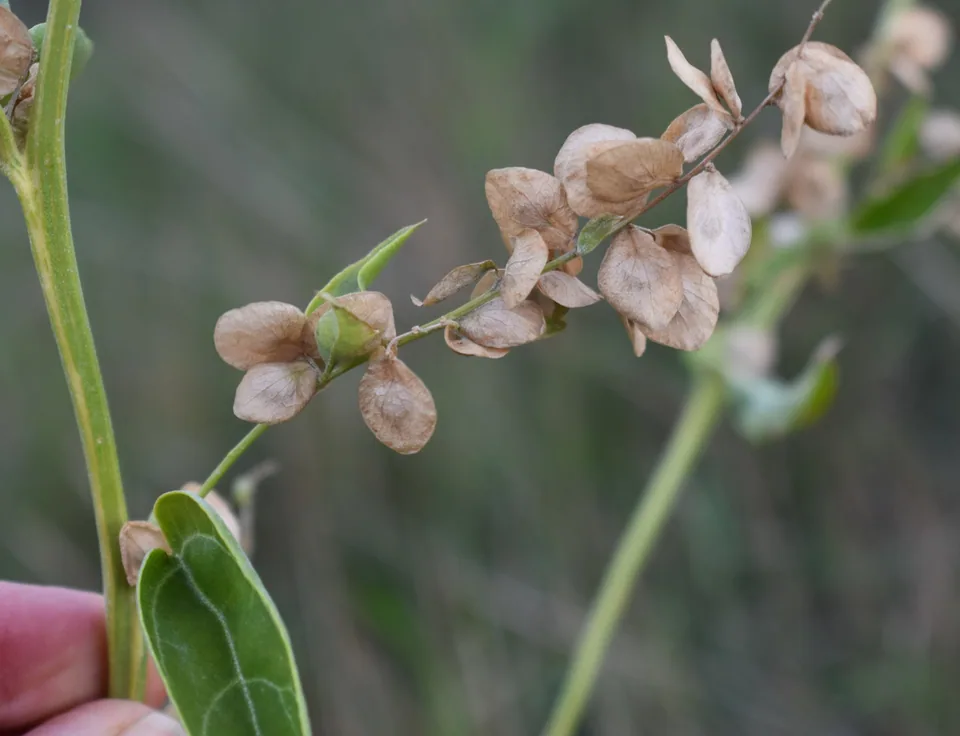
How to Grow and Care for Garden orache
Atriplex hortensis
Written by Emilio Marruso · last checked
At a glance
Garden orach is an easy annual you grow from seed: sow it from March to June and the seedlings come up in 8–15 days. Once grown as a vegetable, it gives you tender leaves to pick from May to October, cooked just like spinach. It can reach 7 ft tall and readily sows its own seed.
- Water
Water regularly while the plants are young
What the sources say (1)
Watering notes: Periodic watering in the early stages of growth
Riego periódico en las primeras etapas.
— cultivos hortícolas [5] - Harvest
Pick the tender lower leaves by hand, May to October; cook them like spinach
What the sources say (2)
Harvest: May to October depending on sowing date; basal leaves picked by hand while tender
Recolección: Recogida manual de las hojas basales lo más tiernas posibles: de mayo a octubre, según la época de siembra.
— cultivos hortícolas [5] How to harvest: Hand-pick the most tender basal leaves, from May to October depending on sowing time
Recogida manual de las hojas basales lo más tiernas posibles: de mayo a octubre, según la época de siembra.
— cultivos hortícolas [5] - Watch out
It reseeds itself easily, so new plants pop up on their own
What the sources say (1)
Propagation: Seed; the plant reseeds itself readily
La resiembra se produce con facilidad. La producción de semilla por planta está entre los 10 a 15 gramos.
— cultivos hortícolas [5] - Size
Can grow up to 7 ft tall
What the sources say (1)
Mature height: up to 200 cm (2 m)
Puede Ilegar hasta los dos me-tros de altura en buenas condiciones.
— cultivos hortícolas [5] - Propagation
From seed; collect the seed heads in late August to September
What the sources say (2)
Propagation: Seed; the plant reseeds itself readily
La resiembra se produce con facilidad. La producción de semilla por planta está entre los 10 a 15 gramos.
— cultivos hortícolas [5] Saving seeds: Harvest the seed spike in late August-September
Producción tle semilla: recogida de la espiga a finales de agosto-septiembre.
— cultivos hortícolas [5] - Sowing
Sow March to June, 1/2 inch deep; seedlings come up in 8–15 days
What the sources say (3)
Sowing: March to June, seed sown 1 cm [0.4 in] deep
Plantación: plantación con semilla de marzo a junio. Profundidad de semilla: 1 cm.
— cultivos hortícolas [5] Sowing depth: 1 cm [0.4 in]
Plantación: plantación con semilla de marzo a junio. Profundidad de semilla: 1 cm.
— cultivos hortícolas [5] Days to germination: 8-15 days
Empieza a germinar en la tierra: ocho-15 días. • Exigencia de agua:
— cultivos hortícolas [5]
Overview
Garden orache is an annual herb of the goosefoot family, like spinach. [5] It was grown as a vegetable, with leaves edible after cooking like spinach. [2] It is sown from seed between March and June and its basal leaves are picked from May to October. [5]
This record is incomplete: the sources we read do not cover every field yet.
Not yet covered by our sources: Watering, Light, Spacing
Garden orache care
Measurements in square brackets are our conversion into the other unit system; the quoted text is unchanged.
How to water Garden orache
Watering
Not stated in the sources we read.
Watering notes
Periodic watering in the early stages of growth
What the sources say (1)
Riego periódico en las primeras etapas.How much light Garden orache needs
Not stated in the sources we read.
Where to grow Garden orache
Not stated in the sources we read.
How to propagate Garden orache
Seed; the plant reseeds itself readily
What the sources say (1)
La resiembra se produce con facilidad. La producción de semilla por planta está entre los 10 a 15 gramos.How to grow Garden orache
The plant
Life cycle
annual
What the sources say (1)
The native range of this species is Caucasus to Central Asia. It is an annual and grows primarily in the temperate biome.Mature height
up to 200 cm (2 m)
What the sources say (1)
Puede Ilegar hasta los dos me-tros de altura en buenas condiciones.Sowing and growth
Days to germination
8-15 days
What the sources say (1)
Empieza a germinar en la tierra: ocho-15 días. • Exigencia de agua:Sowing depth
1 cm [0.4 in]
What the sources say (1)
Plantación: plantación con semilla de marzo a junio. Profundidad de semilla: 1 cm.Harvest and storage
How to harvest
Hand-pick the most tender basal leaves, from May to October depending on sowing time
What the sources say (1)
Recogida manual de las hojas basales lo más tiernas posibles: de mayo a octubre, según la época de siembra.Saving seeds
Harvest the seed spike in late August-September
What the sources say (1)
Producción tle semilla: recogida de la espiga a finales de agosto-septiembre.Remedies
The sources we checked give no remedies for this plant.
Calendar
March to June, seed sown 1 cm [0.4 in] deep
What the sources say (1)
Plantación: plantación con semilla de marzo a junio. Profundidad de semilla: 1 cm.May to October depending on sowing date; basal leaves picked by hand while tender
What the sources say (1)
Recolección: Recogida manual de las hojas basales lo más tiernas posibles: de mayo a octubre, según la época de siembra.Months as given by the sources, which are mostly from the United States (northern hemisphere). In the southern hemisphere they shift by about six months.
Edibility
Reported by the source, quoted verbatim. Do not eat a plant on the basis of this page alone: identification mistakes can be dangerous.
Un tempo veniva coltivata come ortaggio (le foglie sono commestibili previa cottura, come gli spinaci)
[2]
Indicative values
Values from a secondary source, not checked word for word like the rest of this page. Use them as a starting point.
- Light
- full sun, part shadeIndicative value, adapt it to your climate · Secondary source
- Hours of sun
- 6-8 hoursIndicative value, adapt it to your climate · Secondary source
- Watering
- AverageIndicative value, adapt it to your climate · Secondary source
- Drought tolerant
- yesIndicative value, adapt it to your climate · Secondary source
- Soil pH
- 6-7.5Indicative value, adapt it to your climate · Secondary source
- USDA hardiness zones
- 2-11 [winter low −45.6 to 10 °C (−50 to 50 °F)]Indicative value, adapt it to your climate · Secondary source
- Care level
- MediumIndicative value, adapt it to your climate · Secondary source
- Growth rate
- LowIndicative value, adapt it to your climate · Secondary source
- Pruning
- March, April, May, June, July, August, September, March, April, May, March, April, May, March, April, May, June, July, August, SeptemberIndicative value, adapt it to your climate · Secondary source
Similar plants
- Fourwing saltbush Atriplex canescens
- Saltbush Atriplex halimus
- Abyssinian banana Ensete ventricosum
- Agretti Soda inermis
- Aji Capsicum chinense
- Alexanders Smyrnium olusatrum
- Allium senescens Allium senescens
- Allium triquetrum Allium triquetrum
Sources
Every value above is quoted from these documents. Links lead to the original publisher.
- Ethnobotanical Plant Atriplex hortensis | Dr. Duke's Phytochemical and Ethnobotanical Databases · phytochem.nal.usda.gov, consulted
- Atriplex hortensis L. subsp. hortensis - Guida alla flora del Friuli Venezia Giulia · dryades.units.it, consulted
- Atriplex hortensis L. subsp. hortensis - Flora urbana della città di Trieste · dryades.units.it, consulted
- Atriplex hortensis L. | Plants of the World Online | Kew Science · powo.science.kew.org, consulted
- cultivos hortícolas · mapa.gob.es, consulted
Written by Emilio Marruso · last checked